
White Water Rafting in Serbia: Drina, Ibar, Lim
Drina, Ibar and Lim rafting compared: real class ratings, 2026 season windows and RSD/EUR prices - plus where the Class III-IV water actually is.
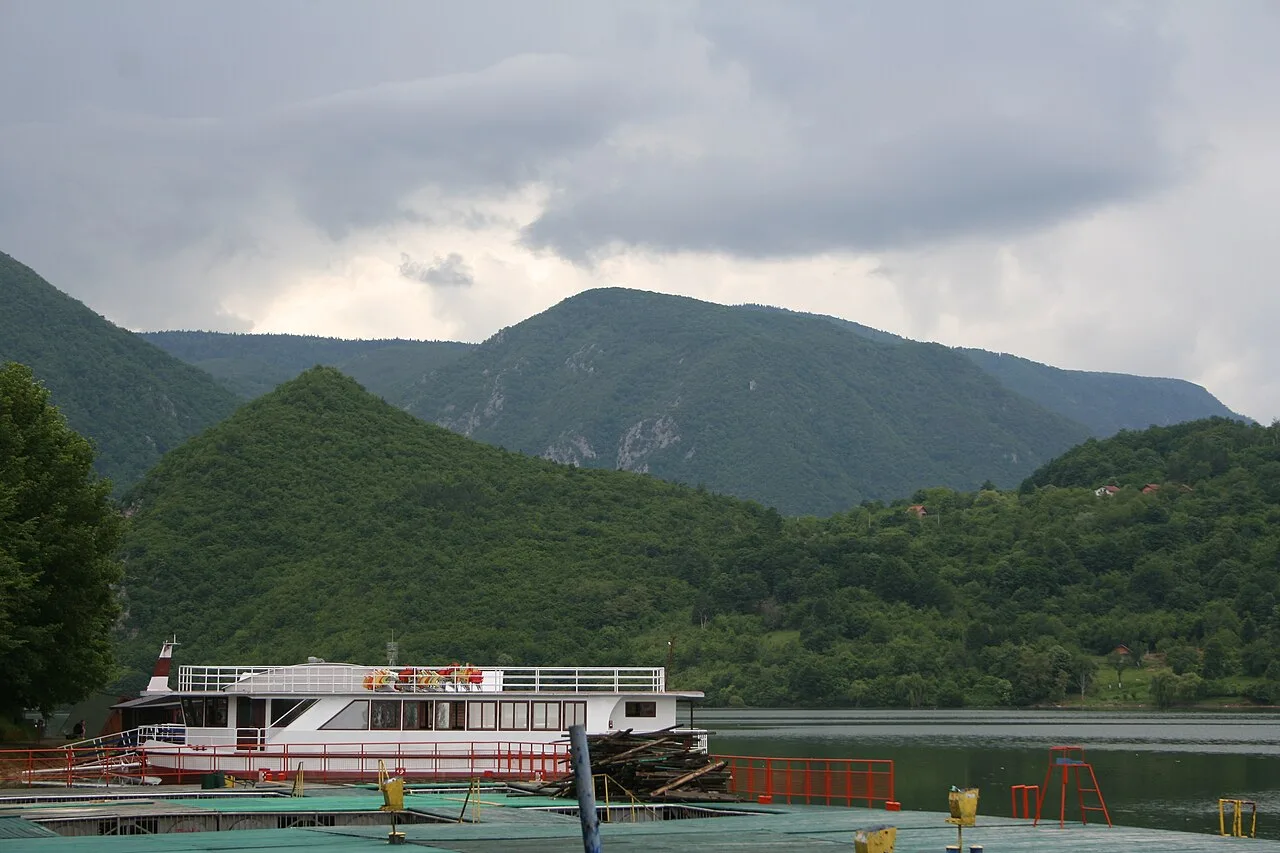
Serbia’s rafting isn’t one river - it’s three, and none of them are the whitewater you’ve probably seen tagged “Balkans rafting” online. The Drina gives you a gentle float below the Perućac dam, past the famous house on the rock. The Ibar threads a medieval valley near Kraljevo that most tourists never find. The Lim runs through southern canyons where lunch is often fresh river fish at the take-out. Licensed Serbian operators rate the Perućac float Class I and standard Ibar and Lim day trips Class I-II, with Ibar pushing toward III in spring flood and one named Lim rapid hitting III-IV year-round. The deep-canyon Class III-IV water in those photos - the Tara Canyon - actually starts across the border in Bosnia and Herzegovina and Montenegro, not here; there’s more on that below. For the three rivers that really are in Serbia, here’s which one matches your nerve and your rental car.
Pick your river first
| River | Typical day-trip class (operators) | Who it’s for | Base town / reach |
|---|---|---|---|
| Drina (Perućac float) | Class I, minor rapids | families, first-timers, photographers | Bajina Bašta / Perućac, ~180 km from Belgrade |
| Ibar | Class I-II summer; Class III possible in spring high water | Belgrade weekend, Kopaonik side trip | Ušće / Maglič gorge near Kraljevo, ~215 km |
| Lim | Class I-II, with one named Class III-IV rapid | quieter canyon, fish lunch, Prijepolje corner | Brodarevo / Prijepolje, ~285 km |
Read the table as a filter. None of Serbia’s three rivers demands prior experience at the water levels operators run commercially - the Perućac float is swim-and-photograph water, and Ibar and Lim add current without needing technical skill. Chasing the deep-canyon whitewater from the postcards? That’s a different trip, and it starts in Bosnia and Montenegro - the Drina section below explains exactly where. If you’re already planning Tara National Park and the house on the Drina, the Perućac float is the natural add-on.
Drina: the calm float, and where the real whitewater is
Foreign visitors often say “Drina rafting” and picture whitewater. What you’ll actually book inside Serbia is calmer than that, and the operators are upfront about it once you ask.
The Perućac-Bajina Bašta float is what most Tara National Park visitors add on. Boarding happens on the free-flowing Drina directly below the Perućac dam - not on the reservoir itself, which backs up 58 km upstream toward Višegrad and sits mostly on the Bosnian side of the border. From the dam you drift roughly 14 km toward Bajina Bašta over two to three hours, passing the little Vrelo stream (barely 365 m from spring to river, among the shortest rivers in Europe) and a few minor rapids before usually floating right past the house on the Drina for the head-on photo. Operators classify this stretch as Class I recreational water - scenic, swim-friendly, not a whitewater course. That’s the trip families book after a morning at Banjska Stena.
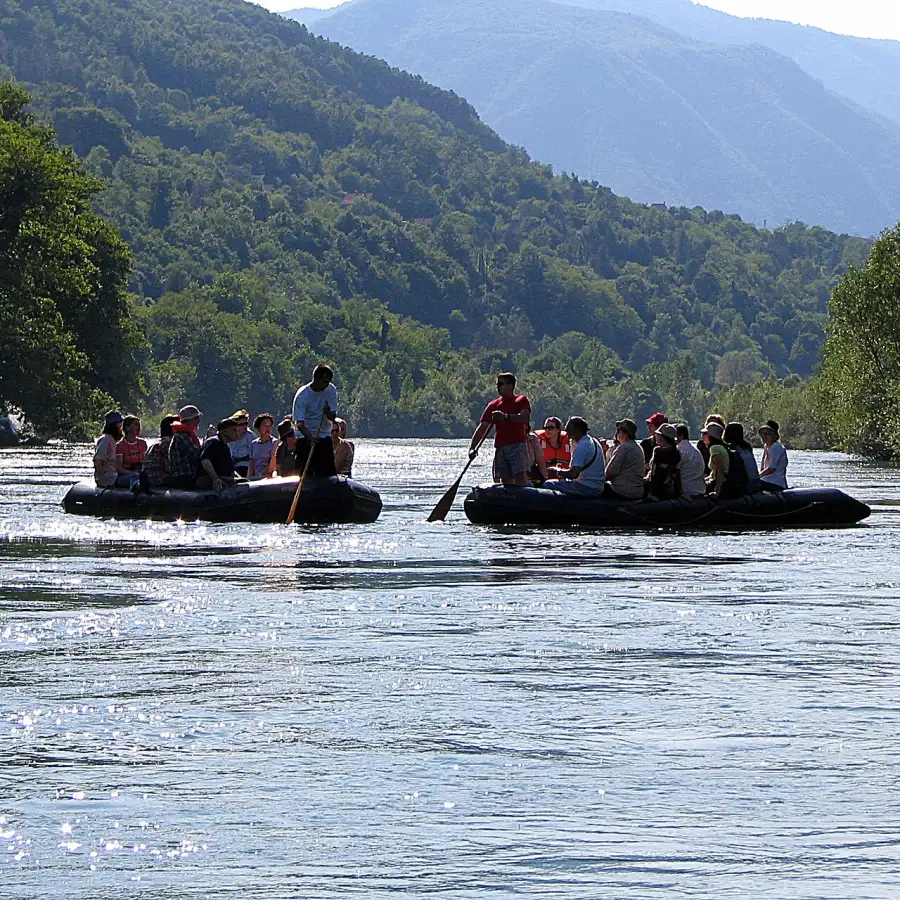
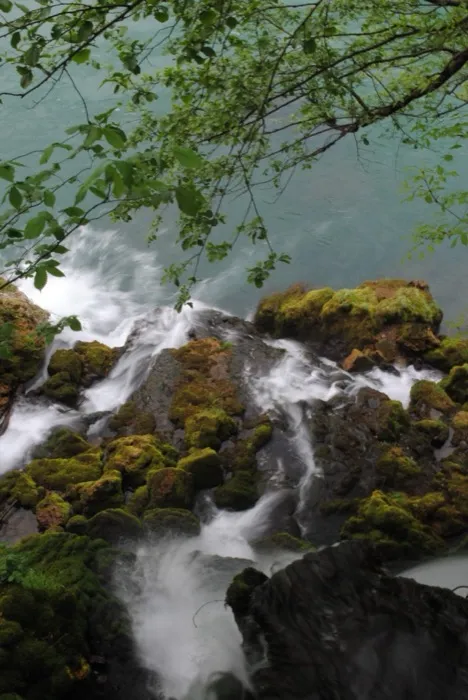
The whitewater everyone’s chasing is a different trip entirely. The Class III-IV canyon tagged “Drina rafting” or “Tara rafting” online is almost always shot below Šćepan Polje, where the Tara and Piva rivers meet to form the Drina - and that confluence, plus the gorge below it, sits in Bosnia and Herzegovina and Montenegro. Operators like TaraSport, based in Foča, run one-day trips from Brštanovica through Šćepan Polje to the Hum area; DMD Camp’s packages have you carrying ID for the state-border crossing mid-river. None of it touches Serbian soil. If that’s the trip you want, our Bosnia rafting guide and Montenegro’s Tara Canyon guide cover the real operators, classes and prices - budget passport time if you’re crossing over from a Serbian base like Zlatibor.
Don’t mix the two when you read reviews online. A glowing “easy Drina rafting” post from Bajina Bašta is the Perućac float. A “best whitewater in Europe” clip tagged Tara or Drina canyon is almost certainly Bosnia or Montenegro - same river system, different countries, very different boat.
Ibar: medieval valley, a fraction of the crowds
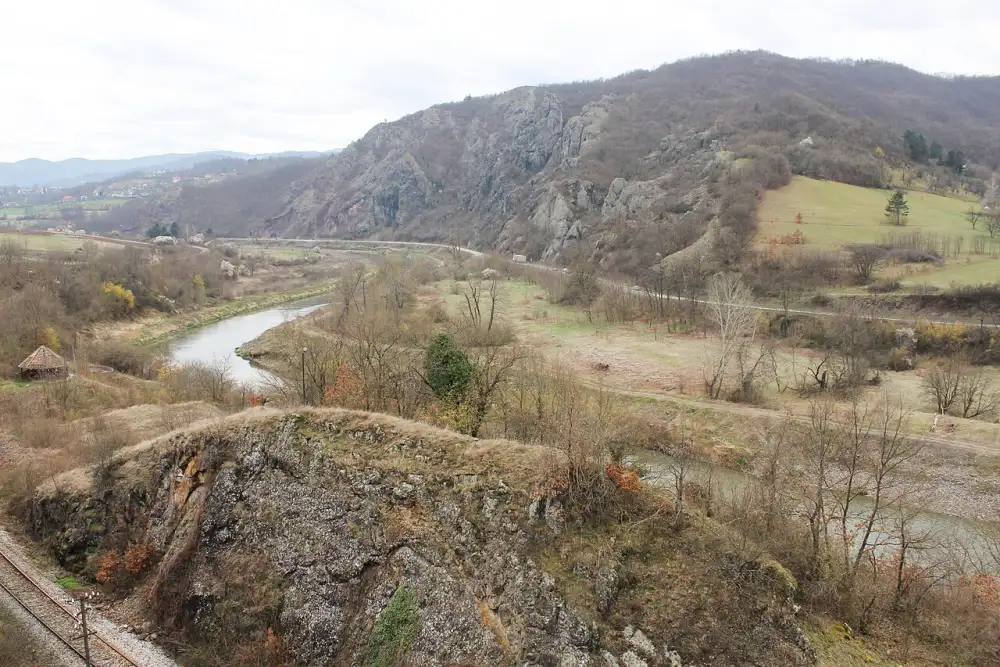
The Ibar is the insider pick if a rafting queue puts you off. The commercial run threads the gorge below Maglič fortress through what locals call the Valley of Lilacs, near Kraljevo, with rapids Grmčić and Jagnjilo as the headline drops. Tours from Belgrade rates the standard run Class II in summer, rising to Class III in spring when snowmelt pushes the water up; Explore Serbia bills its own one-day trip simply as “easy.”
Routes vary by operator and by how much of the gorge you want. Brunoraft (SerbiaRafting) sells the short Ušće-Polumir leg at 9 km, roughly two hours on the water, or a two-day version continuing Polumir-Maglič fortress for another 15 km. Extreme Serbia packages the whole 23 km Ušće-Maglič run as a single 4 to 4.5-hour day with IRF-trained guides, ending at the fortress itself. Explore Serbia covers the same distance in about three hours. Pick the operator whose pace and price fit your day.
Pricing runs in dinars and shifts by operator and section. Tifran’s rafting club quotes 2,900 RSD for Ušće-Polumir, 3,500 RSD for Polumir-Maglič, and 4,700 RSD for the full Ušće-Maglič run - close to Extreme Serbia’s €40 for their one-day Maglič trip and Explore Serbia’s 5,200 RSD package covering the same distance. Confirm the rate and what’s included when you book.
It’s an easy bolt-on from Belgrade - roughly 215 km and just over three hours to the Ušće put-in - or from Kopaonik or Vrnjačka Banja if you’re already in the south. You’ll pass churches, castle ruins and First World War monuments along the banks: medieval Serbia, not a splash park.
Lim: southern canyons, and where the ‘Class V’ talk comes from
The Lim spends most of its upper run in Montenegro, crossing into Serbia in a short border-straddling stretch near Kumanica Monastery and fully inside Serbian territory by the village of Gostun. Commercial day routes that operators sell here are consistently tagged Class I-II - easier than Ibar’s spring water - with one well-known exception: the “reception” rapid between Gostun and Brodarevo, a genuine Class III-IV drop that shows up on every operator’s highlight reel.
Extreme Serbia’s two standard packages are Gostun to Petrovac na Limu (22 km, 4 to 4.5 hours, €35), starting near Kumanica Monastery, and the shorter Brodarevo to Petrovac (15.5 km, 3 to 3.5 hours, €30). Brunoraft (SerbiaRafting) slices the same stretch differently, selling Gostun-Brodarevo (9 km) and Brodarevo-Petrovac (12 km) as separate half-day options, with an overnight at their own camp in Brodarevo between the two. Either way, the route passes swimming holes and the Sopotnica confluence, where some trips add a short “easy canyoning” scramble to the Sopotnica waterfall.
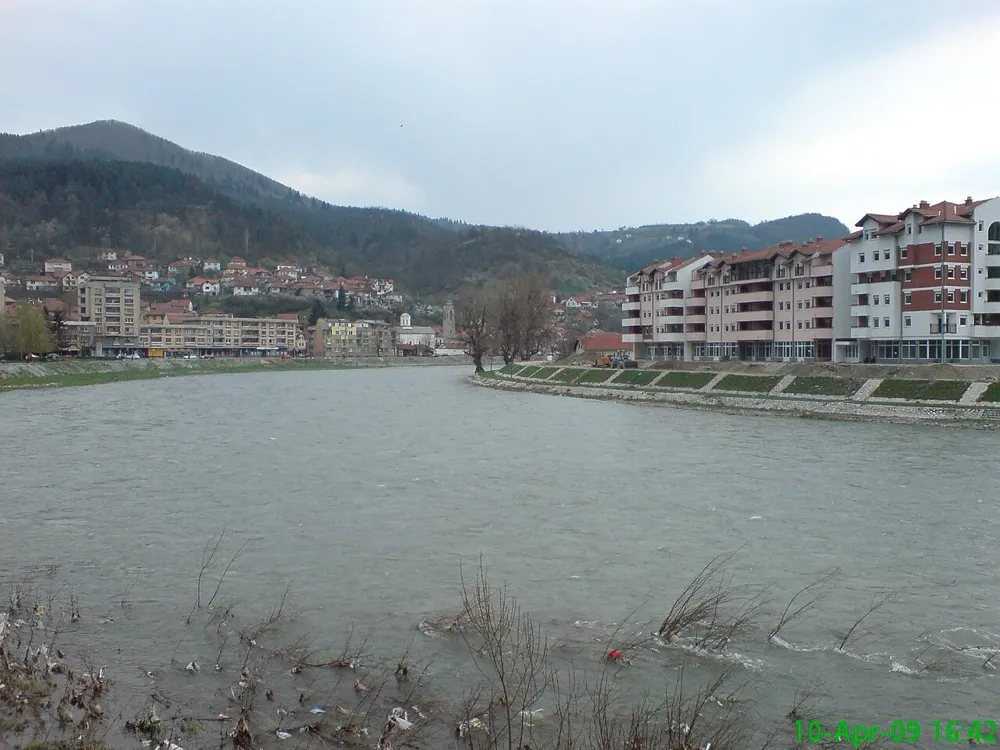
So where does “Class V” come from, if the Serbian day trips top out around III-IV? From the Lim regatta, a three-day, 134 km event that Brunoraft’s own site describes as crossing “Montenegro and Serbia” through five municipalities - Plav, Andrijevica, Berane and Bijelo Polje are all in Montenegro, and only the final stretch through Prijepolje is Serbian. The regatta’s hardest water, in the Tifran gorge below Berane, runs Class III-IV at normal flow since the 2010 floods reshaped it (rated II-V across the whole course depending on level) - and Tifran itself sits in Montenegro, well upstream of where the river crosses into Serbia. Season details for both events are below.
Brodarevo is the hub for the Serbian sections. Brunoraft, active since 2008, runs its overnight camp here, and many Lim trips end with grilled fish at a riverside stop. You’ll need your own transport to Brodarevo - operators meet you at the put-in. Pair a Lim day with hiking in Serbia for the full south-west active week: Uvac meanders one day, Lim water the next.
Season, safety and what operators provide
When to go: The Perućac float and Ibar’s commercial season both run roughly May through September, busiest in July and August. The Lim regatta concentrates in late May and early June, timed to Montenegro’s snowmelt, while standard Serbian day trips on the Gostun-Petrovac stretch run through the same May-September window. Outside those months, daily departures thin out fast - call ahead.
Who can paddle: Commercial outfits expect you to swim moderately well, stay sober (Extreme Serbia and Brunoraft both prohibit alcohol on trips) and declare health issues upfront. Pregnancy and serious heart or back conditions are the usual exclusions. Children ride on many Class I-II routes with age limits set by each club - ask when you book rather than assume.
What’s included: A standard Serbia rafting day bundles the raft, paddles, helmet, life jacket, neoprene suit and boots for cold water, transport between the meeting point and the put-in, and a licensed skipper. Brunoraft’s own price list states the club “carries insurance costs for each rafting participant” on Ibar and Lim trips - worth confirming your operator does the same. Extreme Serbia advertises IRF-standard training for its guides and rescuers on wild and still water. Don’t expect a dry bag for your phone unless you ask.
Group size: Both Extreme Serbia and Brunoraft set a minimum of four participants to launch at the published per-person rate, with eight the maximum per boat. Smaller parties either pay more per person or get merged into another group, per Brunoraft’s own price list.
You’ll need a car for most rivers
None of Serbia’s rafting bases are train-stop towns. Bajina Bašta and Perućac sit at the foot of Tara National Park; Brodarevo and Prijepolje anchor the Lim; the Ibar put-ins cluster near Kraljevo, Ušće and Maglič. Buses reach the towns, but the put-ins and take-outs are riverside gravel tracks that no timetable serves. If you’re building a western loop that already includes Tara National Park viewpoints and the Šargan Eight railway, a rental car pays for itself in one day.
Belgrade-based agencies do run bundled day trips with transport included - Tours from Belgrade’s Perućac package, for example, runs about €110 per person for a minimum of five, most of that covering the six-hour round-trip transfer rather than the rafting itself. Short on time or would rather not drive? That trade makes sense. Already touring western Serbia by car? Book direct with the river operator and skip the transfer fee.
How to book a rafting day
Book direct with a licensed club for the best price and the clearest safety briefing. Names to search: Brunoraft (SerbiaRafting) and Extreme Serbia for Ibar and Lim, both IRF-affiliated; Tifran for budget Ibar pricing; Explore Serbia and Tours from Belgrade if you’d rather have transport bundled from the capital. For the Perućac house-on-the-Drina float, guesthouses in Bajina Bašta and Perućac often sell seats on daily boats without you hunting a website.
Send your dates, group size (with children’s ages), shoe sizes and a contact number - Serbian operators still prefer WhatsApp or Viber. Ask explicitly which section and class band you’re booking; “Ibar rafting” or “Lim rafting” alone is too vague once you know how differently operators slice the same river. Confirm what’s included (meals, park fees, photos), the minimum group size (usually four) and the cancellation rule - spring high-water trips can be called off for safety, and some clubs merge smaller groups rather than cancel.
If you’re weighing rivers against other outdoor days, our best hiking in Serbia guide covers Tara trails and Uvac viewpoints that pair neatly with a Perućac float. Come with a swimsuit, quick-dry layers, sunscreen and cash for the fish lunch on the Lim - and remember that the big whitewater everyone’s chasing is one border crossing away, not in this guide.
Photos
On the map
The map loads on click - to keep the page lightweight.
The map didn’t load. Check your connection and refresh the page.
Read also

Entertainment · 9 min read
Danube River Cruises in Serbia: Options and Prices
Verified · August 28, 2026Belgrade river boats from €22-29; Iron Gate speedboats from 1,700 RSD. Day tours vs self-drive - prices checked Aug 2026.

Entertainment · 11 min read
Belgrade Beer Fest 2026: What's Confirmed and What Isn't
Verified · August 20, 2026Belgrade Beer Fest at Ušće: no 2026 dates from the organiser yet, why two recent editions ran in June, last published ticket prices and getting home.

Entertainment · 11 min read
Belgrade Stag Activities: Shooting, Boats, Prices
Verified · August 11, 2026Belgrade stag prices you can buy: shooting from €49, boat party from €39, weekend karting from 1,700 RSD. Book Saturday before the splav night.

Entertainment · 11 min read
Belgrade with Kids: Family Guide
Verified · August 10, 2026Belgrade with kids: zoo tickets, Kalemegdan tanks, Ada beach, Tesla Museum cash rules, Illusion Museum prices and free park days - checked August 2026.