
Drina River House: Serbia's Loneliest Home
A tiny cabin on a rock in the middle of the Drina near Bajina Basta: the story behind the famous photo, why it keeps washing away, and how to see it.
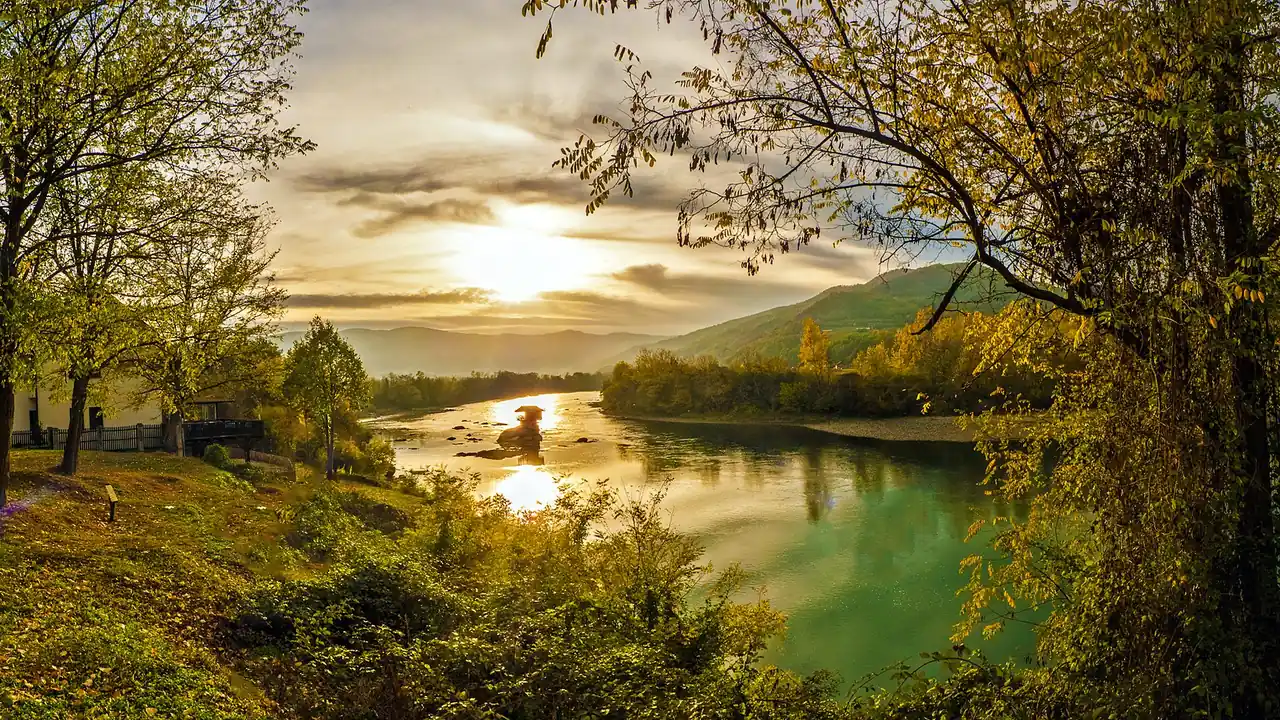
There is a single wooden cabin sitting on a bare rock in the middle of the Drina river, with fast green water on every side and no bridge, no path and no neighbours - and it has quietly become one of Serbia’s most photographed sights. It stands about two kilometres upstream of the small town of Bajina Bašta in western Serbia, on the northeastern edge of Tara mountain, where the Drina marks the border with Bosnia. You can’t walk to it, which is the first thing worth knowing.
What it is, in one look
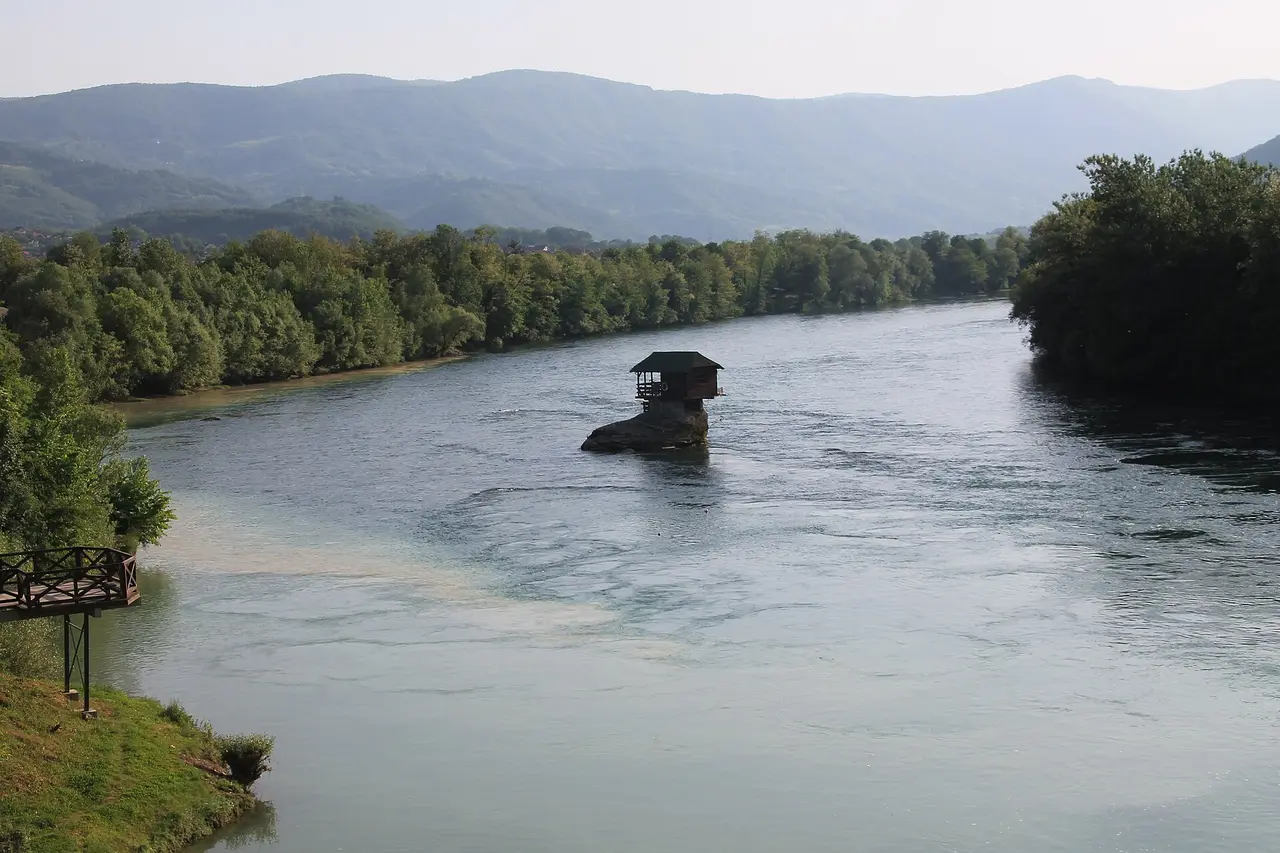
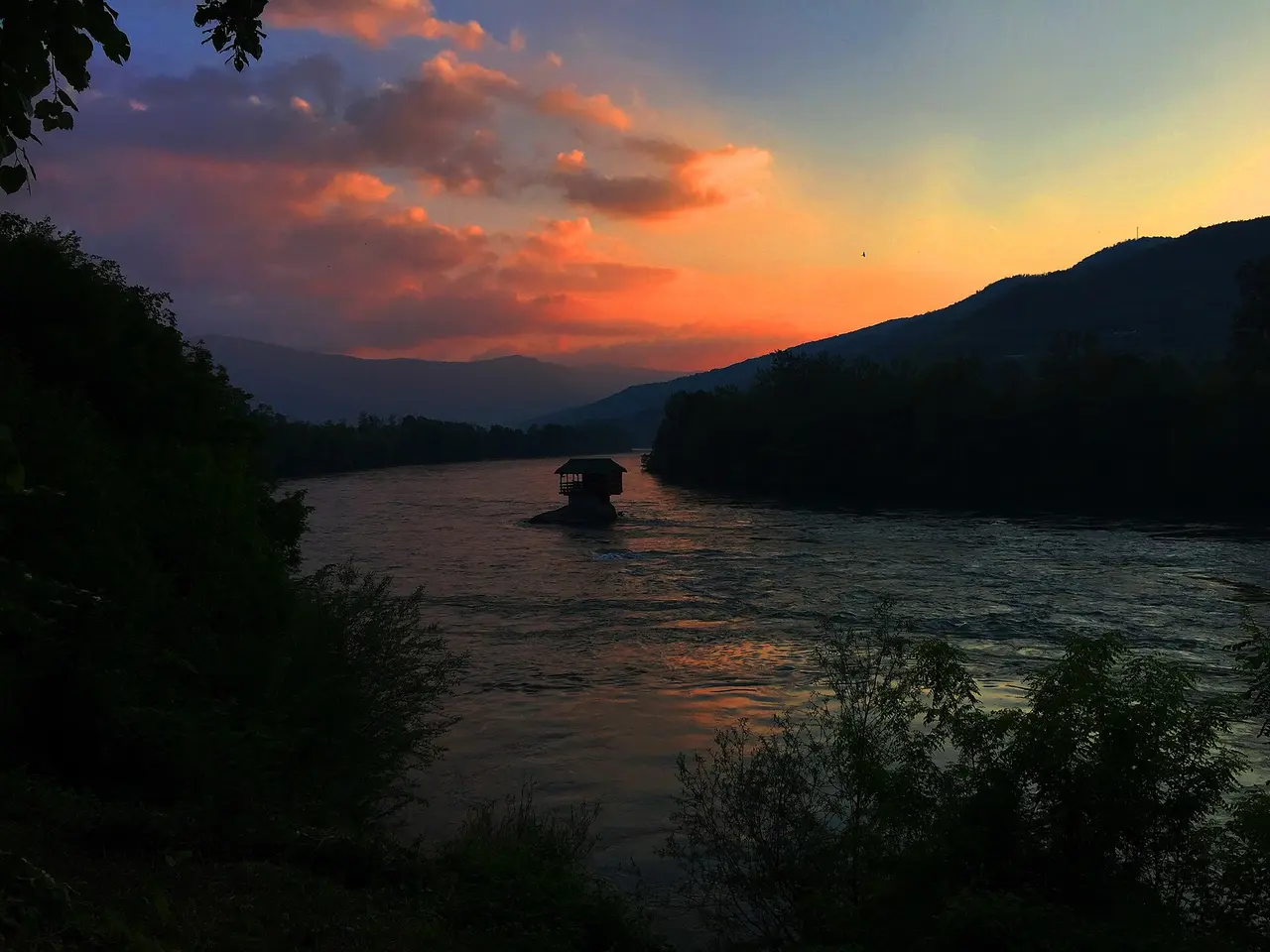
The locals call it Kućica na Drini - “the little house on the Drina” - and part of its charm is how improbable it looks. A knuckle of rock breaks the surface midstream, and balanced on top is a modest timber shack barely bigger than a garden shed, with a pitched roof, a small deck and a set of steps cut into the stone. In low, clear water it looks marooned; in the golden light of early morning or late evening it looks like something from a painting. It is not a museum, a cafe or a viewpoint you can enter - it’s simply a private cabin in an absurd, wonderful spot.
A dare that turned into a landmark
The story is better than the postcard. In the summer of 1968, a group of local teenagers used to swim out to the rock to sunbathe, and got tired of the hard, hot stone. Two of them, the brothers Milija and Milan Mandić, decided the rock needed a roof, and with a gang of friends they hauled out planks and built a shelter on it. Lighter timber went out by boat and kayak; the heavy beams were floated downriver the old way, by raft. What began as somewhere to nap between swims became, over the decades, the most stubborn little building in Serbia.
Milija Mandić looked after it for most of his life, right up to his death in 2017, and the family kept rebuilding it every time the river had other ideas - which it did, often.
Why it keeps washing away
This is the part the pretty photos leave out. The Drina is a powerful, flood-prone river, and it has swept the house off its rock again and again - by most counts around seven times before 2019. It went in December 1999, again in 2005, and again in a big flood in December 2010. Each time the Mandić family and their neighbours simply built it back. The cabin you see today dates from 2011, the latest in a long line of near-identical replacements, which is why its exact look shifts a little from one era of photographs to the next.
That cycle of destruction and stubborn rebuilding is really the point of the place. It’s less a house than a decades-long act of quiet defiance against a river that keeps saying no.
How it got famous
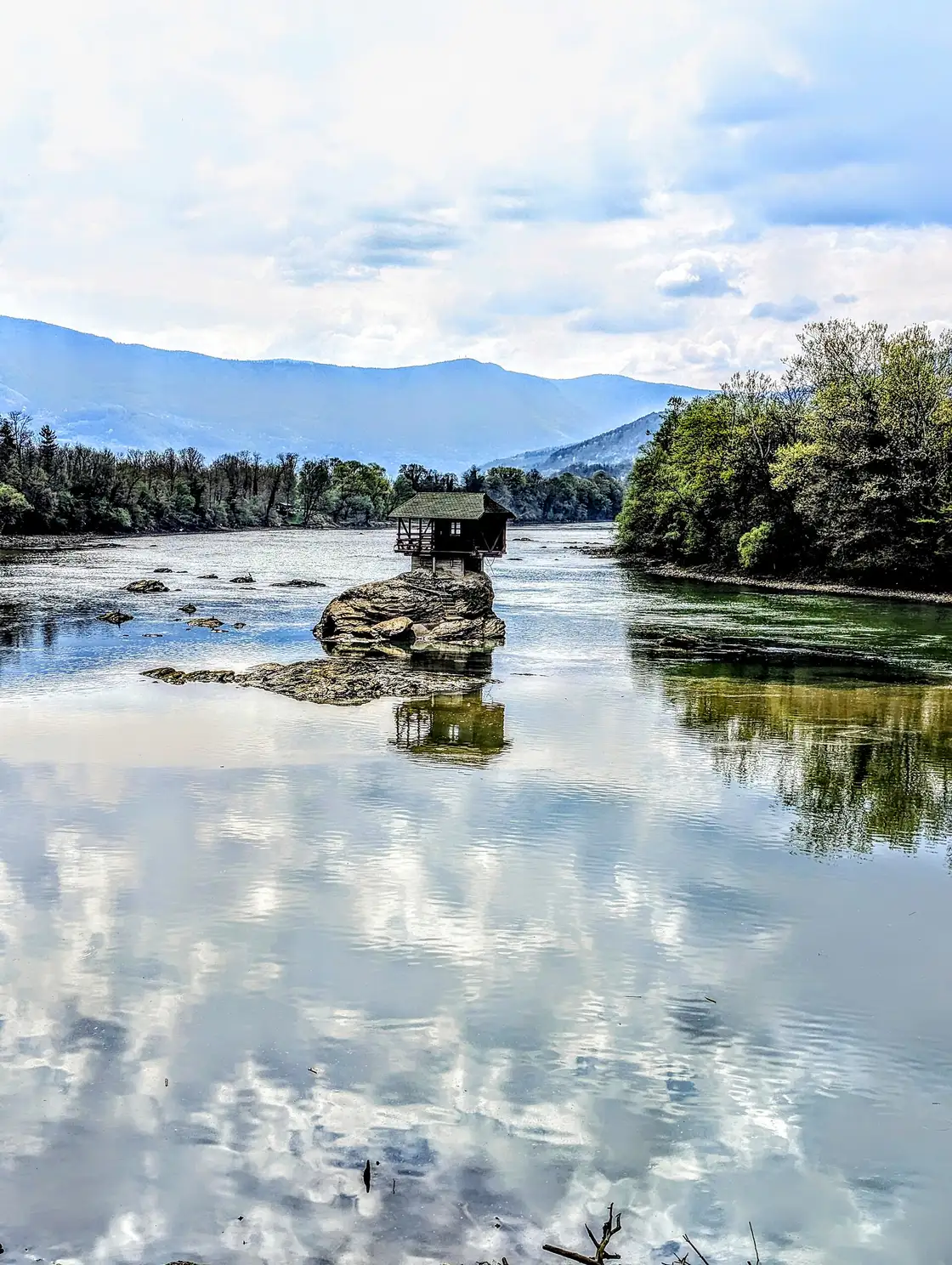
For decades this was a local curiosity and nothing more. Then, in 2012, a photograph of the house by Irene Becker was picked up by National Geographic as one of its featured photos of the month, and the image travelled the world. Since then it has become a fixture of “amazing places on earth” lists and a magnet for photographers and social-media feeds. The irony isn’t lost on locals: a shed built by bored swimmers now pulls travellers to a quiet stretch of the Drina that most of them would never otherwise have found.
How to actually see it
Because you can’t reach the rock, seeing the house means choosing your vantage point, and there are two.
From land. The classic view is from the Serbian bank, where pull-offs and a signed viewpoint along the road above the river give you the full framed scene, mountains and all. This is free, takes ten minutes, and is where most of the famous shots are taken. Come at either end of the day for the light, and remember the water level changes the whole picture - in a dry spell the rock stands tall, after heavy rain the house looks half-drowned.
From the water. For a closer look, local boatmen run trips on the Drina and the neighbouring Perućac lake from Bajina Bašta and the village of Perućac - or you can book a longer rafting day on the Drina that passes the house from downstream. These usually pair the house with the dramatic Drina canyon and the “yellow rock” (Žuta Stena) viewpoint, and they’re the way to feel the river’s pull up close. Schedules and prices are seasonal and best arranged on the spot in Bajina Bašta or Perućac rather than booked far ahead - ask at your guesthouse or the harbour. Each July the river also fills with the Drina Regatta, a huge, boozy mass float past the house; if you want to catch it, check the current year’s date locally before you plan around it.
Just upstream: Perućac and the canyon
The house sits at the doorstep of one of Serbia’s loveliest river stretches, so it pays to know what’s a few minutes further on. By the village of Perućac, the Bajina Bašta dam backs the Drina up into the long, green Perućac lake, and this is where the canyon boat trips launch. Beside it runs the Vrelo, a stream so short - only around 365 metres from its spring under Tara to the point it tips into the Drina, with a little waterfall on the way - that locals nicknamed it the “Year River” and you can stroll its entire length in a few minutes. High above, Tara’s Banjska Stena viewpoint drops sheer into the emerald canyon. It’s a remarkable amount of scenery folded into one small corner, and the house is really the appetiser for it.
A word on manners: the cabin is private, lived-in local history, not a climbing frame. Admire it from the bank or a boat, don’t try to swim or scramble out to the rock, and leave it to the river that keeps trying to take it.
Fitting it into a trip
The house works best as one stop on a western Serbia loop rather than a destination in itself - you’ll spend more time driving there than looking at it. It sits right on the doorstep of Tara National Park, whose Banjska Stena viewpoint over the emerald Drina canyon is the real headline of the area, and it’s an easy add-on to the other western-Serbia favourites: the toy-train switchbacks of the Šargan Eight railway and Emir Kusturica’s wooden village at Drvengrad. Most visitors base themselves either in Bajina Bašta itself or up on the plateau at Zlatibor, which has the widest choice of hotels and makes a comfortable hub for the whole corner.
You need your own wheels to do it properly. Bajina Bašta is roughly 165 kilometres from Belgrade, about three and a half to four hours by car via Užice, so this is overnight-trip country, not a day dash from the capital. Pair the house with Tara and a night in the valley and the long drive earns its keep. Come at first or last light, keep an eye on the water level, and you’ll understand why a tiny shed on a rock became the picture that put this stretch of the Drina on the map.
Photos
On the map
The map loads on click - to keep the page lightweight.
The map didn’t load. Check your connection and refresh the page.
Distance ≈165 km · 3.5-4 h by car
- Belgrade ≈165 km · 3.5-4 h by car E763 to Užice, then the Bajina Bašta turnoff. Best as part of a Tara or western-Serbia trip, not a day trip from the capital.
Read also

What to see · 10 min read
Fruska Gora Monasteries: Which to Visit
Verified · September 3, 2026Sixteen preserved Orthodox monasteries on Fruska Gora: Krusedol, Novo Hopovo, Grgeteg and Vrdnik, plus dress code and a day route from Novi Sad.

What to see · 9 min read
Viminacium: Rome and Mammoths near Belgrade
Verified · September 3, 2026Roman Viminacium near Kostolac: adult tickets 1,050 RSD, hours by season, last tour two hours before close, and why the mammoth park is shut.

What to see · 12 min read
Vinca: The Neolithic Site on Belgrade's Doorstep
Verified · August 29, 2026Vinca's Belo Brdo site is 14 km downstream from Belgrade (16 km by road): 2026 hours, tickets, what the small museum shows, and how to get there.

What to see · 10 min read
Skull Tower of Niš: Story, Tickets, Visiting Tips
Verified · August 25, 2026Ćele Kula in Niš: 1809 Battle of Čegar, chapel hours, 300 RSD tickets and how to visit respectfully from the centre or INI airport.