
Fruska Gora Monasteries: Which to Visit
Sixteen preserved Orthodox monasteries on Fruska Gora: Krusedol, Novo Hopovo, Grgeteg and Vrdnik, plus dress code and a day route from Novi Sad.
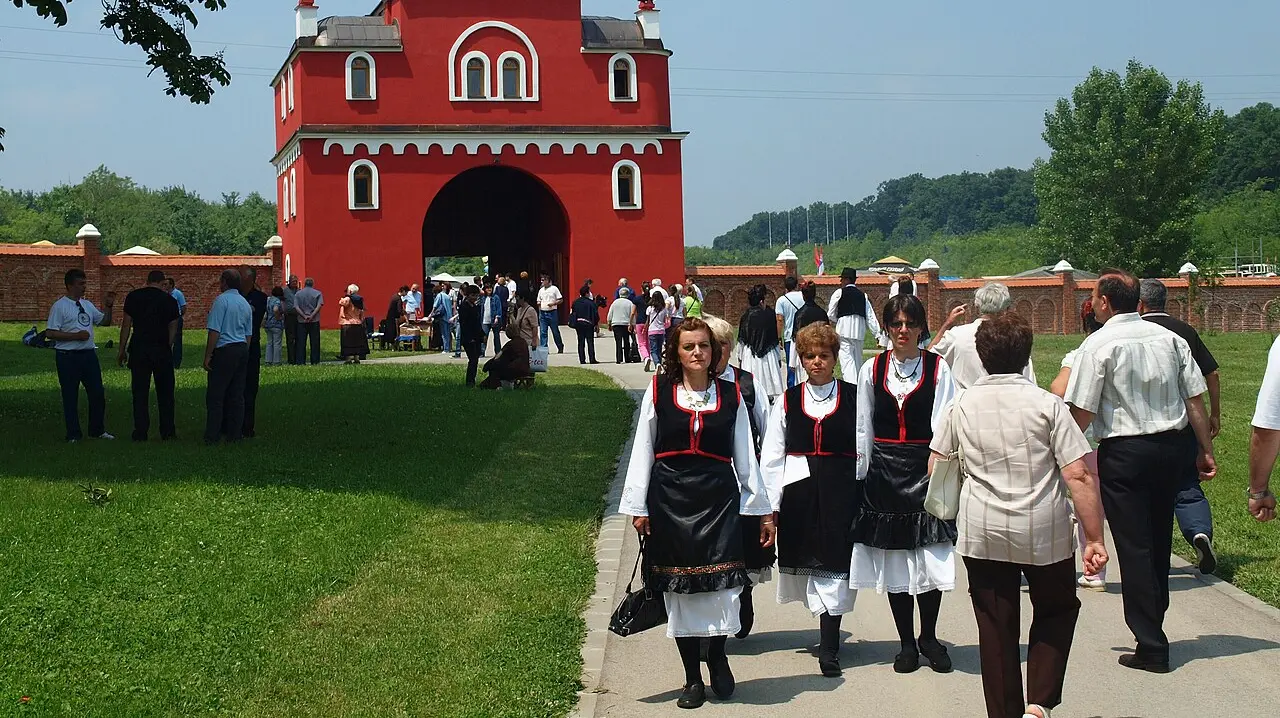
You don’t need all sixteen Fruska Gora monasteries. The Tourism Organisation of Novi Sad counts sixteen Orthodox houses preserved to this day on this low ridge south of Novi Sad, out of roughly thirty-five that stood here in the 16th and 17th centuries, and it still points visitors to two names first: Novo Hopovo and Krusedol. Hit those well, add Grgeteg or Vrdnik if the day still has fuel, and leave the western cluster for another trip.
This page is the pick-list and etiquette guide for that monastic belt. Trails, park rules and the soft hiking network live on our Fruska Gora national park page. The big medieval houses of the south - Studenica, Sopocani, Mileseva - belong to the country roundup of Serbia’s monasteries. Cellars and tasting prices sit on the Fruska Gora wine tour.
Why this ridge became a Holy Mountain
Fruska Gora is only a little over 500 m high, yet for Serbs it carries a weight that has nothing to do with altitude. When Ottoman rule pressed the medieval church south of the Sava and Danube, the centre of Serbian spiritual life shifted north into Habsburg Syrmia. Despots, bishops and refugee monks founded and refounded houses on these wooded slopes; the Brankovic family of Srem holds the largest share of the founding credit that historians can still document.
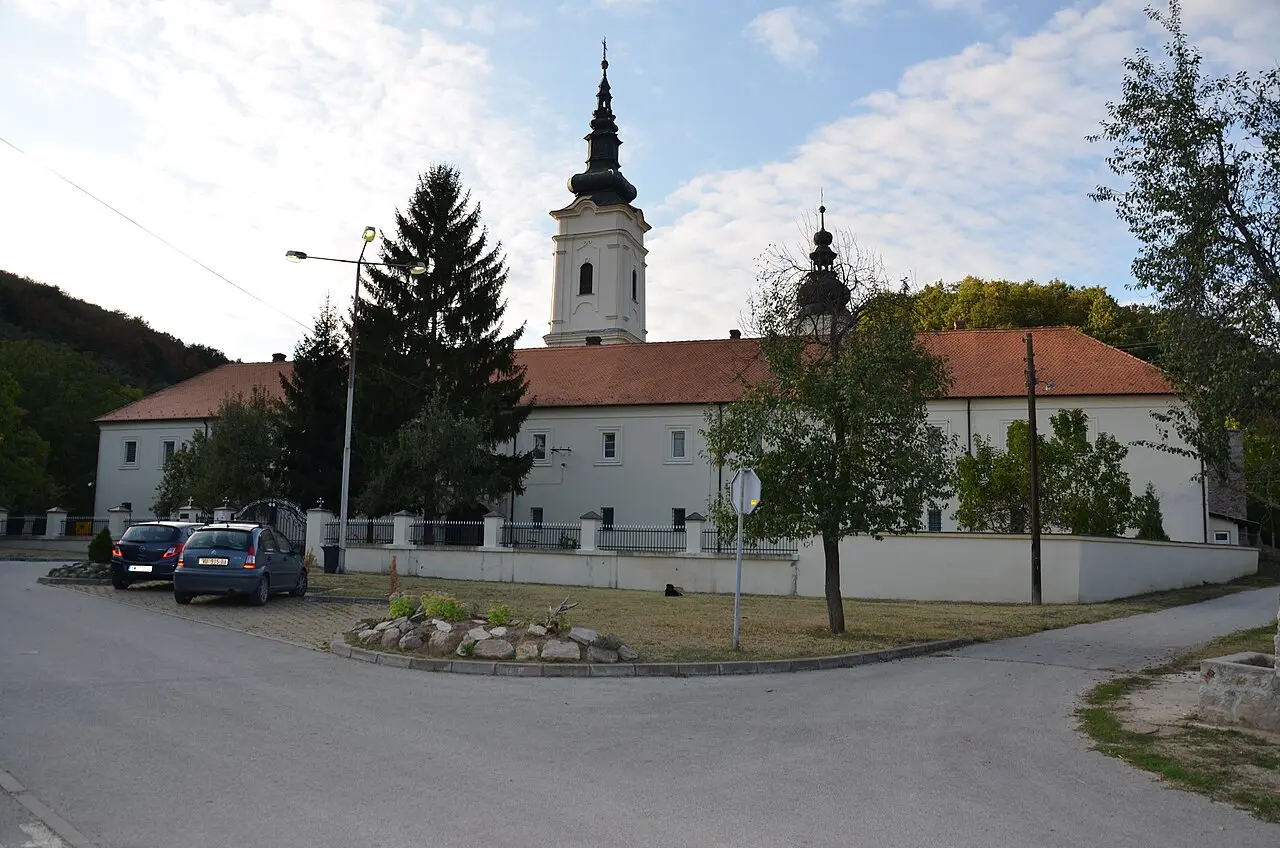
Locals still call the range the “Serbian Athos” or a Holy Mountain. The churches share a family look: a central church inside walls and dormitories, with tall baroque bell towers added in the 18th century. Many sit in quiet valleys with a stream nearby. Only Vrdnik stands inside a proper settlement; the others hide among forest, orchards and vines.
You’ll meet two different counts, and they aren’t a contradiction so much as two different questions. Novi Sad’s tourist office counts sixteen houses preserved to this day and publishes a clear east-to-west roll call. Serbia’s national tourism organisation writes about seventeen medieval monasteries - medieval foundations, which is a different test altogether. Beyond the classic sixteen, the Diocese of Srem has been reviving others nearby: Savinac above Ledinci, declared a monastery again in 2017, and Vavedenje down in Sremski Karlovci, given the same status in 2016. That is where the extra names come from.
Sixteen is the figure to plan around, and “preserved” is doing real work in that phrase. Not every one of them came through the twentieth century standing. Besenovo is the blunt example: the diocese records it as levelled to the ground in May 1944, and what stands there today is a rebuilding still in progress, not an old complex that came through. Don’t treat a checklist of every name as a day plan. You’ll see the same names painted on brown road signs along the ridge - Velika Remeta, Krusedol, Grgeteg, Staro Hopovo, Novo Hopovo, Rakovac, Beocin, Vrdnik, Jazak, Mala Remeta, Besenovo, Sisatovac, Petkovica, Kuvezdin, Dipsa and Privina Glava - and that list alone is why a car beats public transport here.
The two you should not skip
Krusedol is the grandest stop and the emotional centre of the cluster. It was the endowment of bishop Maksim Brankovic, raised as a family mausoleum. Most write-ups say the Ottoman raid of 1716 burned it down and it was rebuilt within a few years; the diocese that owns it tells a slower and more precise story. The church itself was not seriously damaged in 1716 - the residential ranges were what burned - and the first restoration, finished by 1724, went no further than a new oak-shingle roof. The building only took on the look you see now in the early 1740s. Kings, princes and church leaders lie here, including King Milan Obrenovic and Princess Ljubica, wife of the founder of the Obrenovic dynasty. If you walk into only one Fruska Gora church, walk into this one. It’s the stop tour vans actually linger at, and for once the crowd is right.
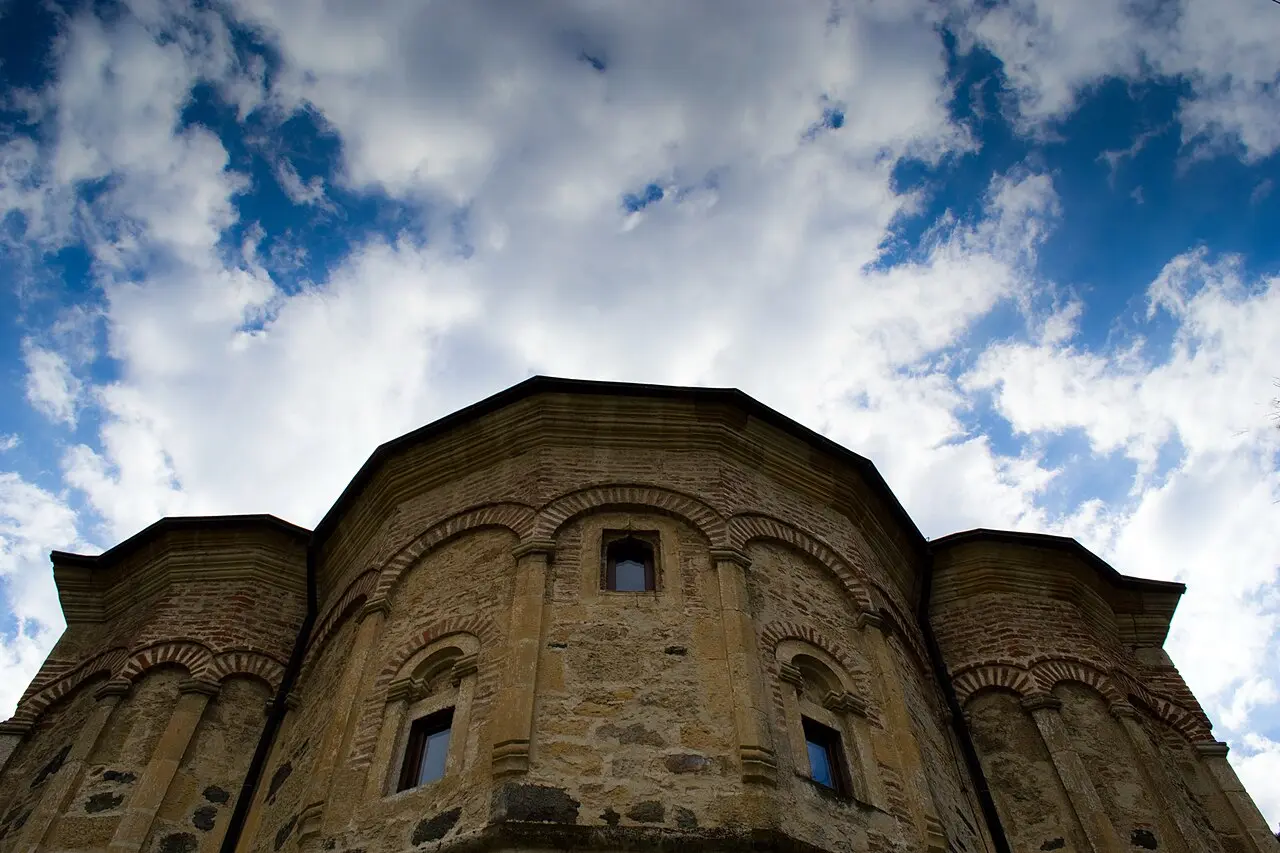
Novo Hopovo is the architecture pick. Novi Sad tourism calls it probably the finest 16th-century church work in Vojvodina. Relics of the warrior saint Theodore Thyron arrived at the older church here in 1555. The frescoes follow a late Byzantine line with Athos and Italo-Cretan echoes; the martyrdom cycle of the apostles is the passage specialists talk about. Dositej Obradovic - the educator every Serb meets at school - belonged to the brotherhood here from July 1757 to November 1760. The diocese records that he was tonsured in the church of St Nicholas, got his first real schooling in the monastery library, and left his name on a spring in the north range that is still called Dositej’s fountain. Don’t rush the nave: the painting only opens up once your eyes adjust.
Strong second stops
Grgeteg sits among vines and feels smaller than Krusedol. Legend credits Despot Vuk Brankovic with founding it for his father Grgur; the complex took on a baroque look in an early-18th-century renewal. What people come for today is the work of Uros Predic, and it pays to know what you’re looking at: he painted icons, not frescoes, in 1901 and 1902, on English canvas or wood, under a contract with archimandrite Ilarion Ruvarac. The “frescoes” you’ll read elsewhere come from a national tourism page; the diocese that owns the church is specific about the technique. Ask before you photograph inside - nuns live here, and the church is their home, not a gallery. That’s also why the courtyard can feel more welcoming than the church on a busy Saturday.
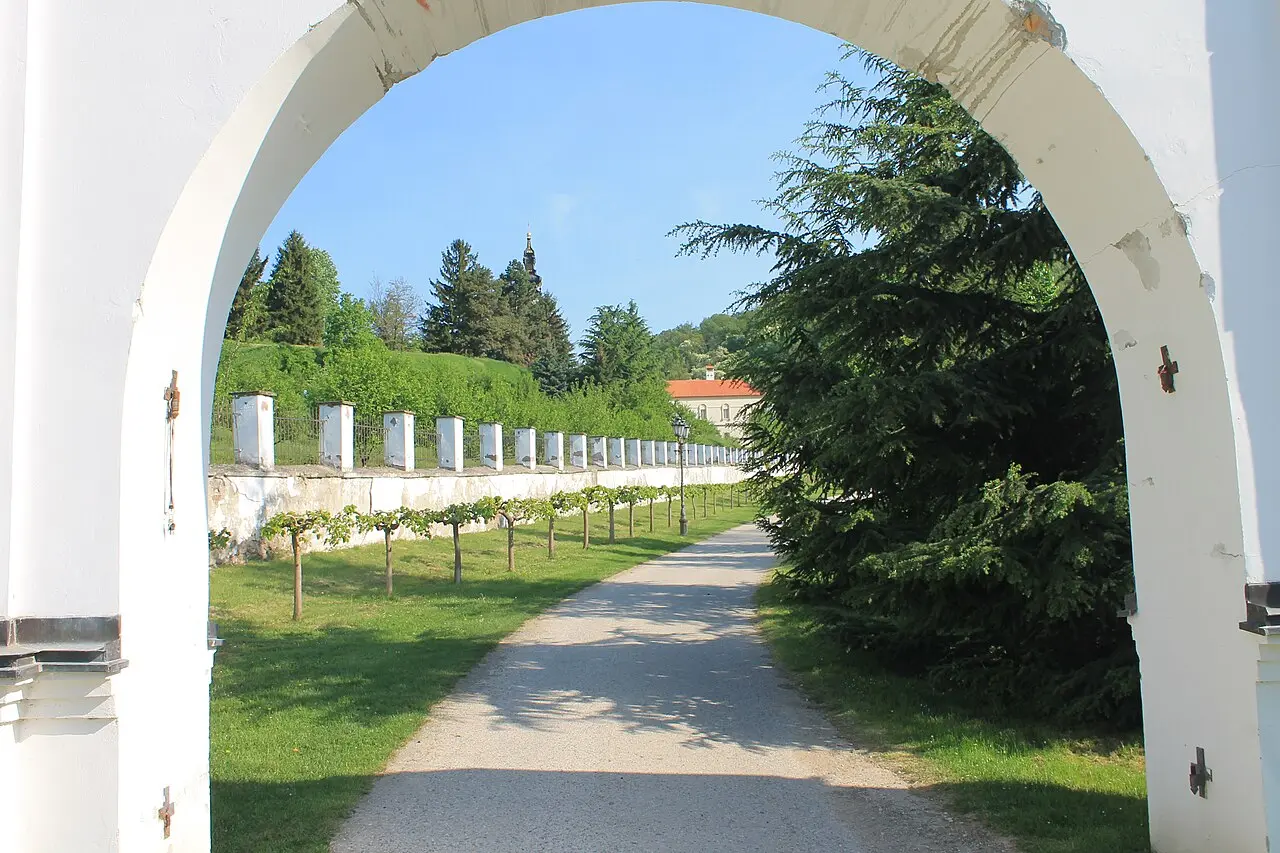
Vrdnik-Ravanica, often just called Vrdnik, is the odd one out because it stands in the spa village of Vrdnik. Monks from the older Ravanica monastery moved north in the late 17th century and brought relics of Prince Lazar; part of that tradition still shapes the identity of the house, which is why locals still say “the Ravanica of Srem”. The present larger church went up in 1811. Pair it with a coffee in the village when you need a break from forest parking lots.
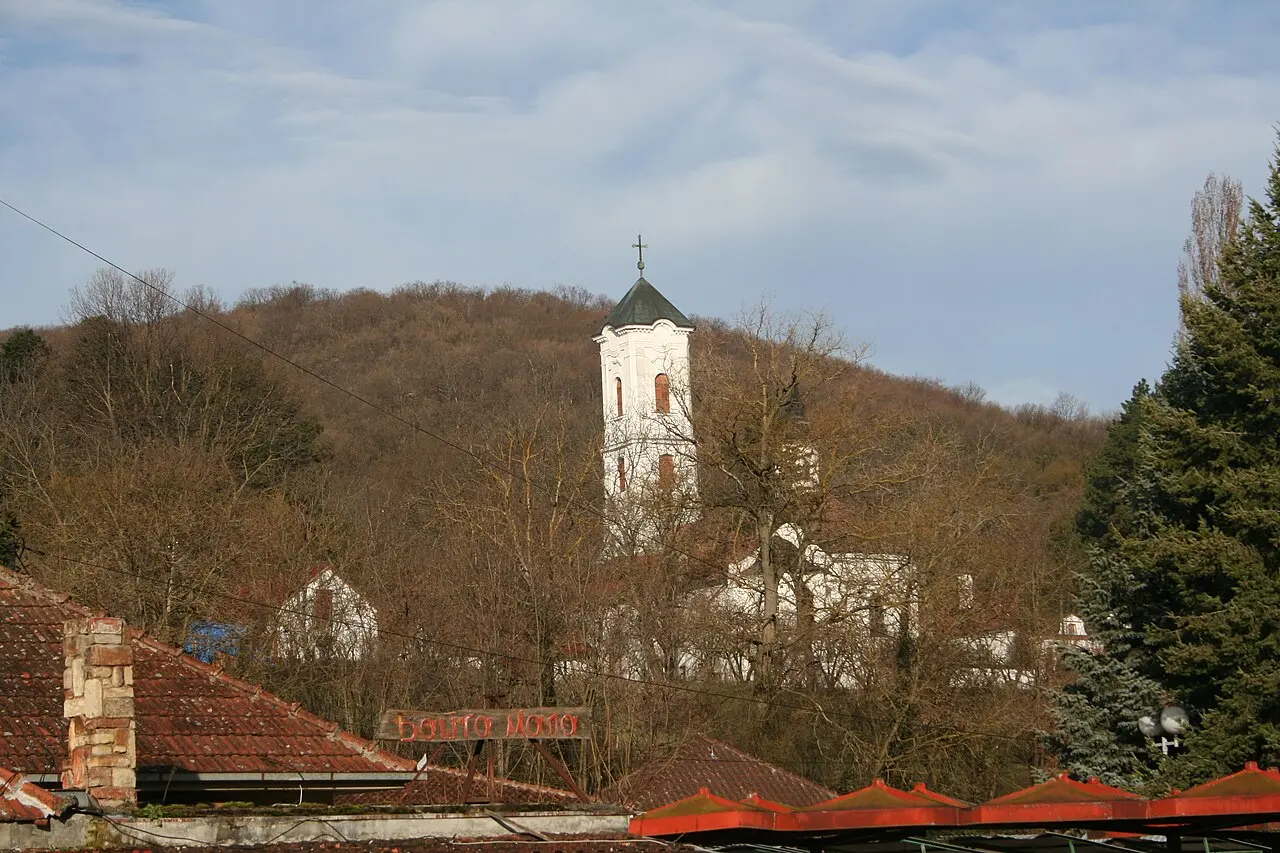
Jazak, on the southern slopes, forms an architectural whole with its Church of the Holy Trinity near the older 16th-century site. The tall baroque tower photographs well and the compound feels less crowded than the eastern “must” stops. Velika Remeta stands out for a seven-storey bell tower and a stone-and-red-brick bulk that reads almost like a small fortress. Farther west, Sisatovac and Beocin reward a second day more than a rushed first afternoon: Sisatovac for its fragmented baroque facades and 19th-century intellectual history, Beocin for 18th-century fresco masters and its French Park. That park is not a loose resemblance to French formal gardens, either - the diocese records that gardeners from Paris laid it out in 1924, on the slope beside the residential range. Novi Sad tourism treats the park as part of the grounds you walk, singles it out as a protected piece of garden architecture, and puts the monastery’s gates at 08:00-19:00 in summer, 09:00-16:00 in winter. It’s fine to save both for a return trip; they’re not weak, they’re simply farther from the Novi Sad loop.
Dress, hours and how not to be that visitor
These are living monasteries, and nobody publishes a tariff - not the diocese, not the Novi Sad or national tourism pages. That silence is worth reading carefully: it isn’t a promise that entry is free, it just means no one has put a price in writing. What the tourism office actually says about Krusedol is that it can be visited during daylight hours, with decent dress implied. In practice you leave a donation, or buy honey, rakija or an icon from the shop. Treat a “modest entrance fee” quoted on a travel blog as unverified, and ask at the gate.
Two or three houses, Krusedol and Mala Remeta among them, are described only as open in daylight hours. Most of the others publish real closing times, and they land earlier than you would guess: Novi Sad tourism has Novo Hopovo shut at 17:00 all year round, Grgeteg open 04:45-19:00 in summer and 04:45-17:00 in winter, Velika Remeta 06:00-18:00, Jazak 08:00-19:00 falling to 08:00-16:00 in winter. Look up the specific one you’re driving to instead of assuming the ridge keeps museum hours - a late-afternoon run at Novo Hopovo is the classic way to arrive at a locked door. Women are asked for a covered head, long skirt and long sleeves; men for long trousers and a shirt. Pets stay outside. Liturgies and daily prayers reshape access without warning, so treat mid-morning to mid-afternoon as the safe window and don’t argue at the gate if a service has closed the church for an hour. Nobody promises a wrap at the door, so turn up dressed for it rather than counting on one.
Keep voices low. Ask before photographing frescoes or people. Flash is usually unwelcome. Group visits at quieter houses such as Petkovica are best announced a day or two ahead by phone - the tourism pages list contacts for that purpose.
A workable day on the ridge
Start from Novi Sad. Drive the ridge road that locals still call Partizanski put and take the signed turnoffs rather than trying to hop by bus. A realistic morning is Krusedol → Novo Hopovo, with Grgeteg slotted between them if the road and timing cooperate. Lunch in Irig or back toward Sremski Karlovci, then either Vrdnik or a booked tasting from the wine tour page - not both if you’re also driving.
From Belgrade, budget 1 to 1.5 hours to reach the Novi Sad side of the ridge (about 80 km), then the same loop. Without a car, an organised monastery day tour is the sane option; our car rental in Serbia page covers the self-drive alternative. Hikers who want forest trails after the churches should switch to the national park guide rather than inventing a trail from a monastery parking lot.
Two monasteries done slowly beat six done as a checklist. Krusedol and Novo Hopovo already justify the drive; Grgeteg or Vrdnik is the bonus that turns a good morning into a full day without turning sacred houses into stamps in a passport.
Photos
On the map
The map loads on click - to keep the page lightweight.
The map didn’t load. Check your connection and refresh the page.
Admission and opening hours
- Admission price
- No published tariff - neither the diocese nor the Novi Sad and national tourism pages list an entrance fee. Visits run on donation and shop purchases; confirm at the gate
- Opening hours
- Varies by monastery (Novi Sad tourism, per-monastery pages): Novo Hopovo until 17:00 all year; Grgeteg 04:45-19:00 summer / 04:45-17:00 winter; Velika Remeta 06:00-18:00; Beocin 08:00-19:00 / 09:00-16:00 winter; Jazak 08:00-19:00 / 08:00-16:00; Staro Hopovo 08:00-20:00 / 08:00-17:00; Rakovac 07:00-19:30 / 07:00-17:00. Krusedol and Mala Remeta described only as daylight hours. Times flex around services
Modest dress required. Confirm interior access on arrival - these are living communities, not ticketed museums. Sixteen is the count of houses preserved to this day, not of intact survivals: Besenovo was levelled in May 1944 and is still being rebuilt.
Details checked: September 3, 2026
Distance
- Belgrade ≈80 km · 1-1.5 h by car to the Novi Sad side Reach Novi Sad first, then the Partizanski put ridge road. Individual monasteries are hard to link by bus.
- Novi Sad 20-40 min by car to the eastern cluster No single distance fits: by road it is about 20 km to Novo Hopovo, 22 to Krusedol, 23 to Vrdnik and 27 to Grgeteg. They sit on the ridge south of Novi Sad; a hire car or guided tour is the practical way to string stops.
Read also

What to see · 9 min read
Viminacium: Rome and Mammoths near Belgrade
Verified · September 3, 2026Roman Viminacium near Kostolac: adult tickets 1,050 RSD, hours by season, last tour two hours before close, and why the mammoth park is shut.

What to see · 12 min read
Vinca: The Neolithic Site on Belgrade's Doorstep
Verified · August 29, 2026Vinca's Belo Brdo site is 14 km downstream from Belgrade (16 km by road): 2026 hours, tickets, what the small museum shows, and how to get there.

What to see · 10 min read
Skull Tower of Niš: Story, Tickets, Visiting Tips
Verified · August 25, 2026Ćele Kula in Niš: 1809 Battle of Čegar, chapel hours, 300 RSD tickets and how to visit respectfully from the centre or INI airport.

What to see · 10 min read
Smederevo Fortress: Giant on the Danube
Verified · August 23, 2026Smederevo Fortress on the Danube: the 1428-1430 last capital of medieval Serbia, tickets, buses from Belgrade and pairing it with a Danube road trip.