
Smederevo Fortress: Giant on the Danube
Smederevo Fortress on the Danube: the 1428-1430 last capital of medieval Serbia, tickets, buses from Belgrade and pairing it with a Danube road trip.
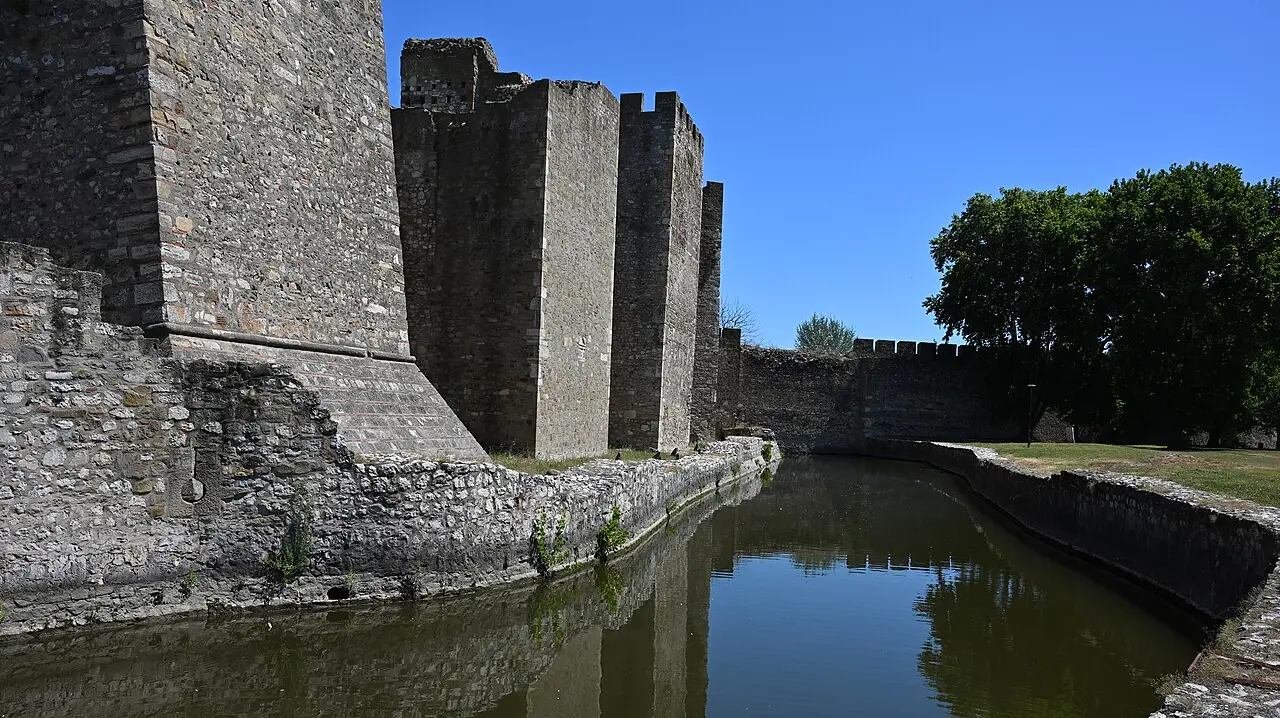
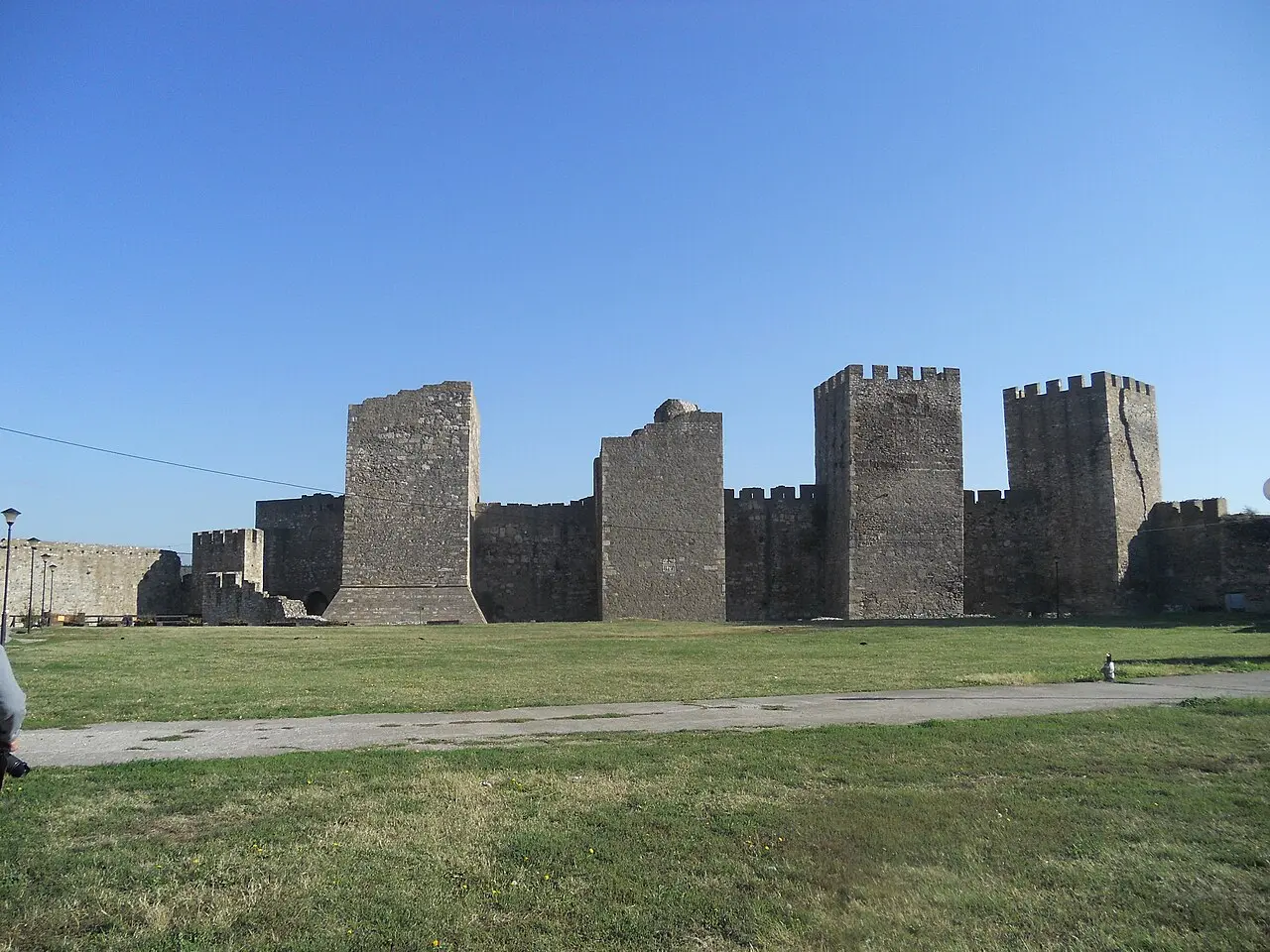
Smederevo Fortress is the medieval city Despot Đurađ Branković threw up in a panic between 1428 and 1430 when he had to hand Belgrade back to the Hungarians and still keep Serbia alive between two empires. It sits on a flat triangle where the little Jezava meets the Danube, about 45 km downstream of Belgrade, and for three decades it was the last capital of an independent Serbian state before the Ottomans took it in 1459. You don’t visit for cute lanes or a souvenir strip: you come for scale. The museum that runs the site classifies the walled enclosure, roughly 10.5 to 11 hectares of lowland masonry, as among the largest lowland fortifications in Europe - a claim you’ll see on the official fortress website, not tourist-board exaggeration.
Our roundup of best day trips from Belgrade slots Smederevo into the easy Danube-east pocket. This page is the full story: why the triangle plan, what survived the 1941 blast, how much the ticket costs today, and how to fold the fortress into a longer run downriver toward Golubac and the Iron Gate.
Why build a capital on a pancake?
Medieval Balkan rulers usually perched on rocks. Branković chose a plain at a river junction because politics demanded it. After Despot Stefan Lazarević died in 1427, Hungary took Belgrade back under an old treaty, and Serbia needed a new seat that stayed close to Hungarian Christendom while still placating the Ottomans to the south. Smederevo sits 45 km downstream of Belgrade and upstream of where the Velika Morava feeds the Danube - a choke point on the Balkan road network. Control here meant control of Danube traffic and a buffer against Hungarian raids into the Morava valley.
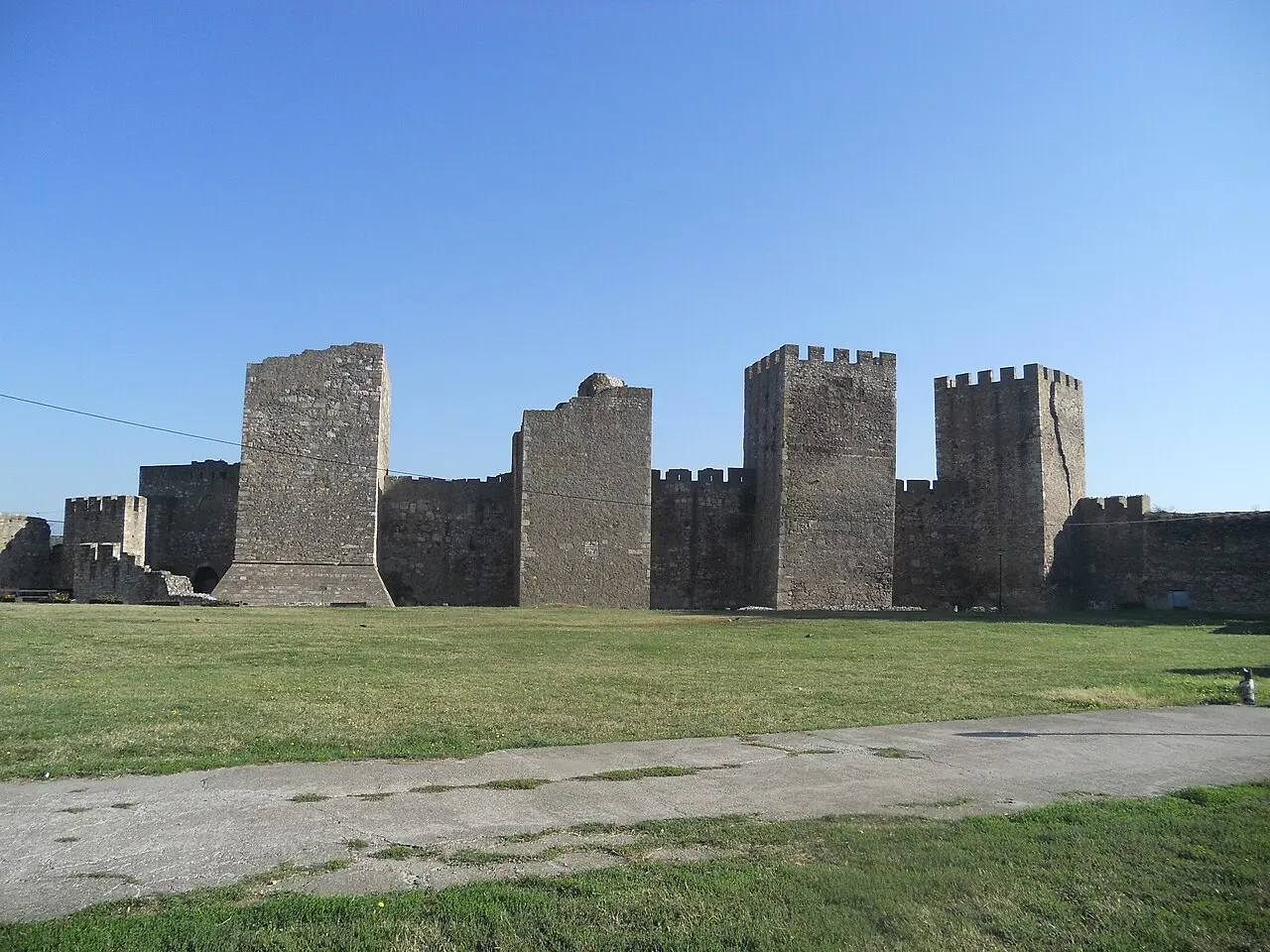
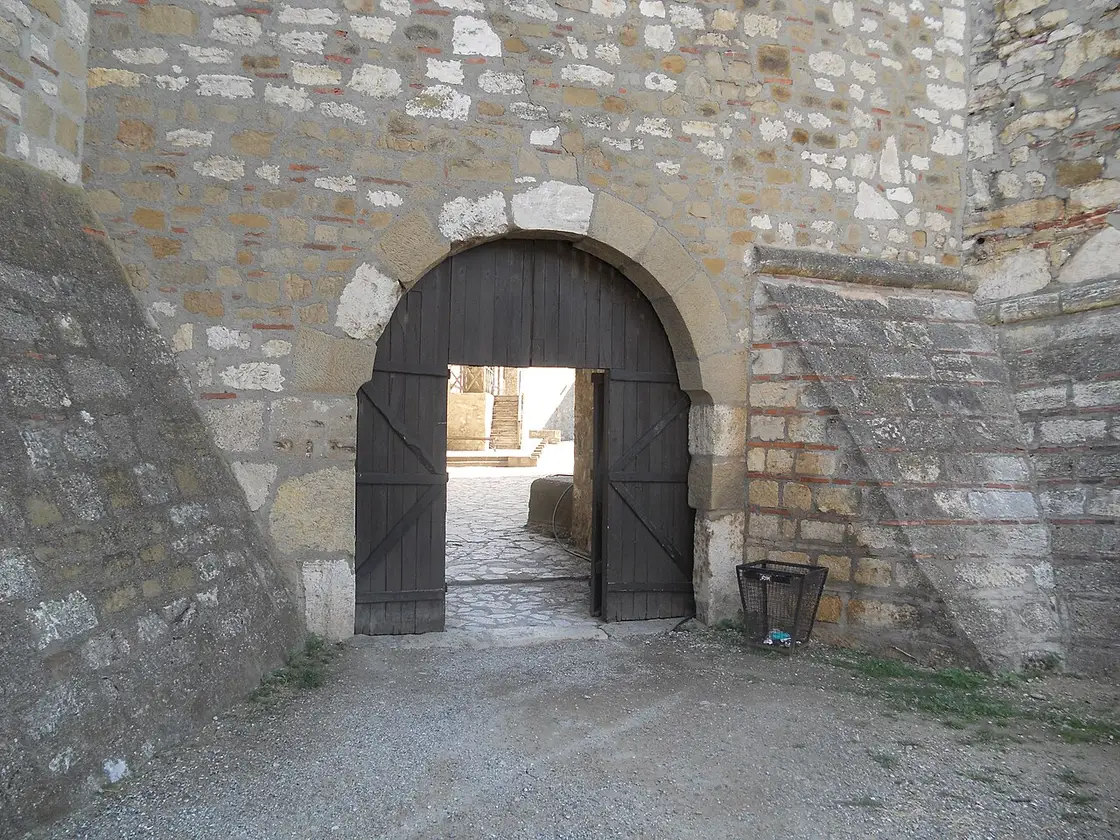
The terrain dictated the shape: a triangular ground plan with two sides on water and the third closed by ditches. Workers hauled stone from Roman quarries at Viminacium and Margum and even stripped medieval graveyards when local rock ran short - the official tourist board page is blunt about that sacrifice. What rose in two frantic years (1428-1430) was the Small Town (Mali grad): six towers, a donjon with walls over four metres thick, a throne hall facing the river, and a brick inscription tower naming Branković and the year 6938 in the Byzantine calendar (1430 AD). That’s among the rare immured inscription plaques anywhere in the former Byzantine world, and it’s still there on the Krstata kula (Cross Tower).
Small Town, Large Town, and a city that never quite happened
Branković’s dream was a full capital inside the walls, not just a bunker. Between 1430 and 1439 the Large Town (Veliki grad) spread along the Danube bank - the tourist board puts it at almost eleven hectares, with nineteen towers raised above twenty metres during a quieter spell (1444-1453). There was a court church, a colony of Dubrovnik merchants, goldsmiths, and the relics of Saint Luke, still the town’s patron. Venice signed a merchant treaty in the audience hall in 1435.
Then history accelerated. The Ottomans first took Smederevo in 1439; Branković bought it back in 1444; Mehmed II finished the job in 1459, erasing the medieval Serbian state. The fortress kept military value under the Turks - they added an outer wall with gun ports in the 1480s - but it never again held the weight Branković planned.
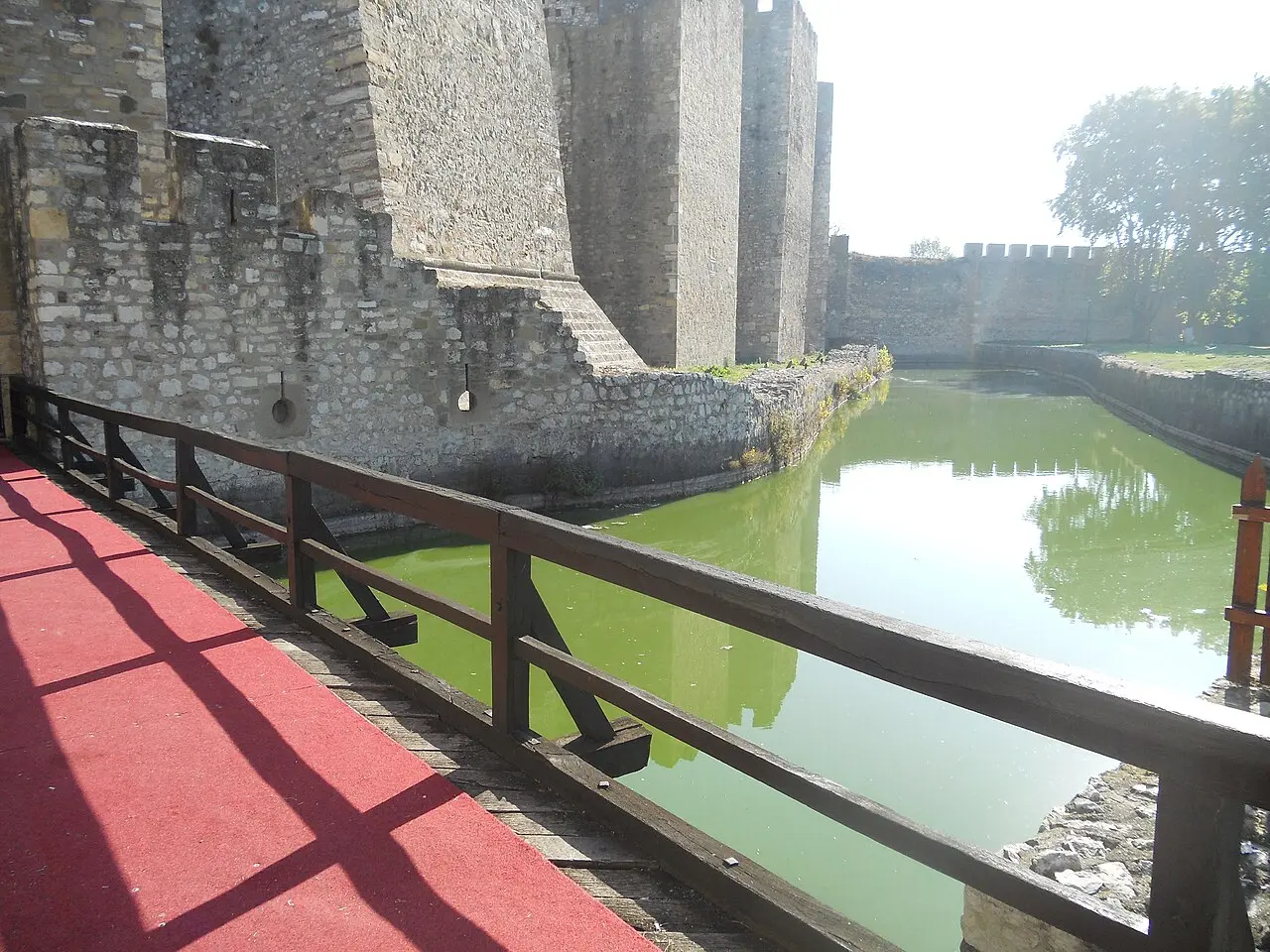
What you walk through today is mostly that fifteenth-century skeleton. The inner water trenches, the ship gate on the Danube side, and the long curtain facing the river are the parts that read clearest. Urban sprawl never swallowed the interior; the place stayed a fort, which is why the layout still teaches you how late medieval Serbia thought about defence.
The Danube Canvas and the hall where Venice signed
The showpiece on the river wall is the Danube Canvas (Dunavska platna): four tall double-arched windows carved in stone, mixing Gothic and Romanesque bifores. Behind them sat the Magna Sala Audientias, the reception hall where court life and diplomacy happened. The trading agreement with Venice in 1435 was signed in that room. Stand below the windows today and you’re looking at the same river view envoys saw - wide water, slow barges, and the flat Šumadija shore beyond.
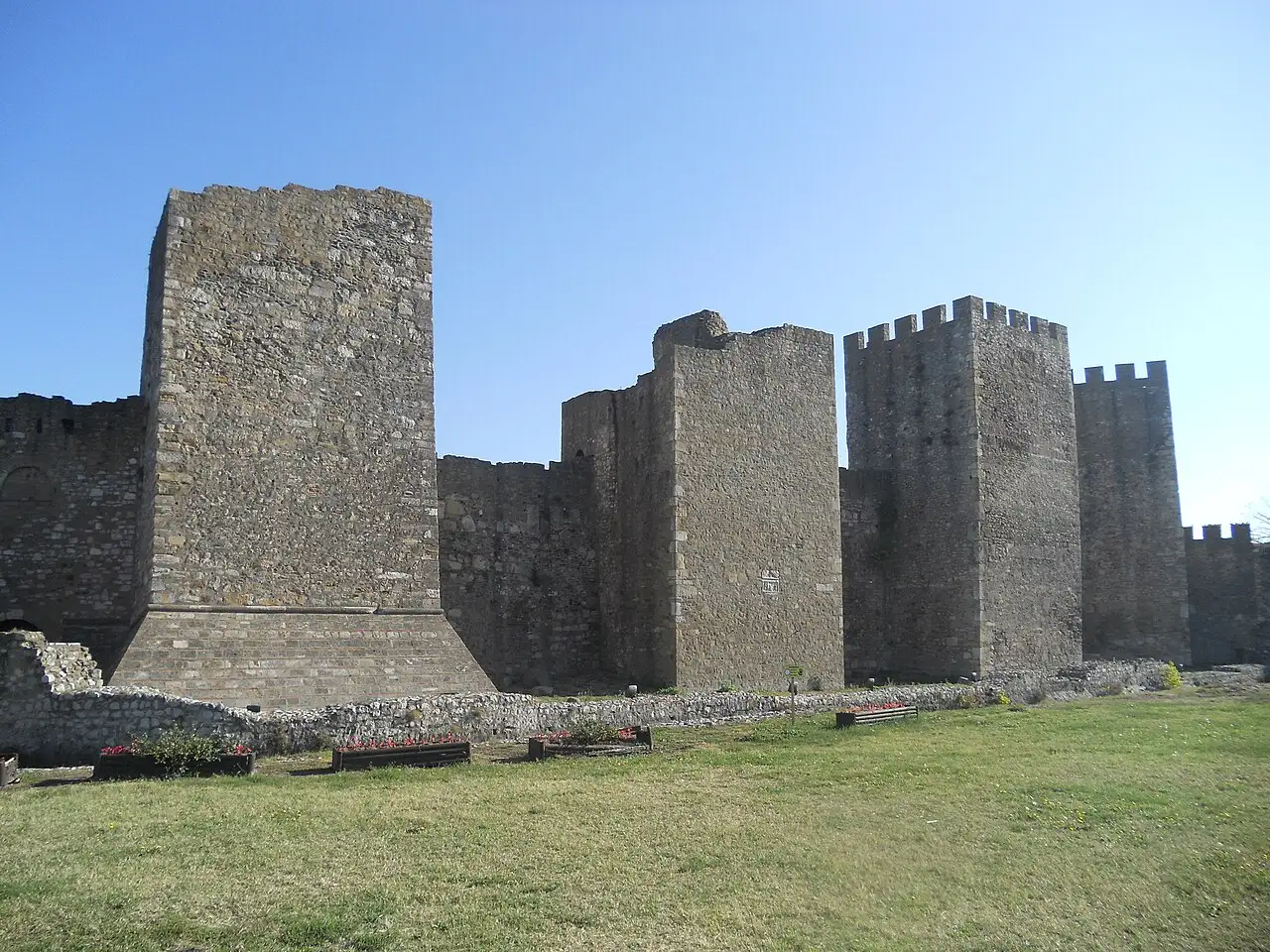
The donjon (Donžon kula) at the inner corner was the last refuge: absurdly thick walls, hidden posterns toward Hungary, and the spot where nobles retreated when Ottoman guns appeared. It is the tower that feels least like a photo backdrop and most like a place people once prayed in.
What the numbers mean (and what to ignore)
You’ll hear competing hectares and tower counts. Wikipedia’s infobox lists 11.3 hectares and about twenty-five towers along 1.5 kilometres of walls over two metres thick. The state museum site rounds to 10.5 hectares inside the walls. Treat both as the same order of magnitude: this is not a hilltop castle you circle in twenty minutes; it’s a fortified district you could get lost in.
Do not expect Petra-level restoration everywhere. Krstata kula and the Danube wall are in decent shape; chunks of the Large Town are scarred or open lawn. That honesty is part of the appeal - you’re not walking a theme park, you’re walking the last stand of a state.
The 1941 explosion that scarred the walls
Modern Smederevo’s worst day came on 5 June 1941, when German forces stored ammunition inside the fortress and the whole depot blew. Contemporary accounts and Wikipedia’s synthesis put the death toll at roughly 2,500 people, with thousands more injured and the southern curtain wrecked. Shrapnel reached suburbs ten kilometres away. Walk the south wall and you’ll still see the violence in the masonry - a reminder that this park is not only medieval.
After the war the complex slowly turned from barracks into a memorial and event space. Summer concerts, fairs, and joggers on the ramparts are normal now; the stage in the inner ward hosts cultural programmes. It gives the place a lived-in warmth you won’t find at Golubac, which was rebuilt for ticketing and zones.
Tickets, hours, and what is free
Practicalities are refreshingly simple by Balkan fortress standards. The outer park and Large Town lawns are open to walkers without a ticket - locals picnic, cycle, and film here year-round. The ticketed zone is the Small Town inner court (Mali grad), where the palace remains and the best tower climbs sit.
The Smederevo tourist organisation publishes current prices on smederevowelcome.com (checked August 2026):
- Small Town entry: 120 RSD adults, 60 RSD concession
- Hours: 08:00-20:00 daily
- Guided tours: about 1,000 RSD for an hour through the tourist office (+381 26 615 666, turizam.info@smederevo.org.rs)
That’s well under a euro for the inner ward - bring small dinar notes. Hours can shift for events; check visitsmederevo.com the week you travel. For an English narrative, book the guided tour ahead rather than assuming a random gate attendant will have time.
Getting there from Belgrade
Distance is modest: about 45 km east of the capital. By car it’s typically fifty to sixty minutes via the E75/A1 corridor toward Požarevac, then the Smederevo turnoff - the same axis our three-day Danube road trip uses on day one.
Bus is the realistic public option. There is no direct passenger train from Belgrade to Smederevo on the main line; Srbija Voz does run a Požarevac-Smederevo Regio shuttle on the branch line (timetable 2025/2026), but from Belgrade you’d need to reach Požarevac first, which kills the simplicity. Multiple operators (Lasta and others) run coaches from Belgrade’s bus stations roughly hourly, more often mid-morning and late afternoon; the ride commonly takes about an hour to an hour and fifteen minutes, and the Smederevo bus station sits opposite the fortress - five to ten minutes on foot to the gate. Buy tickets at the station counter the day you travel; have cash in dinars ready.
If you’re building a Danube day without driving, an organised tour that bundles Smederevo with Golubac or the gorge is often less fiddly than juggling two bus timetables. Our Iron Gate and Golubac guide covers the long eastern day; Smederevo is the calm half-day before you commit to that run.
Parking near the riverbank is mostly free along the rail tracks on weekends, but spaces fill fast in summer. SMS parking systems can frustrate foreign SIM cards - budget a short walk if payment apps fail.
How long to stay, and what to pair it with
A focused visit needs ninety minutes to two hours: outer walk, ticketed inner court, rampart photos, maybe a coffee on the waterfront. History buffs who read every plaque or book the guided tour should plan half a day.
Pairings that make sense on the ground:
- Same day, light: Smederevo alone from Belgrade by bus - back by late afternoon.
- Danube day one: Follow our Belgrade to Iron Gates road trip and treat Smederevo as the first stop before Roman Viminacium and Silver Lake - the stones in the fortress walls probably came from there.
- Fortress chain: Contrast this lowland triangle with hilltop Golubac at the gorge mouth (Iron Gate guide) or with Petrovaradin above Novi Sad if you’re collecting Serbian citadels.
Smederevo town itself is workaday - good ćevapi and river beer, not a boutique old town. The payoff is emptiness: on a weekday you’ll share the walls with school groups and fishermen, not tour-bus queues.
When to go
April through June and September through October give you green lawns, manageable heat, and long evening light on the Danube. July and August are fine if you start early; midday brick radiates heat. Winter walks can be atmospheric but muddy along the moats. There is no bad season for photos if you dress for wind off the river.
UNESCO placed the fortress on its tentative list in 2010, and Serbia classed it a Monument of Culture of Exceptional Importance decades earlier - status that matches what you feel on the ramparts: not a cute ruin, but a state-sized fort that lost its gamble against empires. If your Serbia trip has room for one quiet medieval site east of Belgrade, this is the one that earns the bus ride.
Photos
On the map
The map loads on click - to keep the page lightweight.
The map didn’t load. Check your connection and refresh the page.
Admission and opening hours
- Admission price
- Small Town (Mali grad): 120 RSD adults, 60 RSD concession; outer park free
- Opening hours
- Small Town 08:00-20:00 daily (checked Aug 2026)
Guided tours ~1000 RSD via Tourist Organization Smederevo; confirm hours on visitsmederevo.com before you go
Details checked: August 23, 2026
Distance ≈45 km · 50-60 min by car; ~1 h by bus
- Belgrade ≈45 km · 50-60 min by car; ~1 h by bus Buses from Belgrade are the practical public option; the station is a short walk from the walls. No direct train from Belgrade - see Getting there.
Read also

What to see · 12 min read
Vinca: The Neolithic Site on Belgrade's Doorstep
Verified · August 29, 2026Vinca's Belo Brdo site is 14 km downstream from Belgrade (16 km by road): 2026 hours, tickets, what the small museum shows, and how to get there.

What to see · 10 min read
Skull Tower of Niš: Story, Tickets, Visiting Tips
Verified · August 25, 2026Ćele Kula in Niš: 1809 Battle of Čegar, chapel hours, 300 RSD tickets and how to visit respectfully from the centre or INI airport.

What to see · 8 min read
Museum of Yugoslavia: House of Flowers Guide
Verified · August 21, 2026Belgrade Museum of Yugoslavia tickets and hours, House of Flowers (Tito), May 25 Museum and how to reach Dedinje.

What to see · 12 min read
Ada Ciganlija: Belgrade's River Island Beach
Verified · August 15, 2026How to reach Ada Ciganlija, when Lake Sava is lifeguarded, what you pay for, and where to swim on Belgrade's river-island beach.