
Fruška Gora: Monasteries, Wine & Hikes
Serbia's oldest national park beside Novi Sad: the monasteries of the "Serbian Athos", Sremski Karlovci wine and Bermet, and easy forest hikes.
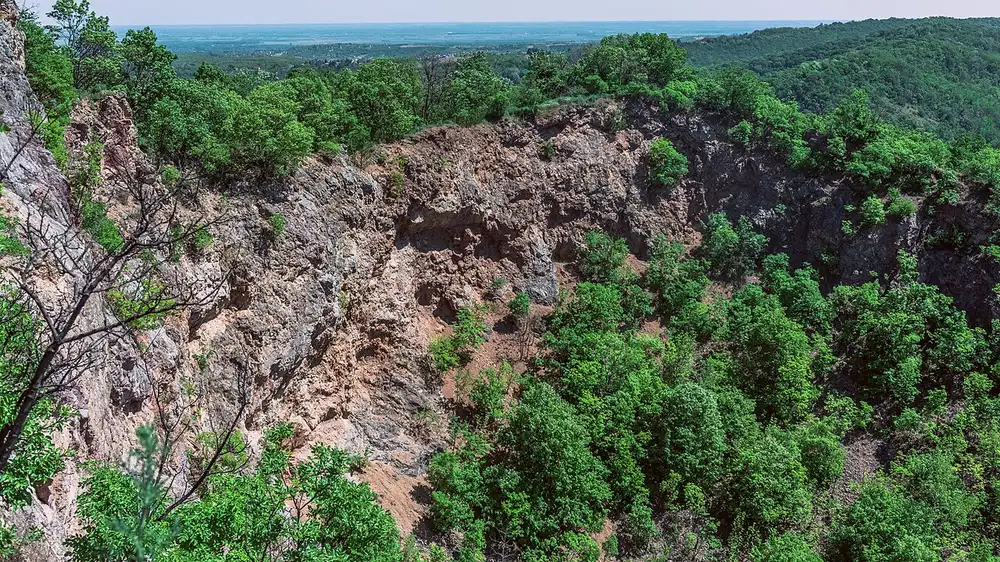
Fruška Gora is the low, green ridge that rises straight out of the flat Vojvodina plain just south of Novi Sad, and it’s the best half-day in northern Serbia for one simple reason: three completely different trips share the same set of forested hills. It was declared Serbia’s first national park back in 1960, and it packs in a cluster of centuries-old Orthodox monasteries - enough that people call it the “Serbian Mount Athos” - a proper little wine country around the baroque town of Sremski Karlovci, and hundreds of kilometres of gentle walking and cycling trails through oak and lime woods. None of it is dramatic in the alpine sense; the whole range tops out at a modest 539 metres. What it offers instead is an unhurried day of frescoes, tastings and shade, ten minutes from a city. For the cellars themselves - prices, booking and who pours without an appointment - see the Fruska Gora wine tour.
Because those three threads rarely overlap on the ground - the monasteries, wineries and trailheads are scattered across the hills - the practical question is less “what to see” than “how to string it together in a day”. Sort the logistics, and Fruška Gora turns from a name on the map into one of the easiest, most rewarding day trips in the country.
Where is Fruška Gora, and how do you visit it?
Fruška Gora sits in Syrmia (Srem), the wedge of land between the Danube and the Sava, with its northern slopes running right down to the Danube and the city of Novi Sad on its northeastern foot - barely 10 km from the first trailheads. That closeness is the whole point: this is the day trip you do from Novi Sad, and it slots neatly onto the end of a city break there. The busy wine road and the big monasteries all cluster on this northern side; the quiet southern slope above the Sava sees a fraction of the traffic, and if you are driving up from Belgrade rather than Novi Sad, our Srem and Sava day loop pairs those hushed south-side monasteries with Roman Sirmium and the Zasavica wetland for a very different day in the same Srem.
From Belgrade it’s about 80 km, roughly an hour to an hour and a half by road up to the Novi Sad side. Wherever you start, the honest advice is the same: come with a car, or on an organised tour. The range is threaded by a single scenic ridge road - the old Partizanski put (“Partisans’ road”) - that links most of the monasteries and viewpoints, but the individual sites are spread out and poorly served by public transport. Trying to hop between monasteries by bus is a frustrating way to spend a day; a hire car or a guided monastery-and-wine trip does the linking for you.
A realistic day looks like this: two or three monasteries in the morning, a long lunch, and a winery or the old town of Sremski Karlovci in the afternoon - you don’t need to rush any of it.
The monasteries: Serbia’s “Holy Mountain”
The thing that makes Fruška Gora unique is the sheer concentration of monasteries, and that density earned the range its nickname - not just tourist-board flourish, either: the Serbian Orthodox Church officially declared Fruška Gora a Holy Mountain on 12 October 2003. These are smaller and later than the great medieval houses of the south; for those, see our roundup of the most beautiful monasteries in Serbia. For how many there really are, which ones deserve your morning, the opening times each one publishes and what to wear through the gate, we keep all of it on the Fruška Gora monasteries guide.
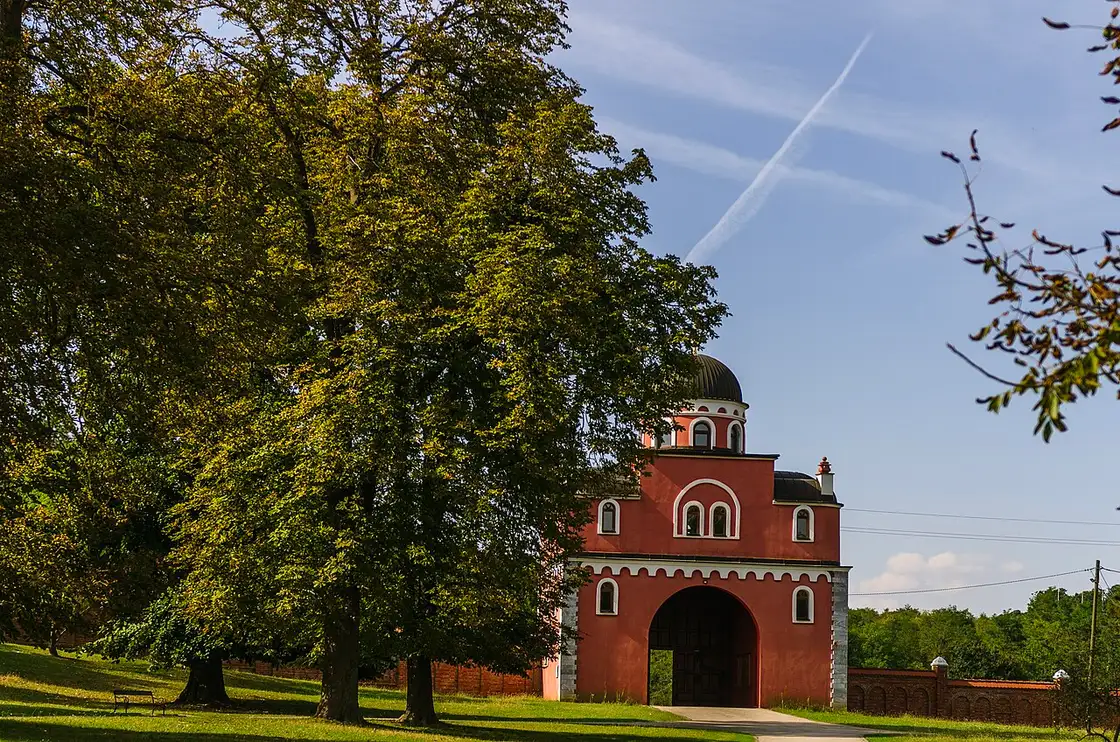
The four below are the ones most day trips are built around.
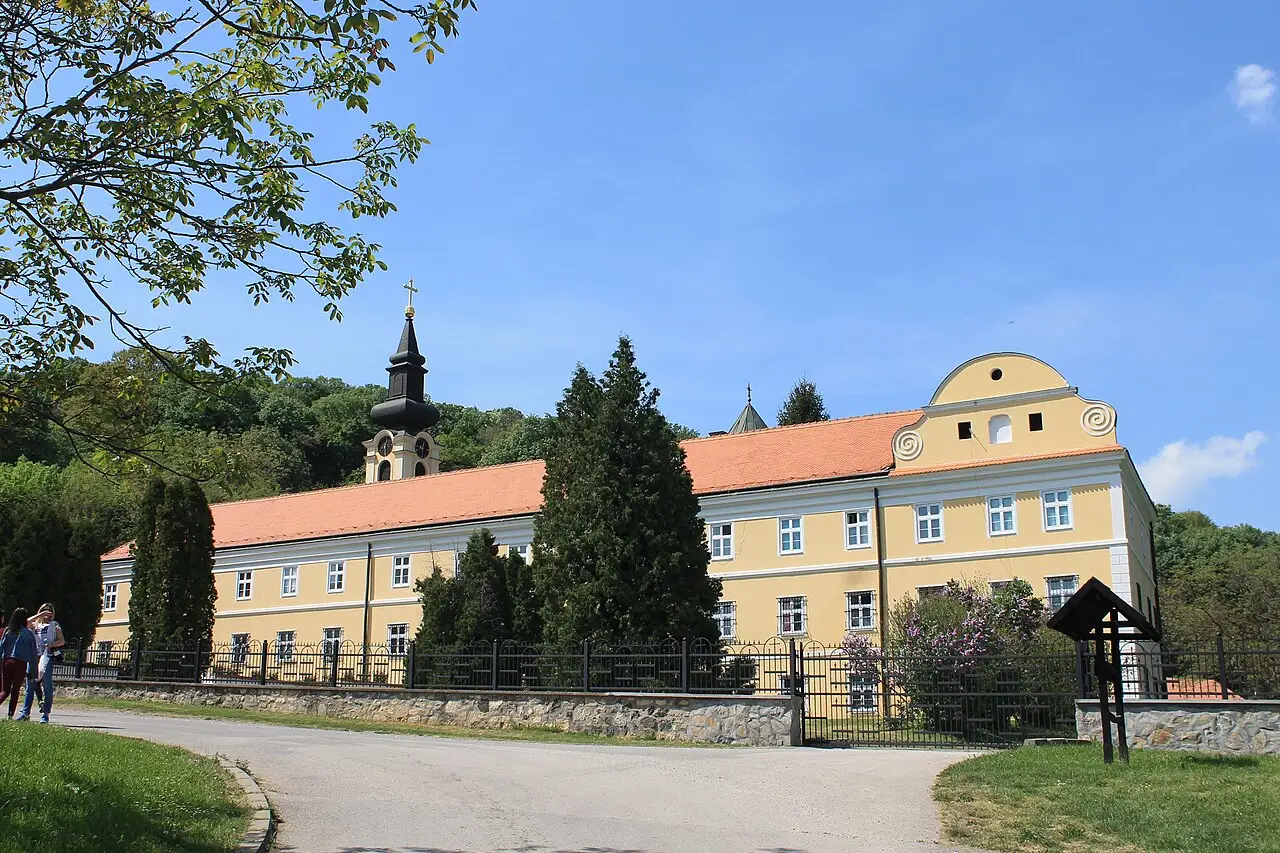
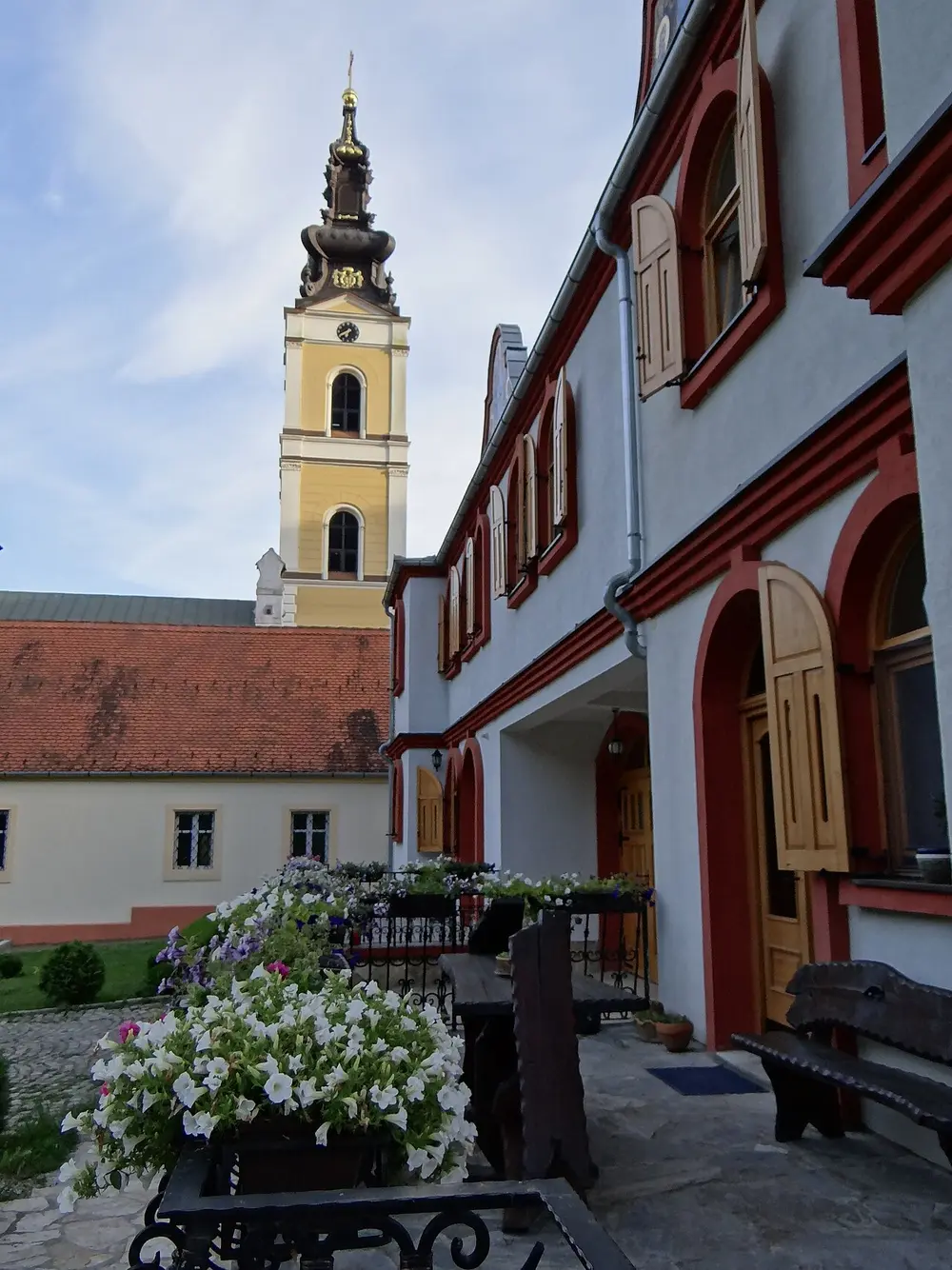
These are living communities rather than museums, and they expect modest dress and quiet - don’t treat them like open-air galleries. The monasteries guide has the dress code, the published hours and the etiquette in full.
The wine country and Bermet
Fruška Gora’s south-facing slopes have grown vines since Roman times, and the heart of it all is Sremski Karlovci, a jewel of a baroque town at the foot of the hills, ten minutes from Novi Sad. It’s tasting country: the Sremski Karlovci tourist office lists 20 registered cellars, 15 with a tasting (checked 16 August 2026), with more scattered along the Fruška Gora roads, most pouring the crisp whites the region does best - Riesling, Traminer and the like - and happy to welcome visitors if you call ahead or turn up with a tour.
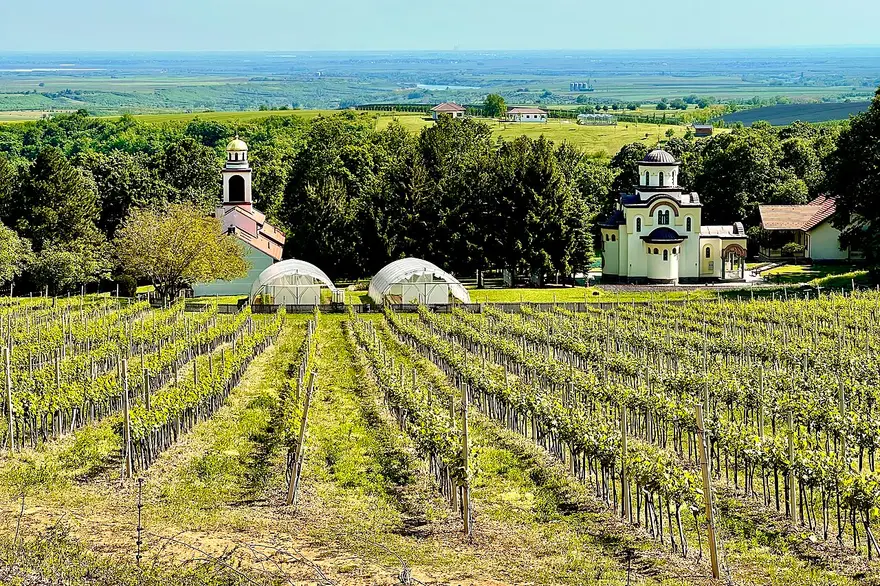
The bottle to try, though, is the local oddity: Bermet. It’s a dark, spiced dessert wine - somewhere between a sweet vermouth and a mulled wine, steeped with a secret blend of herbs and spices, at a hefty 16-18% alcohol - and the exact recipes are guarded by a handful of Karlovci families. Serve it chilled after a meal, or as an aperitif.
Every cellar will tell you the same story, worth repeating with the caveat attached: Bermet is said to have been on the wine list of the Titanic. It was certainly a favourite at the Habsburg court in Vienna and reportedly with the Russian imperial family - Empress Maria Theresa is on record ordering it by the barrel. The Titanic claim comes from reconstructed cargo lists that name “Ausbruch”, the Austro-Hungarian sweet-wine style Bermet belongs to, among the wine stored in the Southampton warehouse. Whether that Ausbruch was specifically Karlovci Bermet or a similar wine from elsewhere in the old empire, nobody can now prove - so enjoy it as a great yarn, not a documented fact. Either way, it’s a genuinely unusual thing to taste, and you can only really get it here.
Hiking, cycling and linden honey
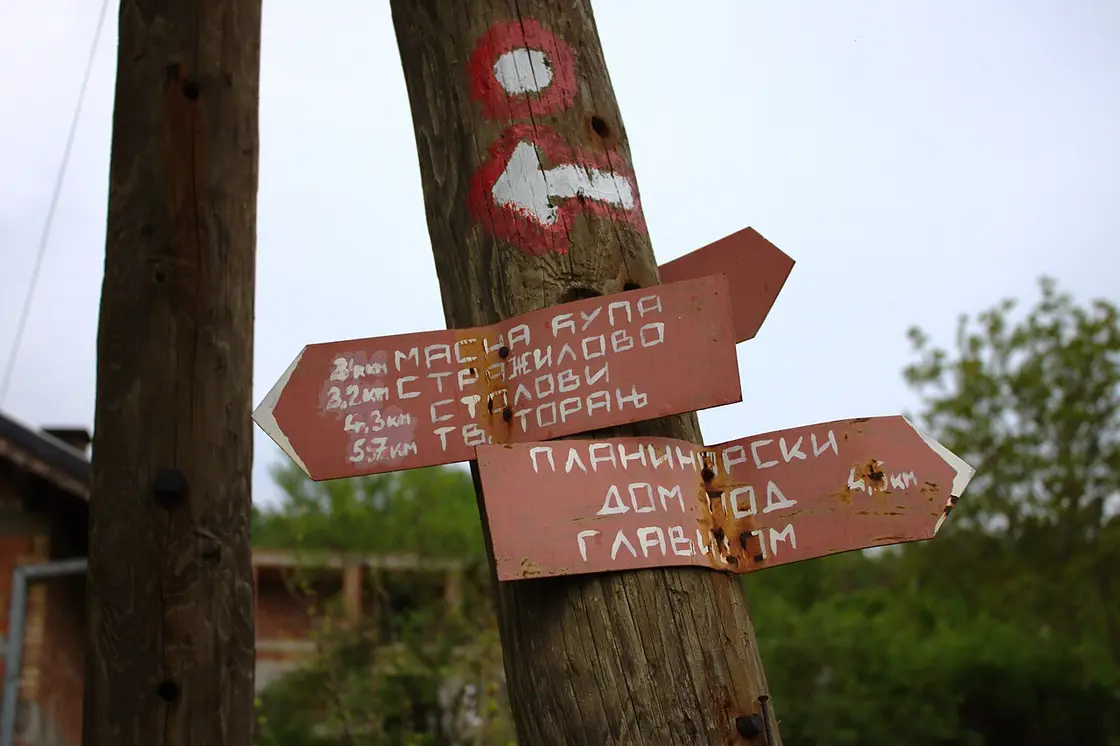
Between the monasteries and the wineries, the hills themselves are the third reason to come. Fruška Gora is a bona-fide hiking and mountain-biking destination, crisscrossed with well-marked forest trails - and it has the numbers to prove it. The Fruškogorski maraton, a mountaineering event first run in 1978, now fills a weekend at the end of April with more than 18,000 walkers and trail runners tackling 19 different routes, from an easy family loop up to a brutal 134 km ultra. You don’t need to enter a race to use the network: the paths are open year-round, waymarked with the marathon’s distinctive red heart on a white circle, and the terrain is gentle enough for a casual day walker. It is the softest walking in the country, and our overview of the best hiking in Serbia shows where it sits against the tougher mountain trails.
Those woods have a claim to fame of their own: Fruška Gora holds one of the highest concentrations of linden (lime) forest in Europe. In late spring the flowering limes scent whole hillsides, the bees go to work, and the result is the region’s prized linden honey - pale, fragrant and sold at monastery gates and roadside stalls all over the range. Buy a jar; it travels well and it’s the honest souvenir of the place. If you’d rather cover ground than walk it, the ridge road and the quiet lanes off it make for lovely, undemanding cycling, with a vineyard or a monastery every few kilometres to justify a stop.
For a wilder, higher slice of Serbian nature once you’re done here, the clifftop viewpoints and canyon of Tara National Park out west are the mountain counterpoint to Fruška Gora’s gentle hills - and if you’re basing yourself in the capital, this ridge is one of the easiest of the best day trips from Belgrade. You’ll find the rest of the country’s landmarks in the attractions section.
Planning a day: the practical version
The easiest way to enjoy Fruška Gora is to base yourself in Novi Sad and give the hills a full day, or a relaxed afternoon if you’re short on time. Our Novi Sad travel guide covers the city itself - Freedom Square, the Danube beach and the great Petrovaradin Fortress across the river - and Fruška Gora is the obvious extra day when a single day in town leaves you wanting more.
If you’re driving, take the Partizanski put along the ridge and simply pull off for whichever monastery, viewpoint or cellar catches your eye - Krušedol and Novo Hopovo are both easy stops, and Sremski Karlovci makes a natural lunch. If you’d rather not juggle monastery opening times, tasting bookings and mountain lanes, a guided monastery-and-wine day tour does all the stitching for you and lets everyone enjoy the Bermet. Spring and autumn are the loveliest seasons - wildflowers and flowering limes in May and June, gold forests and the grape harvest in September and October - but the shade of the woods makes it a fine escape even at the height of a Vojvodina summer.
Monasteries in the morning, a cellar and a long lunch by early afternoon, then a walk through the lime woods to shake it off: that rhythm is why Fruška Gora remains the most quietly satisfying day out in the north of the country.
Photos
On the map
The map loads on click - to keep the page lightweight.
The map didn’t load. Check your connection and refresh the page.
Distance
- Belgrade ≈80 km · 1-1.5 h by car Easiest self-driven or on an organised monastery-and-wine day tour; individual monasteries are hard to reach by public transport.
- Novi Sad ≈10 km · 20-30 min by car The range starts on the southern edge of Novi Sad; the classic half- or full-day trip from the city.
Read also

What to see · 10 min read
Fruska Gora Monasteries: Which to Visit
Verified · September 3, 2026Sixteen preserved Orthodox monasteries on Fruska Gora: Krusedol, Novo Hopovo, Grgeteg and Vrdnik, plus dress code and a day route from Novi Sad.

What to see · 9 min read
Viminacium: Rome and Mammoths near Belgrade
Verified · September 3, 2026Roman Viminacium near Kostolac: adult tickets 1,050 RSD, hours by season, last tour two hours before close, and why the mammoth park is shut.

What to see · 12 min read
Vinca: The Neolithic Site on Belgrade's Doorstep
Verified · August 29, 2026Vinca's Belo Brdo site is 14 km downstream from Belgrade (16 km by road): 2026 hours, tickets, what the small museum shows, and how to get there.

What to see · 10 min read
Skull Tower of Niš: Story, Tickets, Visiting Tips
Verified · August 25, 2026Ćele Kula in Niš: 1809 Battle of Čegar, chapel hours, 300 RSD tickets and how to visit respectfully from the centre or INI airport.