
Studenica Monastery: Serbia's Greatest UNESCO Site
Serbia's oldest and grandest monastery: Studenica's white marble churches, the 1209 Crucifixion and 1314 King's Church frescoes, plus how to visit.
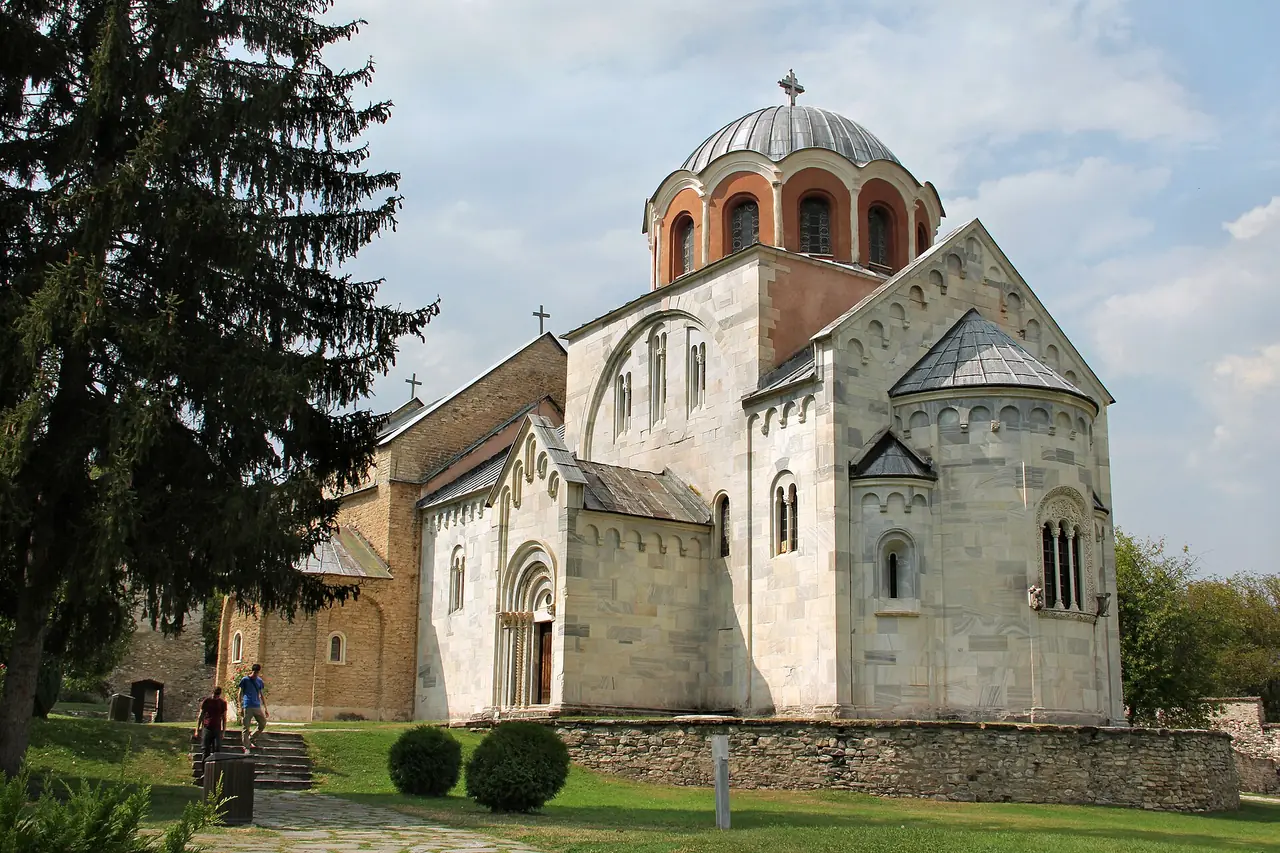
Studenica is the oldest, largest and most revered monastery in Serbia, and it’s free to walk into. Founded in the late 12th century by Stefan Nemanja, the man who built the medieval Serbian state, it sits in a quiet river valley about 39 km southwest of Kraljevo and has been a working monastery for more than eight centuries. UNESCO put it on the World Heritage list in 1986 for two things above all: a pair of churches sheathed in white marble, and some of the finest Byzantine frescoes anywhere, including a Crucifixion painted in 1209 that art historians rank among the greatest in the Orthodox world.
The thing to grasp before you go is that Studenica isn’t a ruin or a museum with a ticket desk. It’s a living community of monks behind a ring of walls, which is exactly why it feels different from a castle or a gallery: you come in as a visitor to someone else’s home. That also shapes the practicalities - modest dress, quiet voices, hours that bend around services - and it’s why the two small churches, not their size, are the reason to make the long drive out here.
Why Studenica matters
To understand why Serbs treat this place almost as a national shrine, you need the founder. Stefan Nemanja was the Grand Prince who pulled the Serbian lands into a single state in the twelfth century, and Studenica was his own foundation, built as his mausoleum. In 1196 he handed power to his son and took monastic vows here as the monk Simeon; he was later canonised as Saint Simeon. His youngest son, Rastko, became the monk Sava - Saint Sava, the first archbishop of the Serbian church and the country’s patron saint, who wrote the rule that governed monastic life at Studenica and made it the mother-house of Serbian monasticism.
So this one walled compound holds the founder of the state and is bound up with the founder of the national church. That’s a lot of national identity concentrated in a small valley, and it’s why Studenica is the yardstick against which every other Serbian monastery is measured - see how it stands beside the rest in our roundup of the most beautiful monasteries in Serbia. Our guide to the Temple of Saint Sava in Belgrade covers the other end of that story, the vast modern church raised in Sava’s name.
The white marble Church of the Virgin
The building that stops you first is the Church of the Virgin (Bogorodicina crkva), begun around 1190. What makes it unusual is the material: where most medieval Serbian churches are brick and stone, this one is faced in gleaming white marble, and the effect on a sunny day is startling - it almost glows against the green hills. Look closely at the portals and windows and you’ll find delicately carved Romanesque stonework, lions and vines and figures, the sign of Western craftsmen working alongside Byzantine ones. This blend of a Byzantine plan with Romanesque marble carving is what art historians call the Raska school, and Studenica is its founding monument.
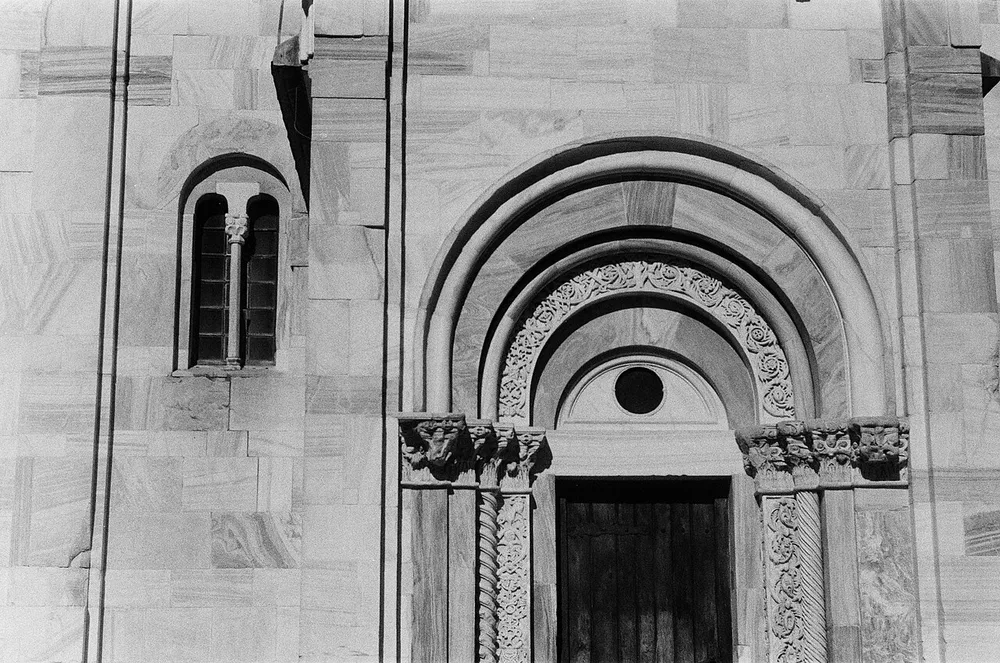
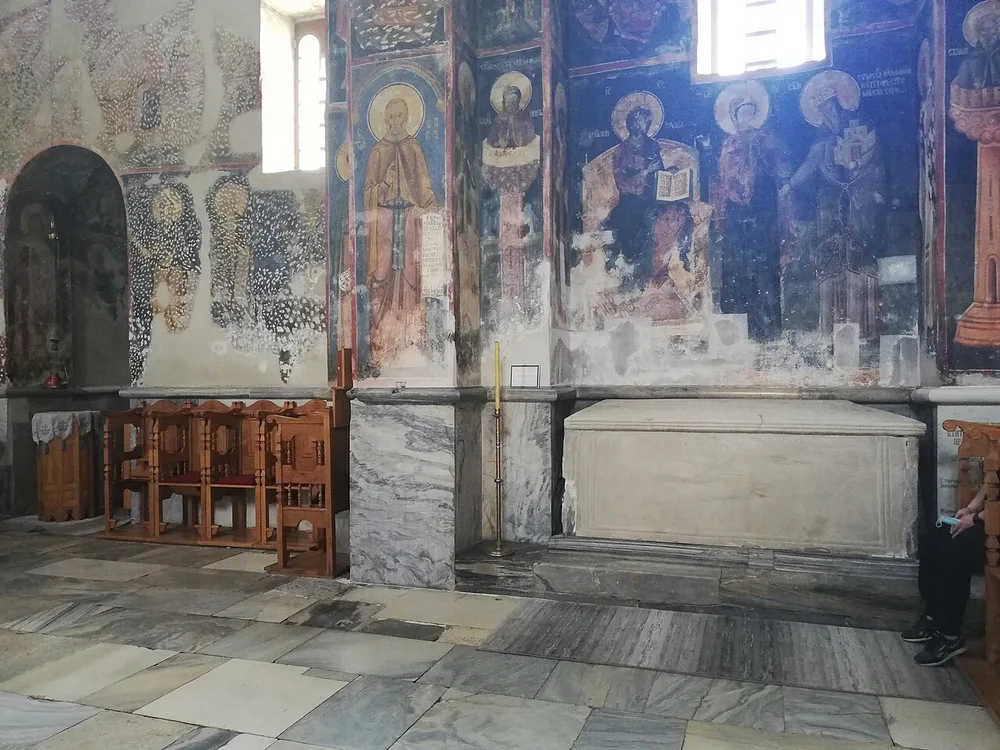
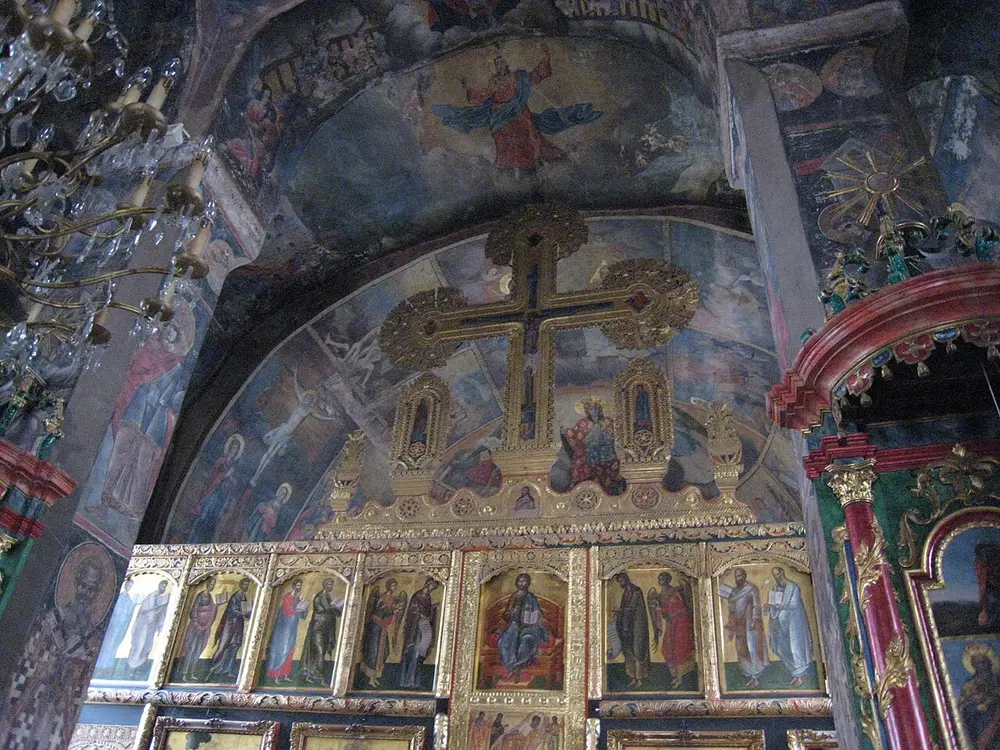
Step inside and the walls carry the payoff. The interior frescoes date to the early thirteenth century, and the single image everyone comes for is the Crucifixion of 1209, set against a deep blue ground: a spare, monumental scene that’s regularly called one of the high points of European painting of its age. Do not rush it - this is the room where the whole monastery began. In the same church lies the marble tomb of Stefan Nemanja, the founder himself, brought back here by his son Sava.
The King’s Church and its frescoes
The second church is easy to miss because it’s so small, and missing it would be the real mistake. The King’s Church (Kraljeva crkva), a tiny cube of a building dedicated to Saints Joachim and Anna, was added in 1314 by King Milutin, a century after the main church. Its size is deceptive: inside is one of the most complete and celebrated fresco cycles in Byzantine art, a densely painted Life of the Virgin that fills every surface.
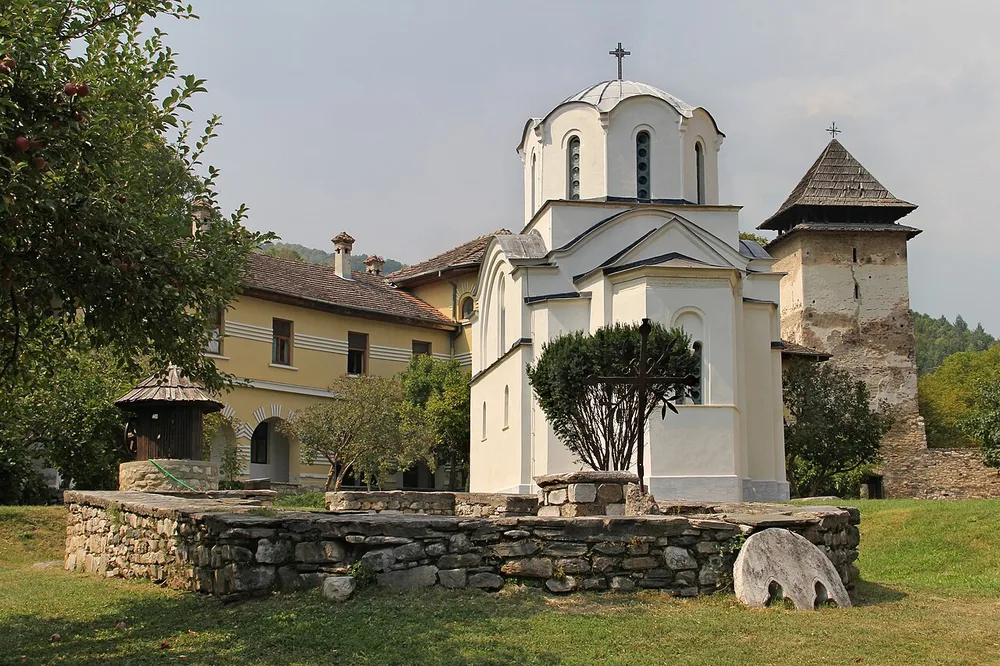
These frescoes are the work of masters brought from Thessaloniki, usually identified as the painters Michael Astrapas and Eutychios, and their soft, human faces and confident storytelling mark a high point of the Palaiologan revival in painting. If you only have the patience for one interior, the specialists will tell you to give it to this little church rather than the grander one next door. A third, even smaller Church of St Nicholas nearby keeps fragments of frescoes from the twelfth and thirteenth centuries, so within a few paces you can walk through three overlapping centuries of medieval art.
How to get to Studenica
Here is the honest catch: Studenica is remote, and there’s no train and no direct bus to the gate. The monastery sits up the Studenica river valley, off the main Ibar-valley road that runs south from Kraljevo toward Raska and Novi Pazar. The nearest town, Usce, is about 12 km down at the valley mouth.
With a car it’s straightforward: from Belgrade reckon on roughly three hours, taking the A2 motorway toward Cacak and Kraljevo, then the Ibar road and the signed Studenica turnoff. From Kraljevo it is about 50 minutes, and from Novi Pazar, the base for the rest of Serbia’s UNESCO south, a little over an hour. Without a car you can reach Usce by bus and then use a local bus (only a handful a day) or a taxi for the last stretch up the valley - ask locally and confirm return times, because it’s a long way to be stranded. Frankly, the two easiest ways to see Studenica are your own hire car or an organised day tour from Belgrade, which usually bundles it with the nearby Zica monastery. Our guides to renting a car in Serbia and getting around Serbia cover both angles.
Visiting: hours, dress and how long
Entry is free - there’s no ticket, though a donation is welcome at a working monastery. The churches are generally open from about 08:00 to 17:00, but times flex around services and the seasons, and a curator often shows visitors the interiors; groups are asked to call ahead. Because monks live and worship here, dress modestly: shoulders and knees covered for everyone, and a wrap is usually lent at the gate if you turn up in shorts. Keep your voice down, and ask before photographing frescoes, as flash is often not allowed.
An hour and a half is enough to see all three churches without hurrying, and it is worth lingering to walk the grassy compound inside the walls and buy honey or rakija from the monks. If you’re building a wider trip, Studenica pairs naturally with the mountain resort of Kopaonik an hour or so east, and it’s the anchor of Serbia’s monastic south; for the fuller picture of how to fit it in, see our 7-day Serbia itinerary. If your taste for painted churches is only whetted, the wine-country monasteries of Fruska Gora in the north are the other great cluster. Come for the marble, stay for the 1209 Crucifixion, and give the little King’s Church the ten quiet minutes it has earned over seven hundred years.
Photos
On the map
The map loads on click - to keep the page lightweight.
The map didn’t load. Check your connection and refresh the page.
Admission and opening hours
- Admission price
- Free (working monastery; donations welcomed)
- Opening hours
- Roughly 08:00-17:00 daily; curator-guided, groups should call ahead
Modest dress required (shoulders and knees covered; wraps are often lent at the gate)
Details checked: July 21, 2026
Distance ≈230 km · ~3 h by car
- Belgrade ≈230 km · ~3 h by car A2 motorway to Cacak/Kraljevo, then the Ibar valley road toward Raska and the Studenica turnoff. Best with a car or on a day tour, often paired with Zica.
Read also

What to see · 10 min read
Fruska Gora Monasteries: Which to Visit
Verified · September 3, 2026Sixteen preserved Orthodox monasteries on Fruska Gora: Krusedol, Novo Hopovo, Grgeteg and Vrdnik, plus dress code and a day route from Novi Sad.

What to see · 9 min read
Viminacium: Rome and Mammoths near Belgrade
Verified · September 3, 2026Roman Viminacium near Kostolac: adult tickets 1,050 RSD, hours by season, last tour two hours before close, and why the mammoth park is shut.

What to see · 12 min read
Vinca: The Neolithic Site on Belgrade's Doorstep
Verified · August 29, 2026Vinca's Belo Brdo site is 14 km downstream from Belgrade (16 km by road): 2026 hours, tickets, what the small museum shows, and how to get there.

What to see · 10 min read
Skull Tower of Niš: Story, Tickets, Visiting Tips
Verified · August 25, 2026Ćele Kula in Niš: 1809 Battle of Čegar, chapel hours, 300 RSD tickets and how to visit respectfully from the centre or INI airport.