
Novi Pazar: Gateway to Serbia's UNESCO South
Novi Pazar travel guide: the Ottoman bazaar, the oldest church in Serbia, Djurdjevi Stupovi and Sopocani, plus how to get there and where to stay.
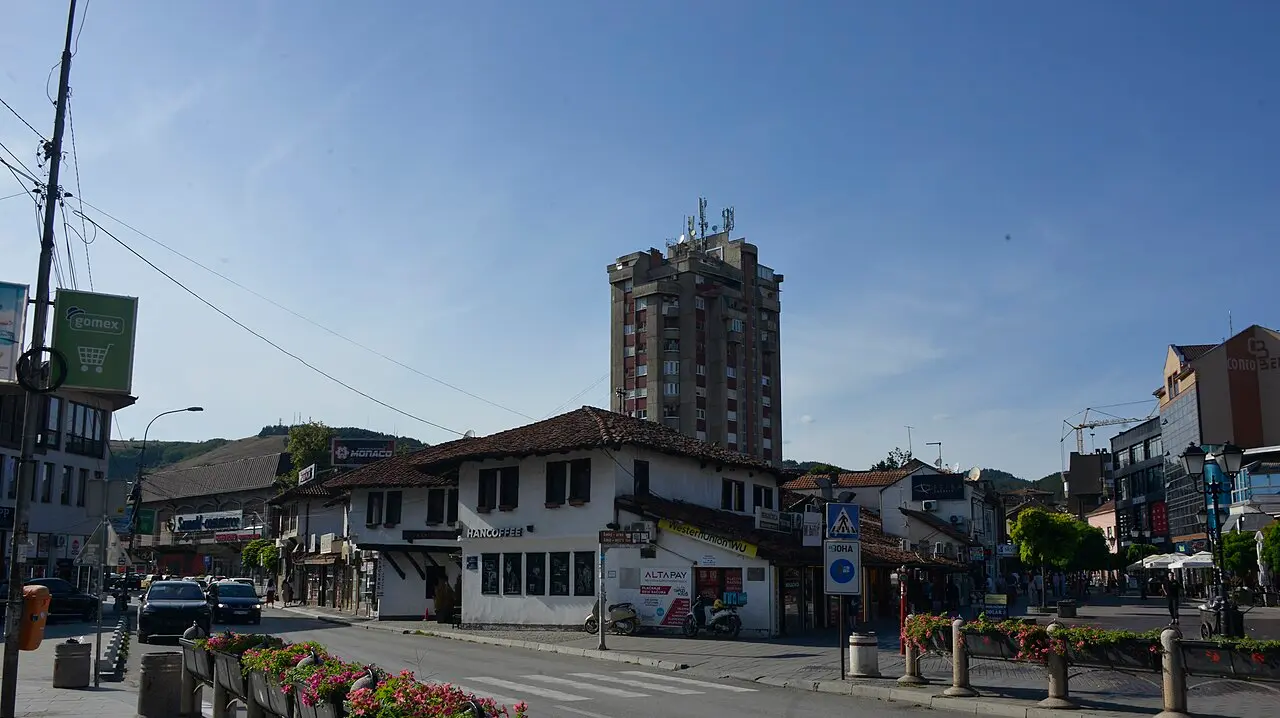
Novi Pazar is the base for the densest cluster of UNESCO-listed medieval sites in Serbia, and it’s also the most Ottoman town in the country. Within twenty minutes of the centre you can stand in the oldest intact church in Serbia, walk round a monastery founded about 1170, and reach Sopocani, whose 13th-century frescoes specialists rate above anything else painted here. In the middle of town, meanwhile, a 16th-century mosque, a ruined Turkish bath and a caravanserai sit within a few streets of each other.
That combination is the reason to come. The valley of the Raska river was the cradle of the medieval Serbian state - Stari Ras, the first capital, is on the hill outside town - and after 1461, when the Ottoman general Isa-beg Ishakovic founded the town here (the same man who founded Sarajevo), it grew into the trading centre of the Sandzak. Both layers are still standing, a short drive apart, and almost no foreign itinerary includes them.
Getting there, and how long to stay
Novi Pazar sits in southwestern Serbia, in the Raska District, in a bowl between the Golija and Rogozna mountains. From Belgrade it’s 276-290 km depending on the route, roughly three and three-quarter to four hours by car down the Ibar highway through Kraljevo and Raska. Buses cover the same corridor in about five and a half hours; there are several a day, but frequencies shift with the season, so check the day before rather than turning up at the station. There’s no passenger train.
A car changes this trip completely. The three great monuments are all outside the town - Petrova crkva on its terrace, Djurdjevi Stupovi on a hill a couple of kilometres on, Sopocani 15 km west - and none of them is on a useful bus route. Taxis are cheap, but agree the fare or ask for the meter before you set off, and a half-day of hops between the three works if you would rather not drive; our guide to car rental in Serbia covers the alternative.
One night is enough for the four headline sites without rushing. Two lets you add the spa, a slow morning in the bazaar and the drive north to Studenica, roughly an hour and a half away.
The old quarter: mosque, hammam and han
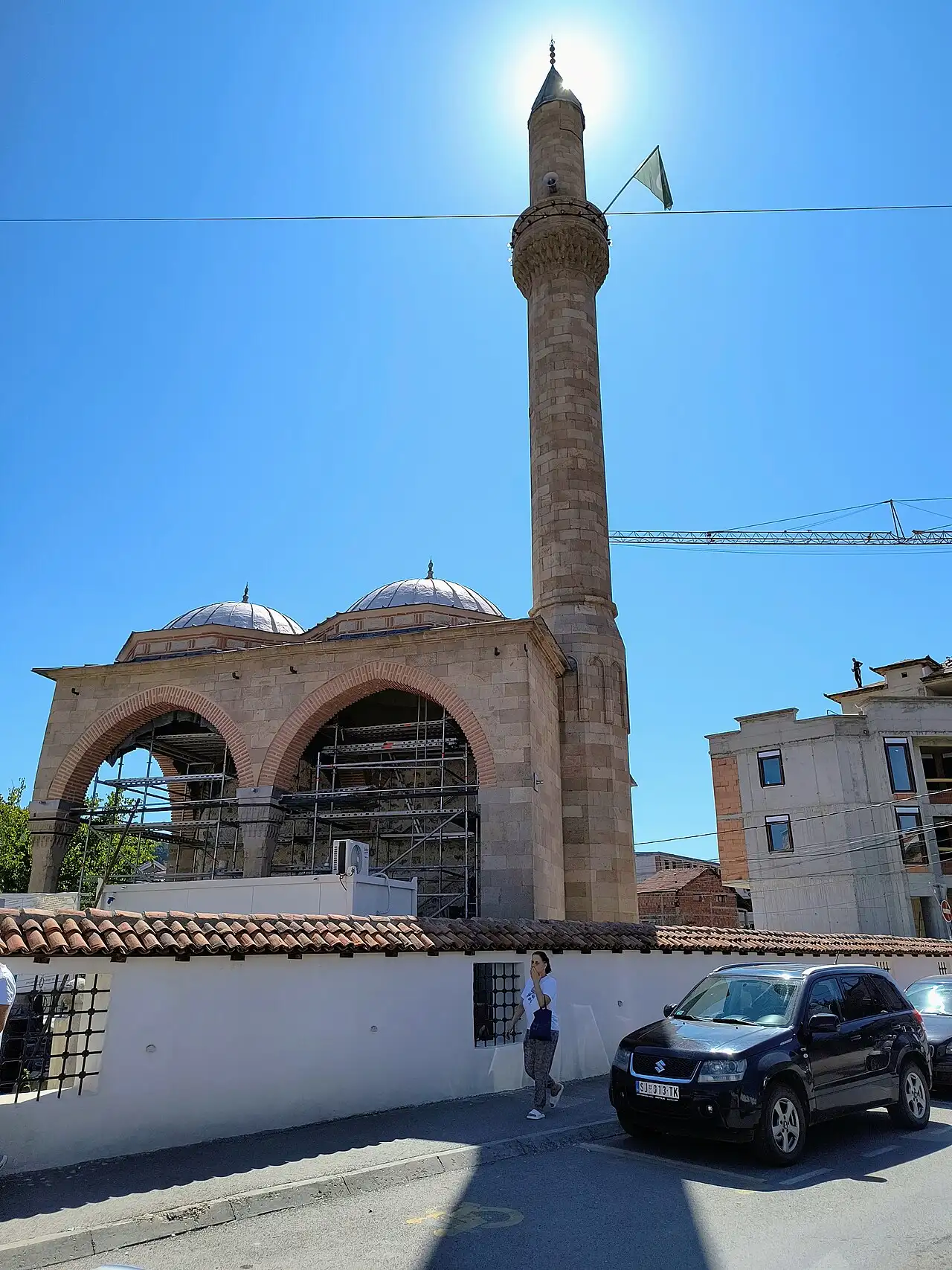
Start in the centre, because the Ottoman town is compact and best walked. The Altun-alem mosque - the name means “golden jewel” - was built in the first half of the 16th century by the builder Muslihudin Abdulgani, and it’s one of the oldest surviving pieces of Islamic architecture in Serbia. You reach it through the bazaar streets. It’s a working mosque, so come outside prayer times and dress accordingly.
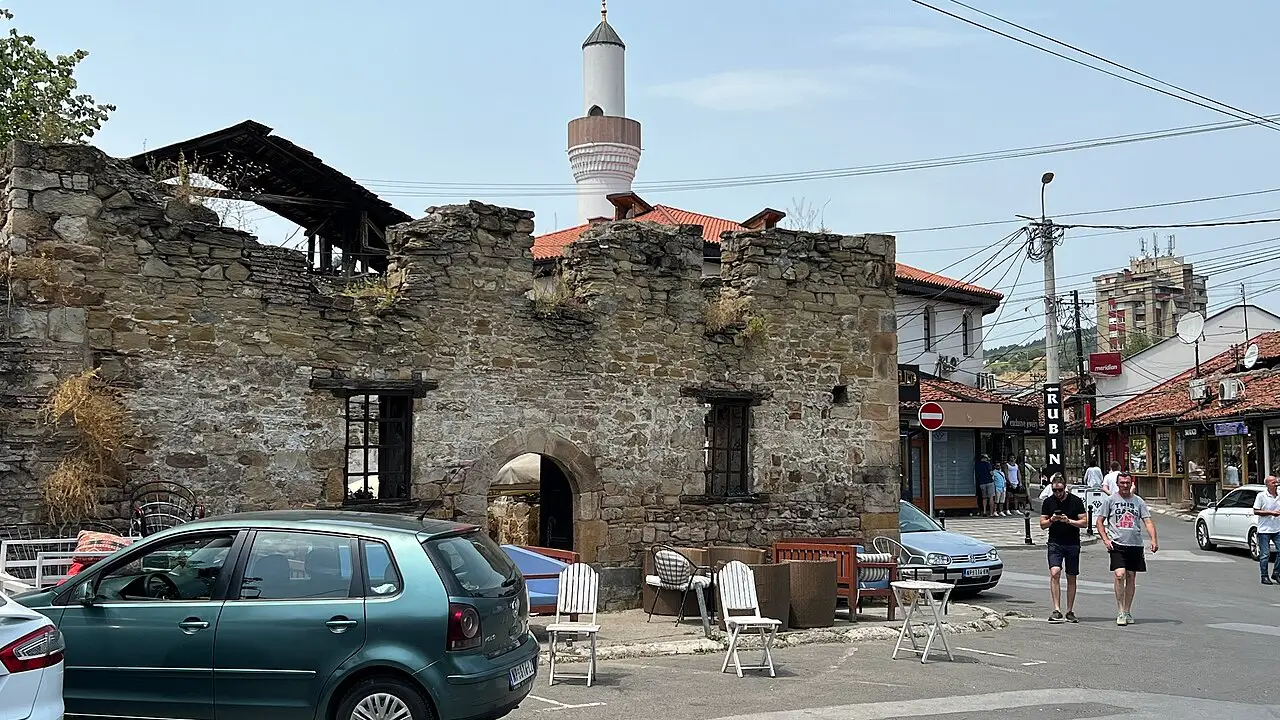
A few minutes away stands the hammam, the 15th-century Turkish bath from Isa-beg’s time. Don’t expect a museum. It’s a roofless stone shell with plants growing out of the walls, wedged between a car park and a cafe terrace, and that unpolished state is how most of the Ottoman fabric here has survived: in use, in the way, and unfenced.
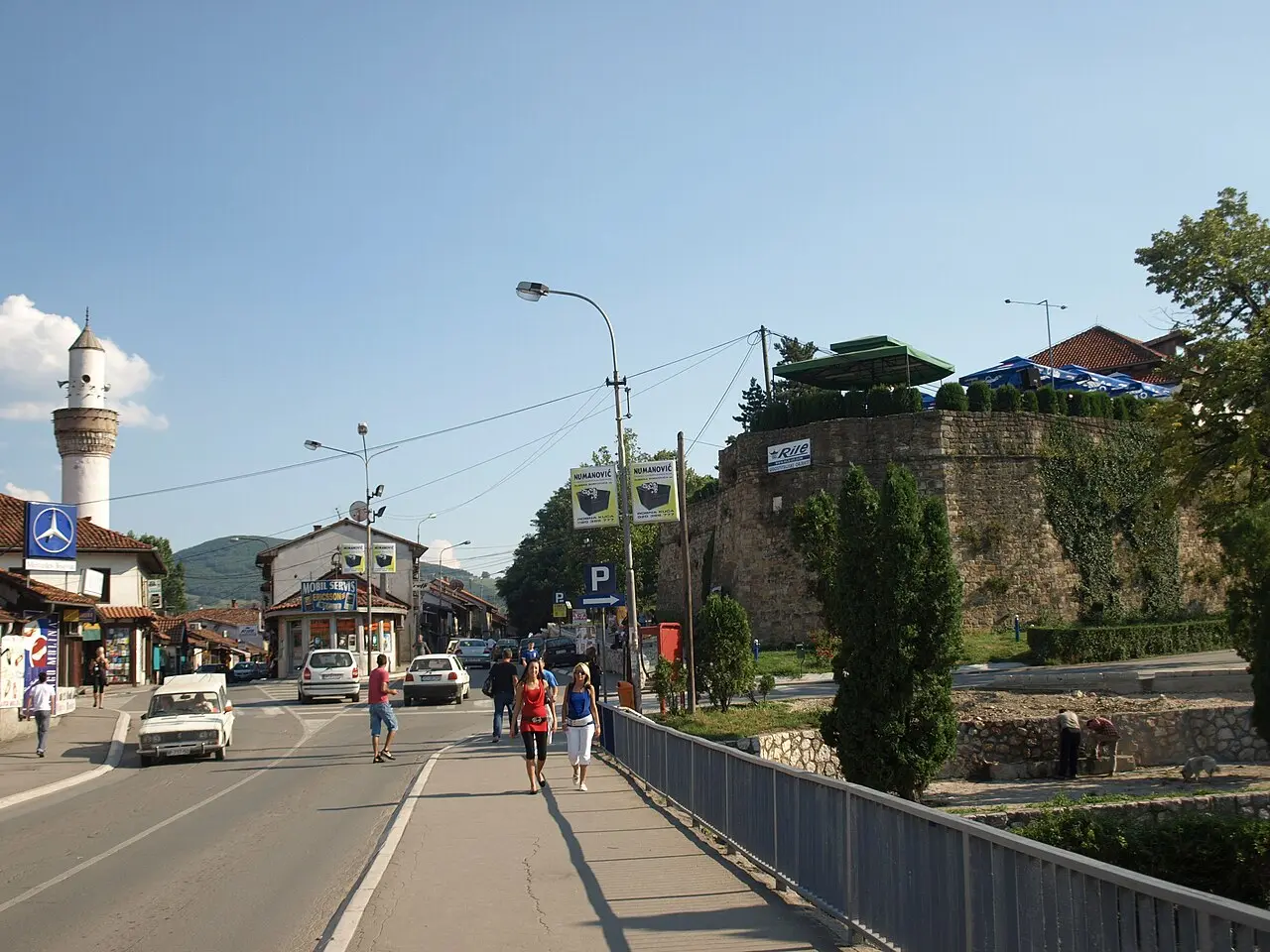
The circuit closes with Amir-aga’s han, a 17th-century caravanserai that has been restored and put back to use, and the remains of the Novi Pazar fortress, now a walled park in the middle of town. Between them run the bazaar streets, still the commercial heart of the place - Novi Pazar built up a denim and textile industry here in the 1990s, big enough to supply much of the region, before it faded in the 2000s, and the trading instinct never left.
The bazaar is no museum piece. Novi Pazar is a young, busy town - it has a state university and a Faculty of Islamic Studies - and the streets around the market stay lively with cafes, jewellers and clothing shops well into the evening. You’re visiting a working place that happens to have a thousand years of history stacked around it, not a preserved old quarter.
Petrova crkva: the oldest church in Serbia
On a terrace above the town, ringed by a graveyard, stands a small, round, whitewashed church that predates everything else in this guide. The Church of the Holy Apostles Peter and Paul, known locally as Petrova crkva, is traditionally dated to about 820, under Prince Radoslav, on a site used since Roman times; UNESCO dates the standing church to the 10th century. Either way, it’s the oldest intact church in Serbia.
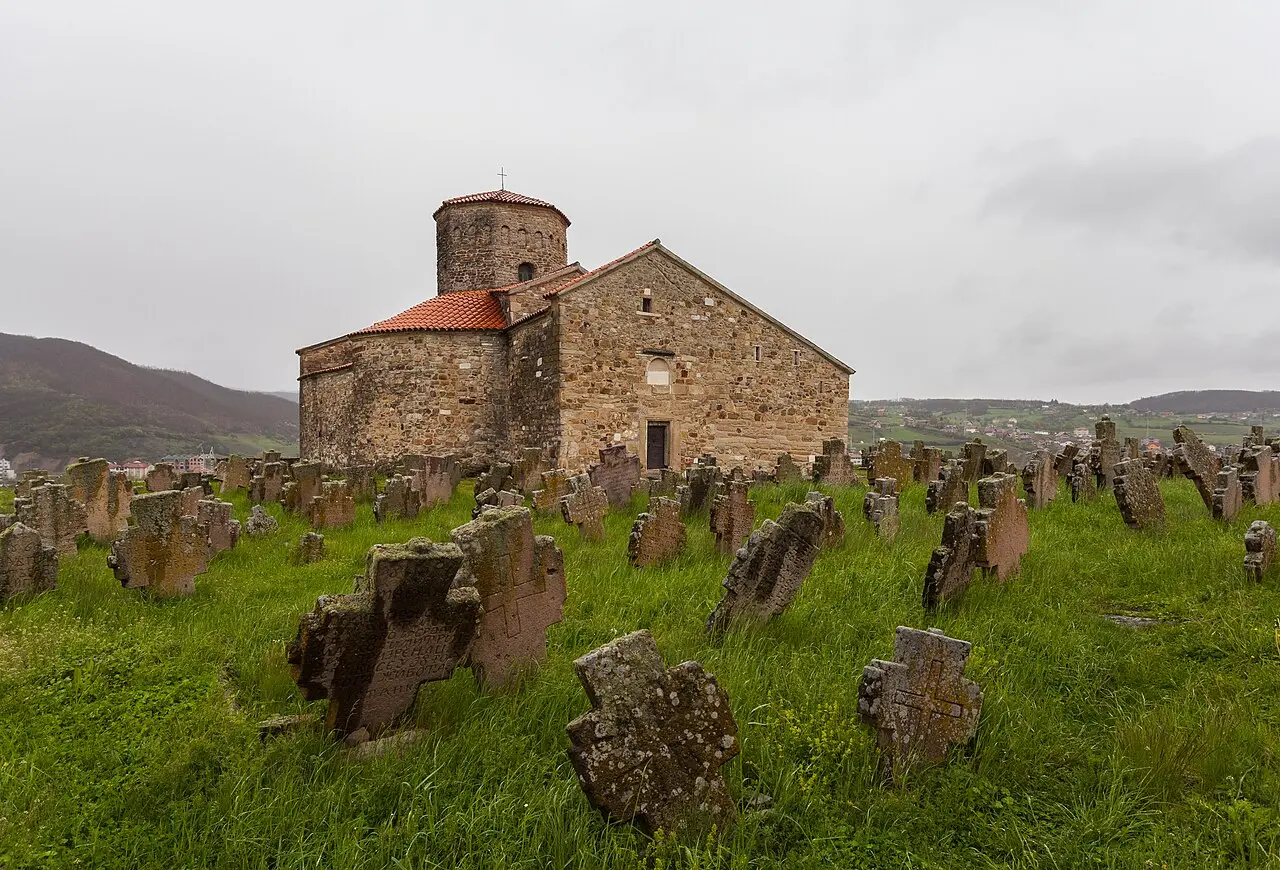
Its importance is out of all proportion to its size. Stefan Nemanja was baptised here before 1163 - the founder of the dynasty that ran Serbia for the next two centuries - and he later held the church council here that outlawed the Bogomils. Stand inside for two minutes and the arithmetic lands: the building was already three hundred years old when that happened. No hours are posted and there’s no ticket; it’s a working church in a graveyard, so if a service is on, wait it out.
Djurdjevi Stupovi and Sopocani
On a second hill about 2.5 km on, Djurdjevi Stupovi - “the Pillars of St George” - was founded by Stefan Nemanja around 1170 and named for the two towers flanking its west front. It was wrecked and rebuilt repeatedly over the centuries and is still being pieced back together, which gives it an unusual half-ruin, half-restoration character; King Stefan Dragutin is buried here. The view down over the valley would justify the climb on its own.
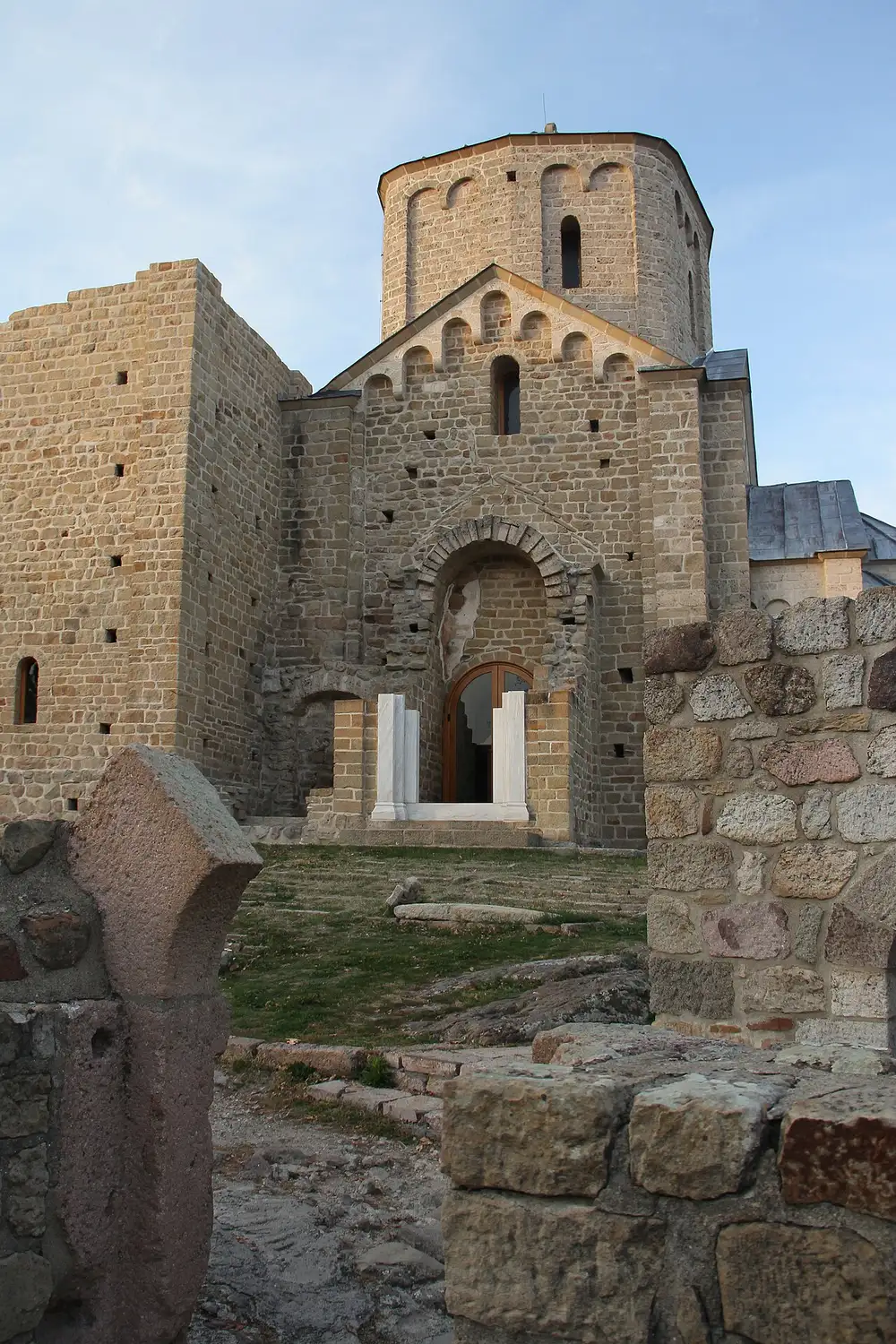
Sopocani is the one to plan the day around, because it sits 15 km west of town along a quiet valley road with no bus out to it. King Stefan Uros I founded it around 1260, and its frescoes went up in the decade that followed. The Dormition of the Virgin on the west wall of the nave, more than 30 square metres of it, is routinely called the finest fresco in Serbian medieval art. Drive out in the afternoon, when the light comes low through the west windows onto it; the plain exterior gives nothing away, which is exactly why the wall inside lands the way it does.
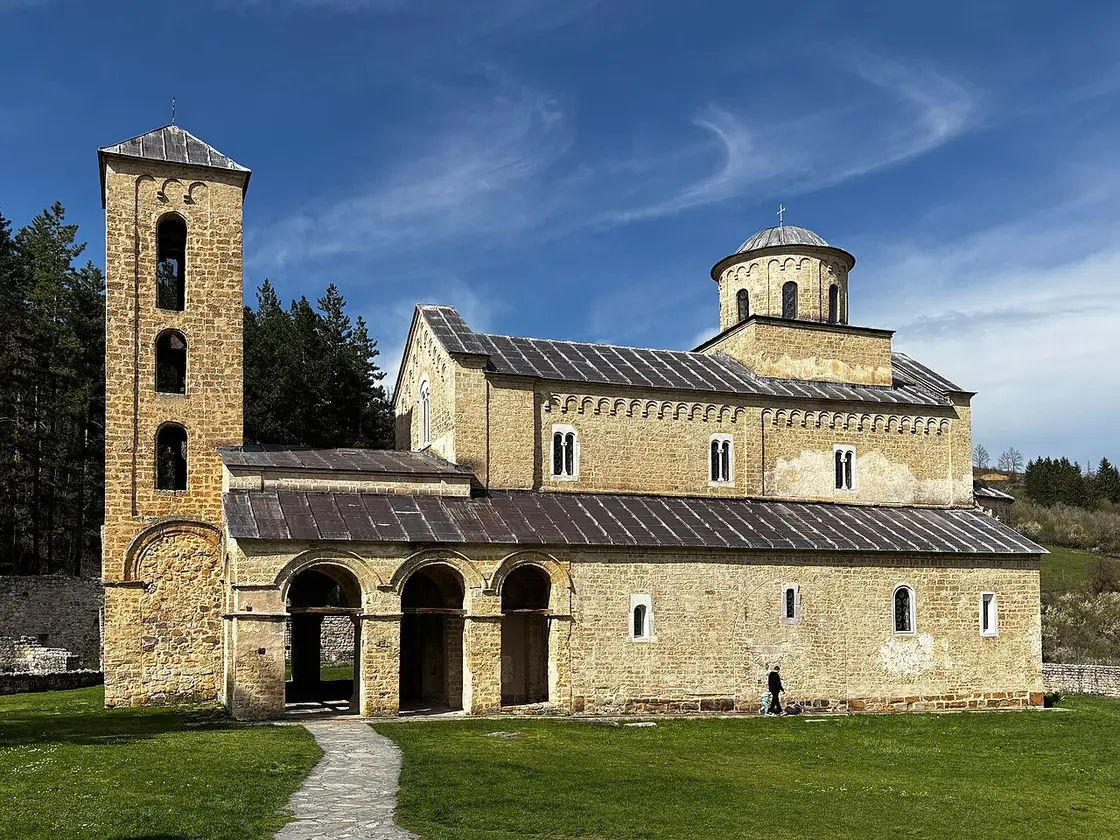
Those three, together with the ruined fortress of Stari Ras itself, make up the World Heritage site inscribed in 1979 as Stari Ras and Sopocani. For how they sit alongside the rest of the country’s monastic heritage, see our roundup of the most beautiful monasteries in Serbia.
Manage your expectations about Ras. The first capital of the Serbian state is a hilltop of foundations and broken walls above the Sebecevska river, with no visitor centre and little signage - it’s a site for people who like standing in the wind imagining things, not a museum visit. The three churches carry the day; Ras supplies the context.
One day in Novi Pazar
If you have a single day and a car, keep the driving to a minimum and let the light do the planning. Start in the bazaar while it’s quiet - Altun-alem first, then the hammam, the han and the fortress park, all on foot, with a coffee somewhere in the middle; two hours covers it. Then climb to Petrova crkva, five minutes from the centre, and on to Djurdjevi Stupovi a couple of kilometres further up, which together take about an hour and a half, most of it spent on the view. Come back into town for a cevapi lunch - don’t over-order, the portions are generous - and save Sopocani for the afternoon, when the sun is coming through the west windows onto the Dormition. The spa or a terrace closes the day; Novi Pazar isn’t a nightlife town, and it’s better for it.
Fitting Studenica into the same day is possible but wasteful - it’s an hour and a half each way, and it deserves its own morning.
Eating in Novi Pazar
The town has a reputation for cevapi that people drive down from Belgrade for: the local version comes in smaller, denser fingers than elsewhere, with raw onion and often yogurt or kajmak rather than the usual ajvar. Grills around the bazaar cook them all day, and the lunchtime queue tells you which one to join. The sweets keep Ottoman standards - baklava, tufahije, syrup and cream - and coffee comes Turkish, with a cube of rahat lokum. Our guide to Serbian food covers the national dishes if you want the wider primer.
Practical notes
- Where to stay. Small hotels and apartments cluster near the centre and out towards Novopazarska Banja, the thermal spa on the edge of town; rates sit well below Belgrade or Zlatibor.
- Manners. This is a mixed town: by the 2022 census the municipality counted roughly 88,500 Muslim and 13,700 Orthodox residents, with medieval Orthodox monasteries a few kilometres out of town. Cover shoulders and knees at both the mosques and the monasteries, ask before photographing people, and expect quieter streets around midday on Friday.
- Ramadan changes the rhythm: bazaar restaurants may open late and the evening is the lively part of the day. The dates move each year, so check before you book.
- Timing. Late spring and early autumn are the sweet spot. The valley bakes in July and August, and the monastery roads are more fun without ice on them.
- Going on. The town is within reach of the crossings into Kosovo and is a common jumping-off point in that direction. If that’s your plan, read our guide to crossing between Serbia and Kosovo first, because the side you enter from matters.
Novi Pazar rewards a slow visit: an 820s church, an 1170s monastery, a 1260s fresco cycle and a 16th-century mosque within half an hour of each other, in a town most foreign itineraries skip entirely. Browse more Serbian towns in the cities section, or fold it into a longer drive with our routes.
Photos
On the map
The map loads on click - to keep the page lightweight.
The map didn’t load. Check your connection and refresh the page.
Distance ≈285 km · 3 h 40 min - 4 h by car
- Belgrade ≈285 km · 3 h 40 min - 4 h by car South on the Ibar highway through Kraljevo and Raska. Buses take around five and a half hours.
Read also

Cities · 9 min read
Sombor: Vojvodina's Greenest Town
Verified · August 31, 2026Sombor travel guide: 121 km of tree alleys, the fijaker stand, County Hall with Eisenhut painting, and Gornje Podunavlje wetlands.

Cities · 12 min read
Valjevo: Old Town, Museums and Two Rivers
Verified · August 19, 2026Valjevo travel guide: Tesnjar, the Muselim Residence, Nenadovic Tower, the cathedral, and how to reach the town by train or car.

Cities · 9 min read
Sokobanja: Spa Under Rtanj Mountain
Verified · August 13, 2026Sokobanja spa guide: Ottoman hammam, respiratory air, Rtanj hikes, Bovan Lake and how to reach the town from Niš or Belgrade.

Cities · 10 min read
Vrnjacka Banja: Serbia's Top Spa Town
Verified · July 25, 2026Vrnjacka Banja is Serbia's most visited spa town: seven mineral springs, the Bridge of Love padlocks, a green park and Lovefest each August.