
Vrnjacka Banja: Serbia's Top Spa Town
Vrnjacka Banja is Serbia's most visited spa town: seven mineral springs, the Bridge of Love padlocks, a green park and Lovefest each August.
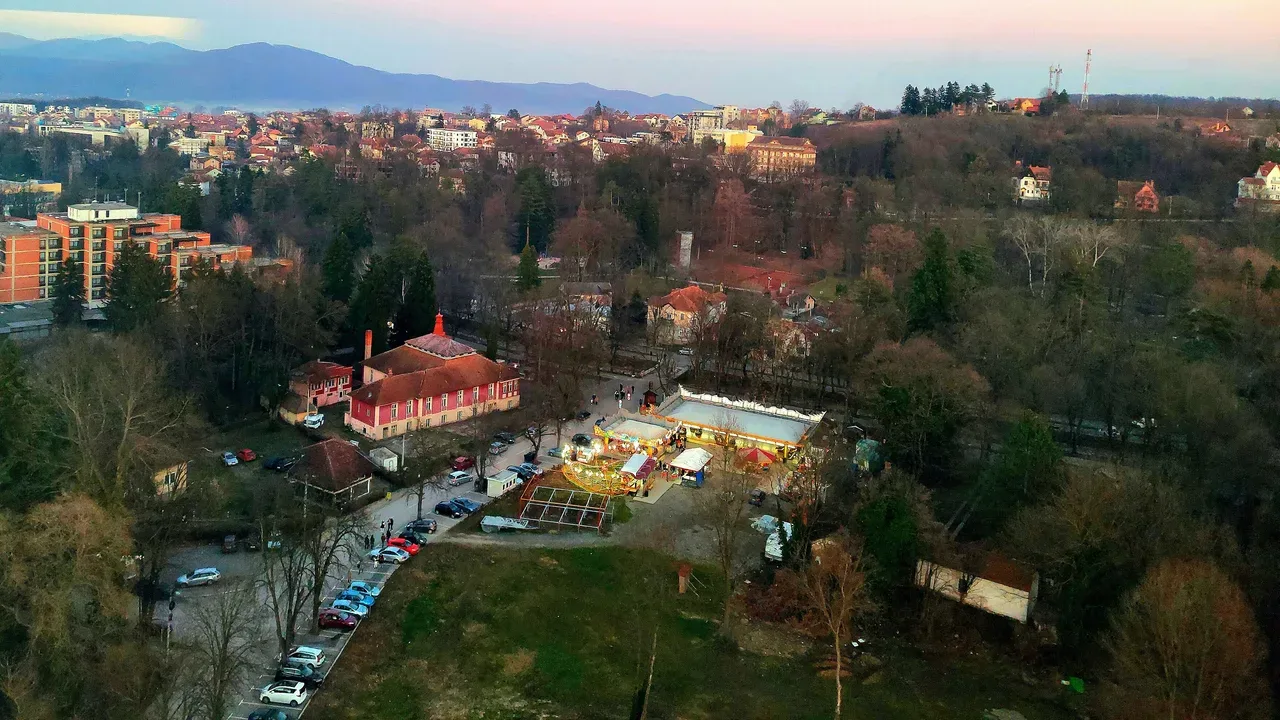
Vrnjacka Banja is Serbia’s most visited spa town, and it has been in the water business since the Romans drank here. Seven mineral springs feed its pools and drinking fountains, a shaded park runs the length of the centre, and a small footbridge in that park is where the padlock-on-a-railing habit is said to have started, long before anyone tried it on a bridge in Paris. The town sits in central Serbia, about 200 km south of Belgrade, close enough to Kopaonik and the UNESCO monasteries of the south to work as a comfortable base for that corner of the country.
What you actually come for depends on why you’re here. Serbian and regional visitors come for the water: two- and three-week drinking cures for the stomach, the liver and the metabolism, prescribed and taken seriously. Foreign travellers usually come for the mood instead, a green, walkable, slightly old-fashioned resort where the main event is a slow lap of the park with an ice cream, and lately for Lovefest, the techno festival that takes the town over for two weekends in August. Knowing which of those trips you’re on saves disappointment. This is a place to slow down and eat well, not a place with a checklist of monuments.
Getting there
The practical route is the bus or the car, not the train. By car it’s about 2 h 50 from Belgrade: the A1/E75 motorway south to Pojate, then west towards Kraljevo and up the valley. By bus there are roughly five direct departures a day from Belgrade taking about 3 h 15, and because the town is small and flat you don’t need a car once you arrive. Kraljevo is only about 20 km away, half an hour by local bus, which makes it the natural transfer point if you’re stitching a longer trip together. Our guide to getting around Serbia has the wider bus and train picture.
A car earns its keep only if you plan to use Vrnjacka Banja as a base for day trips, which is a good reason to have one here. If that is the plan, see our notes on renting a car in Serbia before you book.
The seven springs, and what the water is for
The spa runs on seven named mineral springs: Topla voda at 36.5 C, Jezero at 27 C, Sneznik at 17 C and Slatina at 14 C, plus Beli izvor, Borjak and Vrnjacko vrelo. Four of them (Topla voda, Sneznik, Slatina and Jezero) are used for treatment and drinking cures; two are bottled and sold across Serbia. The star is Topla voda, “warm water”, which comes out at roughly human body temperature. You will hear locals call it the only spring in the world that matches body heat exactly; take the superlative as civic pride, but the temperature itself is real and it’s what built the town.
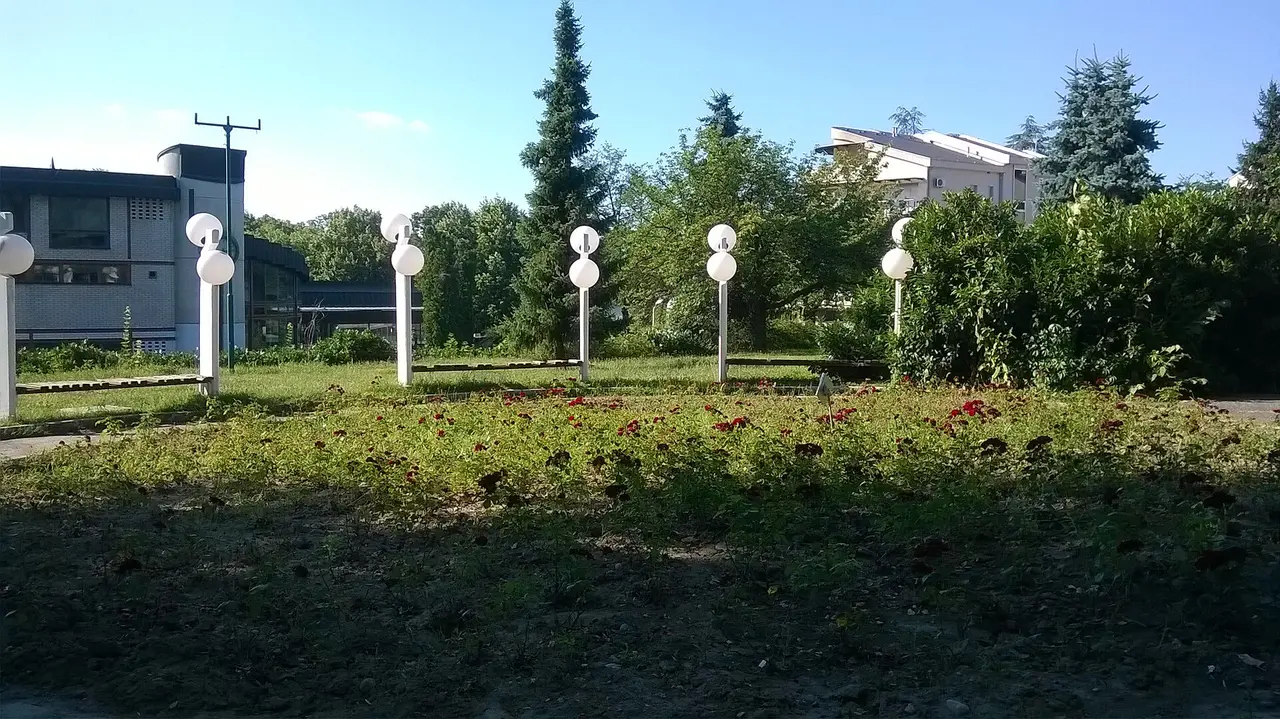
The drinking cures are traditionally aimed at metabolic problems, diabetes, the gallbladder, chronic gastritis, stomach ulcers and the urinary tract, and Serbian doctors still send patients here for exactly that. The useful thing for a casual visitor: you don’t need to check into a clinic to try the water. The drinking fountains in the park are public, so you can fill a cup and taste it for yourself. It’s mineral, faintly fizzy and an acquired thing rather than a refreshment. The serious treatment side runs through the state rehabilitation hospital Merkur and the wellness centres attached to the bigger hotels, and a real programme is something you book in advance rather than walk into.
This isn’t new. The Romans used these waters for drinking and bathing between the 1st and 4th centuries AD, and a Roman spring was uncovered here in 1924 during works to capture the water. The modern spa dates to 1868, when the Krusevac district chief Pavle Mutavdzic and a group of local worthies set up a society to develop the springs; the first season the following year proved the idea, and by the late 1800s Vrnjacka Banja had become a fashionable resort of the Serbian royal era. Its pre-war peak tells you how big it got: in 1935 it drew 28,080 visitors, more than any other place in the whole of Yugoslavia.
The Bridge of Love
The town’s most photographed spot is a small iron footbridge over the Vrnjacka river in the park, hung with rusting padlocks. This is the Most ljubavi, the Bridge of Love, and the story behind it’s genuinely local rather than borrowed.
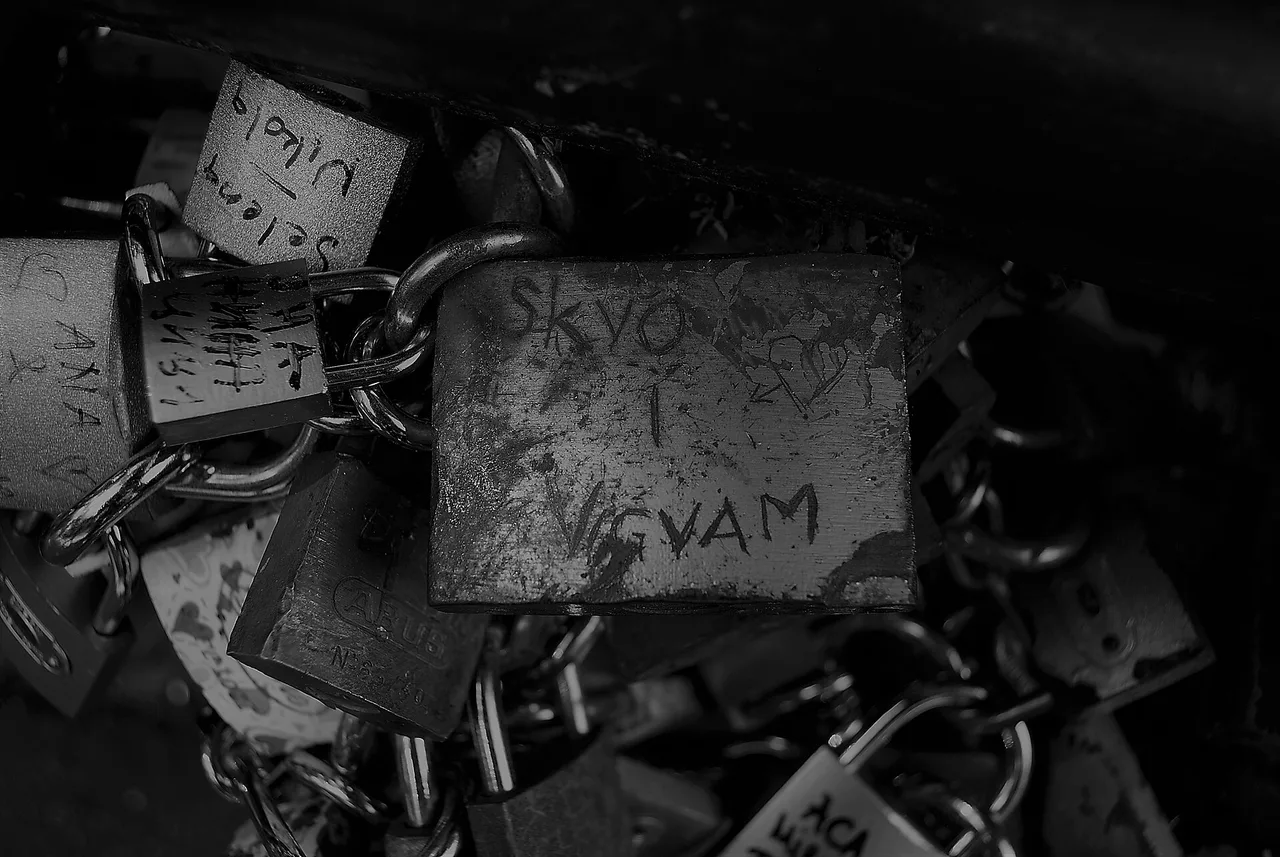
Before the First World War a local schoolteacher named Nada fell in love with a Serbian officer called Relja, and the bridge was their meeting place. When the war took him to the front in Greece he fell for another woman there and never came back, and Nada, the story goes, faded and died of a broken heart. Local girls started fixing padlocks with their own and their sweetheart’s names to the bridge railing and throwing the keys into the river, so that their love would not go the way of Nada’s. The custom faded until the poet Desanka Maksimovic heard it on a visit and wrote “Molitva za ljubav” (“Prayer for Love”), which put it back on the map. Vrnjacka Banja is now widely cited as the origin of the love-padlock tradition that later spread to bridges across Europe.
Set your expectations right and it’s a lovely five minutes: the bridge itself is modest, and it’s the story, not the structure, that people come for. It sits right in the middle of the park, so you pass it anyway.
The park is the point
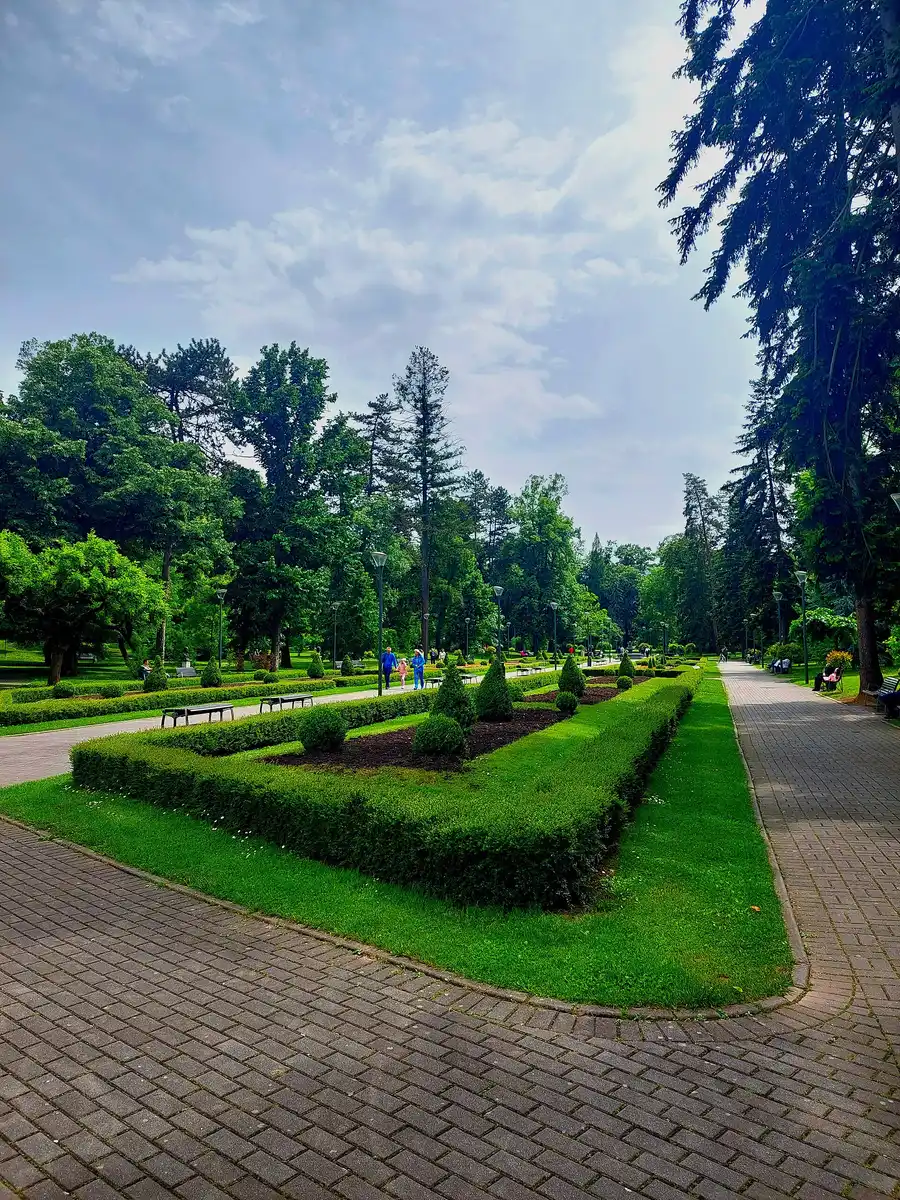
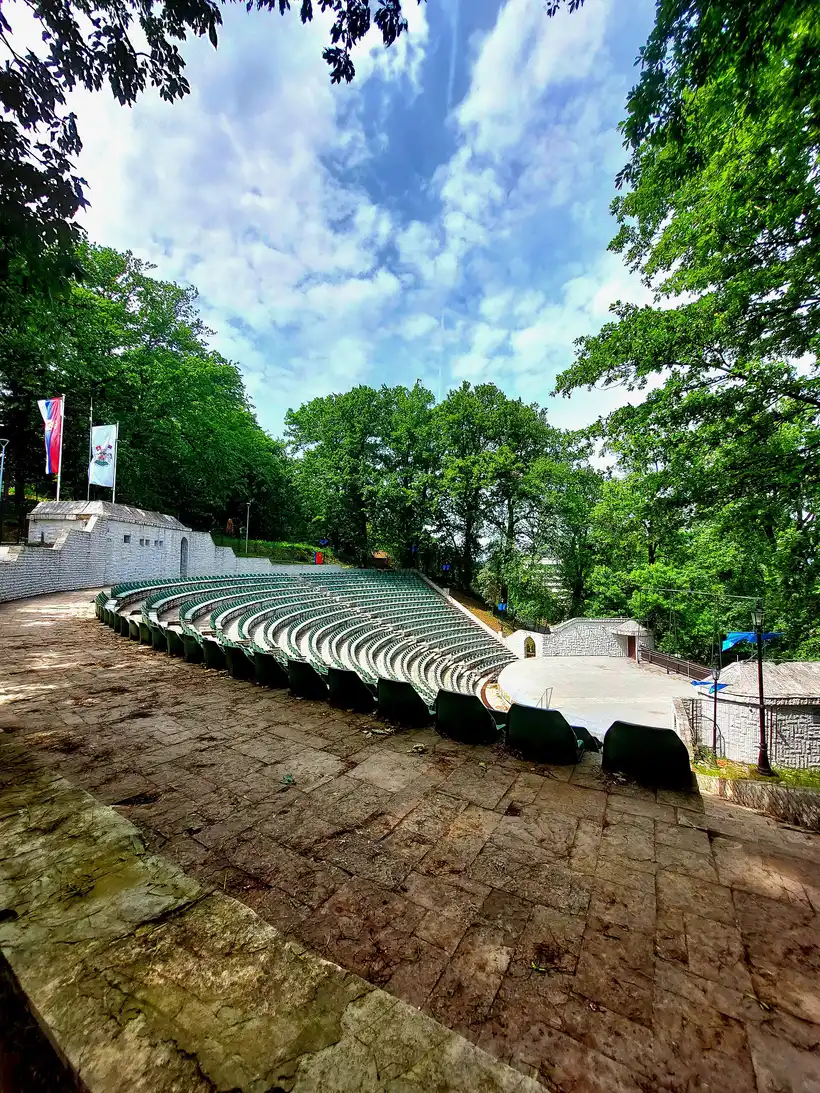
More than any single sight, the central park is what makes the town. It runs through the centre along the little river, with the spring pavilions and fountains, cafe terraces under old trees, a Japanese garden corner and an open-air amphitheatre folded into it. Serbs treat the evening korzo, the slow social walk up and down the promenade, as the main activity, and after a day or two you understand why. There’s no rush here, and that is the selling point.
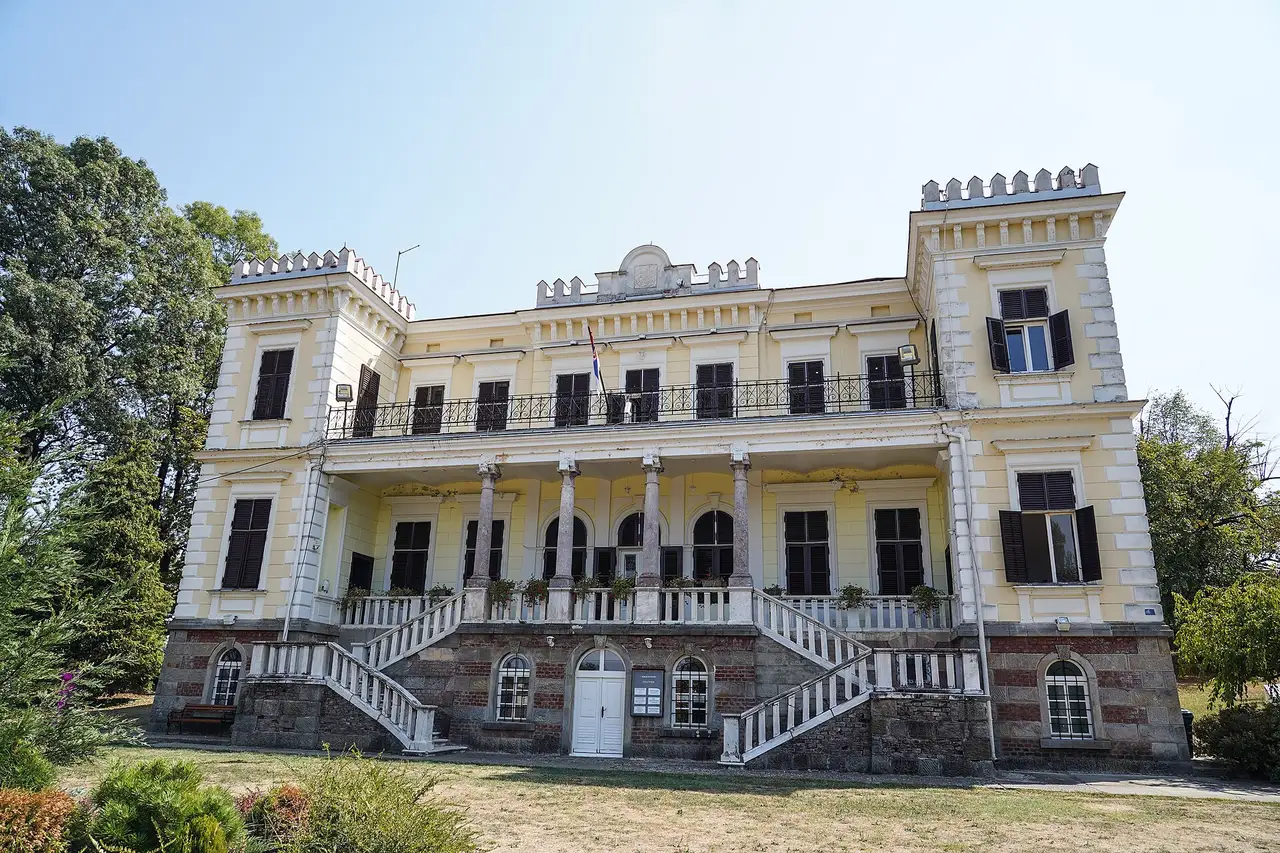
The one building worth walking up to is the Belimarkovic villa, the mansion a royal-era general built above the park in the 1880s, which now works as a cultural and exhibition space and marks the point where the spa turned from a cluster of fountains into a proper resort. Beyond that, the pleasures are low-key: the fountains, the flowerbeds, a coffee, and the hills of Goc rising straight behind the town for anyone who wants a walk with a gradient.
Lovefest and the August crowd
For two weekends each August the quiet spa town becomes something else entirely. Lovefest, running since 2007, is one of Serbia’s biggest electronic-music festivals, staged at the lakeside Park Jezero with a lineup of international techno and house names. In 2026 it falls on 7-8 and 14-15 August, though you should confirm the exact days on the festival’s own site before you plan around it.
This is the fork in the road for planning. If you want the calm cure-town, those festival weekends are the ones to avoid: rooms sell out months ahead and prices climb. If you’re coming for the party, do the opposite and book as early as you can. Either way, decide before you look at hotels. In the cold months the town is at its quietest and cheapest, which our guide to Serbia in winter sets against a ski week on Kopaonik. Our roundup of music festivals in Serbia sets Lovefest against Guca, Nisville and the rest so you can pick your weekend.
Using it as a base
Where Vrnjacka Banja really earns a night or two is as a soft base for central and southern Serbia, especially with a car.
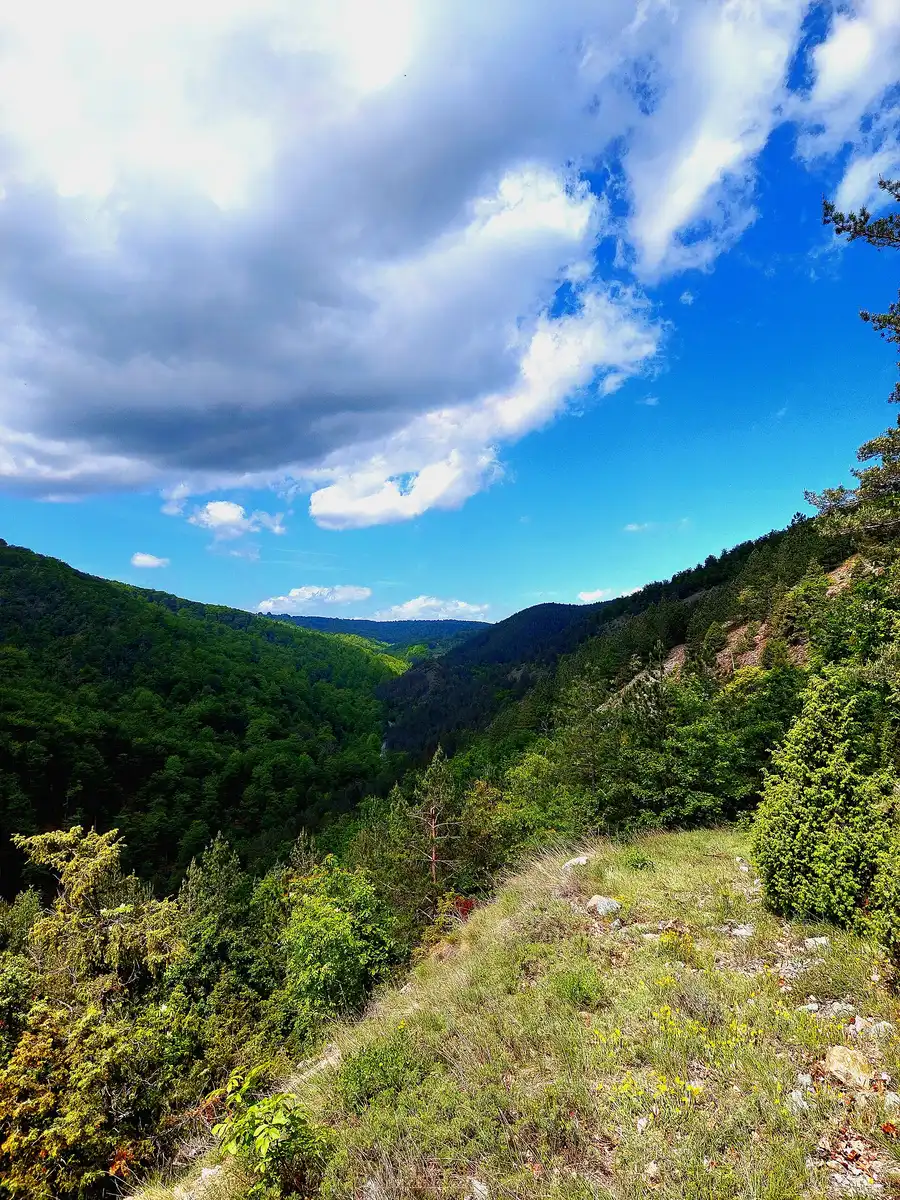
Kopaonik, Serbia’s main mountain resort, is about 61 km away, roughly 1 h 30 by car, which makes a day of skiing in winter or hiking in summer entirely feasible from a spa bed; see the full Kopaonik guide for what’s up there. In the other direction, the great medieval monasteries of the south are within reach: Studenica, the country’s finest, is an easy drive, and our monasteries of Serbia roundup maps the wider circuit down towards Novi Pazar. Add the Zupa wine country around Aleksandrovac just to the east, and Kraljevo’s old town twenty minutes north, and you have several days without repeating yourself.
Practical notes
- When to go. Late spring to early autumn, with May, June and September the sweet spot. July and August are hot and, on the Lovefest weekends, packed; check our best time to visit Serbia if you are timing a wider trip.
- How long. One or two nights covers the town comfortably, more only if you’re taking a cure or using it as a base for the region.
- The water. Free to taste at the park fountains; a proper treatment programme through Merkur or a hotel spa is booked ahead, not walked into.
- Money and food. Cheaper than Belgrade, with the usual spa-town run of cafes, bakeries and grilled meat, and a local sweet tooth to match. Bring cash for the small places.
- Getting around. On foot for everything in town; a car or an arranged transfer for Kopaonik, the monasteries and the wine roads.
Vrnjacka Banja won’t fill a week of sightseeing, and it doesn’t pretend to. What it offers is a green, easy, faintly nostalgic couple of days built around water, a walk and a story, with some of central Serbia’s best trips a short drive away. If you want the eastern alternative - Ottoman hammam plus Rtanj rather than Goc and Kopaonik - see Sokobanja. Browse more towns in the cities section, or read up on nearby Studenica Monastery before you go.
Photos
On the map
The map loads on click - to keep the page lightweight.
The map didn’t load. Check your connection and refresh the page.
Distance ≈200 km · About 2 h 50 by car, or 3 h 15 by direct bus
- Belgrade ≈200 km · About 2 h 50 by car, or 3 h 15 by direct bus Roughly five direct buses a day from Belgrade; the motorway runs south to Pojate, then west towards Kraljevo. Fares change, so check the operator.
Read also

Cities · 9 min read
Sombor: Vojvodina's Greenest Town
Verified · August 31, 2026Sombor travel guide: 121 km of tree alleys, the fijaker stand, County Hall with Eisenhut painting, and Gornje Podunavlje wetlands.

Cities · 12 min read
Valjevo: Old Town, Museums and Two Rivers
Verified · August 19, 2026Valjevo travel guide: Tesnjar, the Muselim Residence, Nenadovic Tower, the cathedral, and how to reach the town by train or car.

Cities · 9 min read
Sokobanja: Spa Under Rtanj Mountain
Verified · August 13, 2026Sokobanja spa guide: Ottoman hammam, respiratory air, Rtanj hikes, Bovan Lake and how to reach the town from Niš or Belgrade.

Cities · 13 min read
Sremski Karlovci: Wine Town on the Danube
Verified · August 16, 2026Sremski Karlovci guide: the 1699 peace treaty and its four doors, 20 wine cellars, what bermet really is, and the bus from Novi Sad.