
Valjevo: Old Town, Museums and Two Rivers
Valjevo travel guide: Tesnjar, the Muselim Residence, Nenadovic Tower, the cathedral, and how to reach the town by train or car.
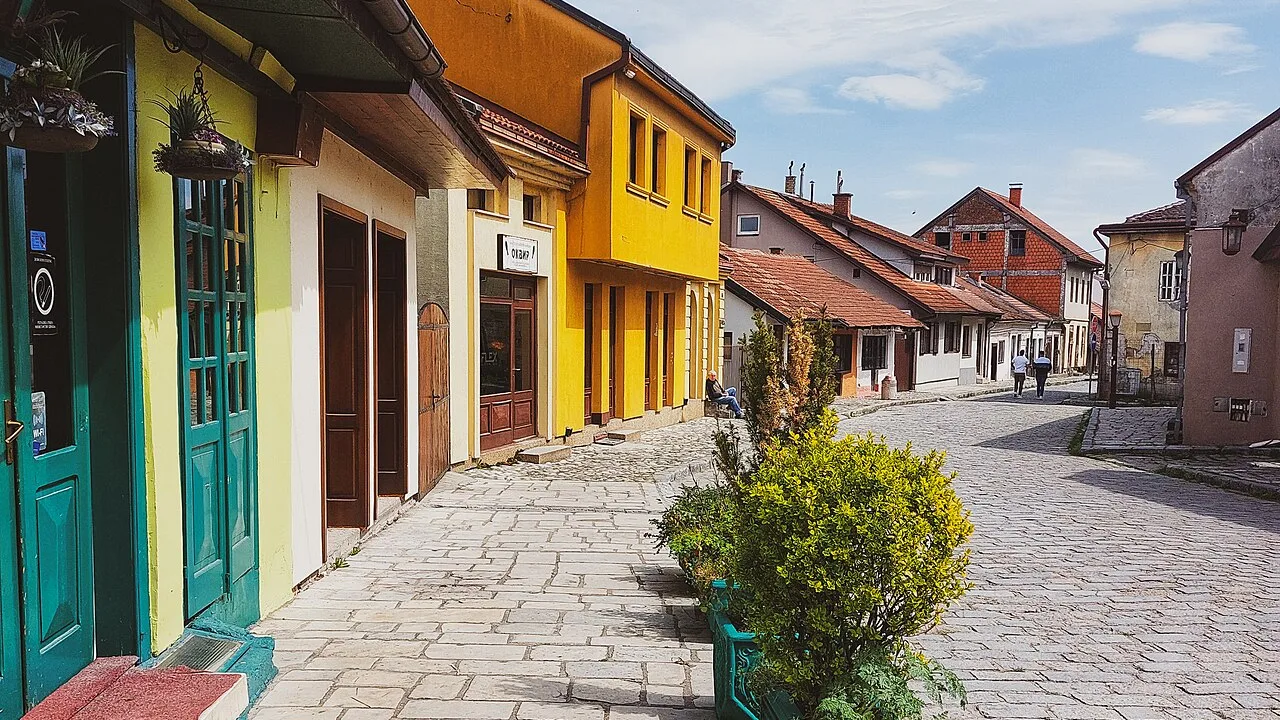
Valjevo is the market town of Serbia’s Kolubara valley: a protected Ottoman-era quarter, a handful of museum buildings built around one connected story, and one of the largest Orthodox churches in the country, all inside a compact centre where two rivers meet. It’s about 100 km southwest of Belgrade, roughly an hour and a half by car on the A2 motorway, and often quicker than that by train. Tesnjar and the museums make a genuine day trip from the capital; the hills above town belong to a longer one.
The town first shows up in a Dubrovnik merchant’s ledger in 1393, which gives it roughly six centuries of documented history, though what you actually see on the ground is mostly Ottoman and 19th-century. By the 2022 census the town itself counted 56,059 people, with 82,169 across the wider municipality - a working regional centre rather than a resort, built where the Kolubara comes down off the Medvednik and Povlen hills. That last part matters more than it sounds: Valjevo’s whole character, and most of what follows here, comes from being the last flat ground before the mountains start.
Getting to Valjevo, with or without a car
A car is the easy way in, down the A2 Milos Veliki motorway (E763) from Belgrade. Car hire in Serbia covers deposits, manual gearboxes and how the A2 toll actually works if you’re picking up in the capital.
You don’t need the car just for Valjevo, though, and the train is the pleasant surprise. Srbija Voz runs direct services from Beograd Centar, and on a summer day there can be as many as nine of them, taking 1 hour 12 minutes to 1 hour 32 minutes each way - often faster door to door than driving, once you count finding somewhere to park in the old quarter. A couple of the daytime departures are summer-only (mid-June to mid-September), so expect five trains on a winter weekend and seven on a winter weekday. Check current departures on srbijavoz.rs before you build a plan around a specific one; we couldn’t confirm the fare in advance, so budget for buying it on the day. Lasta coaches also run to Valjevo, from Belgrade’s bus station in New Belgrade’s Block 42, which replaced the demolished riverside terminal in September 2024.
For the town itself - the old quarter, the museum buildings, the cathedral - a train or bus day trip works perfectly well and doesn’t need a car at all. It’s the extension into Brankovina and up onto Divcibare that genuinely does; there’s no single service that strings all three together in one day. If that loop is the plan, our Valjevo and Divcibare route covers it.
Tesnjar, and the bridge the town didn’t build
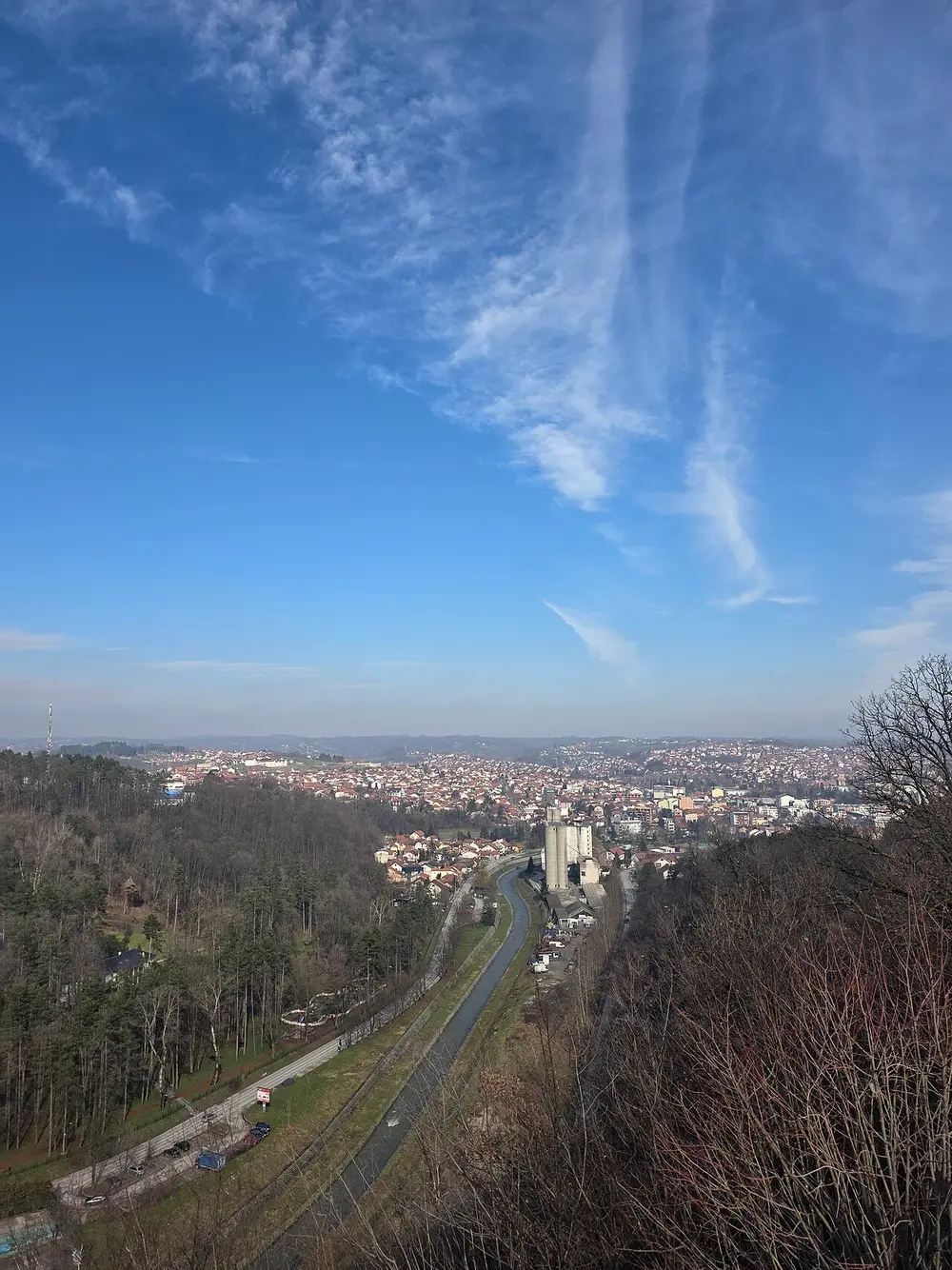
The old quarter, Tesnjar, sits on the right bank of the Kolubara and is the one part of Valjevo every guidebook photographs: a run of low 19th-century houses with shopfronts below and living rooms cantilevered above, cobbles underfoot, cafes and craft shops now filling what were once tailors’ and coppersmiths’ workshops.
The pedestrian crossing at the edge of the quarter, known locally as Beli most (“White Bridge”), is a concrete bridge built in 1959 - so the crossing you’ll actually walk over isn’t the one with the odd history. That belongs to its predecessor: a wooden bridge, more than 40 metres long, that the city administration never built at all. Valjevo’s own water utility maintained it instead, which made it the one bridge in town the town hall never had to look after. That wooden bridge is long gone, but it says something true about how this place has always worked: half its landmarks went up because somebody needed them, not because a committee planned them.
Walk the quarter in the morning if you can, before the day trippers arrive from Belgrade, and don’t rush it. Two hours covers everything and still leaves time to sit down for a coffee.
Muselim’s Residence: the spark of an uprising
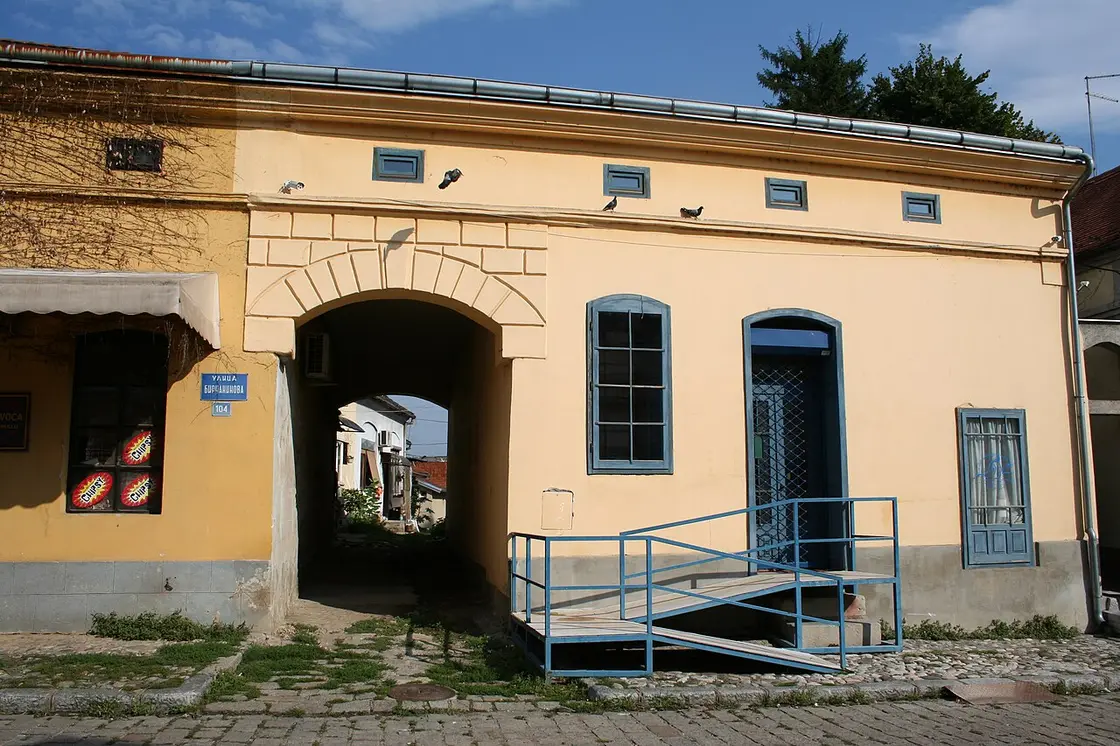
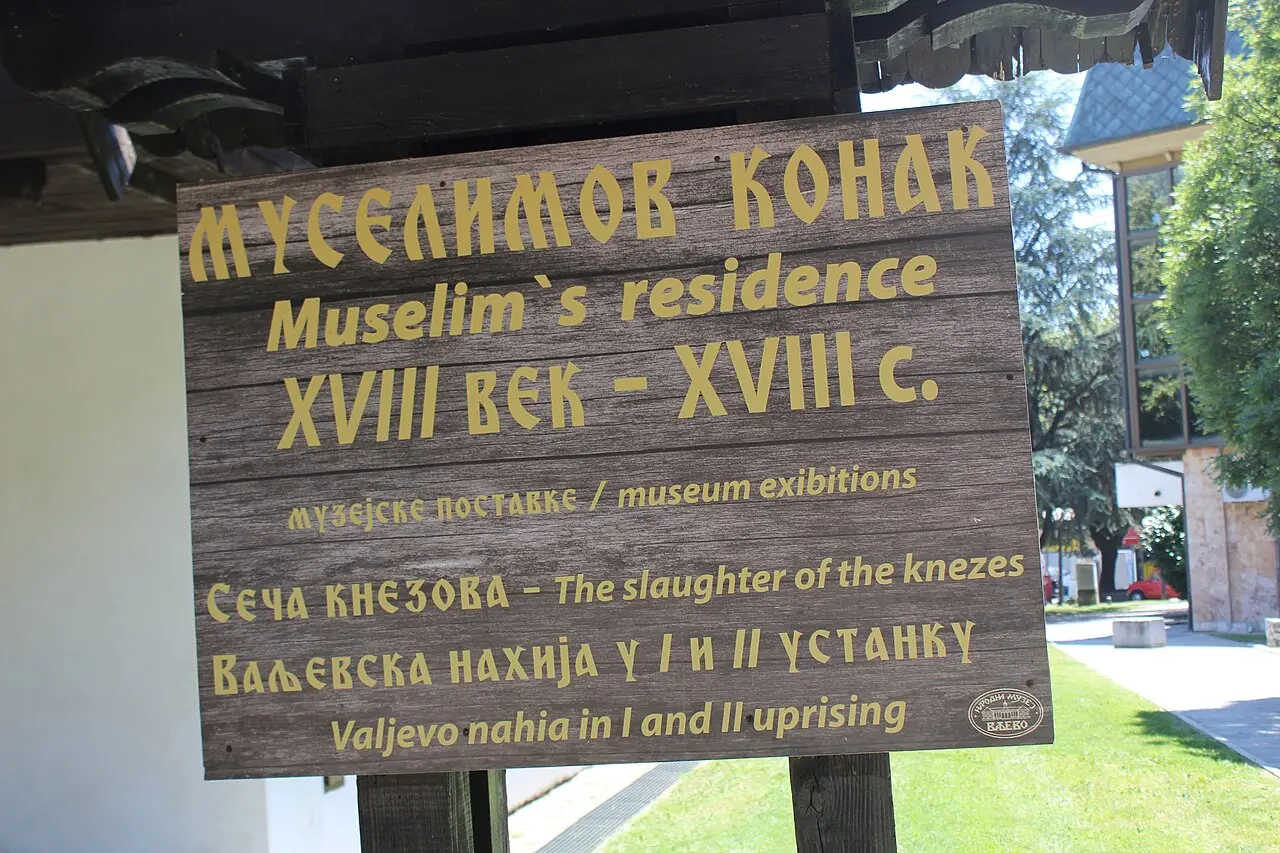
Two buildings anchor Valjevo’s museum, and both sit within a few minutes of Tesnjar. The older one is Muselim’s Residence (Muselimov konak), an 18th-century Ottoman administrative house usually named as the oldest building standing in town. Ottoman forces held two of the most powerful Serbian dukes in the region, Aleksa Nenadović and Ilija Birčanin, in its cellar before leading them out on 4 February 1804 to be beheaded on the bank of the Kolubara; their heads were then put on public display on the building’s roof. It’s a brutal story, and it wasn’t an isolated one: across the wider district, dozens of other knezes, merchants and priests were killed in the same days, on the same orders, though the museum itself is careful to call Aleksa and Ilija symbols of that wider killing, not its only victims.
The museum doesn’t soften any of it. Its permanent exhibition inside the Residence is called, plainly, “Seca knezova” - the slaughter of the knezes - built around the cellar where the two men were held before their execution. A separate central exhibition, “Treca dimenzija proslosti” (“The Third Dimension of the Past”), sits in the main museum building a short walk away on Trg Zivojina Misica, right beside the Grand hotel; the museum describes its own galleries as Serbia’s most-visited indoor exhibition space - take that as institutional pride, not an independent ranking. Word of the killings spread fast. Ten days later, on 14 February, Serbs gathered at Orasac, more than 80 km away near modern Arandjelovac, and chose Karadjordje to lead an uprising. Valjevo supplied the spark; Orasac is where the fire actually started.
Both buildings keep the same hours: Tuesday to Saturday, 10:00-18:00 (last entry 17:30), Sunday 10:00-15:00 (last entry 14:30), closed Monday. A ticket to either one costs 190 dinars, roughly EUR 1.60 at the current rate, or 260 dinars for both together - cheap enough that the only real decision is whether you have the ninety minutes, not whether you have the money.
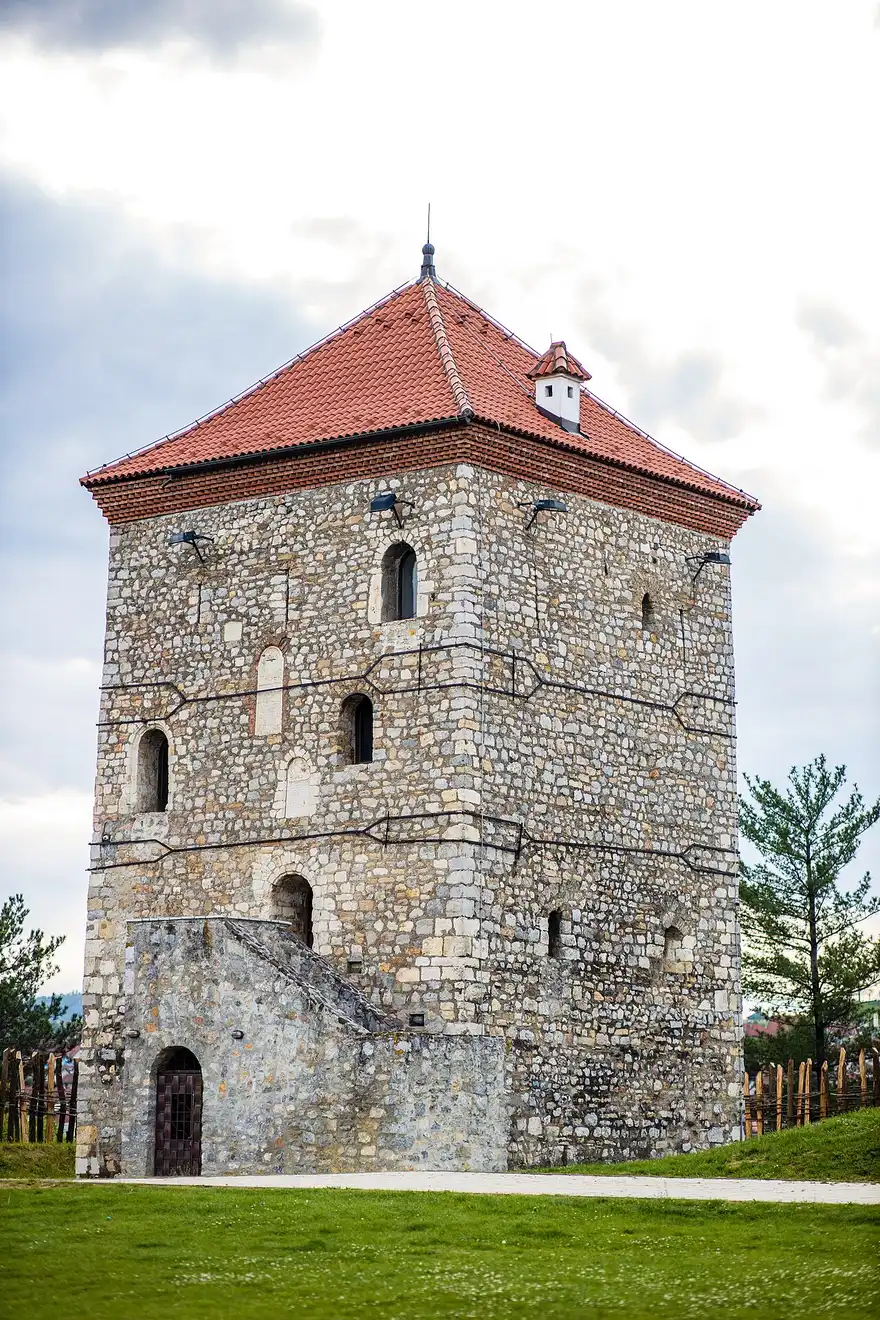
The tower the surviving brother built
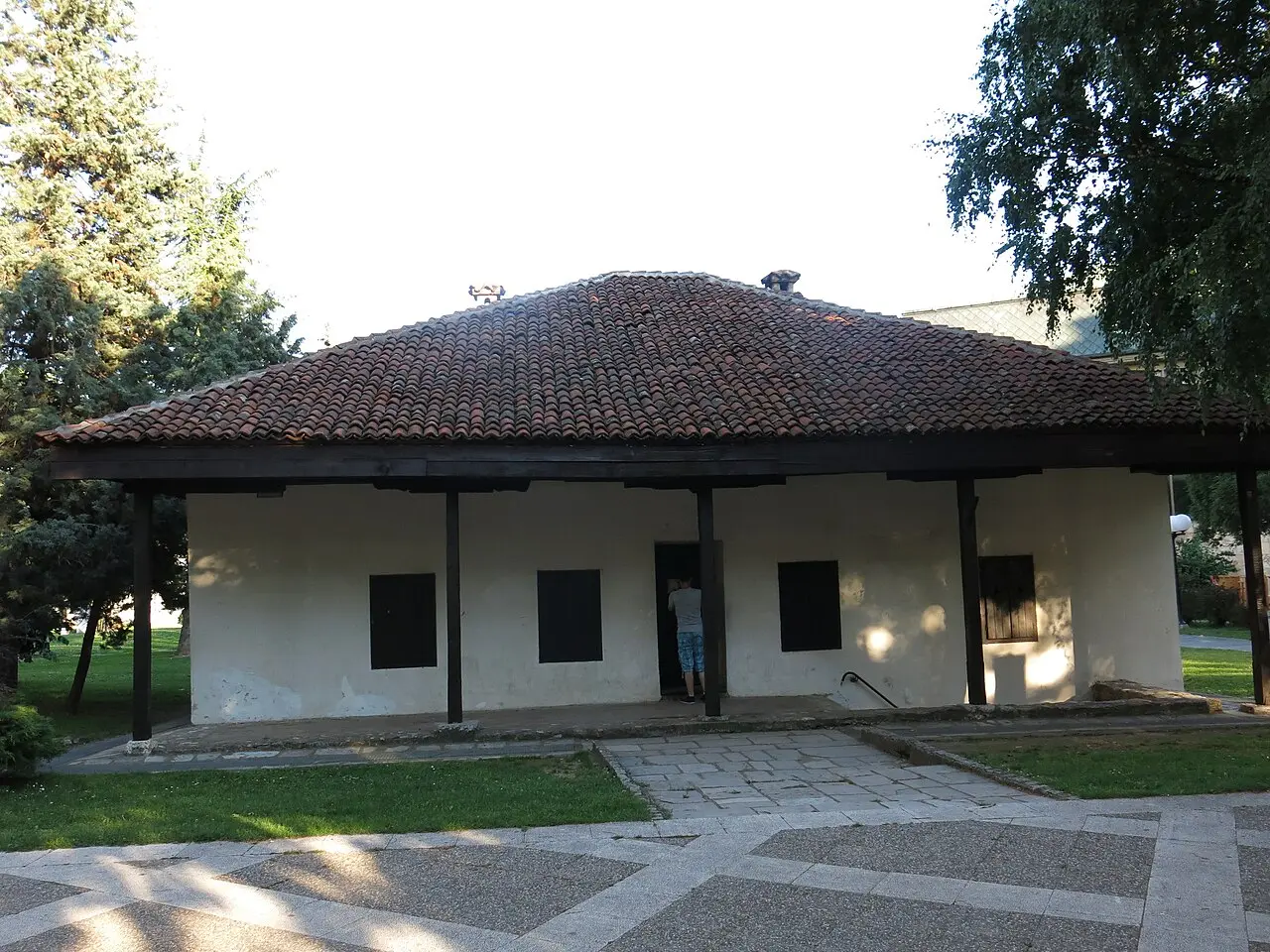
Aleksa Nenadović had a younger brother, Jakov, born like Aleksa in the nearby village of Brankovina, 11 km north of town. When news of the execution reached him, Jakov joined the uprising at once and rose fast, serving as Serbia’s prime minister (December 1810 to January 1811) and then its interior minister. In 1813, with his son Jevrem, he raised a stone tower in Valjevo as the insurgent government’s central store of gunpowder and weapons, built partly from the stones of an even older tower nearby.
The timing turned out cruel. The uprising collapsed later that same year, and Ottoman forces retook the town, using Jakov’s own tower as a prison until Serbian troops liberated Valjevo again on 28 May 1815 - at which point voivode Sima Nenadović found it still packed with exhausted prisoners and had it burned to the ground. It stood in ruins until 1836, when it was rebuilt at the expense of the young Principality of Serbia under Milos Obrenović, the same year Jakov himself died in Vienna, having followed Karadjordje into exile first to Bessarabia and then to Saint Petersburg once the uprising fell apart.
What stands on the hill today is more than that 1836 shell. The tower’s been fully restored since, with a museum exhibition running since 2012 and a rebuilt rampart, wooden palisade and moat added around it more recently. It’s protected as cultural heritage of great importance - a serious designation, though one step below the top tier that protects Tesnjar itself. The tower keeps a shorter season than the Residence - 1 May to 31 October, Tuesday to Saturday, 10:00-17:00 (last entry 16:30), closed Sunday and Monday - and costs 170 dinars on its own, or 320 dinars on a combined ticket that also covers the central exhibition and Muselim’s Residence. Ask for it at the counter; it isn’t always volunteered, and it saves you 230 dinars over buying the three separately.
Seen together, the Residence and the tower tell one story: one brother held in a cellar and beheaded for it, the other building a fortress from the wreckage of that history a decade later, and both now sit on the same museum ticket.
The cathedral, and the square behind it
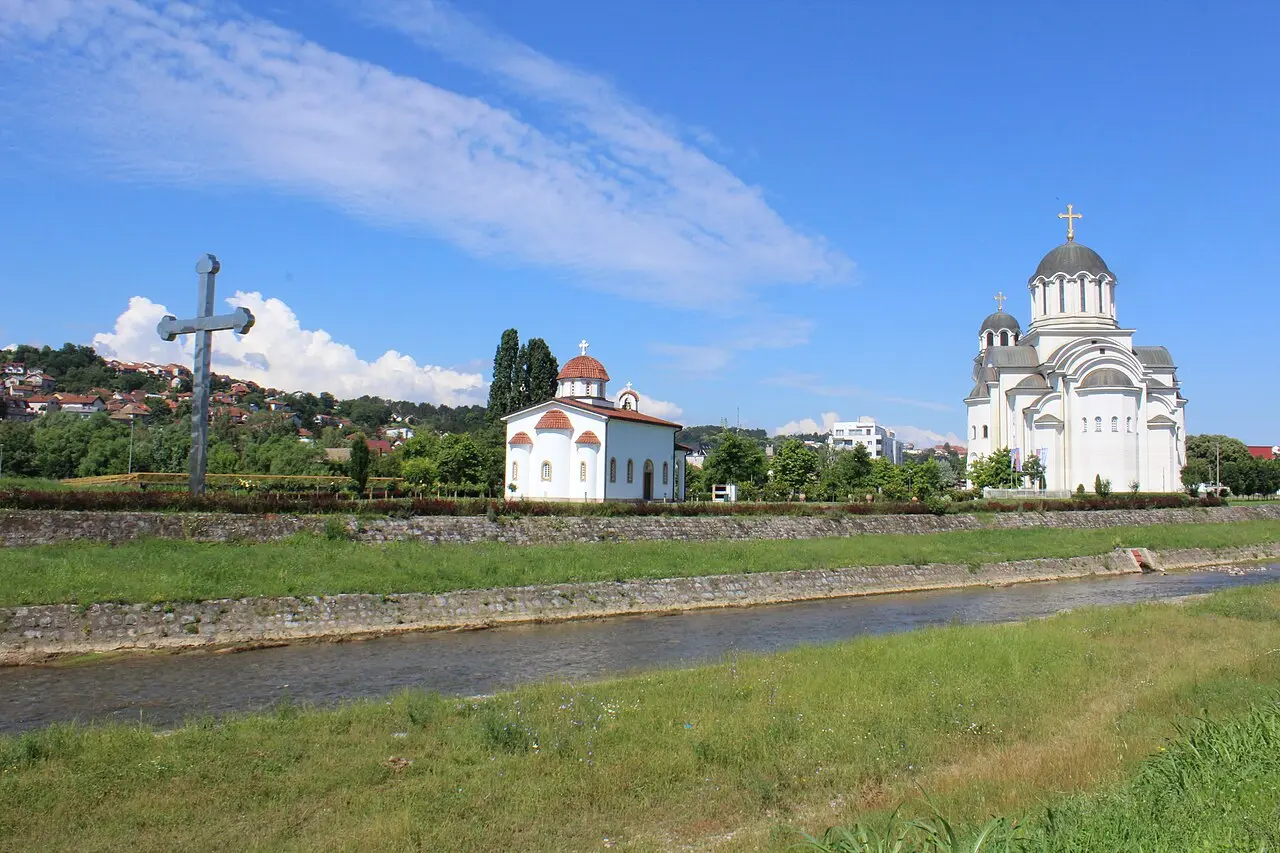
Where the Gradac river finally reaches the Kolubara, right at the edge of the old centre, stands the Church of the Resurrection of Christ (Hram Vaskrsenja Hristovog), a Serbian-Byzantine cathedral begun in 1992 and usually described as the second-largest Orthodox church in Serbia after the Temple of Saint Sava in Belgrade. It’s a big, confident building for a town this size, and you can see it from most of the modern centre.
That modern centre is worth its own hour. Trg Zivojina Misica, the square at the start of the pedestrian zone, is named for the field marshal born in nearby Struganik who commanded the First Army at the Battle of Kolubara - the counteroffensive that Field Marshal Radomir Putnik, chief of the Serbian General Staff, ordered in December 1914, and that drove Austro-Hungarian forces back out of Valjevo that same month. Around the square, a run of early-20th-century facades leads into a pedestrianised shopping street lined with cafes, distinctly different from Tesnjar’s cobbles just five minutes away.
Around Valjevo: rivers, otters and a science village
Valjevo’s setting does a lot of the work. The Gradac river, the same one that meets the Kolubara by the cathedral, rises below Mount Povlen, disappears underground for part of its course, and resurfaces near the village of Bogatici, above Celije Monastery, before cutting a canyon roughly 22.7 km long on its way into town - clean enough, by local reckoning, to support Eurasian otters, a species that won’t tolerate polluted water. A few kilometres further out, the site by Petnica cave is reckoned the first Neolithic settlement in the country to be fully excavated, around 6,000 years old; the village today is better known for its Petnica Science Centre.
Neither of those is a Tesnjar-style stroll - they’re a short drive, not a walk from the old quarter. For a wider spread of west Serbia in one trip, the four-day western Serbia loop treats Valjevo as its opening stop before Zlatibor and the Tara canyon, and our round-up of day trips from Belgrade puts it alongside the capital’s other easy escapes.
Where to stay in Valjevo
Most visitors sleep close to Trg Zivojina Misica, within easy walking distance of both museum buildings and a few minutes from Tesnjar; Hotel Grand, right on the square, is the obvious reference point even if you end up booking elsewhere. Prices undercut both Belgrade and Zlatibor by a wide margin. If Divcibare is also on the itinerary, book that room on the plateau separately rather than trying to base yourself in Valjevo for both nights - the Valjevo and Divcibare route explains why the two stops work better apart.
Practical notes
Monday is the day that wrecks this trip by accident. Both museum buildings are shut then, and the tower adds its own restrictions on top: open only 1 May to 31 October, and closed on Sunday as well as Monday even within that season. Land on the wrong day and Tesnjar’s shopfronts are all you’ll get, which is still a pleasant morning, just not the one this page is selling.
Outside that trap, the town is easy to time. Tesnjar itself takes an unhurried two hours; add either museum building and you’ve filled half a day, and both buildings plus the cathedral make a full one without rushing. Spring and early autumn keep the old quarter comfortable for walking; the valley gets properly hot in July and August. Buy tickets at the door: 190 dinars for the Residence or the central exhibition, 170 for the tower, 260 for the Residence and central exhibition together, 320 for all three. Family and group rates exist too, so check museum.org.rs if there are more than two of you.
Brankovina and Divcibare need a car of your own. The old quarter and the museums don’t.
Two rivers, two brothers, and a habit of rebuilding whatever the last century knocked down: that’s Valjevo in one line, and it’s still one of the few places this close to Belgrade where you can have the old quarter mostly to yourself before lunch.
Photos
On the map
The map loads on click - to keep the page lightweight.
The map didn’t load. Check your connection and refresh the page.
Distance ≈100 km · About 90 minutes by car, or about 75-90 minutes by direct train
- Belgrade ≈100 km · About 90 minutes by car, or about 75-90 minutes by direct train South-west on the A2 Milos Veliki (E763). Srbija Voz runs up to nine direct trains a day from Beograd Centar, about 1h12 to 1h32; Lasta coaches leave from the Belgrade bus station in New Belgrade. Neither operator publishes a fare online, so check on the day.
Read also

Cities · 9 min read
Sombor: Vojvodina's Greenest Town
Verified · August 31, 2026Sombor travel guide: 121 km of tree alleys, the fijaker stand, County Hall with Eisenhut painting, and Gornje Podunavlje wetlands.

Cities · 9 min read
Sokobanja: Spa Under Rtanj Mountain
Verified · August 13, 2026Sokobanja spa guide: Ottoman hammam, respiratory air, Rtanj hikes, Bovan Lake and how to reach the town from Niš or Belgrade.

Cities · 10 min read
Vrnjacka Banja: Serbia's Top Spa Town
Verified · July 25, 2026Vrnjacka Banja is Serbia's most visited spa town: seven mineral springs, the Bridge of Love padlocks, a green park and Lovefest each August.

Cities · 12 min read
Sremski Karlovci: Wine Town on the Danube
Verified · August 16, 2026Sremski Karlovci guide: the 1699 peace treaty and its four doors, 20 wine cellars, what bermet really is, and the bus from Novi Sad.