
Belgrade to Bar by Train: The Scenic Railway
The Belgrade to Bar train in 2026: night and day services, ~11 hours, the Mala Rijeka viaduct, fares and how to buy tickets you cannot book online.
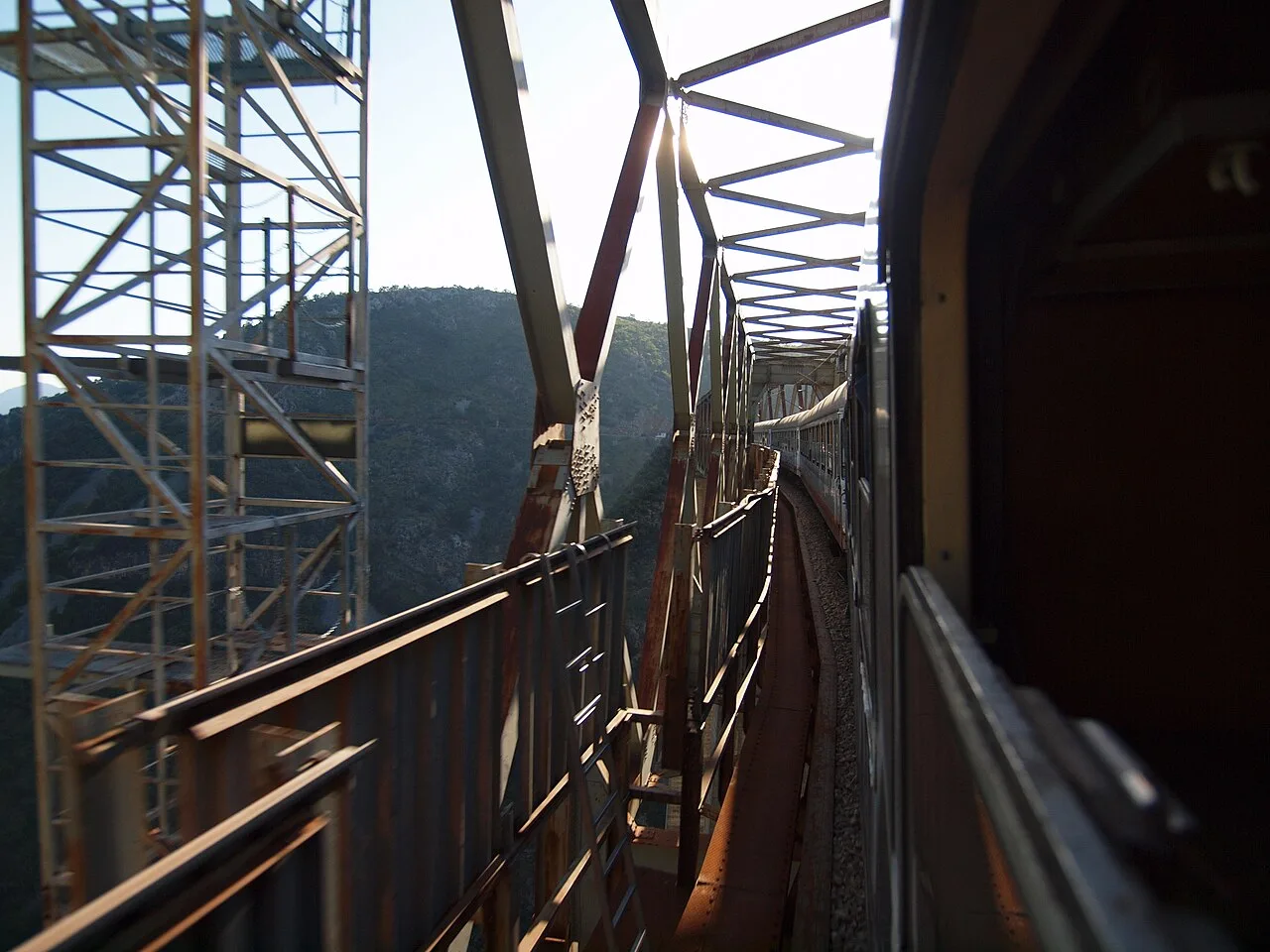
The overnight train from Belgrade to Bar is one of the great rail journeys of Europe, and the good news is that it still runs every day of the year. The trip takes about 11 hours to cover the 476 km down to the Montenegrin coast, crossing 435 bridges and threading 254 tunnels, and the fare is astonishingly low: a base ticket is around €24, with a couchette or sleeper berth adding only a little more. There’s a night train (the Lovćen) all year and a summer-only daytime train (the Tara); which you pick depends on whether you want to sleep through the mountains or watch them go by.
Two things trip up first-timers, so deal with them now. You can’t book this train online, anywhere, which throws people used to buying rail tickets on an app. And the scenery that makes the ride famous is the middle third, through the Montenegrin highlands, which the night train passes in the dark. Below is how to ride it well, and how to actually get a ticket.
The quick verdict
- For the experience and a bed: the night train (Lovćen). Leaves Belgrade Centar around 19:54, reaches Bar about 06:54 the next morning, runs year-round. Book a sleeper or couchette and you wake up on the coast.
- For the views: the daytime train (Tara). Summer only, roughly 09:45 to 21:10, so you see the gorges and the great viaduct in daylight. Seats only, and you change trains at the border.
- Fares are tiny either way. Around €24 base, plus a small berth supplement on the sleeper. This is one of the cheapest long rail journeys in Europe.
If you want the full sensory version, take the day train down and the night train back, so you get the scenery once and a bed once. If you can only do one, most people take the sleeper south and are glad of the early arrival on the Adriatic.
Why this line is special
Opened in 1976 after decades of work, the Belgrade-Bar railway is an engineering epic. It climbs from the plains of Serbia, over the Dinaric mountains, and down to sea level at Bar, and to do it the builders drove those 254 tunnels and threw 435 bridges across the gorges. The showpiece is the Mala Rijeka viaduct, which carries the track roughly 200 metres above the river below it; when it was built it was the highest railway bridge in the world, and it is still one of the highest in Europe. You cross it in Montenegro, north of Podgorica, and on the day train it’s the moment everyone crowds to the window.
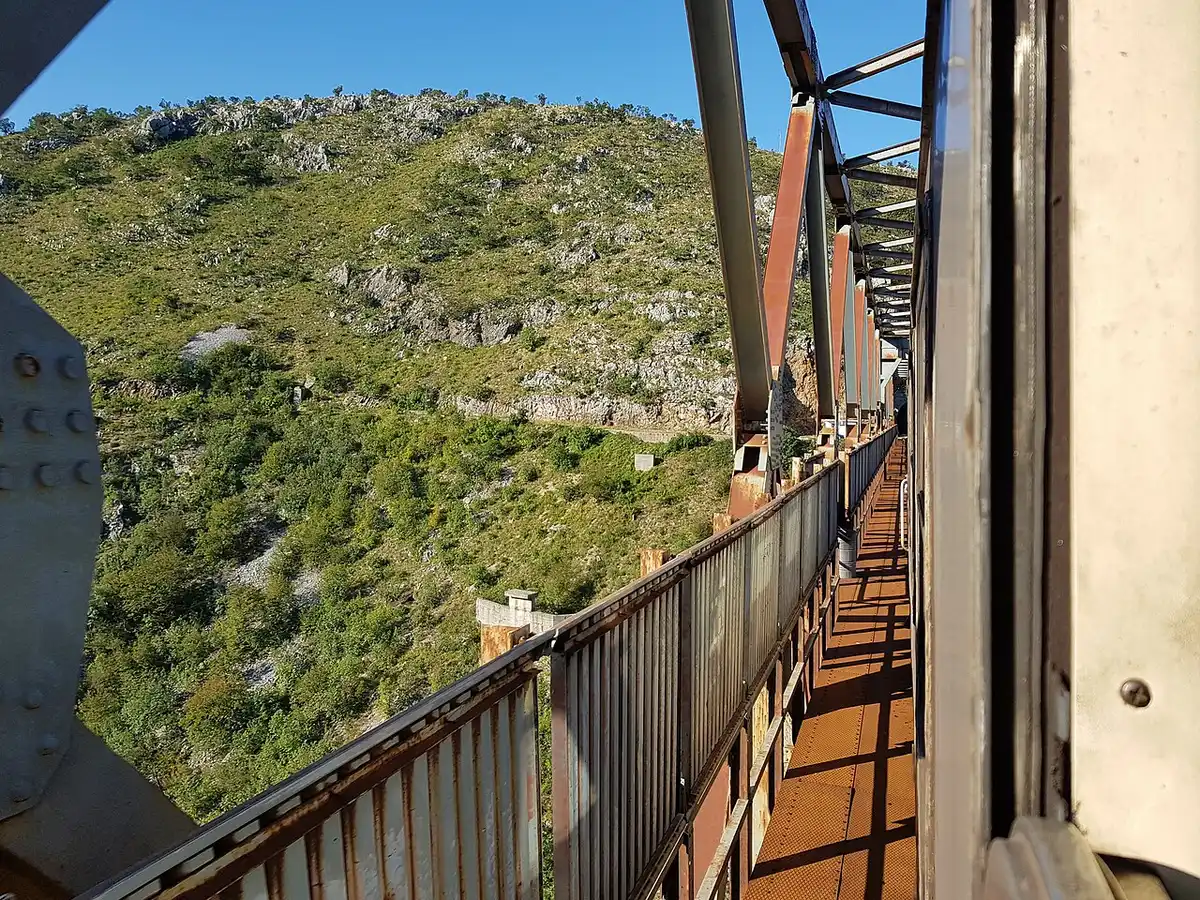
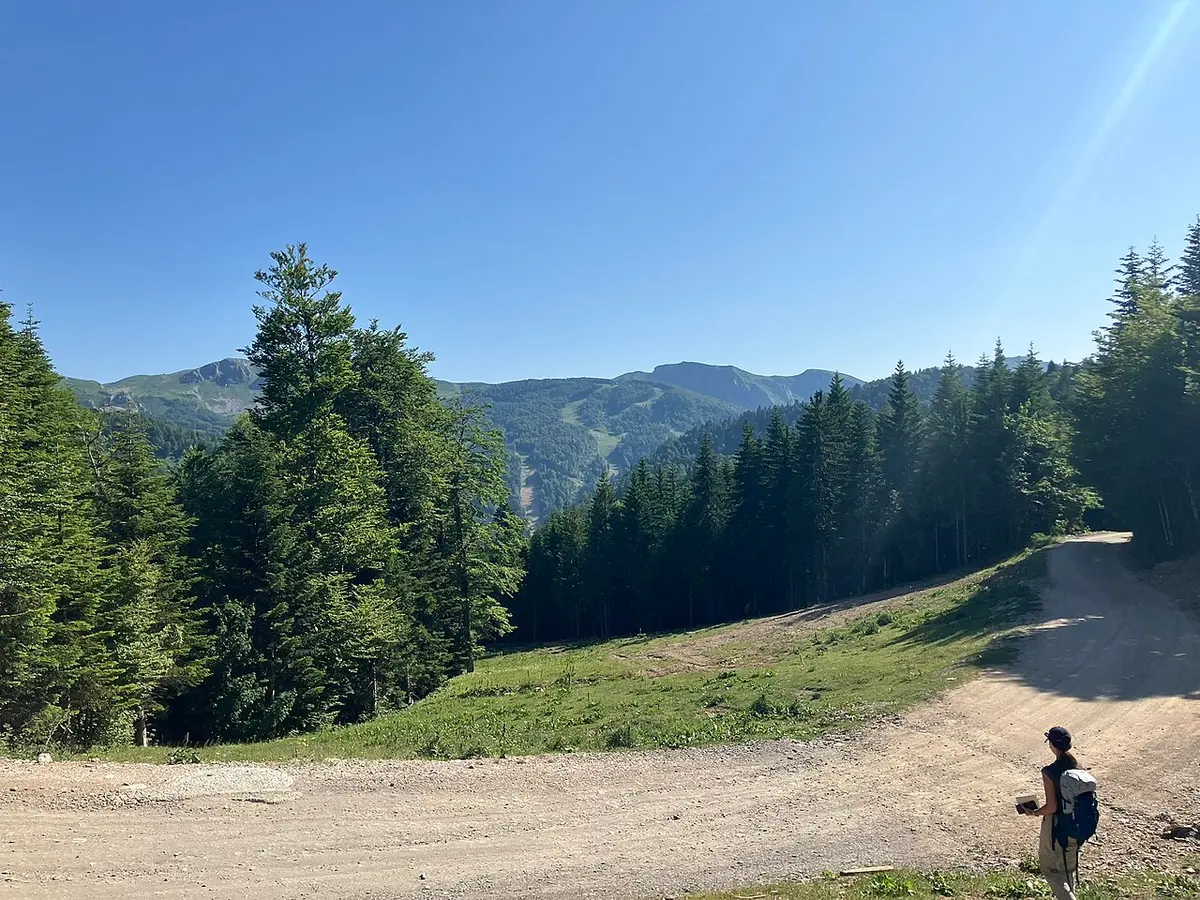
The scenery isn’t evenly spread. The first stretch out of Belgrade, through Valjevo and down toward Užice, is pleasant enough but ordinary. The line earns its reputation once it enters Montenegro, around Kolašin and the Morača canyon, where the track corkscrews through the mountains on a near-continuous run of tunnels and bridges. That’s the part worth staying awake for, and the part the night train sadly hides in darkness.
The night train (Lovćen): the classic way to do it
The year-round service is the Lovćen sleeper. It leaves Belgrade Centar (Prokop) at about 19:54 and pulls into Bar around 06:54 the next morning, an eleven-hour run that neatly turns a long journey into a night’s sleep and drops you on the coast in time for breakfast. Trains leave from Beograd Centar, the modern station south of the old centre, not the grand riverside building that closed years ago.
You have a choice of how to spend the night. There are six-berth and four-berth couchettes (padded bunks, shared, bring or rent bedding) and proper sleeping-car compartments for one, two or three people, each with a washbasin. The supplements on top of the base fare are modest: reckon on roughly €8 for a couchette berth, €17 for a bed in a three-berth sleeper, or €23 for a two-berth sleeper, on top of the ~€24 ticket. For a private-ish bed across a whole country, that’s remarkable value. Book the sleeper rather than a seat if you want to arrive rested; a night upright in a seat carriage is a long one.
The daytime train (Tara): for the views
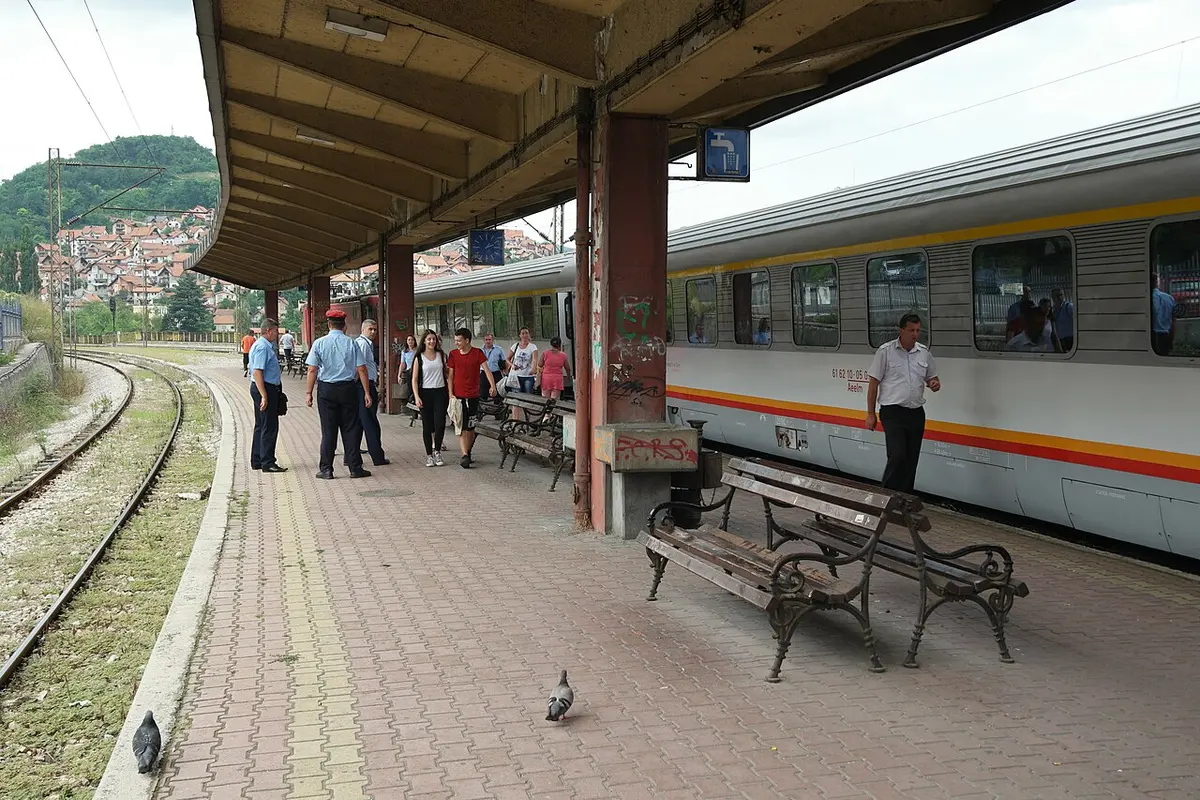
If the scenery is the whole point, take the Tara, the seasonal daytime service. It is a summer service - daily from 12 June to 13 September in 2026, and out of season the day train drops away - leaving Belgrade around 09:45 and reaching Bar about 21:10, so you cross the mountains and the great viaduct in full daylight. It’s second class only, seats rather than berths, and there’s one catch to plan for: you change trains at Bijelo Polje, just inside Montenegro, between the Serbian and Montenegrin railway sections. It’s a straightforward cross-platform change, but worth knowing so it doesn’t come as a surprise. Confirm the exact dates and times before you travel, as the summer timetable is fixed each year.
How to buy tickets (the part that catches people out)
Here’s the thing to internalise: you can’t buy Belgrade-Bar tickets online. Not on an app, not on a website, not from the big international booking sites. Tickets are sold only at railway stations in Serbia or Montenegro, or through a travel agent, and booking opens 60 days ahead. For a walk-up seat that is usually fine, but for a sleeper berth in July or August it’s not - the good berths sell out, and you don’t want to arrive at the station hoping.
The practical approach: if you are already in Belgrade, go to Beograd Centar a day or two early and buy your berth in person. If you’re booking from abroad and want a specific sleeper on a specific summer date, use a Montenegro-based rail agent who can hold the reservation for you; a small booking fee is a fair price for a guaranteed bed. Bring cash for station purchases, and treat any figure you see online as a guide - the fare is set by the railways, and the price you pay at the window is the real one.
Making the most of it
A few things learned the hard way. Pack food and water - there’s no reliable buffet car, and while vendors sometimes board at stops, you shouldn’t count on it for an eleven-hour trip. Charge your devices before you go, as power sockets aren’t guaranteed. On the night train, a left-hand window seat/berth heading south puts more of the daytime canyon scenery on your side, though in a sleeper you’re moving around anyway. And build in slack at the Bar end: if you’re connecting to a ferry across the Adriatic or a bus down the coast, don’t book the tightest possible link, because trains on this line can run late.
Is it worth it?
For the ride itself, absolutely - it is cheap, comfortable enough in a sleeper, and genuinely one of the most scenic rail routes in Europe, all for the price of a pizza and a couple of drinks. Go in with the right expectations: it is slow, the buffet is unreliable, and you can’t book it like a normal train. Do the day train down for the views and the sleeper back for the rest, and you get the best of both.
If you’re planning a wider trip, this railway pairs naturally with a bigger loop of the region - our Serbia 10-day road trip sets out how the west and south fit together, and for the practical side of moving around the country by train, bus and car, our guides to getting around Serbia and how to get to Serbia cover the rest.
Photos
Read also

Transport · 11 min read
Novi Sad to Budapest: Train, Bus & Driving
Verified · September 1, 2026From Novi Sad to Budapest in 2026: FlixBus in 4h45 from EUR 20, drive about 300 km, or Soko train to Subotica then Hungary.

Transport · 10 min read
Belgrade to Istanbul: Bus, Flights & Long Way
Verified · August 26, 2026Belgrade to Istanbul in 2026: coach about 15.5h from €45, flights about 1h45 BEG-IST, no through train. Times, borders and the Sofia relay.

Transport · 11 min read
Belgrade Airport to Novi Sad: Transfer, Bus, Train
Verified · August 23, 2026No direct bus BEG to Novi Sad: a transfer or shared shuttle covers about 90 km in 70 minutes, or take the free airport bus plus the Soko train.

Transport · 12 min read
Belgrade to Kopaonik: Transfers, Bus & Driving
Verified · July 27, 2026Belgrade to Kopaonik is 265-300 km and about 4 hours, 5 in winter. Coach fares, transfer and taxi prices, the two mountain approaches, winter tyre rules.