
Getting Around Serbia: Trains, Buses & Cars
How to get around Serbia in 2026: the fast Soko train north, buses everywhere else, when a car pays off, and why Belgrade has no metro but free trams.
The honest short answer is that Serbia is easy to get around if you match the mode to the direction you’re heading. North, take the train: the fast Soko service links Belgrade, Novi Sad and Subotica in comfort, and it’s genuinely quick. Everywhere else, take the bus: the intercity network is dense, cheap and reaches towns the trains don’t. And for the west and the deep east, where the best scenery sits scattered along thin timetables, a hire car turns a puzzle into a pleasure. There’s no domestic flying worth the bother in a country this size, so those three, train, bus and car, are your whole toolkit.
One thing trips up almost every first-timer, so it is worth saying plainly up front: the fast train only runs on the northern corridor. The rest of the rail network is slow and sparse, which means for a city like Niš the bus isn’t just an option, it’s the right call by a wide margin. Get that one idea straight and the rest of this falls into place quickly. (This guide is about moving around once you’re here; if you’re still working out the arrival, see how to get to Serbia for flights and the overland options.)
The quick verdict, by where you are going
- Belgrade to Novi Sad or Subotica (north): the Soko fast train. Frequent, cheap, under 40 minutes to Novi Sad.
- Belgrade to Niš, Zlatibor, Kragujevac or almost anywhere else: the bus. Hourly to the big towns, and faster than the train on those routes.
- The western mountains (Zlatibor, Tara, the Šargan railway), the ski resort of Kopaonik and the eastern Danube (Golubac, the Iron Gate): a rental car. The sights are spread out and the buses thin; for the ski resort specifically, our Belgrade to Kopaonik guide weighs the drive against the coach and a fixed-price transfer.
- Around Belgrade itself: trams, buses and trolleybuses, all free since 2025 (with one airport exception).
If you’re pairing the capital with Novi Sad, you may never need a car at all. If the mountains are the point of the trip, rent one for that leg and hand it back. Most well-planned Serbia trips mix all three without any fuss.
Trains: fast in the north, slow everywhere else
Serbia’s railways are a story of two halves. The rebuilt northern line is a proper piece of modern infrastructure, and the rest is a patient, old-fashioned network that’s fine for a scenic amble but hopeless if you’re in a hurry.
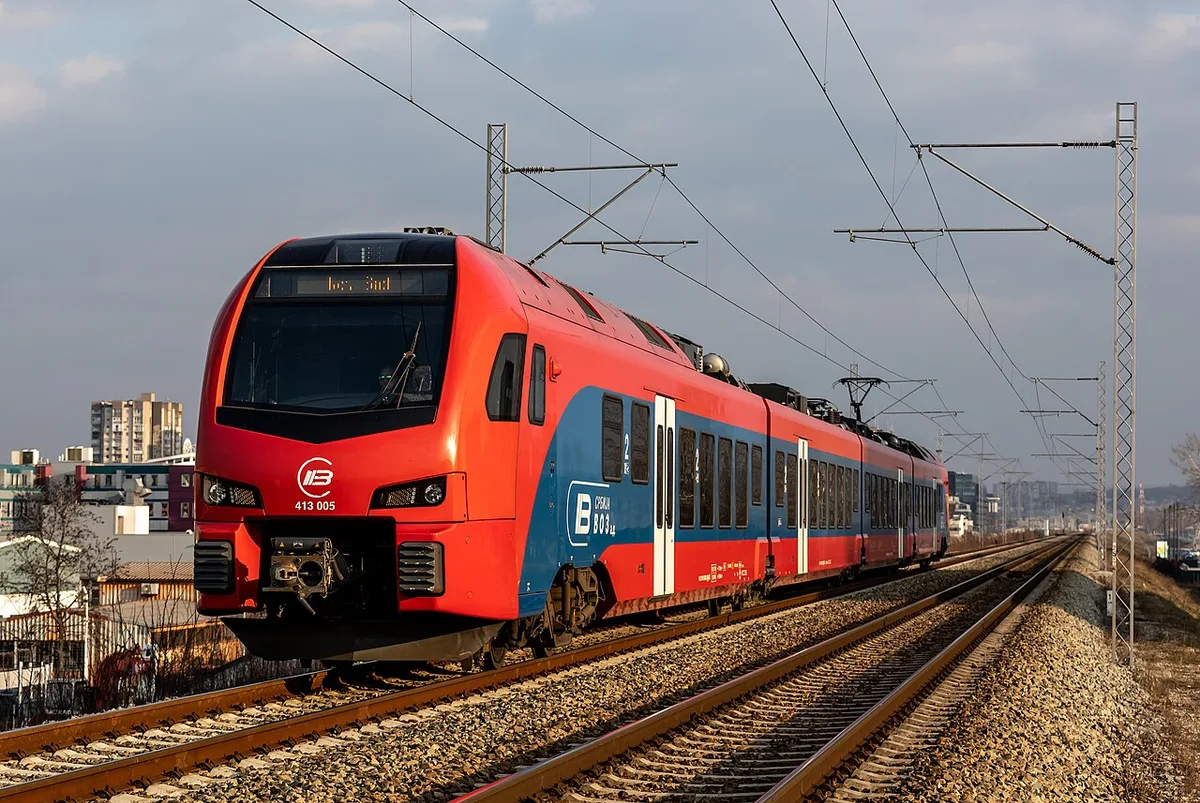
The star is the Soko (“Falcon”) service run by Srbija Voz on the high-speed line north out of Belgrade. It covers Belgrade to Novi Sad in under 40 minutes for the roughly 75 km, and since the extension opened in October 2025 it now carries on to Subotica near the Hungarian border, with the full Belgrade-Subotica run taking under 80 minutes. On that corridor there are around thirteen departures a day to Subotica, split between the fast Soko trains and slower Interregio services that make more stops. Fares are low by any European standard, roughly 1,200 RSD (about €10) one way to Subotica at the time of writing, though prices have crept up as the line matured, so check the current figure on the Srbija Voz site before you count on it.
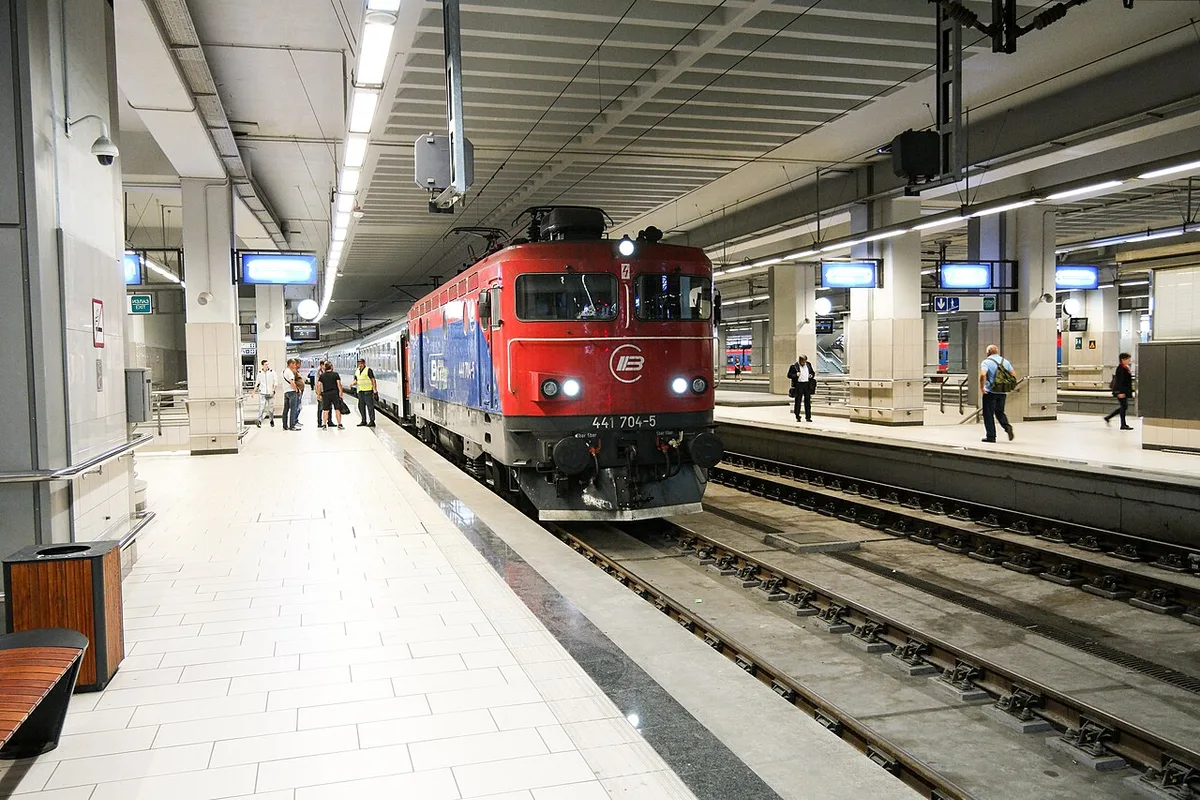
Trains leave from Beograd Centar, the modern station most people still call Prokop, a little south of the old centre. It is worth knowing that Prokop is a working transport hub rather than a grand terminus, and it replaced the beautiful old riverside station, which no longer runs trains. Buy tickets at the counter or online; on the busy northern trains a seat reservation is a good idea at weekends and holidays. If Novi Sad is your target specifically, our guide to getting from Belgrade to Novi Sad walks through the train, bus and car choice and the day-trip timing.
This is the whole reason I keep hammering the point. The fast line is the exception, not the rule. Head south to Niš and the train crawls: the old service takes something like six hours and runs only a few times a day, against a bus that does the same trip in around three. So don’t let “there is a train” fool you into taking it out of the north. As a rule of thumb: rail for Novi Sad and Subotica, buses for the rest. (A separate, lovely exception is the tourist Šargan Eight railway in the west, which is a mountain attraction in its own right, not a way of actually getting anywhere.)
Buses: the real workhorse of the country
For most journeys that are not on the northern rail corridor, the bus is how Serbia actually moves. The network is dense, departures are frequent, coaches are comfortable enough, and it reaches virtually every town of any size, which the railways simply don’t.
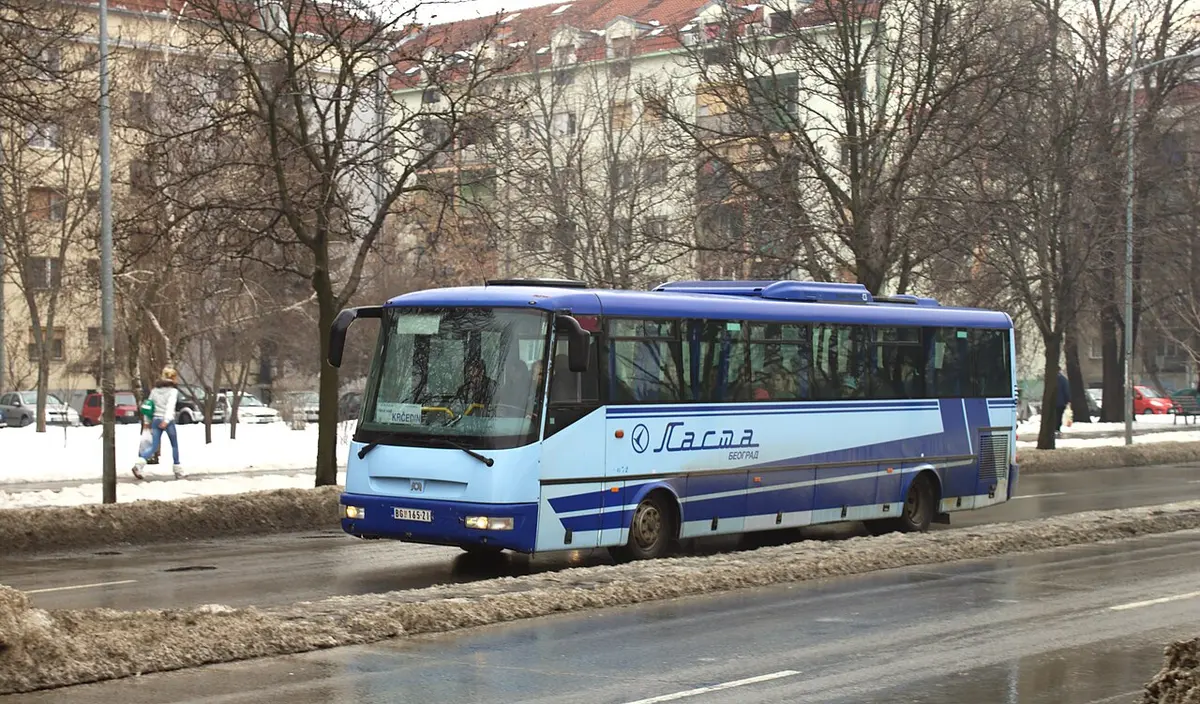
To Niš, buses run roughly hourly and take about three hours and ten minutes, with operators such as Niš-ekspres and Lasta dominating the corridor, and our guide to getting from Belgrade to Niš walks through the bus, the slow train and driving in detail. Similar frequency and value apply to Kragujevac, Užice for the west, and the mountain resorts. Buy tickets at the station counter, from the operator online, or through an aggregator (a local SIM or eSIM keeps the booking apps working on the move); on popular routes and at weekends it is worth booking ahead, and note that some companies charge a small fee for stowing a large bag in the hold, paid to the driver in cash. It’s minor, but it surprises people.
The one wrinkle to plan around in the capital is the bus station itself. Belgrade’s main station (BAS) moved in September 2024 from its old riverside site to a new terminal in New Belgrade (Block 42), out across the Sava from the centre. It’s modern and well organised, but it’s no longer a short walk from the old town, so leave time to reach it, and be sure you are heading to the new location and not the demolished old one, which still shows up on out-of-date maps and blog posts. From the new station, city buses and a nearby suburban rail stop connect you back into town.
For crossing into neighbouring countries, buses again do most of the heavy lifting, with direct international coaches from Belgrade to Sarajevo, Podgorica, Skopje, Sofia and beyond; our guide to getting from Belgrade to Sarajevo walks through the bus, driving the Drina route and why there’s no useful train. South toward the capitals of North Macedonia and Bulgaria the coach is likewise the way to go, and our guides to Belgrade to Skopje and Belgrade to Sofia compare the operators, the drive and why the train no longer runs through on either route. The same is true northward to Hungary: for now the coach is the simplest way, and our Belgrade to Budapest guide compares the direct FlixBus, the short Air Serbia flight and the rail workaround while the through express is still being commissioned. Heading west into Croatia it’s the same story - the direct train has been gone since 2020, so it comes down to the coach or a short flight, which our Belgrade to Zagreb guide compares. Treat any promised direct-train timetable as provisional until it’s actually running.
When a car is worth it (and when it is not)
A hire car isn’t necessary for the north, and it’s a positive nuisance inside Belgrade, where parking is tight and everything is walkable or free to reach by tram. But for the parts of Serbia that make people fall for the place, the western mountains and the eastern Danube, it changes the trip entirely.
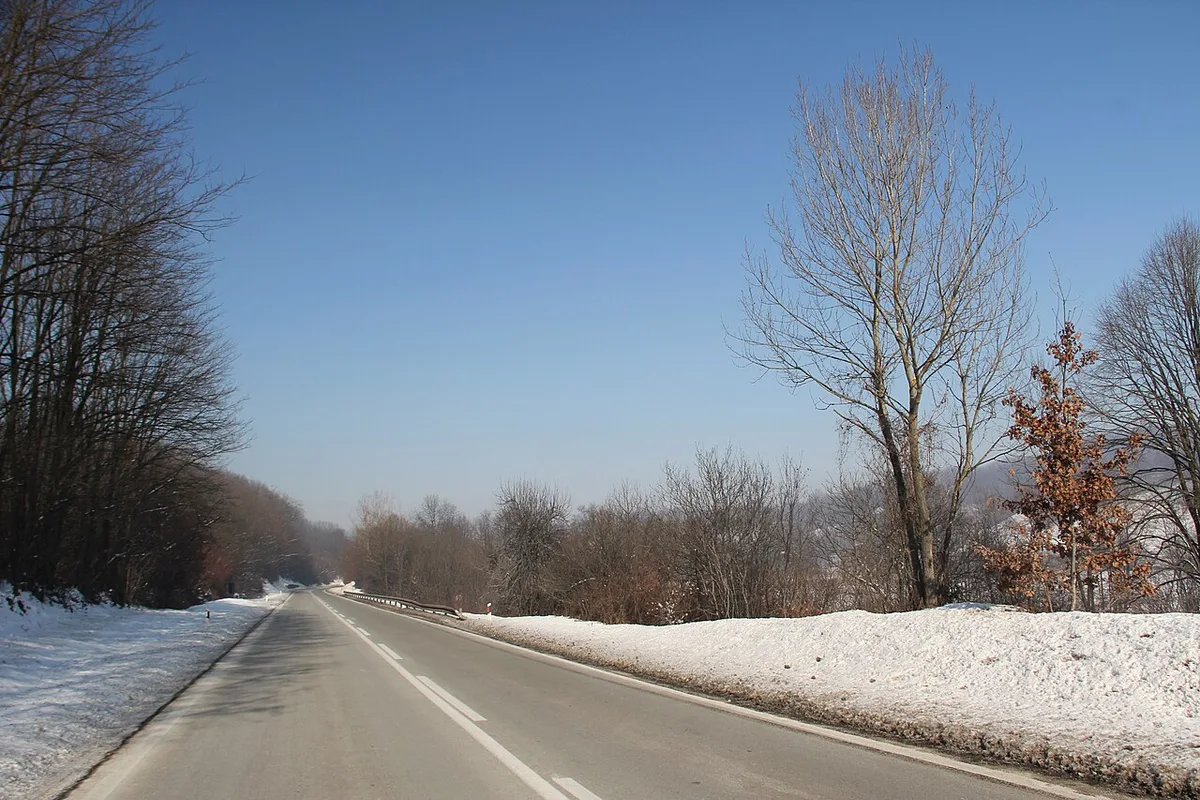
The reason is simple. Around Zlatibor, Tara National Park and Mokra Gora, and out east at Golubac and the Iron Gate, the good stuff is spread thin and the buses that serve it are infrequent. A car folds a whole region of viewpoints, canyons and villages into a series of relaxed half-days, exactly the pattern our 7-day Serbia itinerary is built around. The smart move is to do the Belgrade-Novi Sad half on the train and bus, then collect a car for the western loop and drop it when you’re done, rather than pay for it to sit idle while you sightsee in the capital.
The driving itself is easy. Roads are in decent shape, a modern motorway runs the spine of the country, and one quirk works in your favour: Serbia has no motorway vignette. Instead you take a ticket and pay the toll at a booth as you leave the motorway, so there’s no sticker to buy in advance. The full detail on licences, deposits, tolls without a vignette, fuel and Belgrade’s parking zones is in our dedicated guide.
For all the practicalities of hiring, from what documents you need to how the tolls and city parking work, see our full guide to car rental in Serbia. Pick the car up at the airport on the morning you leave Belgrade, not on arrival.
Getting around Belgrade (and the free-transport catch)
Inside the capital you’ll not need any of the above. Belgrade has no metro, and although the first line is finally under construction, it is years from opening, so the city runs the old-fashioned way on buses, trams and trolleybuses, backed by the BG Voz suburban trains. It works, and the network is dense enough that most visitors walk the centre and hop a tram for the longer stretches.
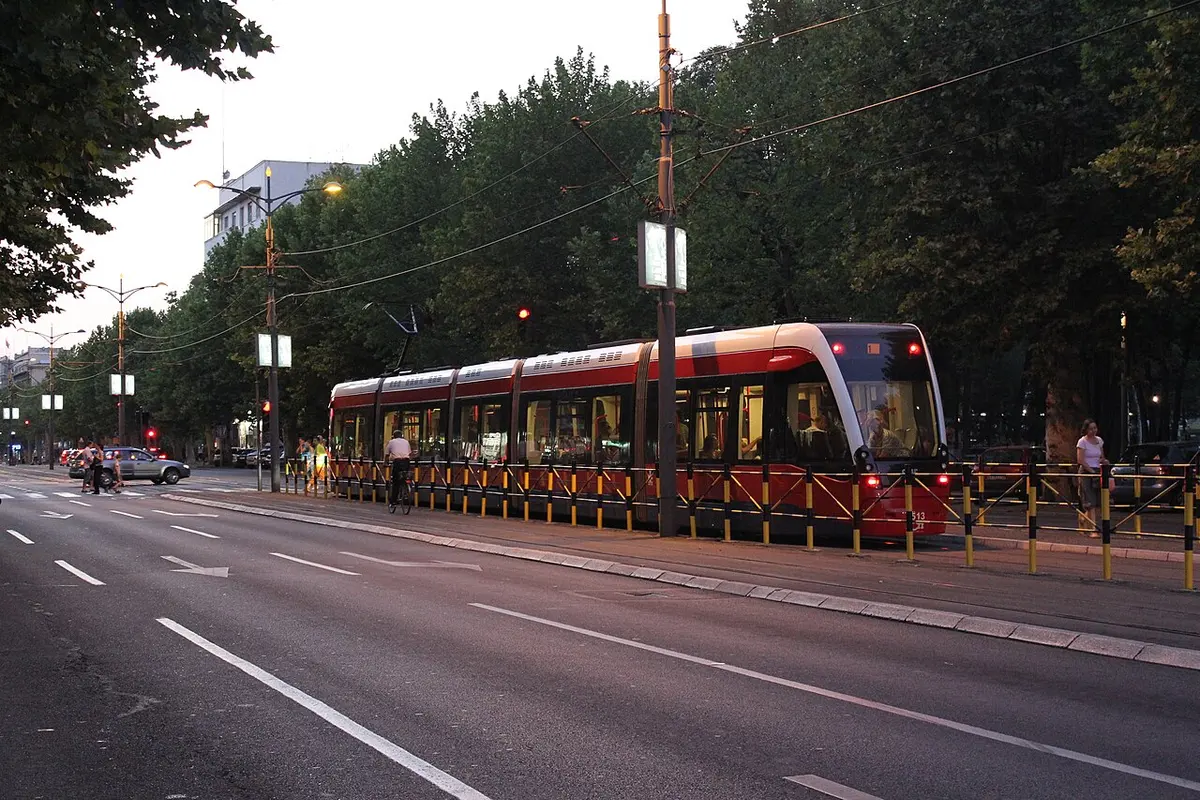
The genuinely unusual part comes next: since January 2025, Belgrade’s public transport is free for everyone. No ticket, no card, no tapping, on all the regular city and suburban buses, trams, trolleybuses and the BG Voz trains. It made Belgrade the largest city in Europe to drop fares outright, and it means the validators still bolted to the buses now sit unused. As a visitor you simply get on.
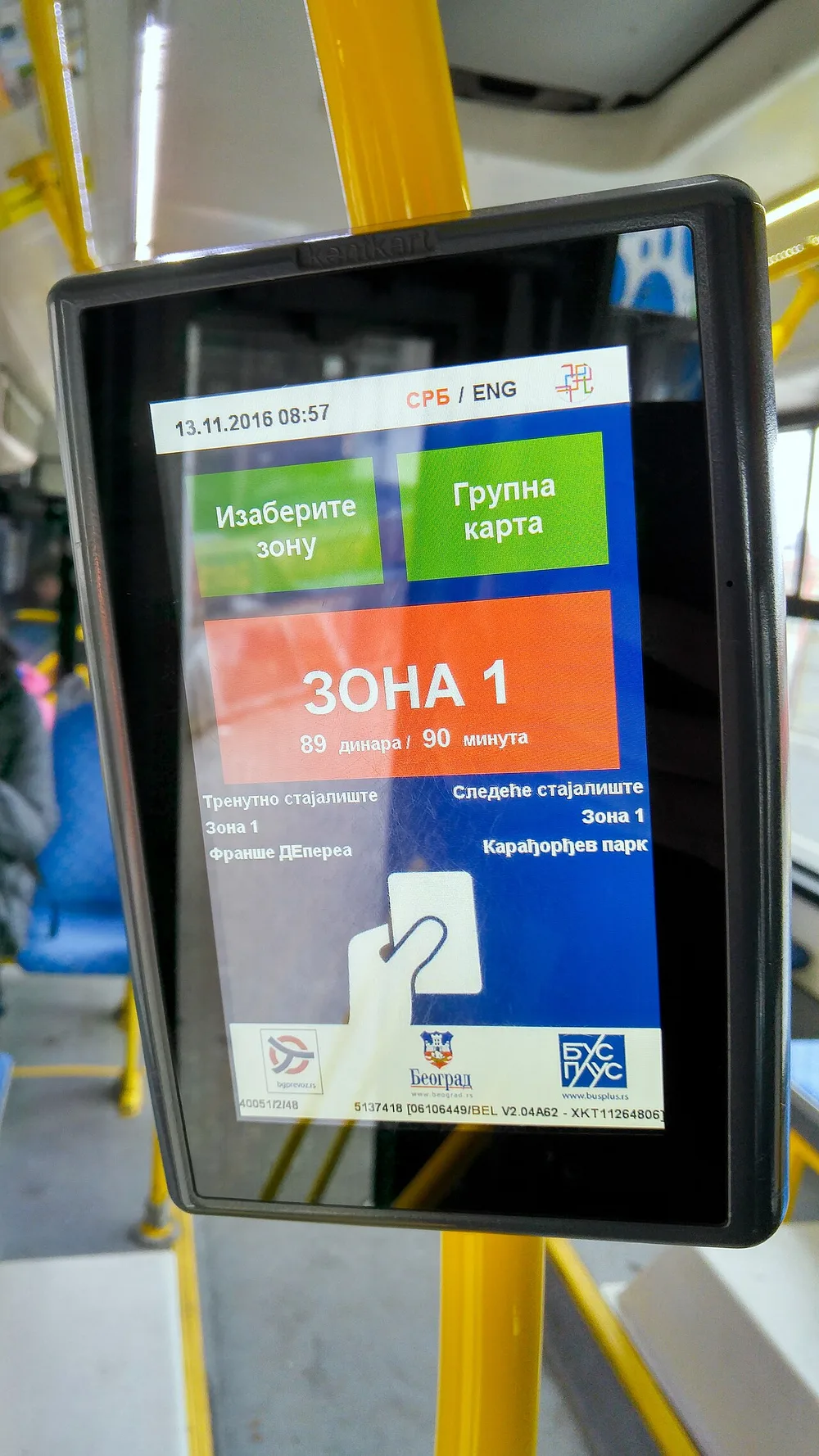
The one exception is the airport. The free rule covers the ordinary city lines, but the A1 airport express minibus isn’t free (nor are the “E” express minibuses), so you still pay a small fare on those. That single carve-out catches a lot of new arrivals, who assume a city that made everything free must include the airport bus too. It doesn’t, and the way in from the airport deserves its own plan: our guide to Belgrade airport to the city centre covers the free bus 72, the paid A1, taxis and transfers side by side. When you do want a cab in town, our guide to taxis in Belgrade covers the ride-hailing apps, the official meter rates and the overcharging tricks to sidestep.
So how should you plan it?
Keep it simple. Slot the northern cities onto the fast train, put everything else on the bus, and rent a car only for the western and eastern legs where the scenery is scattered. In Belgrade, walk, and ride the free trams when your feet give out. That combination costs very little, wastes almost no time, and lets Serbia unfold at the pace it deserves rather than the pace of a rigid timetable.
If you are still shaping the trip, our guide to how many days you need in Serbia helps you decide how far to range, and the 7-day Serbia itinerary shows exactly how the train, bus and car legs stitch together over a week.
Photos
Read also

Transport · 11 min read
Novi Sad to Budapest: Train, Bus & Driving
Verified · September 1, 2026From Novi Sad to Budapest in 2026: FlixBus in 4h45 from EUR 20, drive about 300 km, or Soko train to Subotica then Hungary.

Transport · 10 min read
Belgrade to Istanbul: Bus, Flights & Long Way
Verified · August 26, 2026Belgrade to Istanbul in 2026: coach about 15.5h from €45, flights about 1h45 BEG-IST, no through train. Times, borders and the Sofia relay.

Transport · 11 min read
Belgrade Airport to Novi Sad: Transfer, Bus, Train
Verified · August 23, 2026No direct bus BEG to Novi Sad: a transfer or shared shuttle covers about 90 km in 70 minutes, or take the free airport bus plus the Soko train.

Transport · 12 min read
Belgrade to Kopaonik: Transfers, Bus & Driving
Verified · July 27, 2026Belgrade to Kopaonik is 265-300 km and about 4 hours, 5 in winter. Coach fares, transfer and taxi prices, the two mountain approaches, winter tyre rules.