
Belgrade to Kopaonik: Transfers, Bus & Driving
Belgrade to Kopaonik is 265-300 km and about 4 hours, 5 in winter. Coach fares, transfer and taxi prices, the two mountain approaches, winter tyre rules.
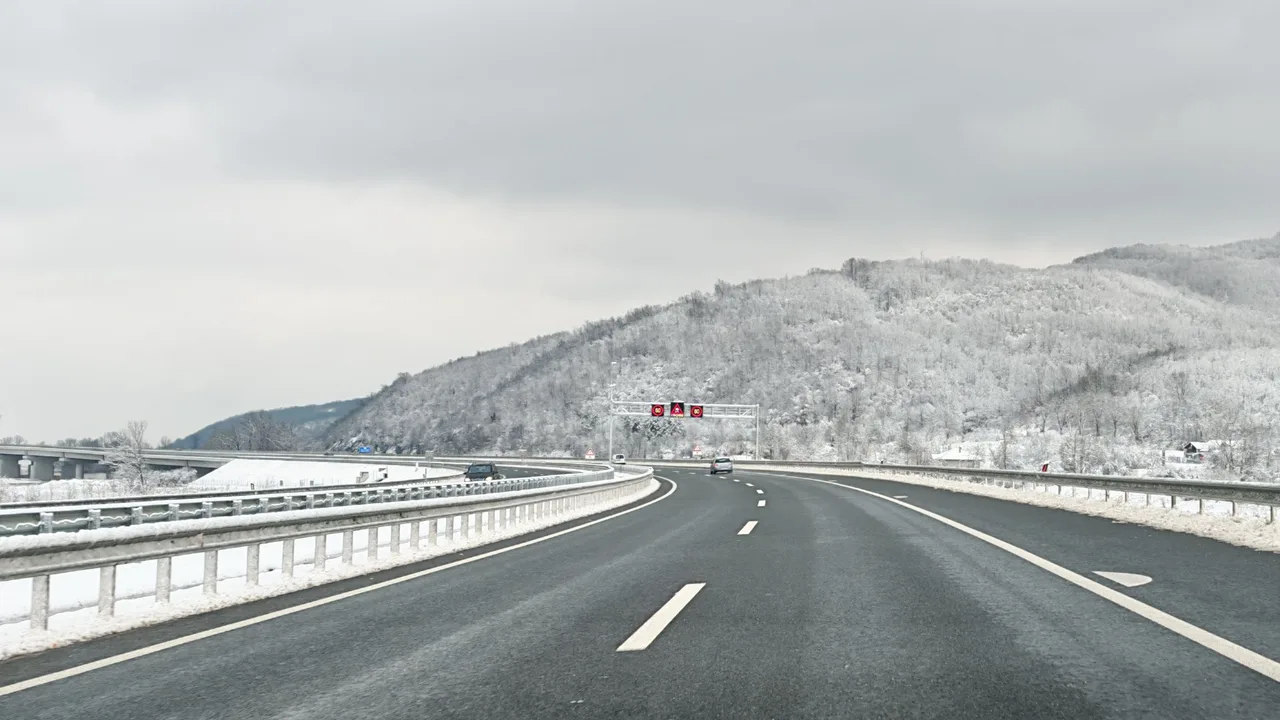
Kopaonik sits 265 to 300 kilometres south of Belgrade depending on the route, and the resort’s own portal budgets about four hours for the drive. Booking platforms quote three and a half, the best case on clear roads; in winter, plan on five. The daily coach costs about 2,750 dinars, roughly 23 euros, and takes just over five hours; a private transfer runs near 281 euros for the vehicle, priced per car rather than per head, which changes the maths for a group. There’s no train, and no amount of timetable-hunting will produce one.
Where people lose the afternoon is the last hour. The map shows a fast motorway run and then a short wiggle up to the plateau, and that wiggle climbs well over a thousand metres on a road that collects snow from November. You pick your approach two hours before you can see the mountain.
The short version
Dinar figures below convert at about 117 to the euro, the rate in July 2026.
- Four people with skis: a transfer or a hire car. At 281 euros the transfer vehicle costs about three times four coach tickets, but it’s door to door with the ski bags - ask for an estate or a minivan, not the standard sedan.
- Two people watching the budget: the bus, about 5,500 dinars (47 euros) for the pair one way.
- Mountain plus the spas around it: a car. Nothing else reaches Vrnjačka Banja, Jošanička Banja or the Ibar valley without a day of waiting.
- Skiing only, a week on the plateau: think twice. The car sits in a garage for roughly 120 euros a week, park entry fee included, and does nothing else.
- Landing after dark in snow: book the transfer ahead, or sleep in Belgrade and take the morning coach. Don’t improvise this leg.
Two roads up, and they behave differently
Both routes start on the motorway and end with a climb, and they are not interchangeable in winter. The eastern approach runs down the A1 to Pojate, then through Kruševac and Brus over the Jaram pass: roughly 300 km, which the resort’s portal puts at four hours. It’s the busier one and the shorter final climb, even though it is the longer drive, and it fills with snow when a front comes through. The western approach leaves the motorway at Batočina for Kragujevac, Kraljevo and the spa village of Jošanička Banja: about 290 km, nearer five hours, and it’s where the portal sends you in bad weather.
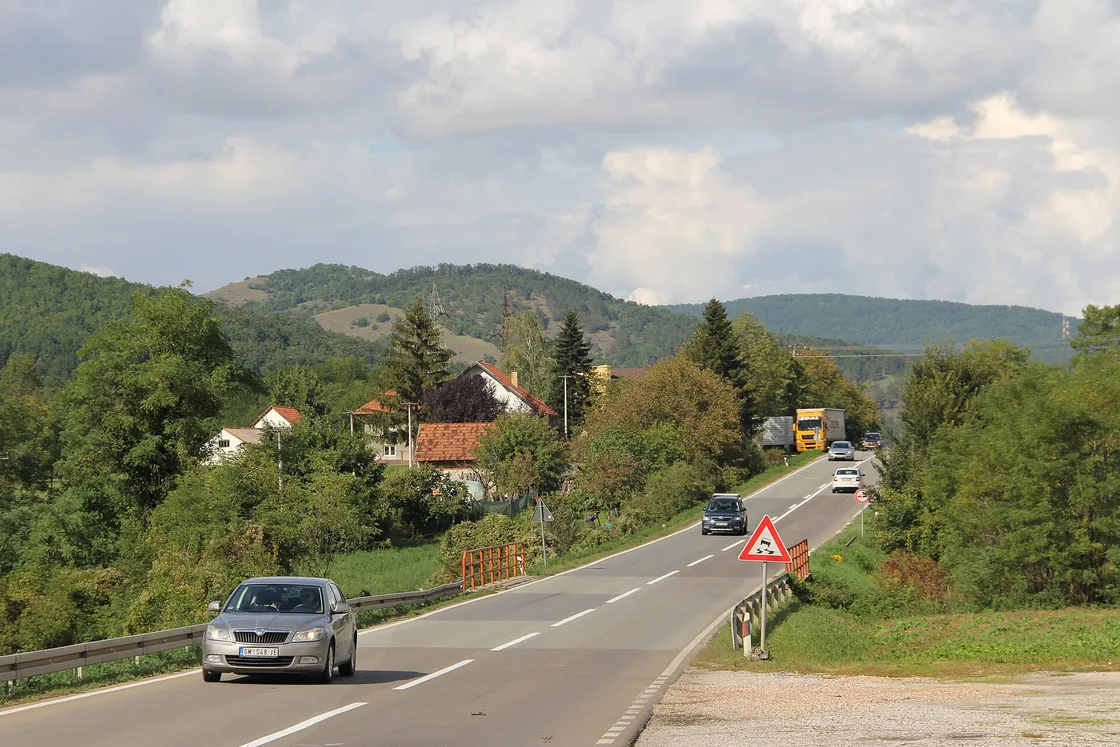
The motorway half has quietly improved. The 28.71 km of the A5 Morava Corridor from Adrani near Kraljevo to Preljina opened on 26 June 2026, leaving 12 km near Vrba as the last gap and the full 112.3 km promised for September 2026, a date worth checking rather than trusting. That matters more than the ribbon-cutting suggested: Preljina sits on the A2 west out of Belgrade, so the western approach now has a near-motorway alternative to the old Batočina line. Which is quicker depends on the day’s traffic.
Tolls are the easy part. Serbia has no vignette: take a ticket at the barrier, pay at the booth as you leave, by cash, card or tag. For scale, the whole A1 run to Niš is about 1,180 dinars (10 euros) for an ordinary car, and you turn off well before Niš, so your share is smaller; Putevi Srbije runs a section calculator, and the list in force is dated 1 July 2026. Our guide to driving in Serbia covers the rest of the rules.
What winter really asks of you
Serbian law here’s conditional, which is the part visitors miss. Under the vehicle regulations, from 1 November to 1 April a car must carry winter equipment if there’s snow, ice or black ice on the road. It isn’t a blanket tyre mandate for dry tarmac, but the moment the road is white you need winter tyres on all four wheels with at least 4 mm of tread, and going without counts as a technical defect of the vehicle, with fines reaching 20,000 dinars, about 170 euros. Chains count as part of the kit outside built-up areas, which is where this road spends its time. These rules get revised, so check the current wording before you travel.
That last point bites hire-car drivers hardest. The final climb, particularly the Brzeće side, can be declared passable only with chains fitted and lorries turned back; the Putevi Srbije winter service report announces it, and you want that on the morning you travel, not the night before. A car that’s perfectly legal on Belgrade’s boulevards can be stopped at the foot of the mountain, so ask your supplier in writing about winter tyres and chains for your dates: “all-season” and “we do that in December” aren’t the same answer. Chains can also be hired in Jošanička Banja and Brzeće, the last villages before each climb.
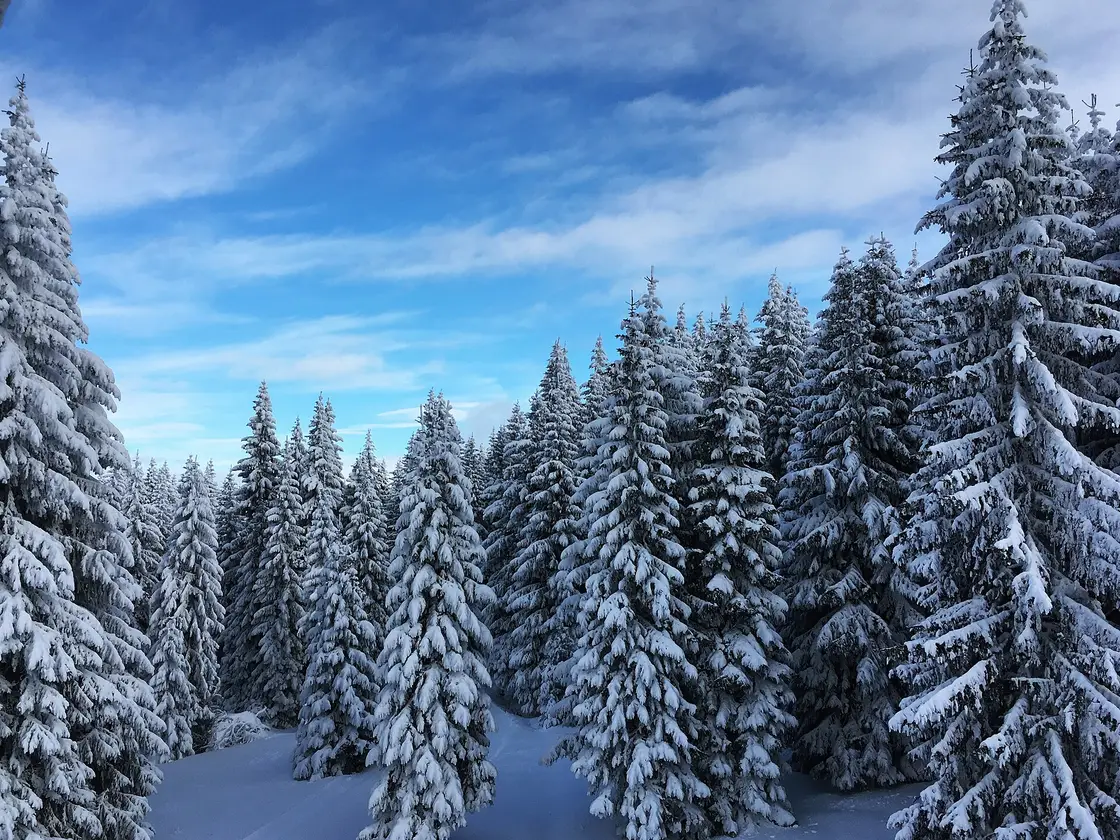
The other habit worth copying is leaving early: an eight o’clock departure buys daylight and a plough that has already been through, rather than the last thirty kilometres in the dark behind a queue of ski boxes.
The bus: cheap, slow, and built around someone else’s day
There is a direct coach, and it does the job if you know what you’re buying. On a summer date we checked, Belgrade to Kopaonik showed two departures, both in the morning and 5 hours 15 minutes, with Jugoprevoz Kruševac at 2,750 dinars one way; Belgrade’s bus station lists returns at 4,090 to 4,250 dinars depending on carrier. For the ski season it advertises daily departures at 07:00 and 08:45 between 25 December and 15 March, while the resort portal describes a morning run and a midday one landing around 17:15, and adds Jugoprevoz Raška, Lasta, Maestro Travel and Supernova Travel. That portal also tells you to ring the station first, which says enough about how firm these timetables are.
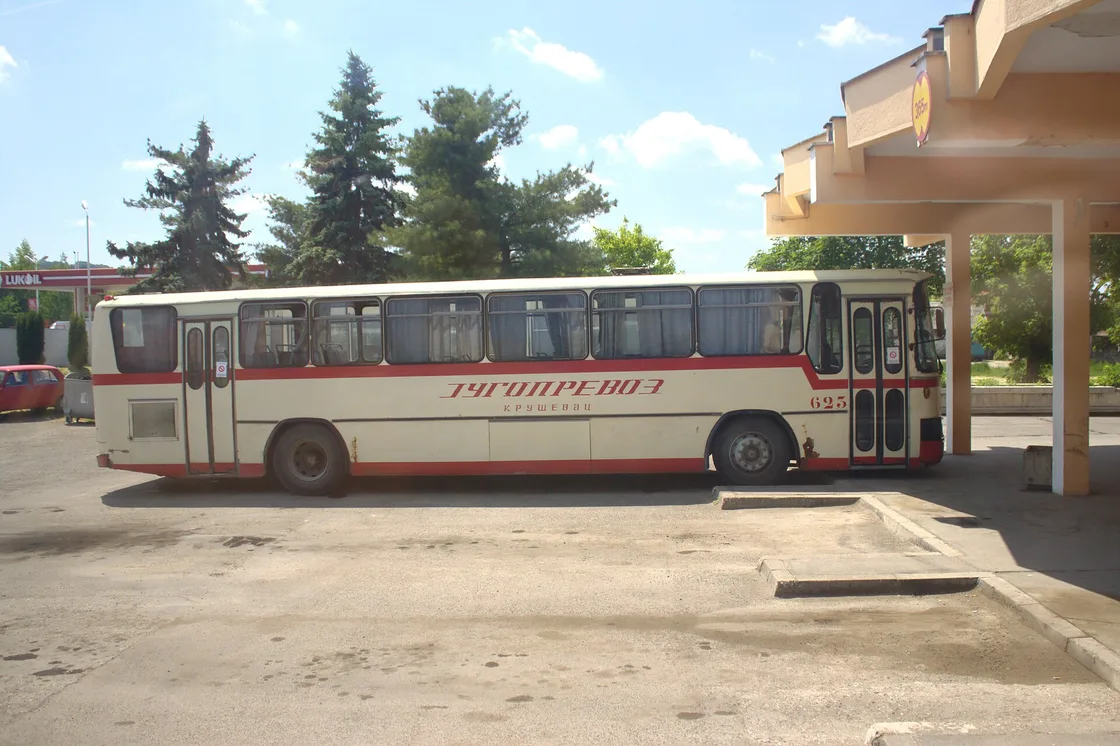
The shape of the service is the real cost. Coaches leave Belgrade in the morning and come back down in the early afternoon, a timetable built around the resort’s changeover day, so the bus quietly costs you half a day at each end. Add the trek out to the bus station in New Belgrade, Block 42, the departure point since September 2024 and nobody’s idea of central, and a five-hour ride eats most of a day door to door. For the wider picture, see getting around Serbia.
Transfers and taxis: paying to skip the problem
A private transfer from Belgrade Airport was quoted at about 281 euros one way for the transfer vehicle on a big booking platform in July 2026, over a stated 265 km and three and a half hours. Read the small print: that buys a sedan for four passengers and three medium suitcases. Four people with ski bags don’t fit, so you’re into estate or minivan territory at a dearer rate. Get a live quote with your actual luggage.
Per vehicle is the phrase that matters, and the gap is wider than it looks. Four one-way coach seats come to 11,000 dinars, about 94 euros, and the transfer is roughly three times that. A taxi isn’t the loophole: these runs are priced by the kilometre for the whole car and agreed before you get in, and at one Belgrade operator’s advertised 0.80 euros per kilometre the trip lands in the 210 to 240 euro bracket. In between sit shared door-to-door minibuses: one operator advertises 3,600 dinars (31 euros) a head one way, ski kit included.
So the transfer isn’t a saving. What it removes are the two awkward parts of this trip: crossing town from the airport to the coach station, and finding transport up the mountain when you land at ten at night in a snowstorm. Land in daylight and the cheaper play is a night in the capital and the morning coach, which our guide to Belgrade Airport transport covers.
The bill that starts when you arrive
Driving looks cheapest until you price the whole week. A compact with winter tyres included runs about 27 to 39 euros a day on a Belgrade agency’s October-to-May tariff, so roughly 200 euros for seven days; comparison sites show lower rates, but confirm the tyres. 600 km of round trip burns 36 to 42 litres, and at July 2026 pump prices, 200 dinars a litre for petrol and 224 for diesel, that’s 60 to 80 euros. Tolls add under 20 euros both ways. Then the mountain starts charging.
Kopaonik National Park charges a fee for bringing a vehicle into the protected area, collected at Đorov most, Brzeće and Sunčana Dolina. For an ordinary car it is 300 dinars a day, 800 for a week or 2,000 for a year, with electric and hybrid cars exempt. That tariff rests on a park board decision from 2020, so read the board at the gate rather than assume.
Then you park. The Skijališta Srbije garage on the plateau runs around 1,900 dinars a day (16 euros), or 150 for each hour or part of one; the open-air lots by the Konak, JAT and bus station are about 700 a day, 4,200 for a week. Those come from a resort portal rather than a till receipt, so treat them as this season’s ballpark.
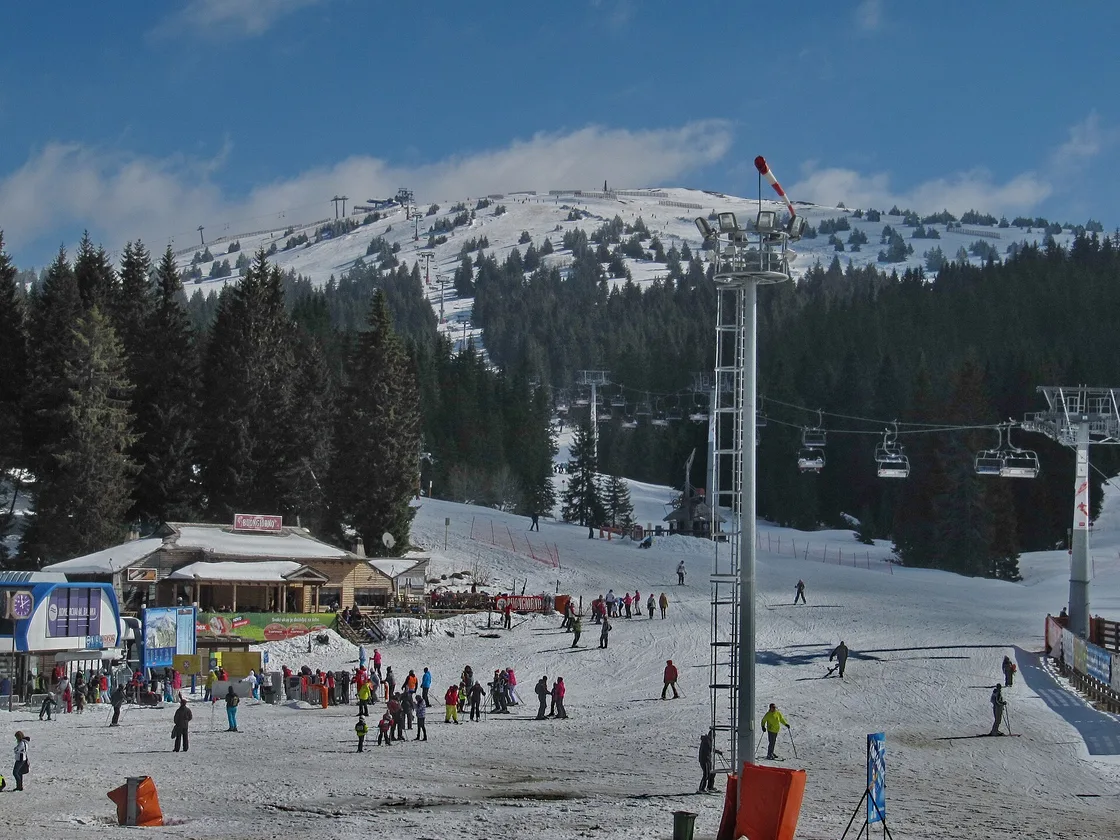
Add it up and the garage plus the park fee is about 14,000 dinars, 120 euros, in standing charges before you drive anywhere. Call the whole ski week on wheels 330 to 430 euros depending on where you park, against 562 for a transfer in both directions. The village is compact and you ski or walk between the lifts, so unless you’re coming down for the spas, the Ibar monasteries or a day in Niš, the car earns nothing while you’re up there. That flips the moment the holiday is a road trip with skiing in it.
Flying in: which airport is actually closest
Almost everyone lands at Belgrade Nikola Tesla, which has the flights, the transfers and the hire desks but sits at the far end of the trip: about 265 to 290 km from the plateau, a shade under the road figures above because the airport is on the city’s western edge.
Niš is the one worth a second look. Constantine the Great Airport sits roughly 118 km from Kopaonik, and it’s no longer a backwater: five airlines fly around fifteen routes, with Air Serbia, Ryanair and Wizz Air linking Vienna, Basel and Memmingen among others. For a ski week from western Europe, a cheap flight into Niš plus a shorter transfer can beat Belgrade on time and money. Kraljevo Morava is closer still, somewhere around 100 to 115 km depending on whose measure you take, but Air Serbia is the only carrier, flying to Istanbul, Tivat and summer Thessaloniki. Check what flies on your dates.
Which one should you book
A car earns nothing while you sit on the plateau, and the cheapest ticket is the one that puts you in Block 42 at seven in the morning. That trade is the whole decision. A ski week for four arriving by air is a transfer trip: one price, one vehicle, ski bags included, nobody negotiating with a driver at midnight. A couple on a budget takes the coach and accepts losing a morning at each end. Pair the mountain with the spa towns or the Ibar monasteries and you need a car, park fee and garage included; our guide to car rental in Serbia covers deposits and what to check at the desk.
Timing decides the rest. Reckon on a season from early December to early April, but Skijališta Srbije had not published the 2026-27 dates when we checked in July, so confirm them before booking flights. The crush is Serbian rather than foreign: Orthodox Christmas and the school winter break, 31 December to 15 January, then the Sretenje holiday, 15 to 19 February 2027. Book beds and transport for those weeks months out; come in the second half of January or late March and you get the same mountain with a quiet road.
If this sounds like a long way for snow, weigh it against Zlatibor or Kopaonik first: the western plateau is an easier drive out of Belgrade, even if the skiing is smaller. For the resort itself, see our guide to Kopaonik, and for the bed at the other end, where to stay in Kopaonik weighs the plateau centre against the cheaper bases below it. What you can’t do is wing it in a storm on summer tyres with an optimistic satnav.
Photos
Read also

Transport · 11 min read
Novi Sad to Budapest: Train, Bus & Driving
Verified · September 1, 2026From Novi Sad to Budapest in 2026: FlixBus in 4h45 from EUR 20, drive about 300 km, or Soko train to Subotica then Hungary.

Transport · 10 min read
Belgrade to Istanbul: Bus, Flights & Long Way
Verified · August 26, 2026Belgrade to Istanbul in 2026: coach about 15.5h from €45, flights about 1h45 BEG-IST, no through train. Times, borders and the Sofia relay.

Transport · 11 min read
Belgrade Airport to Novi Sad: Transfer, Bus, Train
Verified · August 23, 2026No direct bus BEG to Novi Sad: a transfer or shared shuttle covers about 90 km in 70 minutes, or take the free airport bus plus the Soko train.

Transport · 8 min read
Belgrade Public Transport: Free & How to Ride
Verified · July 12, 2026Belgrade public transport is free in 2026: buses, trams, trolleybuses and city trains, no ticket needed. The one paid catch is the airport minibus.