
Niš: Serbia's Southern City
Niš travel guide: the Ottoman fortress, the Skull Tower, Roman Mediana where Constantine was born, the Red Cross camp memorial and Tinkers Alley.
Niš is the big city of southern Serbia, the country’s third, and the one that best rewards travellers who care about history over postcards. Set on the Nišava river at the old crossroads between Belgrade, Sofia and Thessaloniki, it has been a strategic town for two thousand years - the Romans knew it as Naissus and it’s where the emperor Constantine the Great was born. What you come for is layered and, in places, sobering: a huge Ottoman fortress you can wander for free, the notorious Skull Tower, a Roman imperial villa on the edge of town, a preserved World War II camp that’s now a memorial, and a cobbled alley of taverns where the city goes out at night. Give it a full day, ideally two, and it makes a natural southern counterweight to Belgrade; if you’re basing yourself here, our guide to where to stay in Niš breaks down the best areas and where to book.
Niš is not a resort and it doesn’t pretend to be. It’s a working provincial capital with a student energy, cheaper and more relaxed than the capital, and its sights carry real weight rather than gloss. Below is what to see, in roughly the order most visitors take them, with honest notes on the two places that ask for a quieter frame of mind.
Where is Niš, and how do you reach it?
Niš sits about 235 kilometres south of Belgrade on the main corridor toward the Bulgarian and North Macedonian borders, and the drive or bus down takes in the region of two and a half to three hours on the motorway. It has always been a junction city: the route to Sofia peels off east, the route to Skopje and Thessaloniki carries on south, and that position is exactly why every empire that ran through the Balkans wanted to hold it. Frequent buses connect it with Belgrade, and there are trains, though the coach is usually the quicker and simpler option; our guide to getting from Belgrade to Niš compares the bus, train and car in full, with prices and why the fast line doesn’t run south yet. Check current timetables rather than trust an old figure, as services change.
The city has its own small airport - Niš Constantine the Great Airport (INI) - with a handful of seasonal and low-cost routes, which can occasionally make Niš a cheaper way into Serbia than Belgrade, so it is worth a look when you price flights. Once you’re here, the centre is compact and walkable, and the fortress, the river quay and the going-out streets are all within a short stroll of one another; the outlying sights (Mediana, the camp, Niška Banja) are a short taxi or bus ride out.
Niš Fortress: the free heart of the city
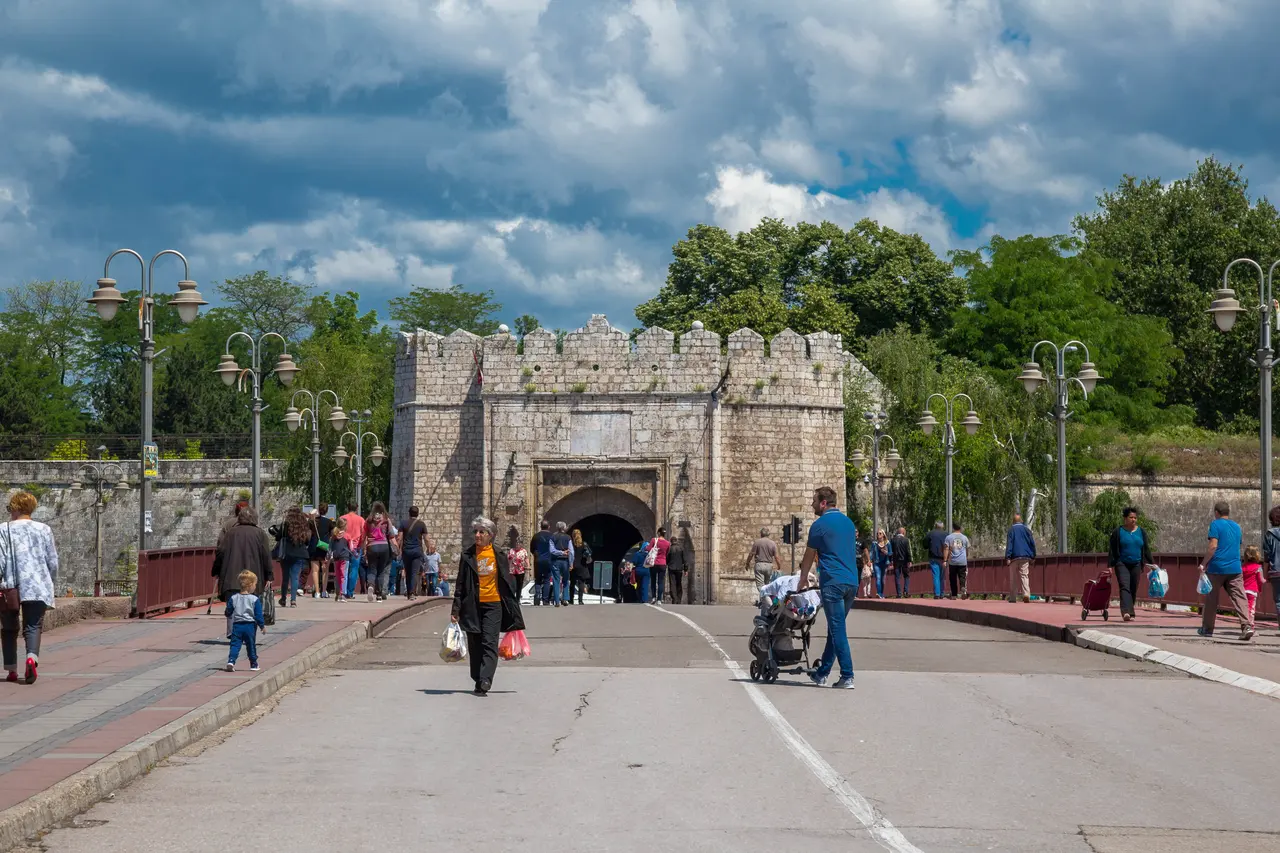
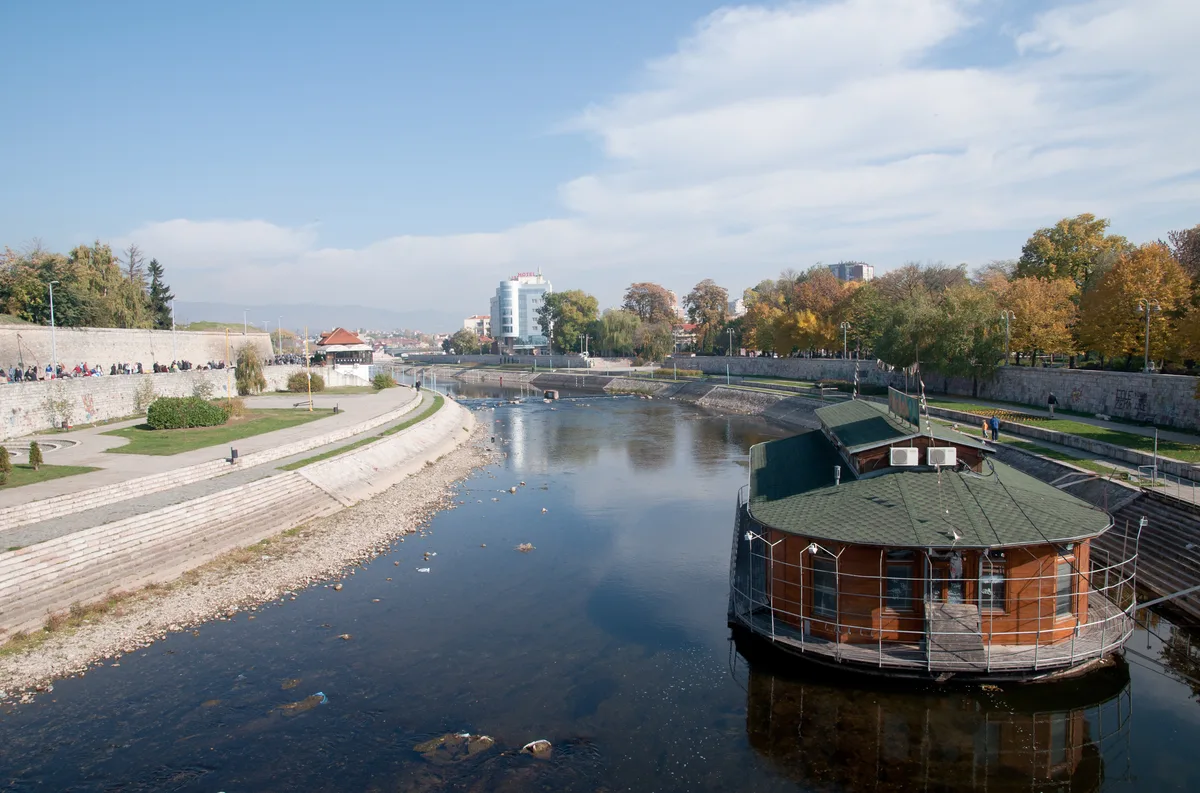
Start at the fortress (Niška tvrđava), because it’s both the main sight and the city’s living room. The great stone citadel you walk today was raised by the Ottomans in the first decades of the 18th century - the ramparts went up roughly 1719 to 1723 - on top of far older Roman, Byzantine and medieval fortifications, and it’s reckoned one of the best-preserved Ottoman fortresses anywhere in the Balkans. You enter through the handsome Stambol Gate on the river side, and the moment you are through it the place stops feeling like a monument and starts feeling like a park: locals cross it on their way to work, students sprawl on the grass, and there are cafés, a summer stage and the odd craft stall among the ramparts.
The best part is that entry to the grounds is free and open, so there’s no ticket and no rush. Inside the walls you’ll find the remains of the Ottoman town that once filled the enclosure - a hammam, the shell of the Bali-beg mosque, an arsenal and a powder magazine among them - along with scattered Roman stonework dug up on the site. It is not a polished, interpreted heritage attraction; it is a big, green, atmospheric space you’re free to roam, and an hour spent wandering it is the gentlest possible introduction to the city. Go late in the day, when the sun drops behind the ramparts and the Nišava turns gold.
The Skull Tower (Ćele Kula)
The single most famous - and most sombre - thing in Niš is the Skull Tower, and it needs its context to make sense. In 1809, during the First Serbian Uprising against Ottoman rule, a Serbian force met a much larger Ottoman army at the Battle of Čegar on the hills outside the city. As his position was about to be overrun, the Serbian commander Stevan Sinđelić fired into his own gunpowder store rather than be taken and impaled, killing himself, his men and the attackers around them in one enormous blast. In reprisal and as a warning to others, the Ottomans built a tower studded with the skulls of the fallen Serbs - originally some 952 of them, set in rows on all four sides - beside the road east toward Sofia.
The warning didn’t work as intended. Over the years the tower became a place of pilgrimage and a symbol of Serbian resistance, and a chapel was built around it in 1892-1894 to shelter and honour what remained. Today the tower still stands inside that chapel, with around 58 skulls left embedded in it; the rest were lost or taken over two centuries. It’s a small, quiet site and a heavy one, and it is treated with care rather than spectacle - visitors are asked to be respectful, and the mood inside the little chapel earns it. Go, but go knowing what you’re looking at; it’s a memorial to a real massacre, not a curiosity.
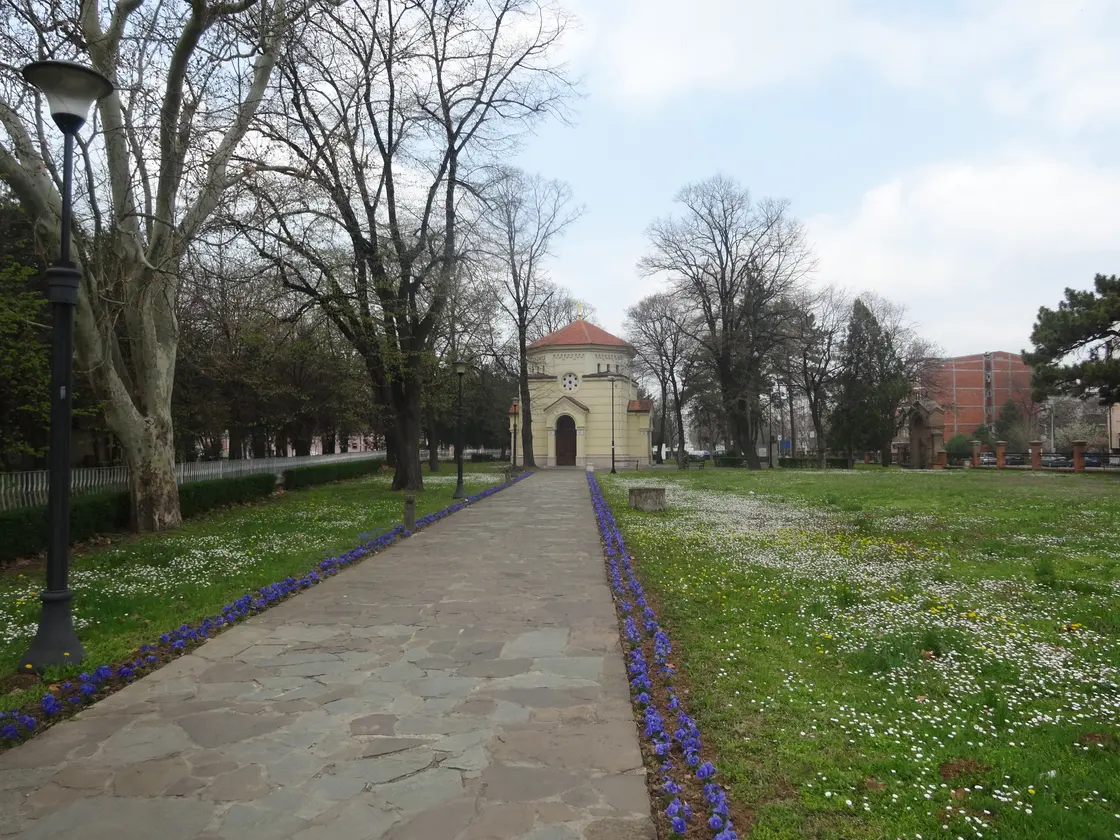
A practical word: entry to the chapel is a small ticket - a few hundred dinars, cash in dinars easiest - and it keeps modest hours, so check locally before you make a special trip. Our dedicated guide to the Skull Tower of Niš has the museum’s current hours, the 300 RSD ticket and how to pair the visit with Mediana on the same side of town. The site is a short ride northeast of the centre on the old Sofia road, and it pairs naturally with a visit to Mediana, which is close by.
Mediana: the Roman villa where an empire was divided
Niš’s Roman side is best seen at Mediana, an archaeological site about four kilometres east of the centre on the road toward Niška Banja. This was a luxurious imperial residence built in the early 4th century, in the era of Constantine the Great - the emperor born here in Naissus in 272 - and it was no modest country house. The complex spread over a large estate with a grand villa, a water tower, storehouses, thermal baths and a colonnaded terrace looking out toward the mountains, the sort of place emperors actually stayed when they passed through.
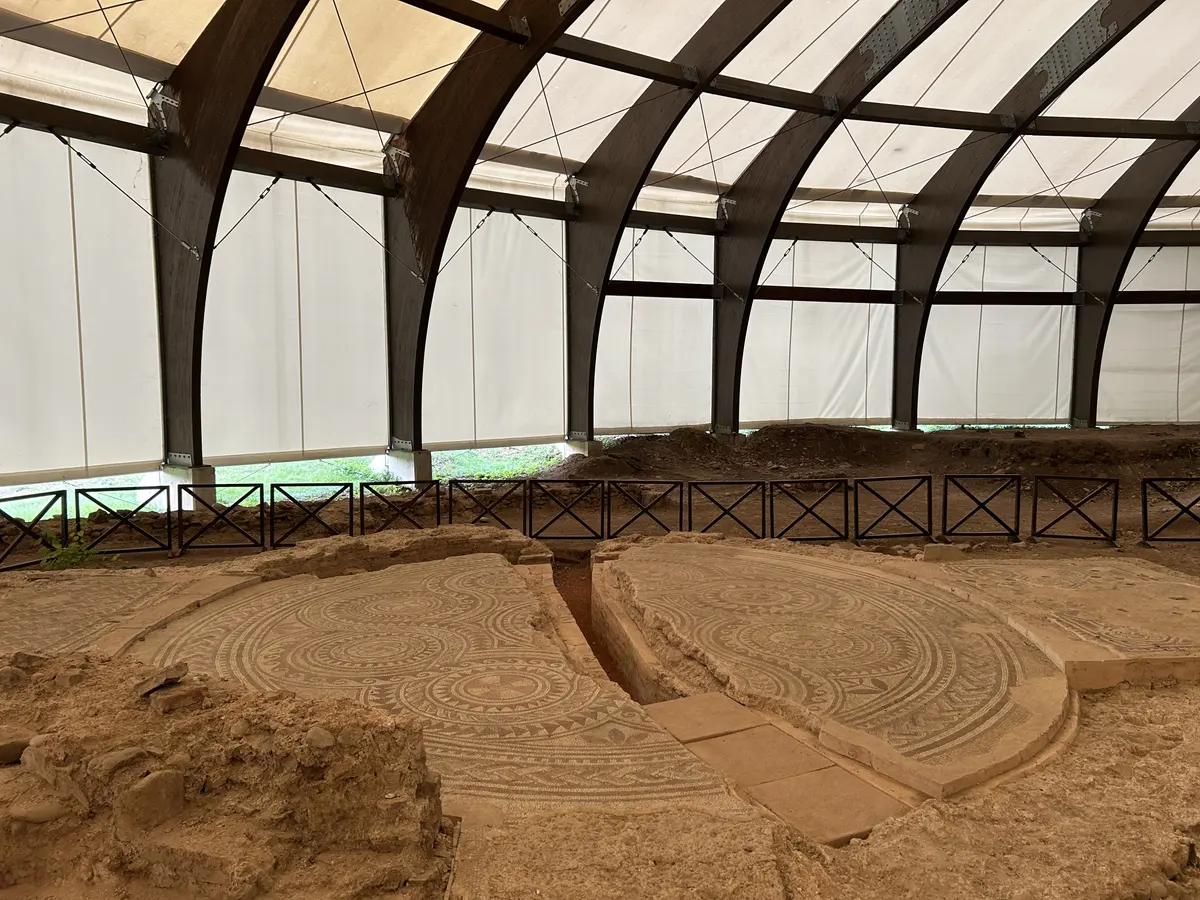
What survives, and what’s worth the trip, is the floor mosaics: sheltered under a modern canopy, several large panels of geometric and figurative work remain in remarkable condition, along with the foundations of the villa and its peristyle. There’s real history in the ground here beyond the pretty floors - Mediana is remembered as the spot where the emperors Valentinian and Valens met and formally divided the Roman Empire between them in the 360s, one of those hinge moments that sound abstract until you’re standing where it happened. It’s a compact site rather than a sprawling ruin, so an hour does it; entry is a small ticket, and it’s run under the city’s National Museum.
Crveni Krst: the Red Cross camp memorial
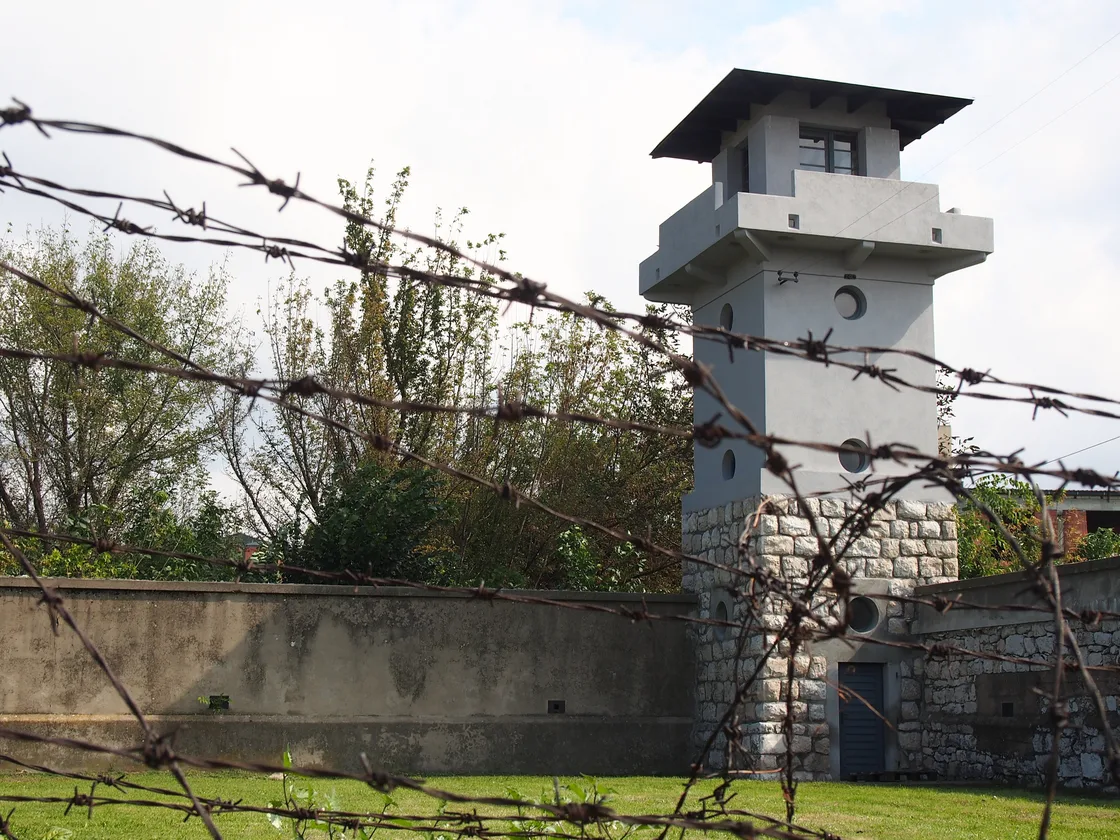
Niš carries a darker recent history too, and it is preserved with unusual honesty. The Crveni Krst (“Red Cross”) camp, on the northern edge of the city, was a Nazi concentration camp in operation from 1941 to 1944, and it’s one of the few such camps left standing more or less intact anywhere in Europe. The barracks, the cells, the watchtowers and the barbed wire are all still there, kept as a memorial museum rather than rebuilt or prettified, and walking the yard is a plain, unsettling experience in the way the place intends.
Around 30,000 people passed through the camp over its three years - Serbian resistance fighters, Jews, Roma and political prisoners - and over 10,000 were shot on the nearby hill of Bubanj, today a memorial park marked by three great stone fists. The camp is also remembered for one of the war’s few successful mass breakouts: on 12 February 1942 about a hundred prisoners escaped over the wire, many of them shot in the attempt, an act still commemorated in the city. This isn’t a light stop, and it’ll not suit every traveller or every mood, but for anyone who wants to understand the region’s twentieth century it is one of the most affecting places in Serbia. Treat it as you would any memorial to atrocity: quietly, and without a camera in front of your face the whole time.
Tinkers Alley: where the city goes out
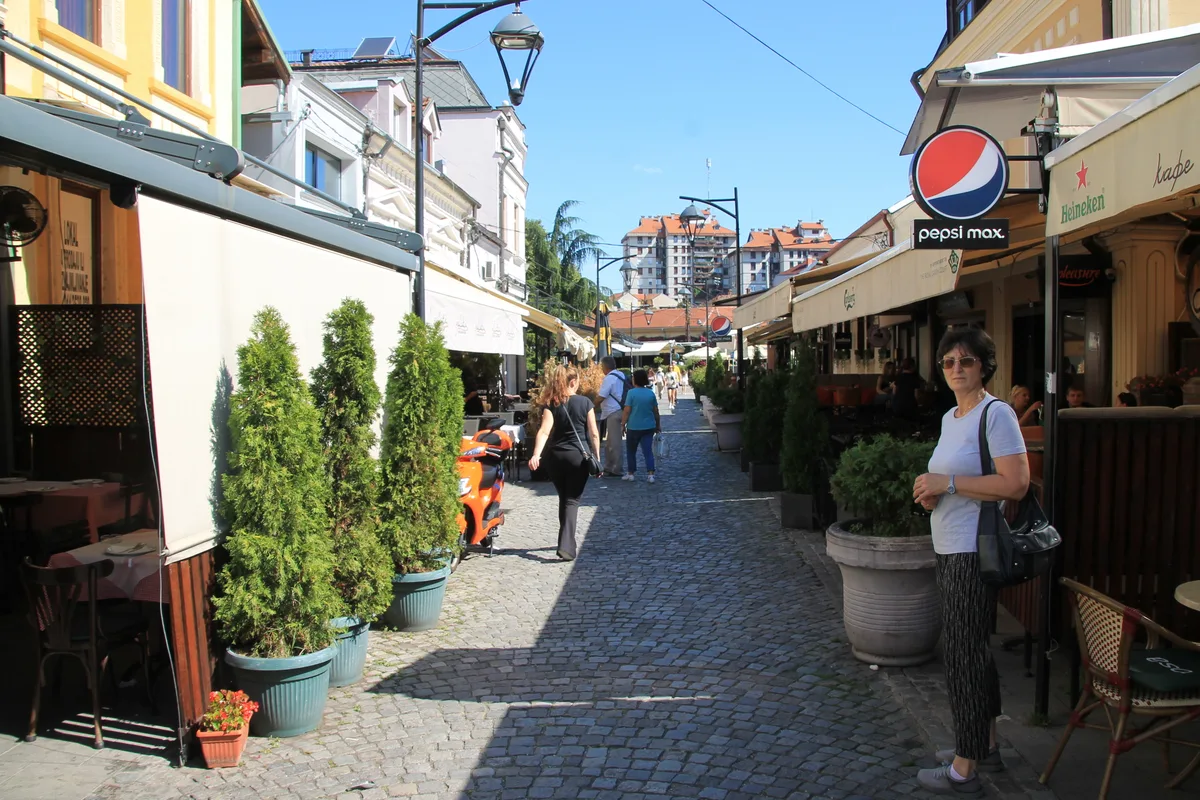
After the heavier sights, Niš knows how to lighten the mood, and it does it on one short cobbled lane. Kazandžijsko sokače, “Tinkers Alley,” on today’s Kopitareva Street, is the surviving heart of the old 18th-century Niš čaršija (the Ottoman-era market quarter). Its name comes from the coppersmiths - the kazandžije - who once hammered out cauldrons and copper pots in workshops along it, and a couple of craft shops keep that trade alive. From the 1990s on, the little street filled up with kafanas, bars and restaurants, and today it is the city’s going-out spine: a run of low old houses, awnings and outdoor tables that come alive in the evening with live music, grilled meat and rakija.
It’s the place to eat well and cheaply and to feel the town at its most sociable. Niš takes its food seriously - this is famously good grill country, the home of a particularly well-regarded roštilj, and the region is known for its wine and rakija too - so order a mixed platter, sit out on the cobbles and stay a while. If you want to know what to point at on the menu, our guide to Serbian food and the dishes worth trying runs through the grill, the fiery southern spreads and the local rakija. The whole quarter is a five-minute walk from the fortress, which makes an easy evening plan: the ramparts at sunset, dinner on Tinkers Alley after dark. For the everyday side of the city, from the Bulevar and Green markets to their pick of grill shops, see Traveling Moose and Bugs’ Niš travel guide.
Niška Banja: the spa on the edge of town
If you’ve longer, or you simply want to slow down, the spa suburb of Niška Banja sits about 10 kilometres southeast of the centre on the road to Sofia, close to Mediana. It has been a bathing resort since Roman times, drawing on warm geothermal springs, and it grew into one of Serbia’s better-known spa towns in the 20th century. The mineral waters here have long been used in the treatment of heart and rheumatic complaints (context, that, not medical advice - take health decisions with a doctor rather than a travel guide), and the town keeps a genteel, faded-elegant air, with bathhouses, a park and hotels along the hillside.
For a traveller it’s less a headline attraction than a pleasant half-day: a soak, a walk in the park, lunch away from the city. Combined with Mediana on the same side of town, it rounds out a Roman-and-relaxation afternoon nicely.
How long to spend, and how to fit Niš in
One full day covers the essentials on foot and by short taxi - the fortress and Tinkers Alley in the centre, the Skull Tower and Mediana out east - and sends you away with a real sense of the city. Two days lets you add the Crveni Krst memorial and Bubanj, a slower evening in the kafanas, and a morning at Niška Banja, which is about the right pace for a place with this much history and no need to hurry.
Niš works well as the southern anchor of a longer Serbian trip. Most travellers pair it with the capital: our guide to things to do in Belgrade covers the northern end of the country, and Niš makes the natural stop if you’re heading on toward Sofia or Skopje. It is also the gateway to the wild east: about an hour toward Rtanj sits Sokobanja, the old spa with a working hammam, and the road toward Bulgaria climbs into Stara Planina, Serbia’s least-visited high country, with the waterfalls and the peak of Midžor an easy detour from the Sofia corridor. To the west, an hour and a half up onto Radan Mountain, lies one of the country’s strangest sights: Devil’s Town, a field of stone-capped earth pyramids and acid springs that makes a good half-day out from the city. If you would rather see the whole country in one loop, Niš is the far-south point on our 7-day Serbia itinerary, which strings the capital, the western mountains and the Danube together into a single road trip. Either way, give the south its due - Niš is where Serbia’s oldest and hardest history is written most plainly on the ground.
Photos
On the map
The map loads on click - to keep the page lightweight.
The map didn’t load. Check your connection and refresh the page.
Read also

Cities · 9 min read
Sombor: Vojvodina's Greenest Town
Verified · August 31, 2026Sombor travel guide: 121 km of tree alleys, the fijaker stand, County Hall with Eisenhut painting, and Gornje Podunavlje wetlands.

Cities · 12 min read
Valjevo: Old Town, Museums and Two Rivers
Verified · August 19, 2026Valjevo travel guide: Tesnjar, the Muselim Residence, Nenadovic Tower, the cathedral, and how to reach the town by train or car.

Cities · 9 min read
Sokobanja: Spa Under Rtanj Mountain
Verified · August 13, 2026Sokobanja spa guide: Ottoman hammam, respiratory air, Rtanj hikes, Bovan Lake and how to reach the town from Niš or Belgrade.

Cities · 10 min read
Vrnjacka Banja: Serbia's Top Spa Town
Verified · July 25, 2026Vrnjacka Banja is Serbia's most visited spa town: seven mineral springs, the Bridge of Love padlocks, a green park and Lovefest each August.