
Sremski Karlovci: Wine Town on the Danube
Sremski Karlovci guide: the 1699 peace treaty and its four doors, 20 wine cellars, what bermet really is, and the bus from Novi Sad.
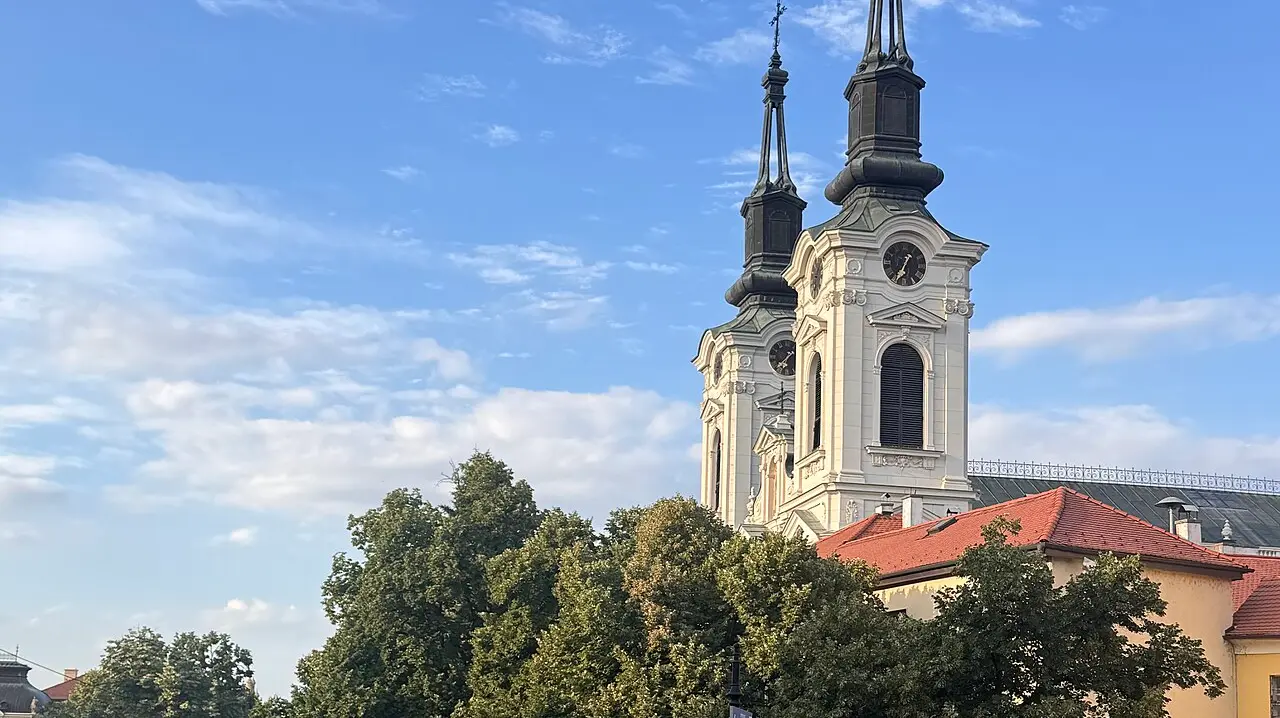
Sremski Karlovci is a town of 7,872 people sitting 8 km from Novi Sad on the Danube, and it is the easiest good day trip in Vojvodina: one Baroque square, a war-ending peace treaty, and 20 wine cellars listed by the local tourist office within a few streets of each other. Half a day covers it comfortably. A full day covers it with lunch and a hangover.
The compression is the point. In most of Serbia the sights are forty minutes apart; here the cathedral, the Patriarchal Court, the oldest Serbian grammar school, the seminary and a fountain with four bronze lions all face the same open space, and the cellars start one street back. What holds it together is that Karlovci was for two centuries the seat of the Serbian Orthodox church inside the Habsburg empire, which is why a town this small has buildings this grand.
The square, in ten minutes
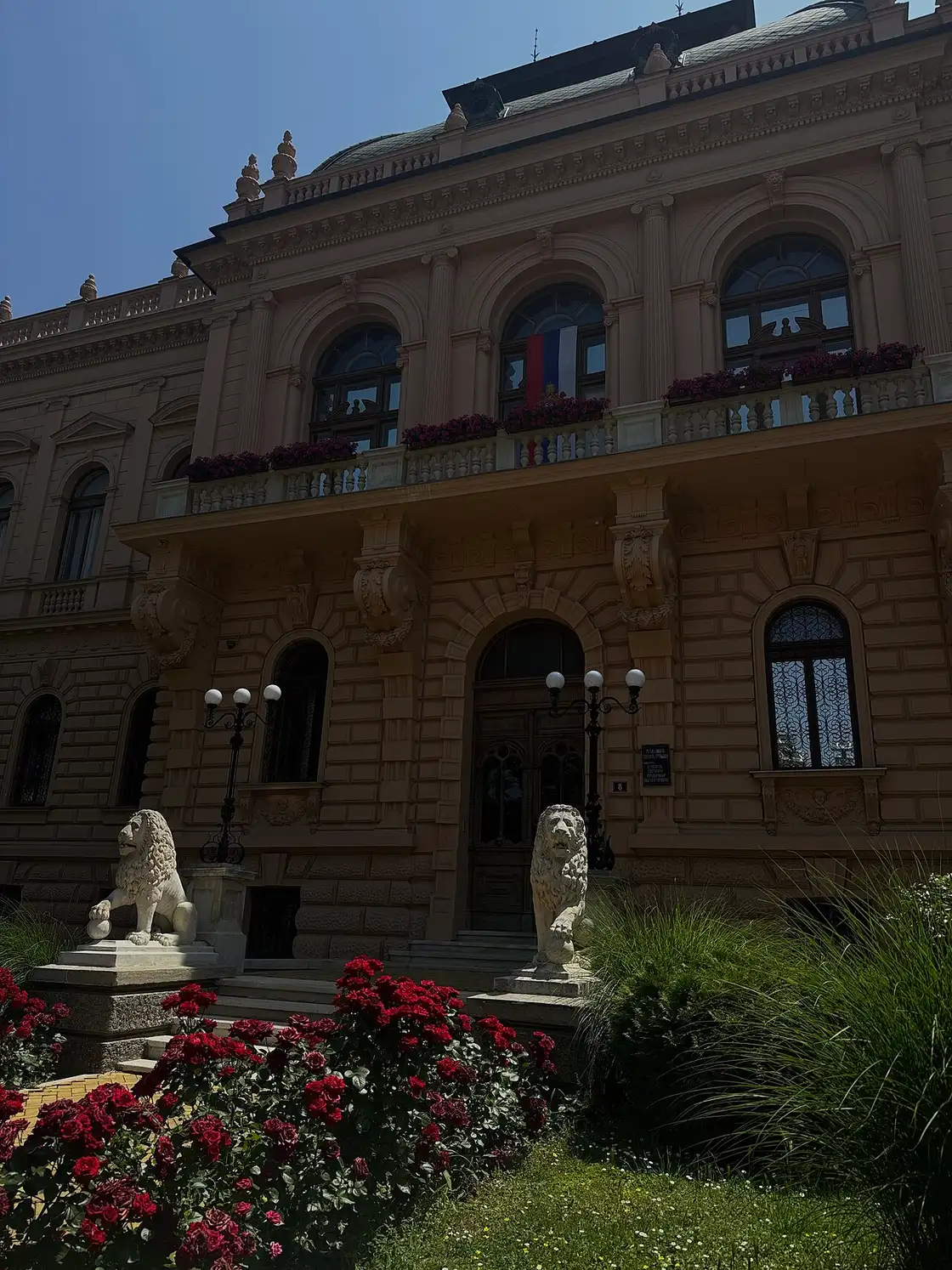
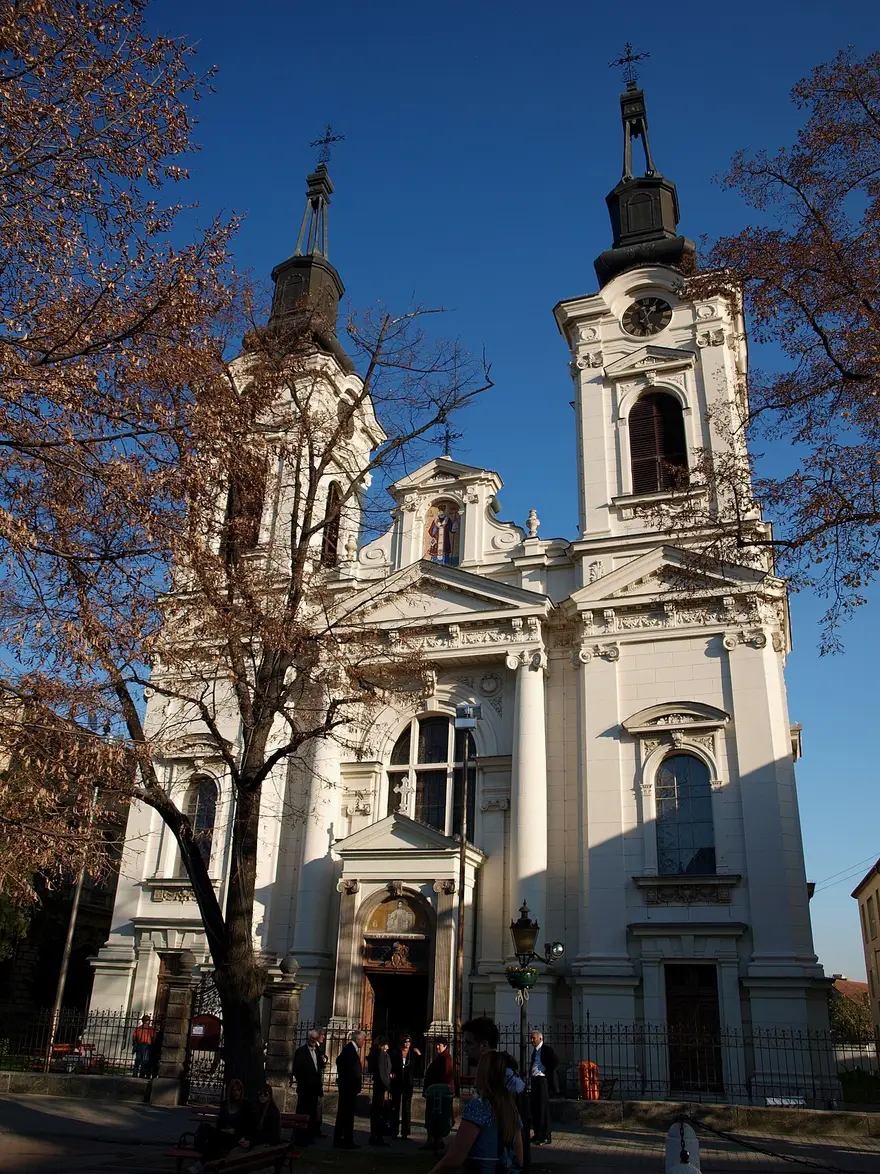
The Cathedral of St Nicholas was built in the late 1750s to a design drawn up in Vienna and finished in 1762; its iconostasis is generally reckoned one of the high points of Serbian Baroque painting. Opposite it stands the Patriarchal Court of the early 1890s (the town dates it 1892 to 1894, other sources run it to 1895), with two stone lions on the steps and roses in front. Inside are manuscripts, portraits of metropolitans, and a chapel whose iconostasis was painted by Uros Predic, one of the best Serbian painters of his generation.
You cannot simply wander in: it’s the Bishop of Srem’s residence and the patriarch’s summer house, and what visitors see is the Riznica, the church treasury inside. The way in is the tourist office, whose combined ticket covers a guided visit to the cathedral, the grammar school, the Riznica and the seminary for 500 dinars, 350 for children. From April 2026 it also runs a walk-up version every Saturday at 12:00 for the same four buildings - 1,000 dinars, 700 for children, free under six - booked by the Friday before. On any other day, phone first.
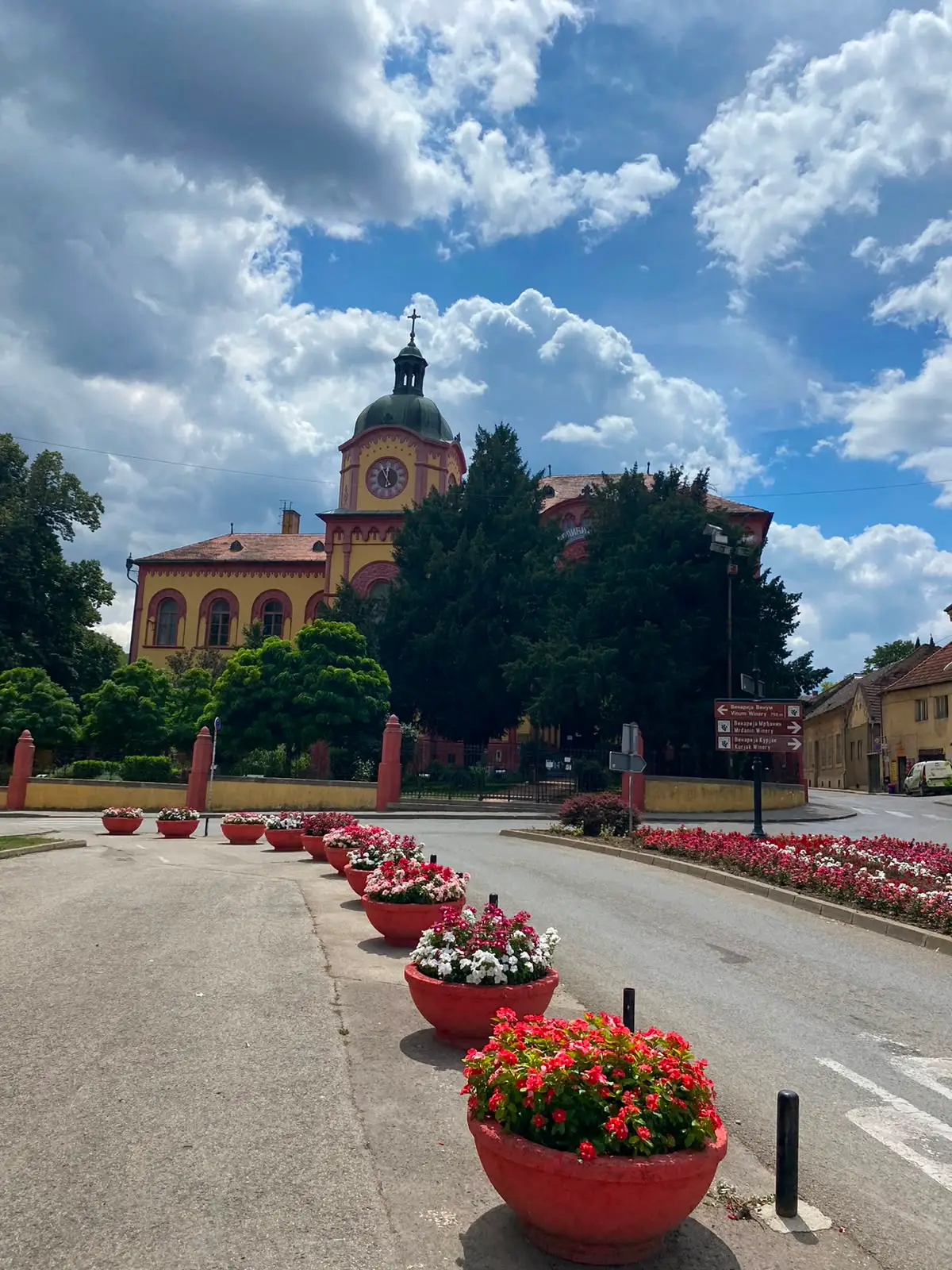
The Karlovci Grammar School is the other heavyweight. It was founded on 3 August 1791 and took its first class on 1 November that year, which makes it the oldest Serbian gymnasium; the building you photograph is the 1891 replacement by the Hungarian architect Julius Partos, paid for by a patriarch’s bequest. Three years after the school came the Orthodox seminary of 1794, founded by Metropolitan Stefan Stratimirovic and still training priests today. Both are working institutions, not museum pieces, which is why seminarians in black are a normal part of the pavement traffic here rather than a costumed set-piece.
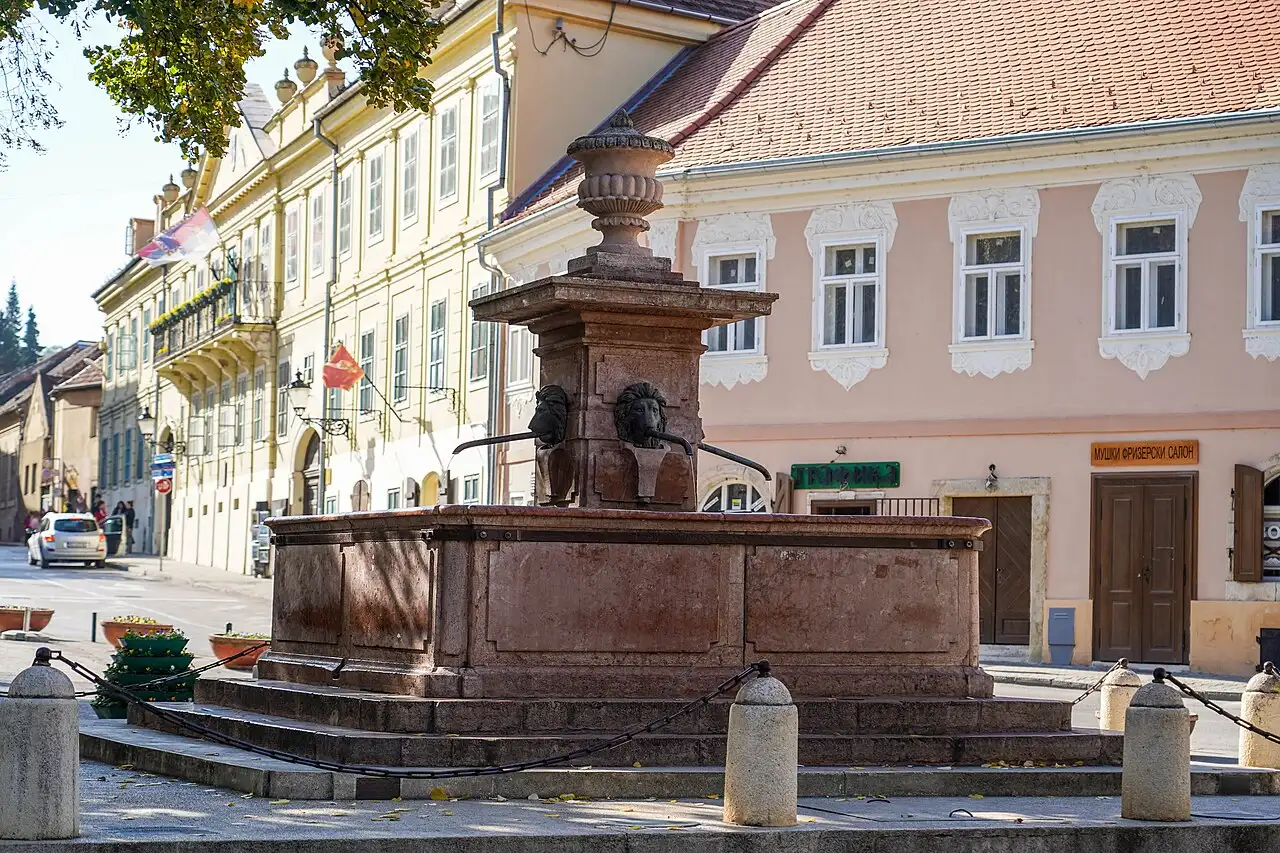
In the middle of it all sits the Four Lions Fountain of 1799, put up to mark the town’s first piped water supply and restored in 2007. Local legend says that whoever drinks from it’ll come back to Karlovci one day. Nobody in town will discourage you from testing this, and the terraces around the square will sell you a slice of kuglof, the local ring cake, while you decide.
The 1699 treaty, and the round-table claim
On the hill above the town stands a round yellow building that most visitors walk past. It shouldn’t be walked past. On 26 January 1699 the Treaty of Karlowitz was signed on this spot between the Ottoman Empire and the Holy League, ending a war that had run since 1683 and redrawing the map of central Europe. Karlovci was chosen because neither side had won: it sat on the demarcation line, halfway between Austrian Petrovaradin and the Ottoman position at Banstol, so no one negotiated on the victor’s ground.
The interesting part is procedural, and the solid half of it’s the four doors. Protocol said the winner entered first and took the head of the table, and there was no winner, so the negotiating hut was built with one door per delegation and the Austrians, Venetians, Poles and Ottomans went in at the same moment. The round table is the shakier half. The town’s own detailed account has an English mediator proposing that everyone sit as equals, “remembering King Arthur and his knights”; the banner on the tourist office home page upgrades that to the first use of the round table in international diplomacy - a marketing line, not a historical finding. It’s absent from that office’s own long-form page, from Britannica and from the English Wikipedia article on the treaty, and a Hungarian reconstruction of the chamber says there was no round table at all, each delegate sitting on the side that faced his own camp. Enjoy the four doors, which are documented. Take the table as local tradition.
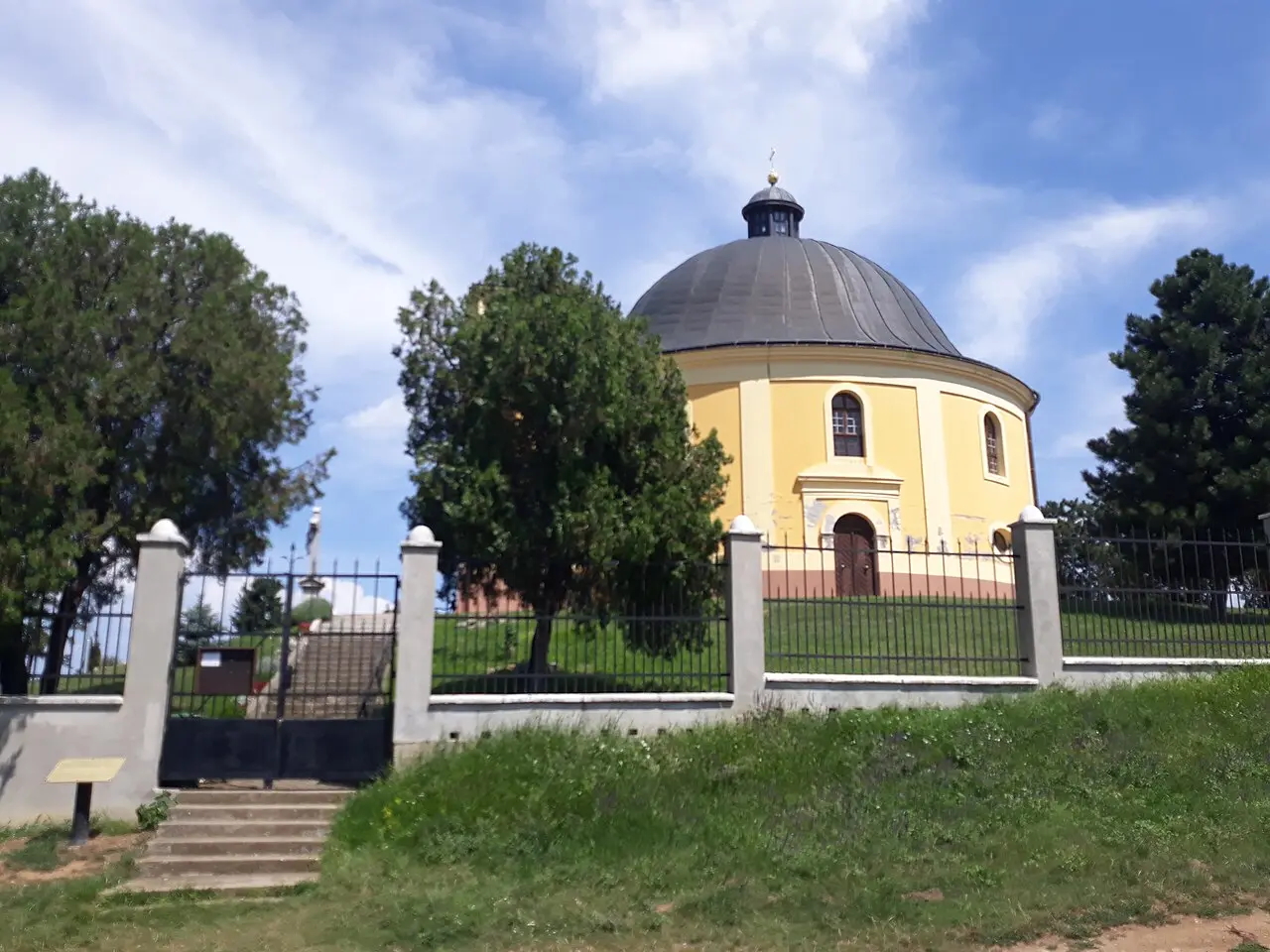
Franciscans from Petrovaradin turned the hut into a chapel almost immediately. The building standing there now was finished structurally in 1814 and fitted out by 1817: circular, modelled on an Ottoman military tent, with three entrances for the Venetian, Austrian and Polish representatives. If you’ve just counted four doors and then three, that gap is the best detail on the hill: the fourth entrance was built and sealed, the Ottoman one, walled up in the hope they wouldn’t be back. A cultural monument of exceptional importance since 1993, it’s priced by the tourist office at 100 dinars, 50 for children. Ask there before you climb: the price is published, the opening isn’t.
Wine, and what bermet actually is
The town’s tourist organisation lists 20 registered cellars, and 15 of them offer a tasting (checked 16 August 2026). That is the drink to understand before you order anything else here.
Bermet is a sweet aromatised wine of 16 to 18 per cent, made by macerating around twenty herbs and spices in a base wine. The recipes are family property and genuinely secret, so a red bermet from one cellar tastes nothing like the red bermet from the cellar three doors down. The shared vocabulary is wormwood, clove, cinnamon and bitter orange over a base of Italian Riesling or Portugizer; what changes from door to door is the balance, and how far the wormwood bitterness is allowed to push. It began as medicine and ended up as dessert. Serve it cold, in small glasses, and treat it as vermouth’s Serbian cousin rather than as wine.
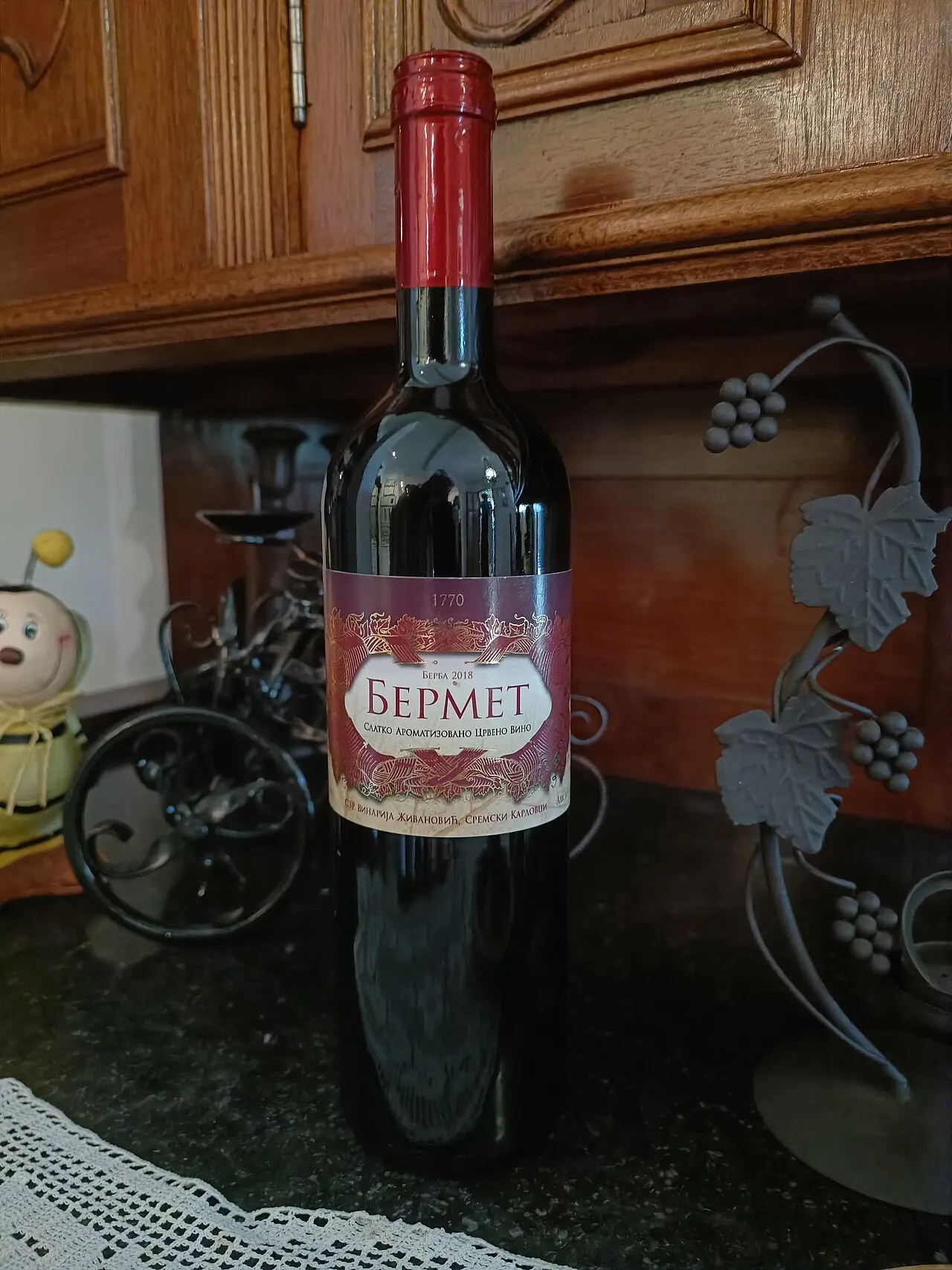
Here is the thing nobody warns you about: almost no Karlovci cellar publishes a tasting price. We went through the tourist office directory one by one. Vinum, on Karlovackog mira, gives its address and two different sets of hours: the contact page says closed Mondays, 09:00-15:00 Tuesday and Wednesday, 11:00-18:00 Thursday to Sunday, while the tourism page prints a set labelled winter - Tuesday 09:00-15:00, Wednesday to Sunday 11:00-18:00. Neither is dated, nothing says which one August runs on, and it tells you it makes about 35,000 litres a year but no price. Zivanovic, up at Mitropolita Stratimirovica 86b, advertises a museum visit with seven wines and three honeys tasted, and again no figure. So phone ahead, agree format and price, and don’t assume a walk-in works on a quiet Tuesday. Or let a Fruska Gora wine and monastery tour handle the driving; most take in a Karlovci cellar. For the monastic half of that day - which houses to enter and in what order - use Fruska Gora monasteries.
The Zivanovic house earns the walk for a second reason. Its Museum of Beekeeping, founded in 1968 in the family home, is a real collection of hives, smokers and honey drums rather than a themed gift shop - beekeeping and winemaking ran in the same families here for generations, and it shows.
The Titanic story, honestly
You will be told that bermet was on the Titanic’s wine list. Sometimes you’ll be told bottles were recovered from the wreck.
The story is worth telling properly before taking it apart, because it’s not pulled from nowhere. Karlovci bermet was a genuine export: the tourist organisation records the Vienna court buying it forward at high prices and regular shipments to America from the mid-19th century. The Titanic link comes from reconstructions of the ship’s cellar from the Southampton warehouse consignment notes, which list “Ausbruch” - the Austro-Hungarian sweet-wine style bermet belongs to - among the wine loaded aboard. Real at both ends, then: a Habsburg dessert wine that shipped west, and its style in the cargo papers.
The chain does not close in the middle. Nobody can show the Ausbruch in Southampton was Karlovci bermet rather than one of a dozen similar wines from elsewhere in the empire, and no wine list names it. The town’s own tourist organisation writes only that the wine went to royal courts “and according to the legend it even made its way to the ill-fated Titanic”; Wikipedia hedges it as “according to some documents” and names none.
None of which makes the wine worse. Buy a bottle because it tastes of clove and orange peel, not because of a ship.
Down to the Danube, and lunch
The town is on the river, but the square isn’t, and a lot of visitors leave without seeing the water at all. It’s about ten minutes on foot from the square down to the bank, and the reason to walk it’s lunch. The riverside strip is where Karlovci keeps its cardas, the Vojvodina fish taverns: the best known is Pod ladom platana, run by the local anglers’ association under decades-old plane trees, doing fish soup, fried river fish and grills in a big shaded garden facing the water. Hotel Dunav has a terrace on the same stretch. Up on the square the terraces are for coffee, wine and kuglof; pleasant, but not lunch. If the whole Serbian menu is new to you, our guide to what to eat in Serbia is the map.
The bank is also about to get busier. A passenger pier for river cruisers was built here, due to open in the 2026 season and big enough for two 135-metre ships at once - the eighth cruise stop on the Serbian Danube. Come in the next year or two and you’re ahead of the coaches.
Strazilovo, and the walk up
Strazilovo lies 4 km from town, inside Fruska Gora National Park: a picnic valley with a stream, wooden bridges and a forest path. Branko Radicevic, the Romantic poet who studied at the Karlovci gymnasium, has lain on the hill above it since 1883, under a monument raised in 1885 whose base is built from stone blocks brought from Serbian lands and carved with their names.
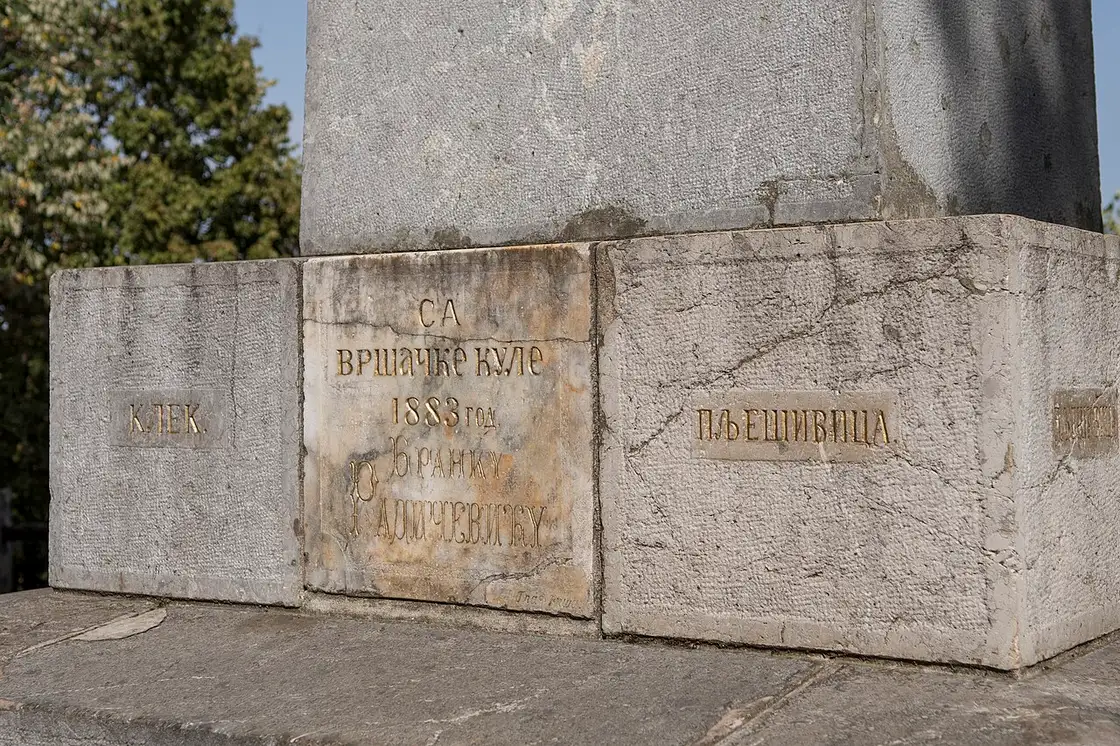
Getting to the valley is the bit no one explains. The Strazilovski put runs the 4 km out from the centre as a normal paved road: drive it and park where you can at the entrance, or walk it on the marked footpath alongside. There’s no bus, and the tarmac stops where the park begins. From the statue at the bottom it’s then a 20 to 30 minute climb up a waymarked path to the obelisk, shaded most of the way, with a mountain hut and terrace at the top. That climb is the only real exercise the day demands. Do it before lunch, not after the cellars.
Buses from Novi Sad, and the January price rise
The bus is the sensible answer. JGSP Novi Sad lines 61 and 62 run out from Novi Sad through Karlovci. Fares jumped at the start of January 2026: a single is now reported at 250 dinars paid to the driver or 190 from the electronic wallet, up from 180 and 135, with the monthly pass at 6,860. The operator didn’t put a notice on its own site, which is exactly why you should check the figure at the stop rather than trust any page, including this one.
The town has a railway station on the Belgrade line, but we couldn’t get a usable current timetable out of the national operator on the day of writing, so treat the train as a bonus and check srbvoz.rs if you want it. By car it’s 8 km from Novi Sad and about 75 km from Belgrade, which is why it lands on so many day trips from Belgrade.
Half a day is enough for the square, the chapel and one cellar. A full day adds Strazilovo and a second cellar, and that’s the version worth doing. Most people sleep in Novi Sad and come out for the afternoon, which is the right call: Karlovci has beds but very little evening. Pair it with Petrovaradin Fortress on the way back, and if the cellars have given you a taste for the strong stuff, our guide to rakija covers the other half of the Serbian drinks list. More towns are in the cities section.
Photos
On the map
The map loads on click - to keep the page lightweight.
The map didn’t load. Check your connection and refresh the page.
Distance
- Belgrade ≈75 km · About 1 h by car Usually done as a stop on a Fruska Gora day tour, or by changing in Novi Sad.
- Novi Sad ≈8 km · 25-35 min by suburban bus 61 or 62 The default way in. Fares went up in January 2026: reported at 250 RSD to the driver, 190 RSD from the electronic wallet.
Read also

Cities · 9 min read
Sombor: Vojvodina's Greenest Town
Verified · August 31, 2026Sombor travel guide: 121 km of tree alleys, the fijaker stand, County Hall with Eisenhut painting, and Gornje Podunavlje wetlands.

Cities · 12 min read
Valjevo: Old Town, Museums and Two Rivers
Verified · August 19, 2026Valjevo travel guide: Tesnjar, the Muselim Residence, Nenadovic Tower, the cathedral, and how to reach the town by train or car.

Cities · 9 min read
Sokobanja: Spa Under Rtanj Mountain
Verified · August 13, 2026Sokobanja spa guide: Ottoman hammam, respiratory air, Rtanj hikes, Bovan Lake and how to reach the town from Niš or Belgrade.

Cities · 10 min read
Vrnjacka Banja: Serbia's Top Spa Town
Verified · July 25, 2026Vrnjacka Banja is Serbia's most visited spa town: seven mineral springs, the Bridge of Love padlocks, a green park and Lovefest each August.