
Novi Sad Travel Guide: Things to Do (2026)
What to do in Novi Sad: Petrovaradin Fortress and its drunken clock, Freedom Square, Štrand beach, Fruška Gora, and the fast train from Belgrade.
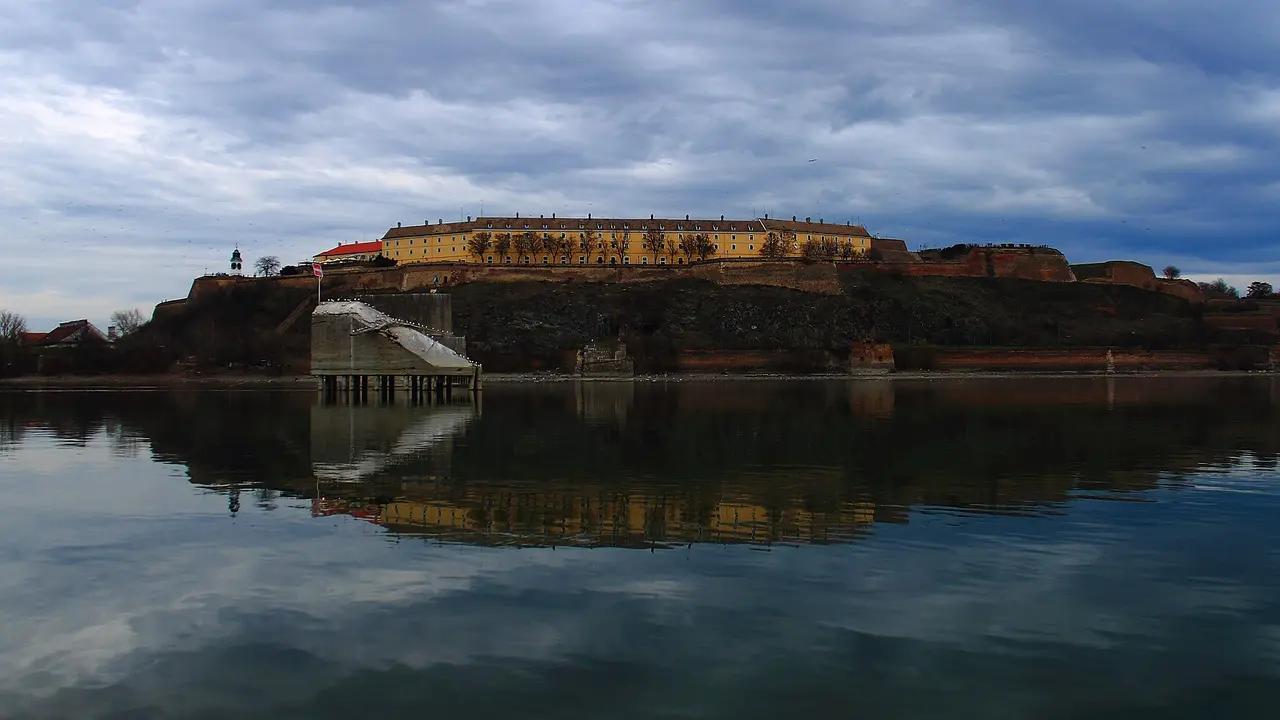
Novi Sad is the easiest big day out in Serbia, and the one most people underrate. It’s the country’s second city, an hour up the Danube from Belgrade, and its whole character is the opposite of the capital’s: flatter, calmer, more Central-European, laid out around a pedestrian old town of pastel façades and a colossal fortress on the far bank. You can see the headline sights - Petrovaradin Fortress, Freedom Square, the churches and the river - comfortably in a single day, which is why it’s the top day trip from Belgrade. But give it a night and you get the parts people actually remember: the beach on the Danube, the wine country half an hour away, and the great fortress that spent 25 summers as one of Europe’s biggest festival stages.
Day trip or overnight from Belgrade
Novi Sad sits close enough to the capital that the real question is how long to stay, not how to get there. The fast Soko train does the run in well under an hour; under the 2025/26 timetable, trains from Belgrade stop at Petrovaradin station below the fortress, because Novi Sad’s central station is closed to passengers, and a free shuttle links it with the city centre. Our guide to getting from Belgrade to Novi Sad compares the train, bus and car with prices and timings, Belgrade Airport to Novi Sad covers the route straight from BEG, and Novi Sad to Budapest picks up if you’re carrying on north into Hungary.
As a day trip it works beautifully - an early train, the fortress and old town, lunch on Zmaj Jovina, back to Belgrade for dinner. But if the Danube beach or a Fruška Gora wine run is on your list, stay a night or two; there’s more here than a single day admits. If you do stay, our guide to where to stay in Novi Sad breaks down the old-town centre, the riverside and Petrovaradin. And if you are still deciding which city to make your Serbia base, Belgrade or Novi Sad weighs the two head to head.
Petrovaradin Fortress: the “Gibraltar on the Danube”
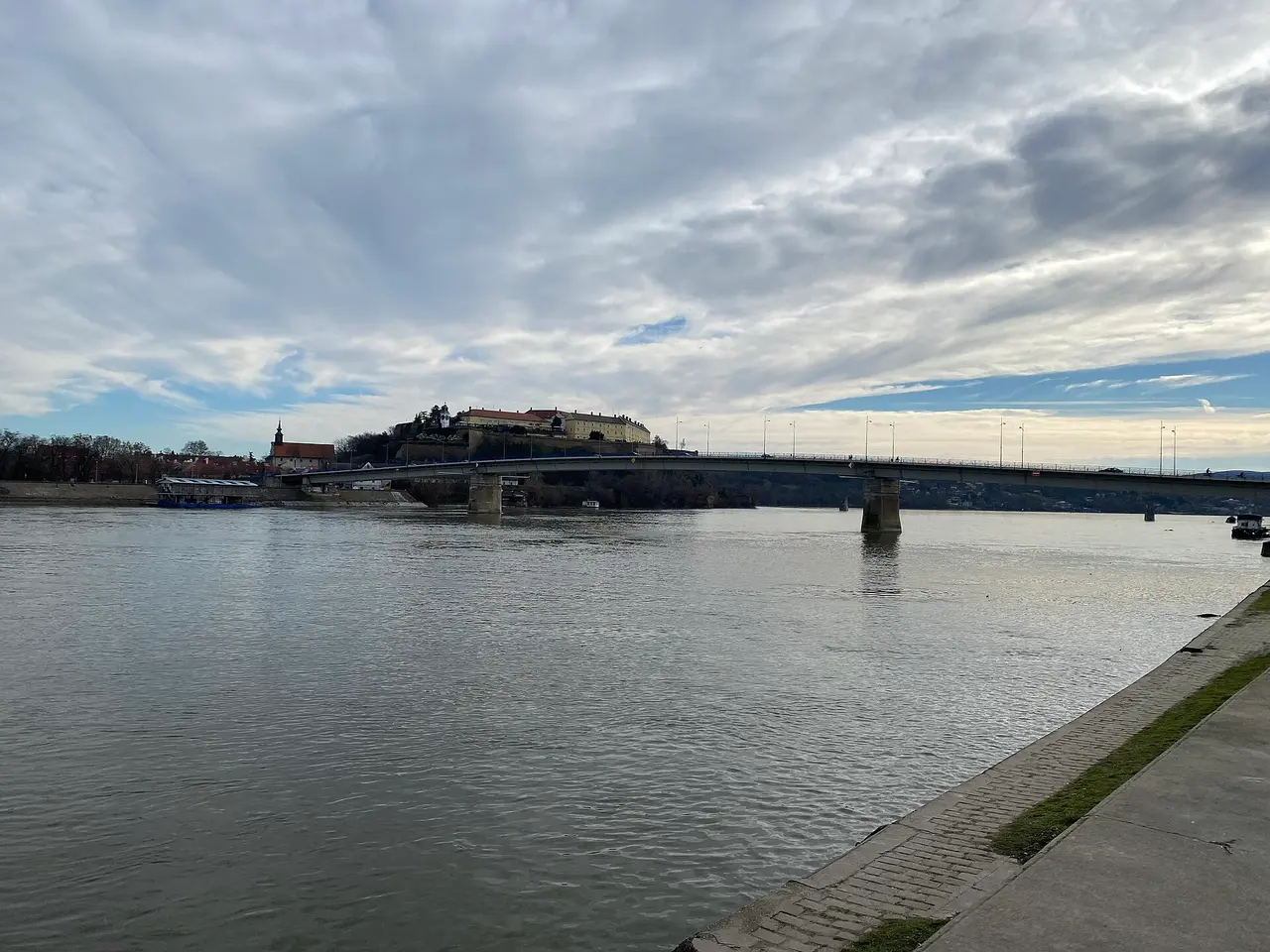
Start across the river. Petrovaradin Fortress is the reason to come - an enormous eighteenth-century citadel the Austrians built on a rock directly opposite the old town, so vast and so well preserved that it earned the nickname “Gibraltar on the Danube.” Walking the grounds is free: you climb up through the gates to a broad plateau of baroque barracks that now hold artists’ studios, cafés, a museum and a hotel, and the view back over the Danube to Novi Sad is the one every visitor photographs. Time it for late afternoon, when the low sun lights up the water below.
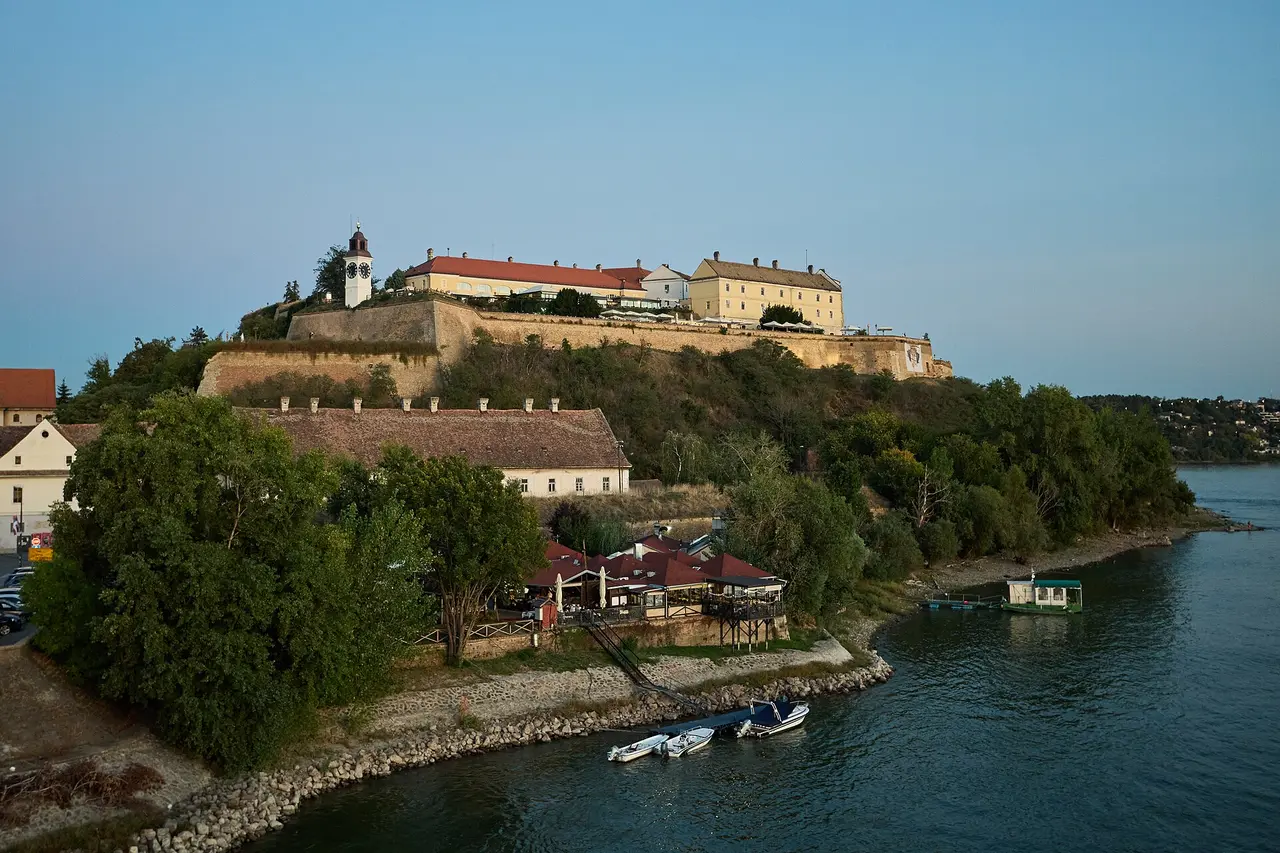
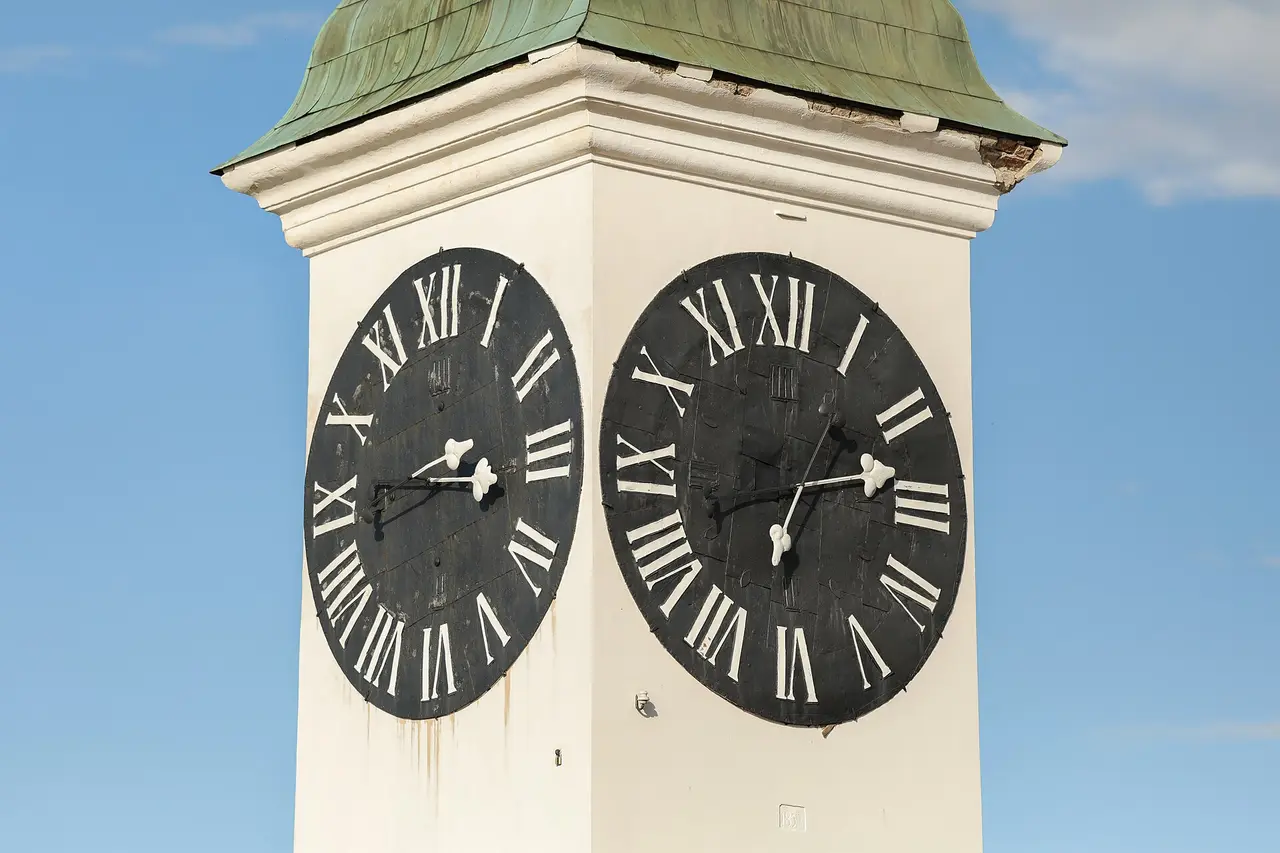
The landmark that anchors the whole skyline is the clock tower, and it hides Novi Sad’s best small story. Look closely: the hands are reversed - the large hand points to the hour and the small one to the minutes. It was built that way so boatmen and townsfolk down on the river could read the hour from a distance. Locals call it the “drunken clock” for a second reason: it’s mechanical and wound by hand, and it runs slow in the cold and fast in the heat, so the time it shows is more of a suggestion than a fact. It’s the kind of detail you’d walk straight past if nobody told you.
Under your feet is the part most day-trippers miss. The fortress sits on a four-level system of underground military galleries - a warren of tunnels, gun positions and mine chambers more than 16 kilometres long, finished in 1783; in its day it was, after Antwerp, the largest mine system in the world. About a kilometre of it’s open to visitors, but only on a guided tour run by the City Museum - you can’t wander it alone, and a torch-lit hour underground is genuinely worth planning around. Tours run several times a day in summer and less often off-season, so ask at the City Museum on the plateau for the next departure. While you’re up there, the museum’s two permanent exhibitions lay out the fortress’s history and the city’s rise from the eighteenth century on. For the fortress on its own terms - the star-fort design, the 1716 battle, the tunnels and the artists’ colony - see our full Petrovaradin Fortress guide.
A word on money: the grounds cost nothing, but the museum and the underground tour each charge a small ticket - think a few hundred dinars apiece - and it’s cash in dinars that works most smoothly here. Prices creep up year to year, so treat any figure you read online, including ours, as a rough guide and confirm on the day.
Freedom Square and the old town
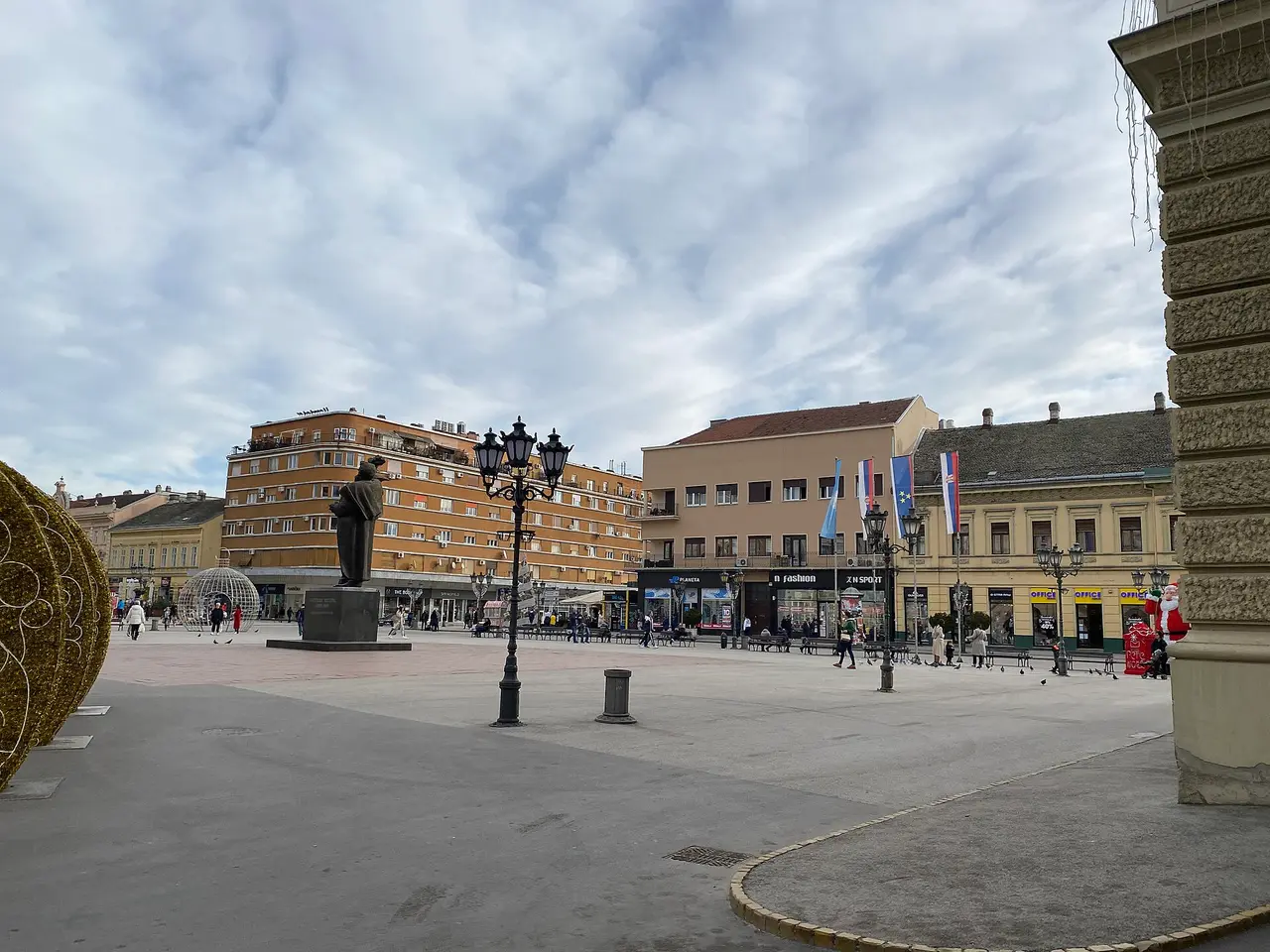
Back across the river, the old town is small, flat and made for walking. Its heart is Freedom Square (Trg slobode), a wide pedestrian plaza framed by the neo-Renaissance City Hall on one side and, facing it, the great spire of the Catholic parish church. In the middle stands Svetozar Miletić, the nineteenth-century mayor and Serbian national figure, cast mid-stride as if he’s about to step off the plinth. It’s the city’s living room - market stalls, buskers, coffee and, in the evening, half of Novi Sad simply out for a stroll.
The church on the square is the Name of Mary Church, the largest in the city and its most photographed silhouette. It’s a neo-Gothic pile built in the 1890s - finished around 1894 - to a design the Hungarian architect György Molnár drew up for free, and its 72-metre spire is roofed, like a good few buildings around here, in the glazed Zsolnay ceramic tiles that give the region’s landmarks their patterned, glinting rooftops. Step inside for the stained glass; it’s a working church, so keep it quiet.
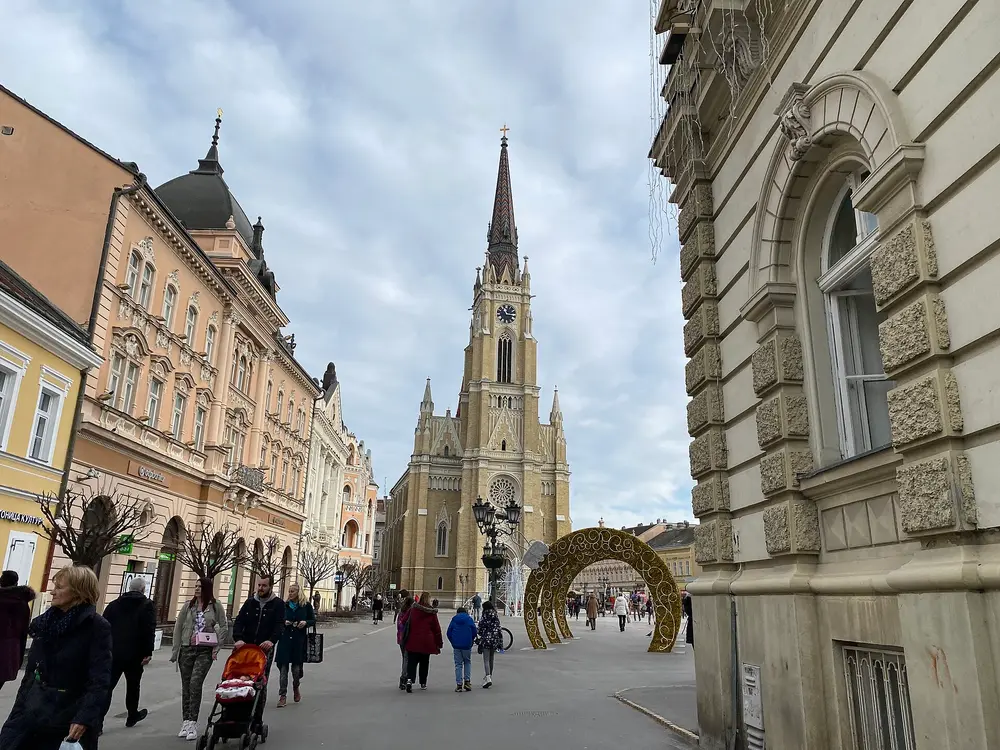
From the square, Zmaj Jovina Street runs east toward the Bishop’s Palace - a short pedestrian run of cafés and shops named after the beloved poet Jovan Jovanović Zmaj, whose statue you’ll pass. It’s the city’s café spine, the place to take a slow coffee the way Serbs actually do, an hour at a time.
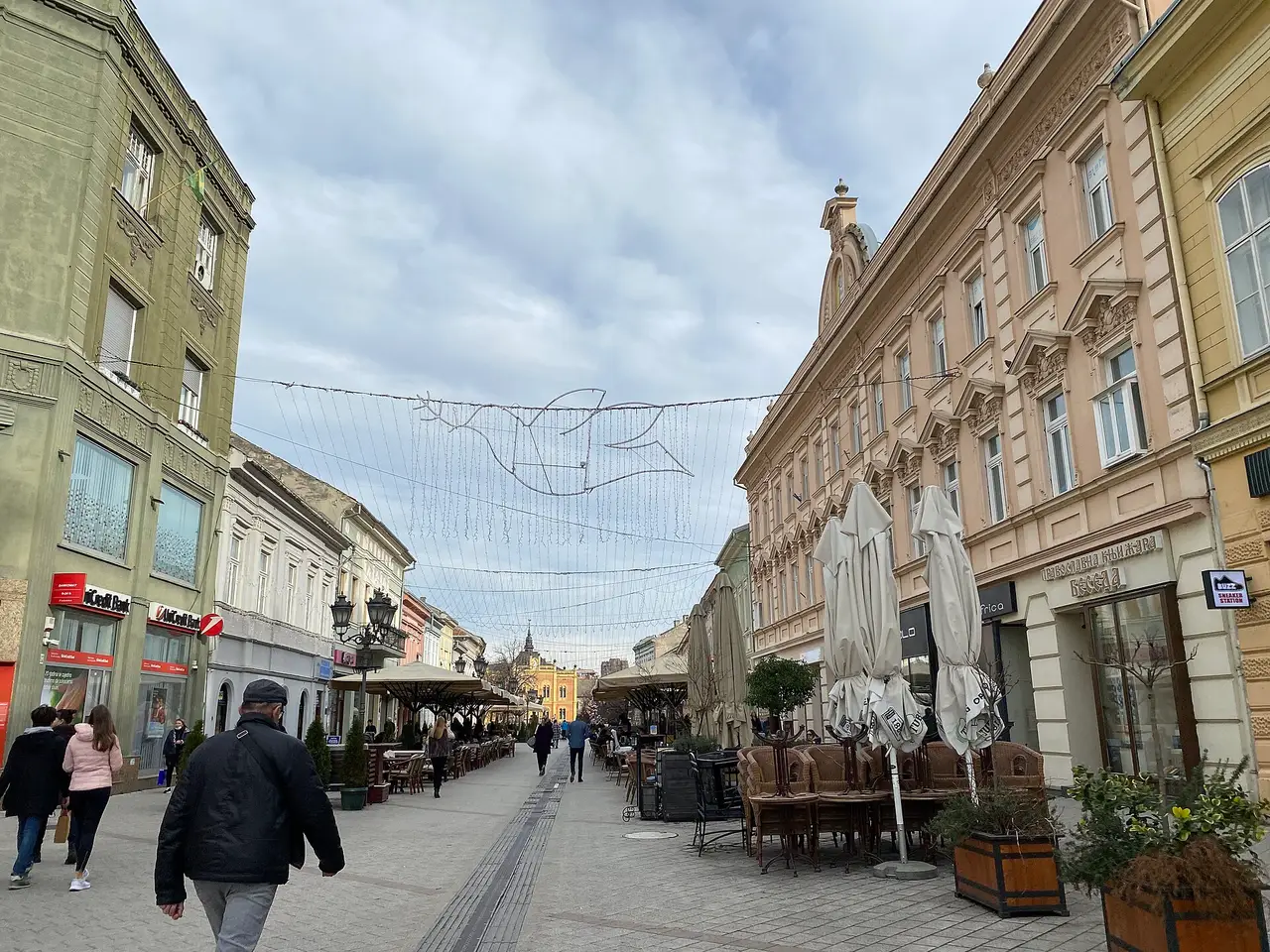
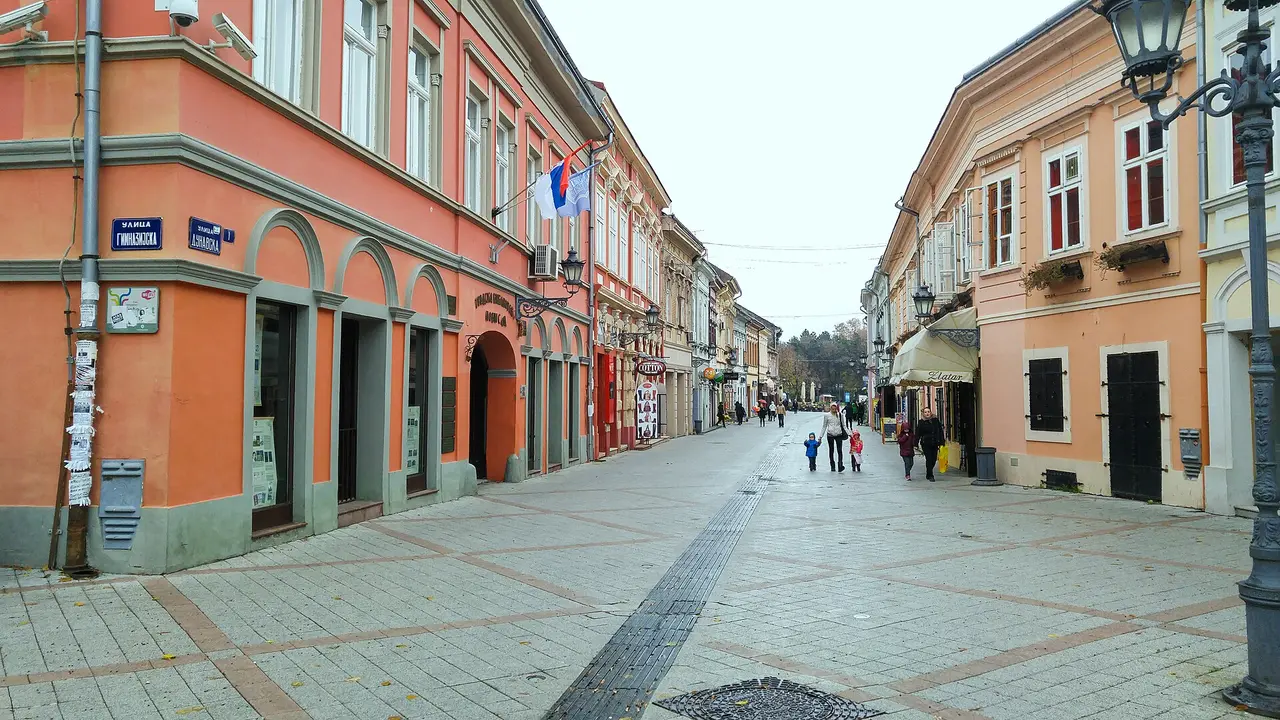
Turn off it onto Dunavska Street, one of the oldest lanes in the city - it dates to the early eighteenth century and slopes gently down to the Danube park, past antiquarian bookshops and the oldest surviving house in town, “At the White Lion.” It’s the prettiest short walk in Novi Sad, and it delivers you neatly to the river.
The Novi Sad Synagogue
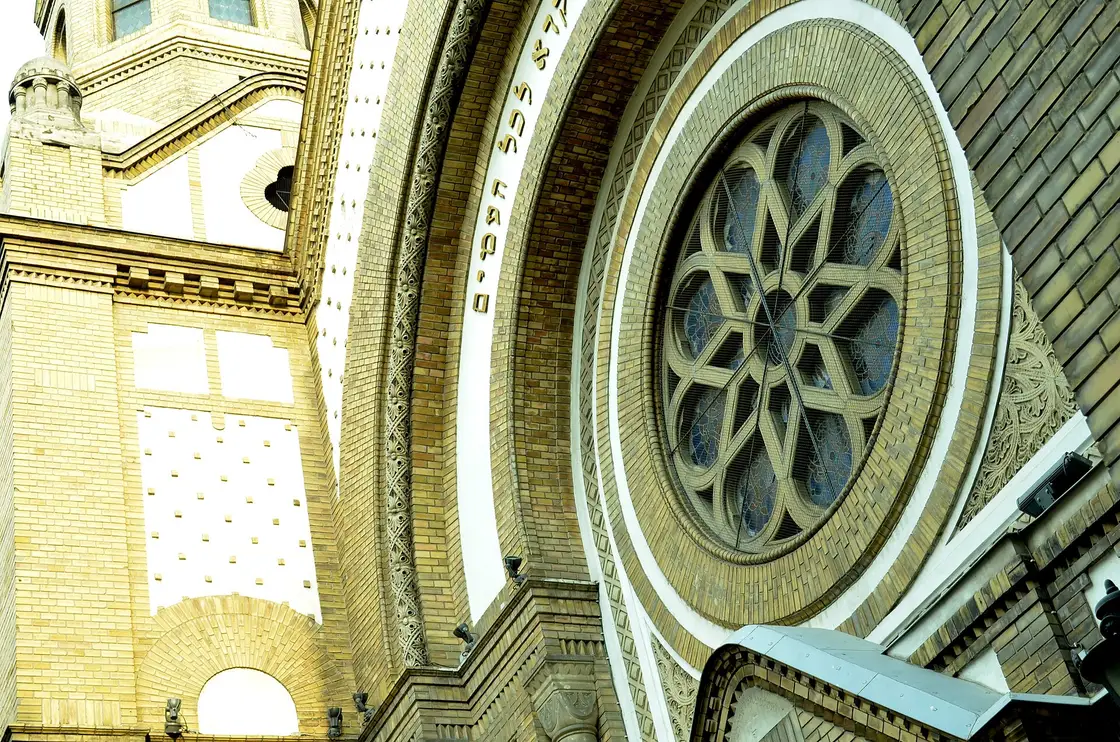
A couple of streets off the square stands one of the finest buildings in Vojvodina: the Novi Sad Synagogue, built between 1905 and 1909 by the Budapest architect Lipót Baumhorn, who designed more synagogues than anyone of his era. It’s a soaring Art-Nouveau composition topped by a 40-metre dome, part of a larger complex that once included a Jewish school and community offices. It no longer serves as an active house of worship - it’s used today as a concert hall, and its acoustics are the reason to time a visit to a recital if one’s on. Even from the outside it’s worth the short detour; few travellers make it, and they should.
Štrand: the Danube city beach
What tips Novi Sad from “nice day trip” to “stay the night” is this: it has a proper beach. Štrand is a broad sweep of Danube sand - around 500 metres long - that has been the city’s summer playground since it opened officially in 1911. On a hot day it’s astonishing: cafés, volleyball, kids in the shallows, and, at the peak of the season, up to twenty thousand people in a single day. It runs roughly May to September, it’s a short walk or ride from the centre, and it is Novi Sad at its most relaxed. Belgrade has its river lake; Novi Sad has this, and locals will argue theirs is better.
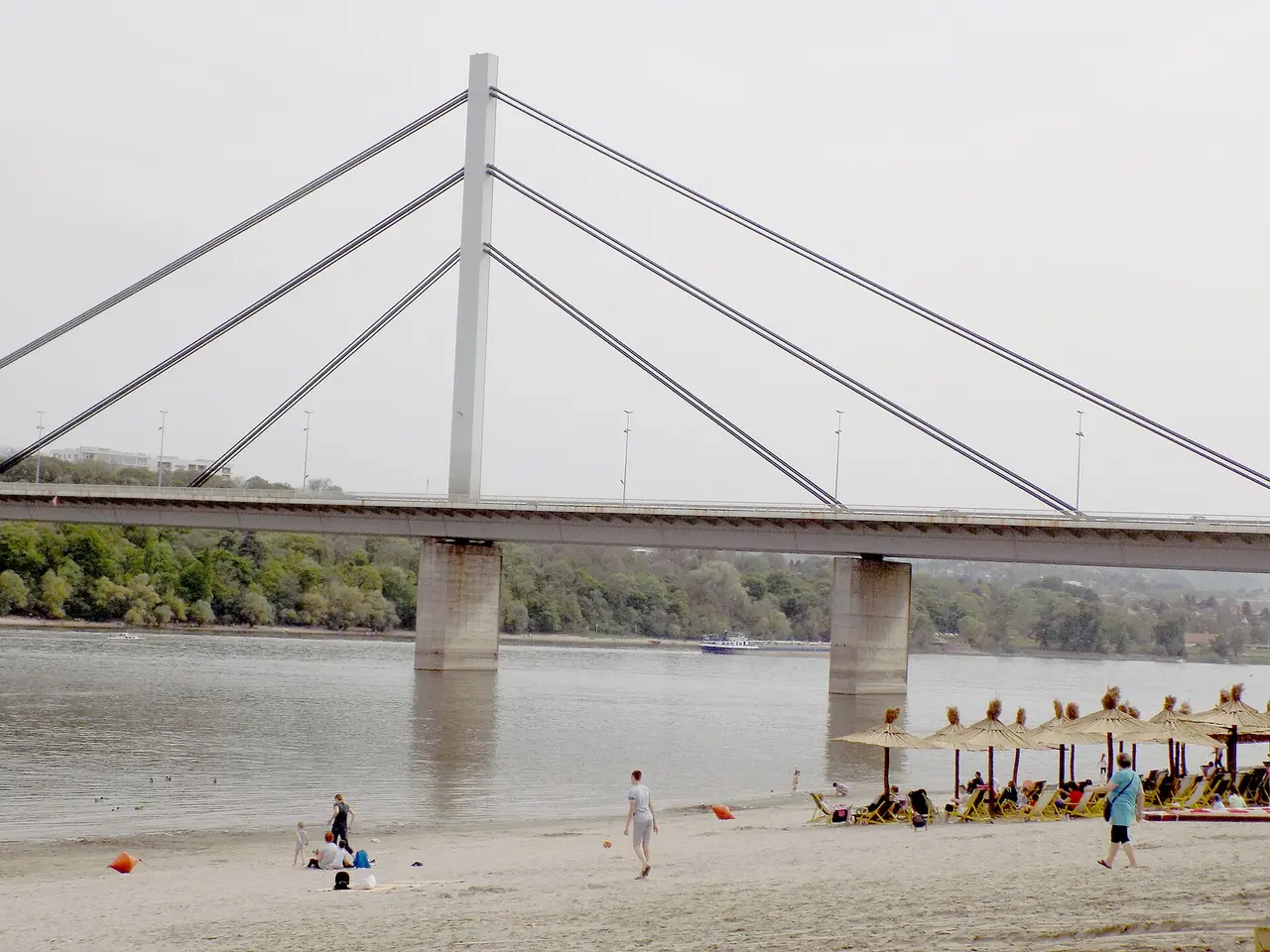
If the beach isn’t your thing, the Danube quay and riverside park still make the best evening stroll in the city, with the fortress lit up across the water and the odd barge-café tied to the bank.
Petrovaradin and the EXIT years
For 25 summers, Novi Sad was one of Europe’s great festival cities. EXIT was born in 2000 out of a student protest against the Milošević regime and grew into a four-night giant staged, unforgettably, inside Petrovaradin Fortress - its legendary Dance Arena filled the fortress moat, with the main stage on the ramparts above. That era has closed: 2025 was EXIT’s final edition at Petrovaradin. After losing state funding amid political tension, the organisers announced the festival is leaving Serbia and touring other countries from 2026, so an EXIT night in the citadel is no longer something you can plan a Novi Sad trip around.
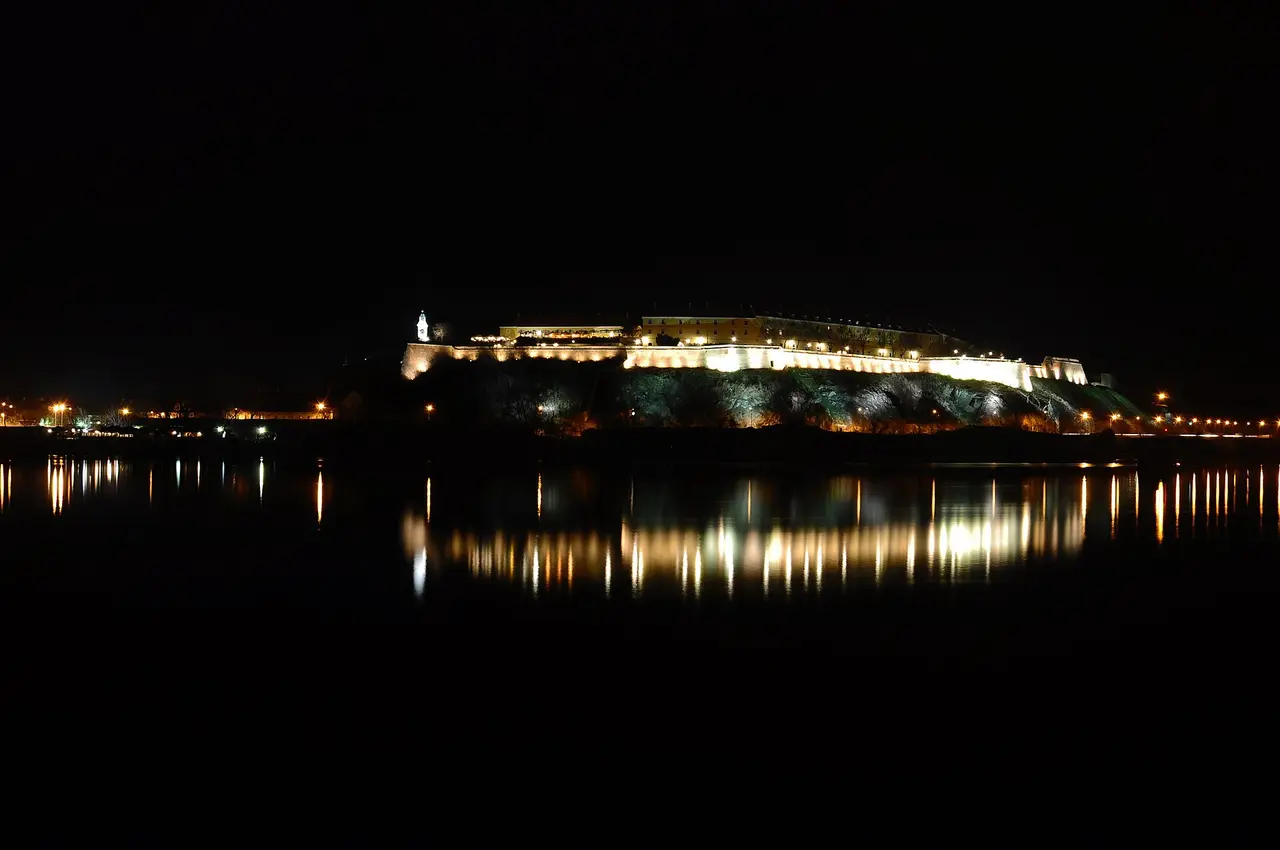
What remains is the fortress itself - floodlit above the Danube and worth an evening walk - and a quarter-century of stories. If live music is what’s drawing you north, check exitfest.org for where EXIT is playing this year and look at Belgrade’s own summer line-up too. Novi Sad still fills up on warm-weather weekends, so if you’re coming in July, book beds ahead; the fast train from Belgrade makes it an easy night out either way.
Day trip: Fruška Gora and Sremski Karlovci
The best reason to give Novi Sad an extra day sits just to the south. Fruška Gora is a low, wooded mountain - a national park of some sixteen Orthodox monasteries, hundreds of kilometres of trails and, crucially, dozens of small wineries turning out some of Vojvodina’s best bottles. The first monastery is barely half an hour from the city, and the whole range is an easy loop by car or on an organised tour: monasteries in the morning, a long lunch and a tasting at a family winery in the afternoon. Our full guide to Fruška Gora’s monasteries, wine and hikes walks through which monasteries to choose and where to taste Bermet.
Tuck the baroque town of Sremski Karlovci into the same trip. Ten minutes from Novi Sad at the foot of the hills, it’s a jewel-box of an old capital - a grand cathedral, Serbia’s oldest grammar school, and cellars pouring Bermet, the sweet spiced wine the town has made for centuries and reputedly served at Habsburg tables. It pairs perfectly with the fortress-and-old-town day, and it’s the sort of half-day that turns a good trip into a memorable one. With a car and a spare day, Novi Sad and Karlovci are the opening leg of our two-day Vojvodina loop, which carries on across the plain to Sombor and the art-nouveau showpiece of Subotica. For more of the country’s landmarks and monasteries, browse the attractions section.
Where to stay in Novi Sad
For a short stay, base yourself in or just off the old town, around Freedom Square, Zmaj Jovina and Dunavska - everything worth seeing is then a flat ten-minute walk away, and the cafés and restaurants are on your doorstep. For something more atmospheric, a handful of small hotels sit up on Petrovaradin by the fortress, trading the walk into town for that Danube view and the quiet of the citadel at night. Prices are gentle compared with Belgrade most of the year - but they climb on summer weekends and around big events, so book well ahead if you’re coming in July.
How to fit it together
If you’ve only got a day, take an early train from Belgrade, walk the old town and cross to the fortress for the afternoon light, and you’ll head back happy. With an overnight, add Štrand in summer or Fruška Gora and Sremski Karlovci in any season, and you’ve got one of the most rounded short breaks in Serbia - city, river, wine and a great fortress, all an hour from the capital. Either way, it’s the natural companion to the capital: see our guide to things to do in Belgrade, where it tops our list of the best day trips from Belgrade, and browse more of the country’s cities in the cities section. Novi Sad is also the first stop out of the capital on our 10-day Serbia road trip, if you’re touring the whole country by car.
Photos
On the map
The map loads on click - to keep the page lightweight.
The map didn’t load. Check your connection and refresh the page.
Read also

Cities · 9 min read
Sombor: Vojvodina's Greenest Town
Verified · August 31, 2026Sombor travel guide: 121 km of tree alleys, the fijaker stand, County Hall with Eisenhut painting, and Gornje Podunavlje wetlands.

Cities · 12 min read
Valjevo: Old Town, Museums and Two Rivers
Verified · August 19, 2026Valjevo travel guide: Tesnjar, the Muselim Residence, Nenadovic Tower, the cathedral, and how to reach the town by train or car.

Cities · 9 min read
Sokobanja: Spa Under Rtanj Mountain
Verified · August 13, 2026Sokobanja spa guide: Ottoman hammam, respiratory air, Rtanj hikes, Bovan Lake and how to reach the town from Niš or Belgrade.

Cities · 10 min read
Vrnjacka Banja: Serbia's Top Spa Town
Verified · July 25, 2026Vrnjacka Banja is Serbia's most visited spa town: seven mineral springs, the Bridge of Love padlocks, a green park and Lovefest each August.