
Subotica: Serbia's Art Nouveau City
Subotica travel guide: the City Hall and its tower, the restored synagogue, Raichle Palace and Lake Palic, plus the 80-minute train from Belgrade.
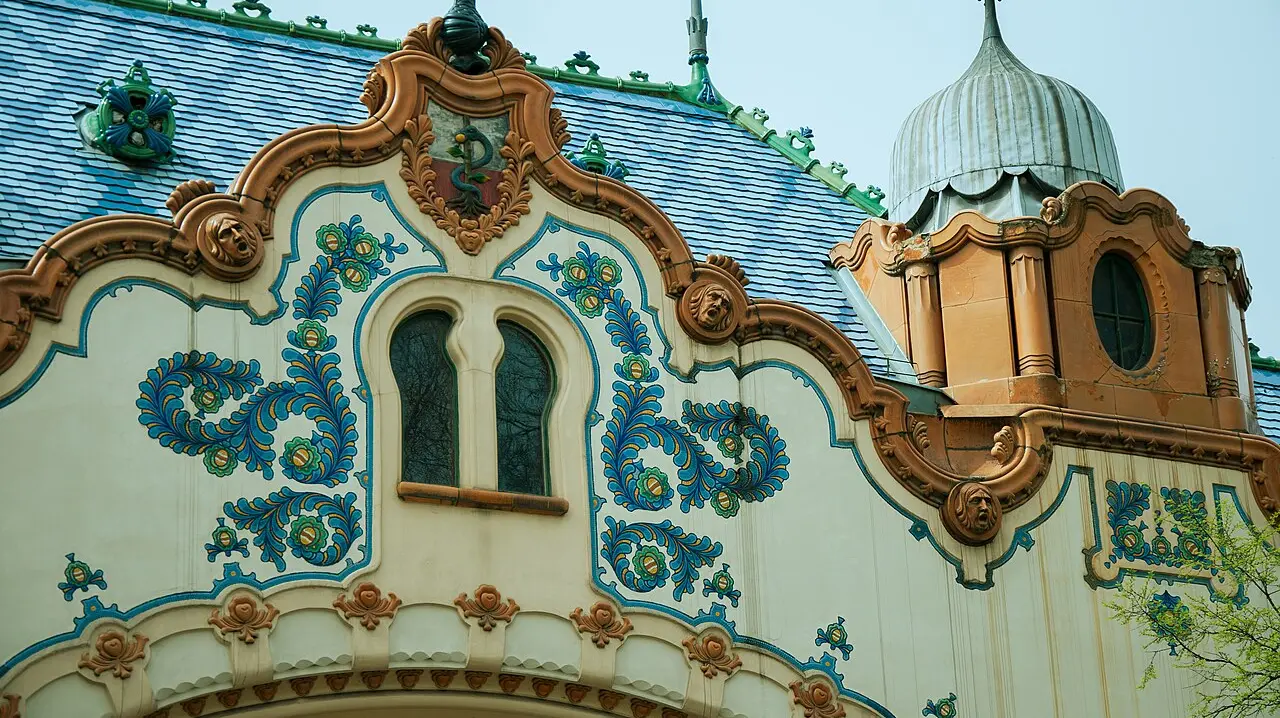
Subotica has the best concentration of Art Nouveau architecture in Serbia, and the fast train now puts it 80 minutes from Belgrade. Three buildings carry the town: the City Hall of 1908-1910, the synagogue of 1901-1903 - the only Hungarian Art Nouveau synagogue left standing in Europe - and the Raichle Palace of 1904, which an architect built as his own house and covered in blue ceramic flowers. Add a lake resort with a matching 1912 ensemble a short drive out of town and you have a very easy day trip, or a comfortable overnight.
The architecture is here because the border moved and the money didn’t. In the 1900s this was a prosperous Hungarian market city, rich enough to hire the best Budapest practices of the day, and Marcell Komor and Dezso Jakab gave it a civic centre in full Hungarian Secession - the Central European cousin of Art Nouveau, with folk-art motifs, Zsolnay ceramics and floral ironwork instead of Parisian curves. By the 2022 census the city proper counted 88,752 people and the wider administrative area 123,952, with no single ethnic group a majority - a genuinely mixed city of Serbs, Hungarians, Croats, Bunjevci, Roma and others, where Serbian and Hungarian are both in daily use. You hear that mix on the street, and you see it on the buildings.
Getting there: the Soko train changed the maths
Since the high-speed line was pushed north in October 2025, the Soko covers the 183 km from Beograd Centar in about 80 minutes for roughly 1,200 dinars. There are around thirteen departures a day in each direction, but not all are the fast Soko - the rest are slower Interregio services that stop everywhere, so check the train type when you book. Our guide to the Belgrade to Subotica train has the timetable detail and the onward options.
From Novi Sad it’s a shorter hop on the same line, which makes Subotica an easy add-on to a Vojvodina trip. One thing the headlines gloss over: as of July 2026 there’s still no through train to Budapest, so if Hungary is your next stop, check before you travel and expect a relay across the border rather than one straight ride.
The City Hall, and the tower nobody tells you about
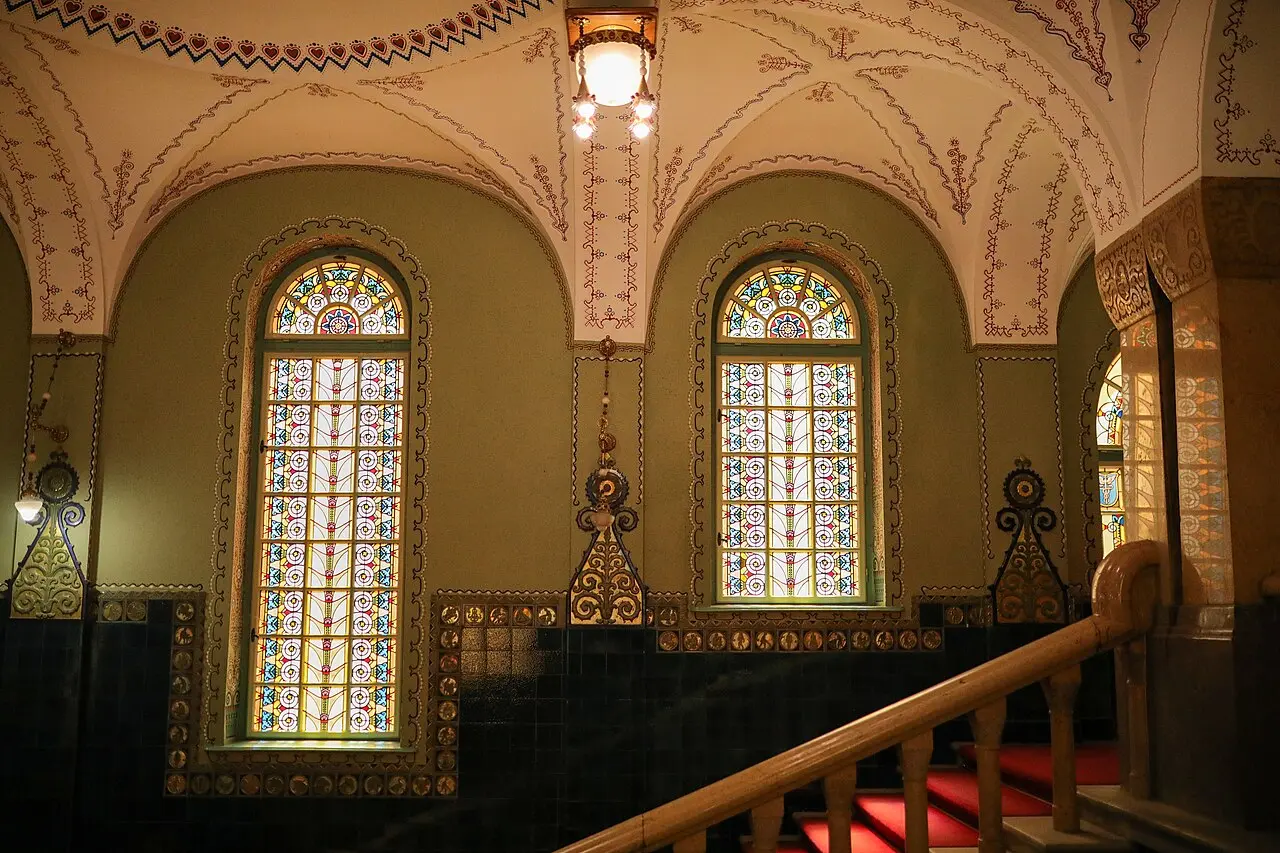
Subotica’s City Hall was built in 1908-1910 by Marcell Komor and Dezso Jakab, and it is the reason people come. From the square it’s a pile of gables, ceramic tiles and a 76-metre tower; inside, the stairwells and the council chamber are lined with stained glass, painted vaults and Zsolnay tilework in colours no municipal building has any business wearing.
The part most visitors miss is the belvedere at 45.5 metres, which opens up the whole flat Pannonian plain and, on a clear day, a long way into Hungary. Access is restricted and reportedly runs on a single daily slot - around noon, Tuesday to Saturday - and you sign up at the City Museum or the tourist information centre beside the City Hall, not at any desk in the tower. Visitors gather in front of the ceremonial entrance on the north side, opposite the blue Zsolnay fountain. It costs about 200 dinars, and there’s no lift: 260 stairs to the top. Times can shift, so confirm the morning you arrive rather than turning up at five to twelve and hoping.
The synagogue: the last of its kind
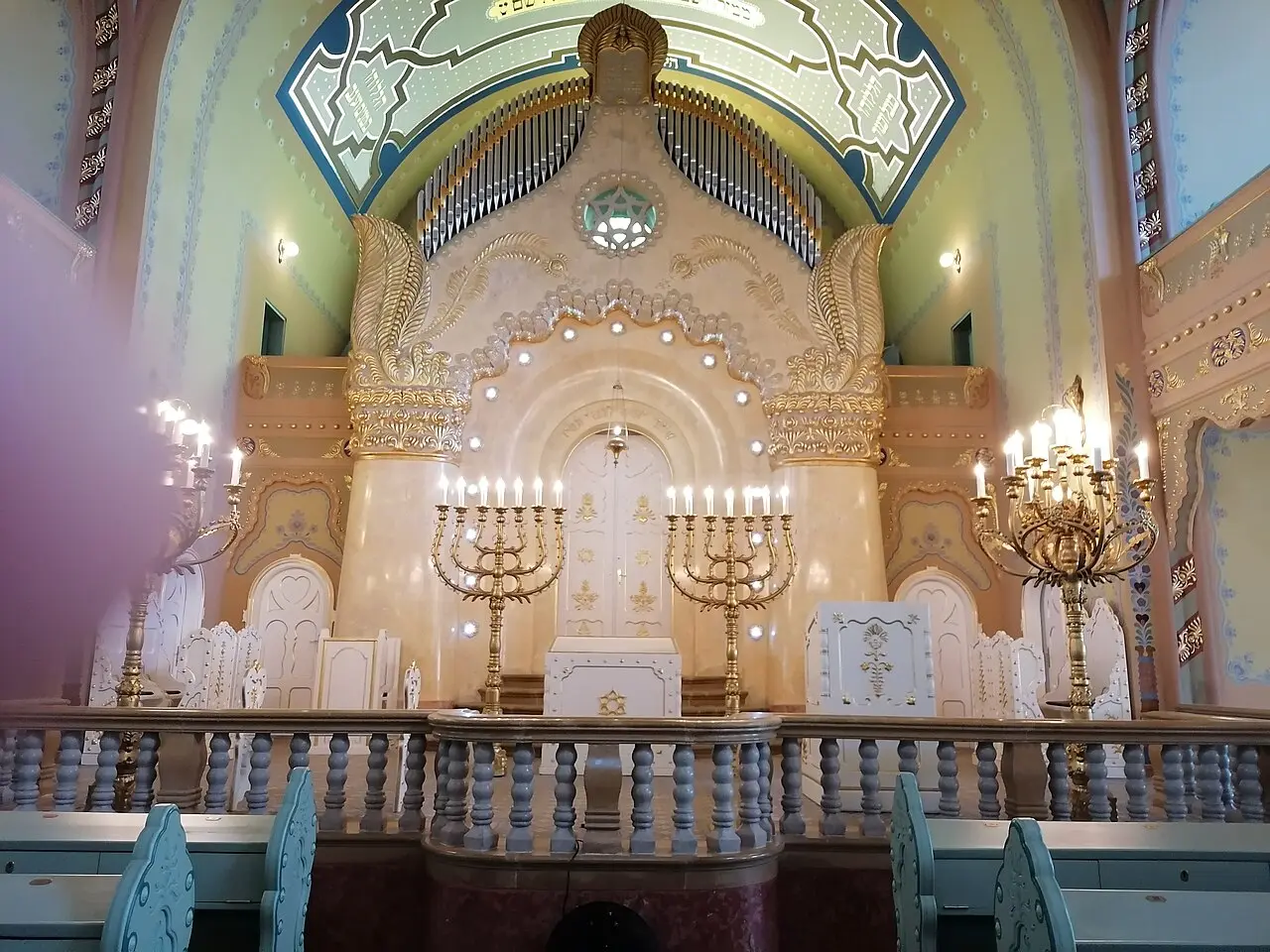
Five minutes from the square stands the building that ought to be the town’s headline act. The synagogue was designed by the same pair, Jakab and Komor, begun in 1901 and finished in 1903, and it is usually described as the second-largest synagogue building in Europe after Budapest’s Dohany Street. More striking than the size: it’s the only surviving Hungarian Art Nouveau synagogue in Europe.
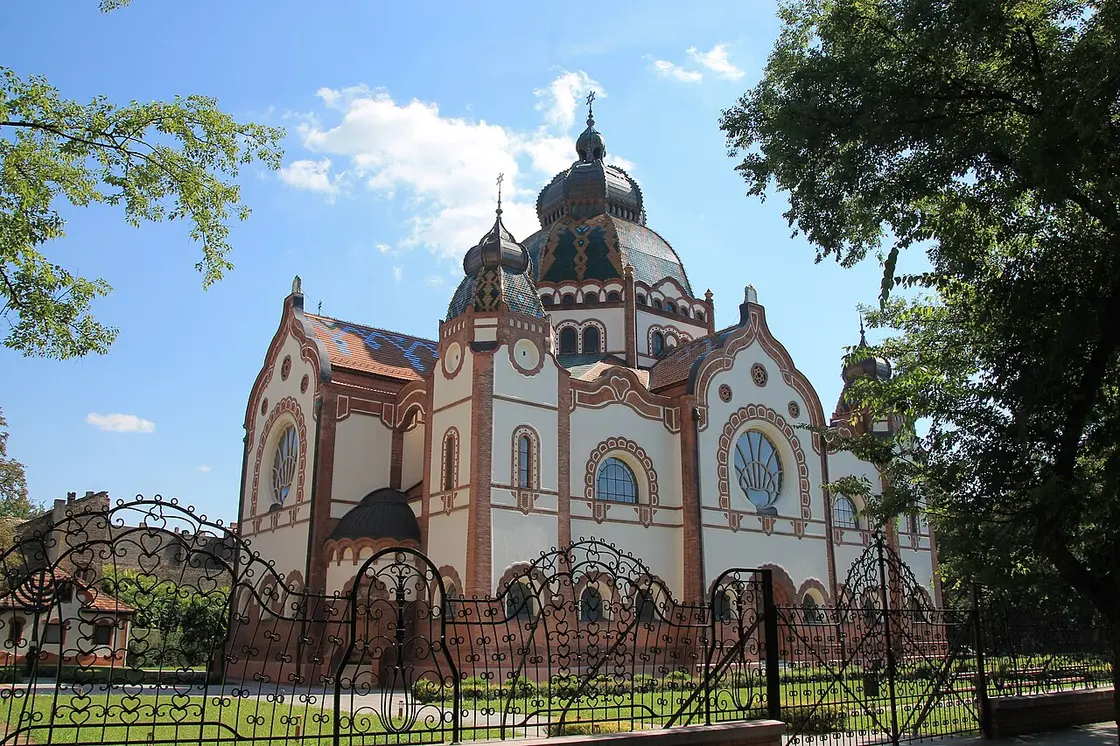
It spent decades in a bad way - it has sat on the World Monuments Fund watch list - before a long, expensive restoration brought it back and it reopened in 2018. It’s no longer a regular working synagogue: the community that built it was almost entirely destroyed in the Holocaust, and the few Jewish families left today cannot fill a building this size, so it now works mainly as a cultural venue and concert hall while staying available to the community for services. Go inside if it’s open - it keeps gallery-style hours and sometimes closes for events, so the tourist office on the square is the place to check. The interior is a pale green, gold and rose confection under a dome of stylised flowers, and photographs undersell it badly.
Raichle Palace and the rest of the centre
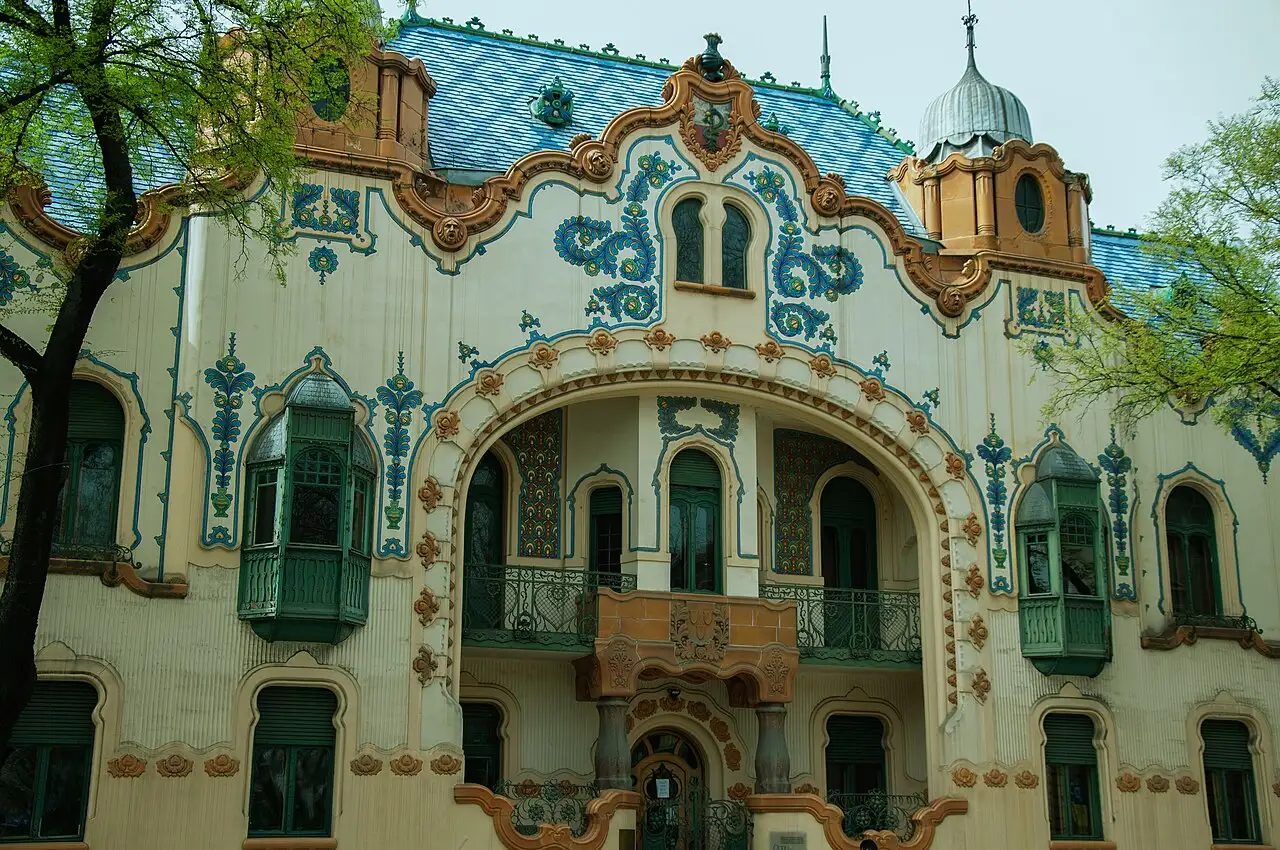
Ferenc Raichle built the Raichle Palace in 1904 as his own house and office, and it shows: it’s the most personal building in town, a facade of blue floral ceramics, heart-shaped railings and green woodwork that reads as showing off in the best way. He went bankrupt not long after. Today it houses the Modern Art Gallery, so you can see the interiors as well as the front.
The rest of the centre repays an hour of aimless walking. The main square carries the Blue Fountain, restored and tiled; the streets around it are lined with early 20th-century facades in varying states of repair, and the contrast between the polished set pieces and the peeling ones is a fair picture of the town. Most of what you want to see sits within a ten-minute walk, which is why Subotica works so well as a day trip.
The trick is knowing where to look. The best work is up high - in the gables, the roof tiles and the ironwork above head height rather than at street level - so keep your eyes off the shopfronts. And step into courtyards where you can: several of these buildings keep their ornament on the garden side, where the owner rather than the public was meant to see it, and the gates are often open.
Lake Palic
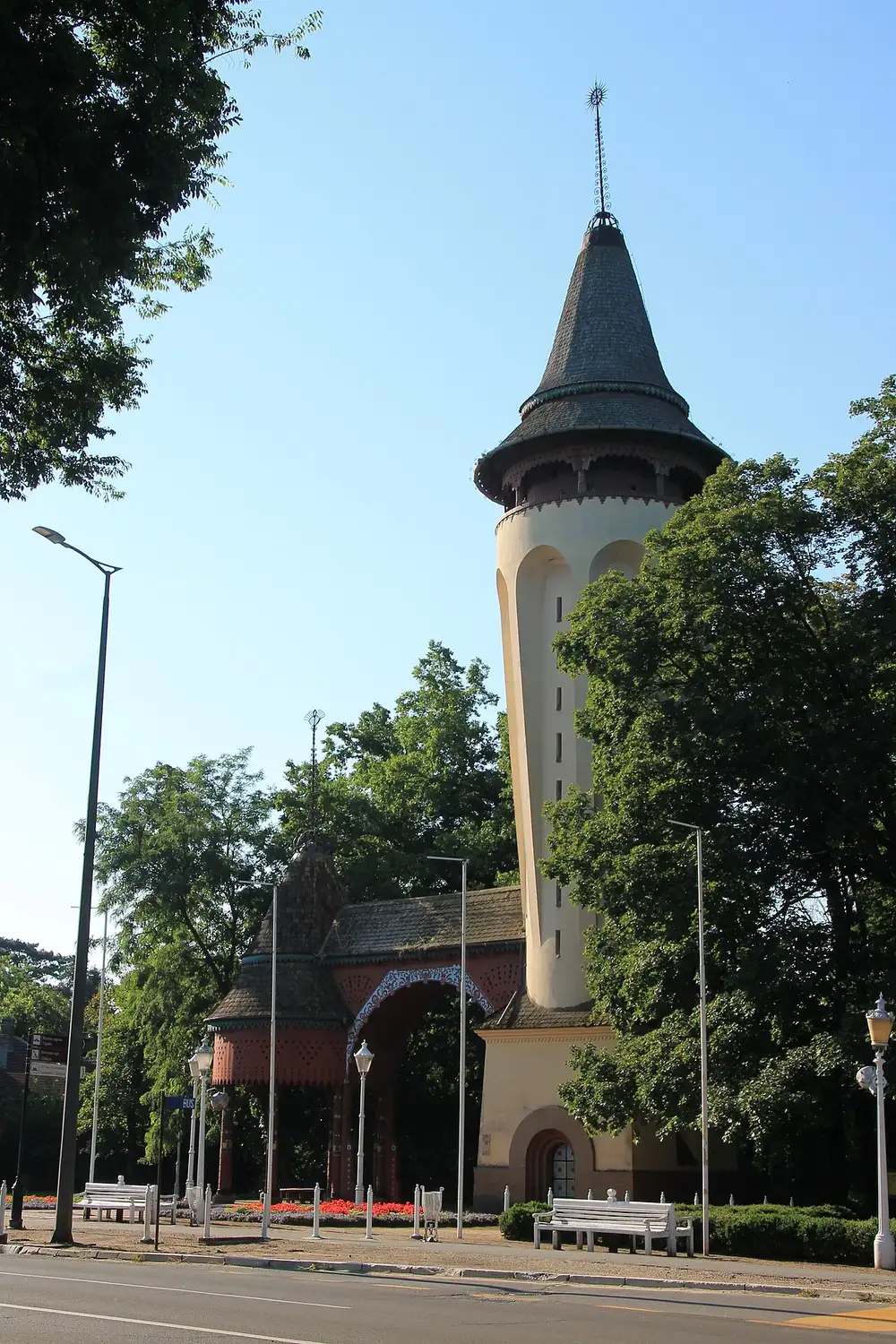
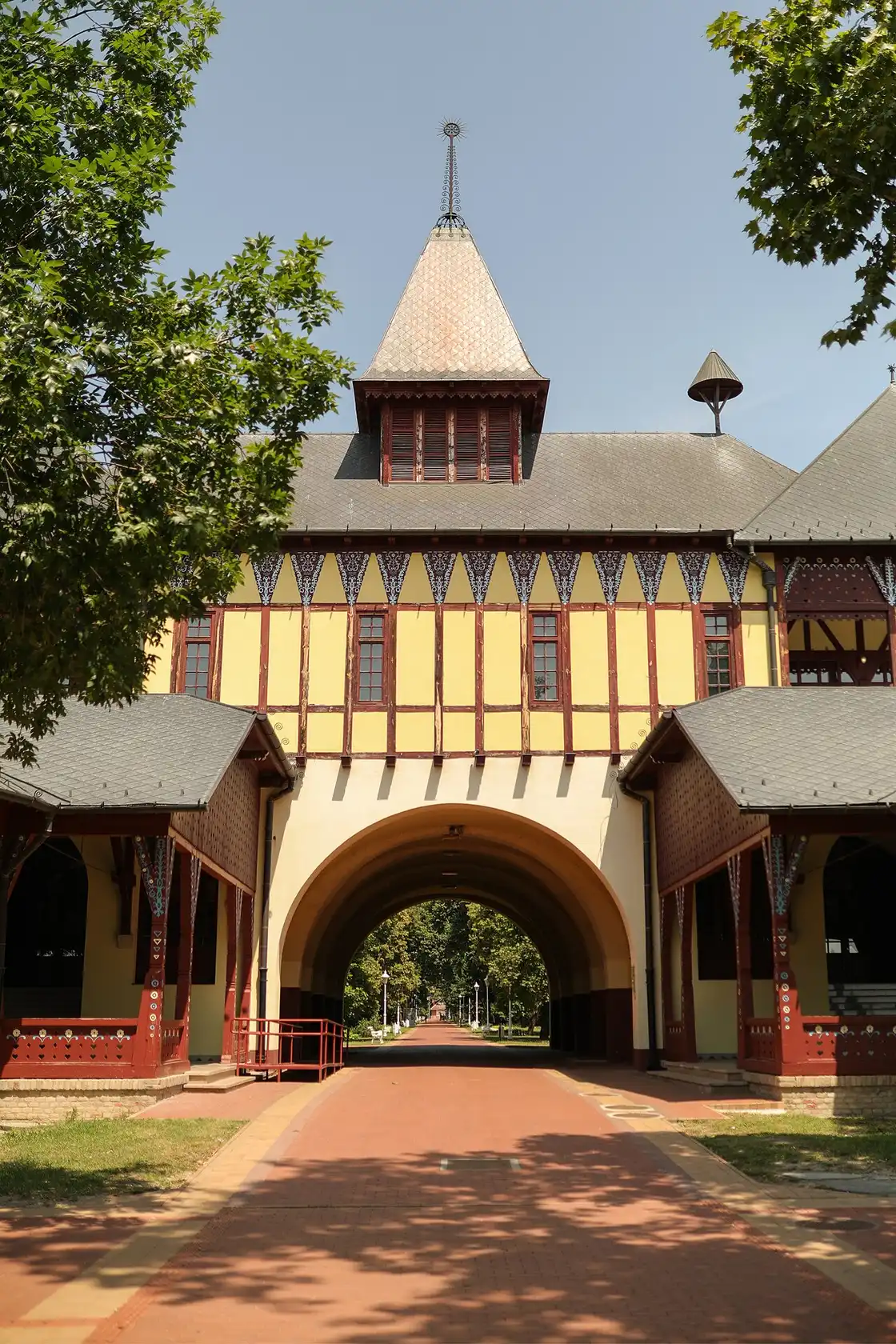
A short way east of town, Lake Palic is where Subotica goes to spend a summer afternoon: a shallow lake, a long promenade under mature trees, terraces, a zoo, and a set of Art Nouveau buildings that belong to the same story as the City Hall. It’s too far to walk comfortably but a quick trip without a car - a local bus or a taxi, both easy to pick up in the centre, and flat enough to cycle in summer. The lakeside ensemble dates from 1912 and includes the Water Tower at the entrance, the Grand Terrace, the Music Pavilion, the Ladies’ Lido and the Memorial Fountain, laid out with the park along the northern shore.
The lake also hosts the Palic European Film Festival each summer; the dates shift from year to year, so check before you plan a trip around it. Out of season the promenade is quiet, half the terraces are shut, and the buildings look their age - which some people prefer. Our full Lake Palic guide has the honest word on the water, the wine road and the festival dates.
A day in Subotica, in order
The town is small enough that the only real planning problem is the tower slot. This sequence solves it:
- Arrive on a morning Soko and walk straight into the centre - the station is a few minutes from the main square.
- The synagogue first, while the light is coming through the east windows and before any coach group turns up.
- Coffee on the square, then the City Hall interiors, having signed up at the City Museum or tourist office before the midday tower slot.
- Up the tower at noon if it’s running - 260 stairs, no lift, and the whole plain laid out at the top.
- Lunch, then Raichle Palace and the Modern Art Gallery inside it, five minutes away.
- Palic in the afternoon, a short bus or taxi ride east: the water tower, the promenade, a terrace by the water, and back for an evening train.
Reverse it if you’re staying the night, and give the lake the sunset instead. For a second take on the same day that adds the Korzo promenade, the farmers’ market and a walk in Dudova Suma park, see Parallaxa View’s day in Subotica.
Practical notes
- How long. Half a day covers the three headline buildings; a full day adds Palic and lunch. Stay the night only if you want the lake in the evening or an early start into Hungary.
- Best time. May, June and September. July and August are hot and the plain offers no shade between buildings; winter is atmospheric but the tower and some interiors keep shorter hours.
- Interiors first, exteriors later. The City Hall tower slot, the synagogue and the gallery all run on their own schedules; build the day around them and fill the gaps with walking, not the other way round.
- Money and food. Prices are lower than Belgrade, and the kitchen leans Hungarian - paprika, freshwater fish, strudel-style pastries. See our guide to Serbian food for the wider menu.
- Onward. Novi Sad is an hour south on the same line; our Novi Sad guide covers the other half of a Vojvodina weekend, Sombor adds the green-canopy stop to the west, and Fruska Gora adds monasteries and wine to it.
Subotica is the one Serbian town where the buildings, not the landscape or the history, are the reason to come - and now that the train takes 80 minutes, there’s no good excuse to skip it. Browse more towns in the cities section, or see how the trip fits together in our transport guides.
Photos
On the map
The map loads on click - to keep the page lightweight.
The map didn’t load. Check your connection and refresh the page.
Distance
- Belgrade ≈183 km · 80 min by Soko fast train Not all daily departures are the fast Soko - the rest are slower Interregio, so check the train type; about 1,200 RSD one way.
- Novi Sad ≈100 km · About 1 h by train or car On the same line north from Novi Sad towards the Hungarian border.
Read also

Cities · 9 min read
Sombor: Vojvodina's Greenest Town
Verified · August 31, 2026Sombor travel guide: 121 km of tree alleys, the fijaker stand, County Hall with Eisenhut painting, and Gornje Podunavlje wetlands.

Cities · 12 min read
Valjevo: Old Town, Museums and Two Rivers
Verified · August 19, 2026Valjevo travel guide: Tesnjar, the Muselim Residence, Nenadovic Tower, the cathedral, and how to reach the town by train or car.

Cities · 9 min read
Sokobanja: Spa Under Rtanj Mountain
Verified · August 13, 2026Sokobanja spa guide: Ottoman hammam, respiratory air, Rtanj hikes, Bovan Lake and how to reach the town from Niš or Belgrade.

Cities · 10 min read
Vrnjacka Banja: Serbia's Top Spa Town
Verified · July 25, 2026Vrnjacka Banja is Serbia's most visited spa town: seven mineral springs, the Bridge of Love padlocks, a green park and Lovefest each August.