
Where to Stay in Novi Sad: Best Areas
The best areas to stay in Novi Sad: the walkable old-town centre, the Danube riverside and Liman, or quiet Petrovaradin under the fortress.
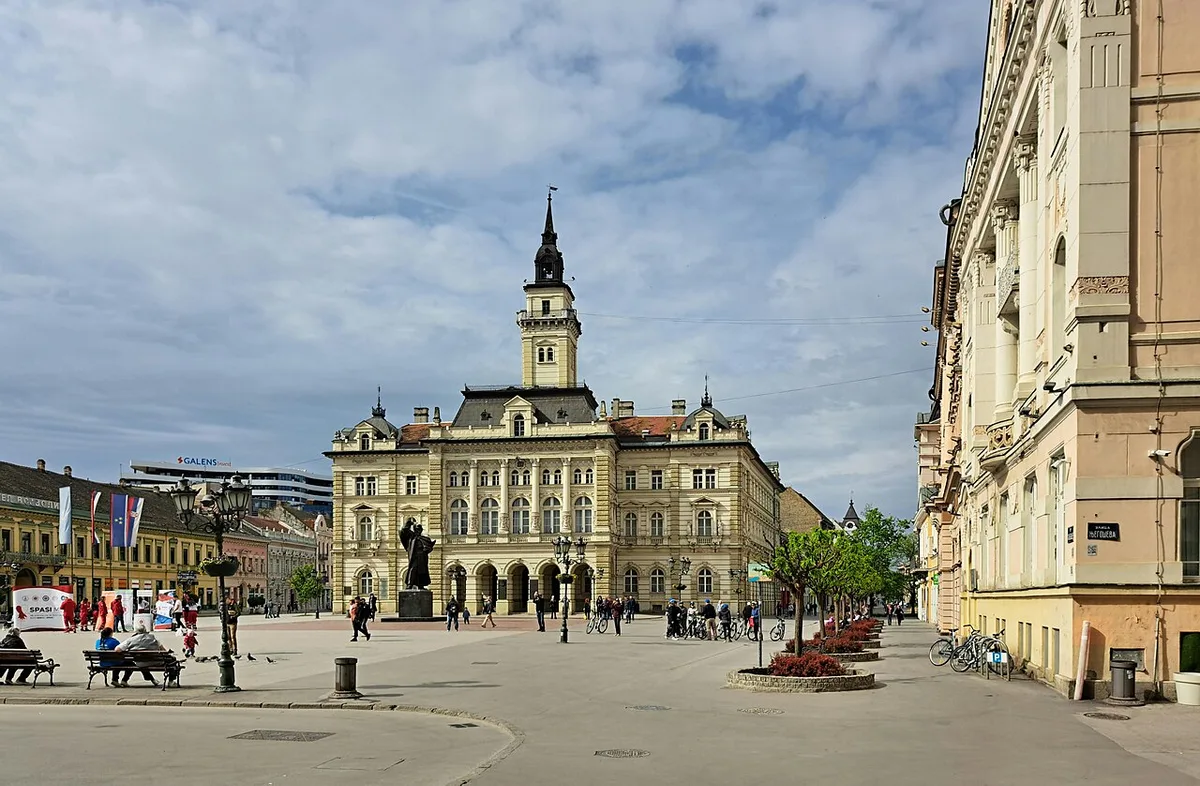
For most trips, stay in the old-town centre (Stari Grad): it puts Freedom Square, the pedestrian café streets and the river all within a flat ten-minute walk, and Novi Sad is small enough that you rarely need anything else. That’s the easy answer. But the city has three quite different places to sleep, and the right one depends on why you’re coming: a first-time sightseer, a family after the Danube beach and a couple wanting quiet under the fortress all want different postcodes. This guide covers the areas worth booking, who each one suits, and the one seasonal quirk that used to make July bookings a scramble.
Where you sleep in Novi Sad is a simpler decision than in Belgrade, because the city is small and the centre is largely pedestrian. You’re not weighing lively districts against sleepy ones across a sprawl; you’re choosing between three things that sit almost within sight of each other - the walkable old-town core, the Danube riverside just below it, and Petrovaradin on the far bank under the fortress. Each has a distinct feel and a distinct price, and the differences are easy to lay out.
Quick answer: which area suits you?
- First visit, want to walk to everything: the old-town centre (Stari Grad).
- Summer, the Danube beach, a quieter and cheaper base: the riverside and Liman.
- Peace, character and fortress views, arriving by car: Petrovaradin.
- Wine day trips to Fruška Gora: anywhere central with a hire car, or the centre plus a driver.
Because the core is so walkable and the free-flowing river is never far, you’ll not go badly wrong with any central choice. The differences are about atmosphere, price and how close you want to be to the water. The detail is below.
Stari Grad: the old-town centre, for first-timers
Stari Grad is the historic heart of Novi Sad and the obvious first-visit base. Stay here and the headline sights are all on your doorstep: Freedom Square (Trg slobode) with the City Hall and the Name of Mary church, the pedestrian café spine of Zmaj Jovina running east, and old, sloping Dunavska Street dropping down to the Danube park. This is the densest concentration of hotels, guesthouses, restaurants and cafés in the city, laid out around pastel baroque and eclectic façades, and it’s walkable end to end in fifteen minutes. You can arrive, drop your bags and be having coffee on the square within the hour.
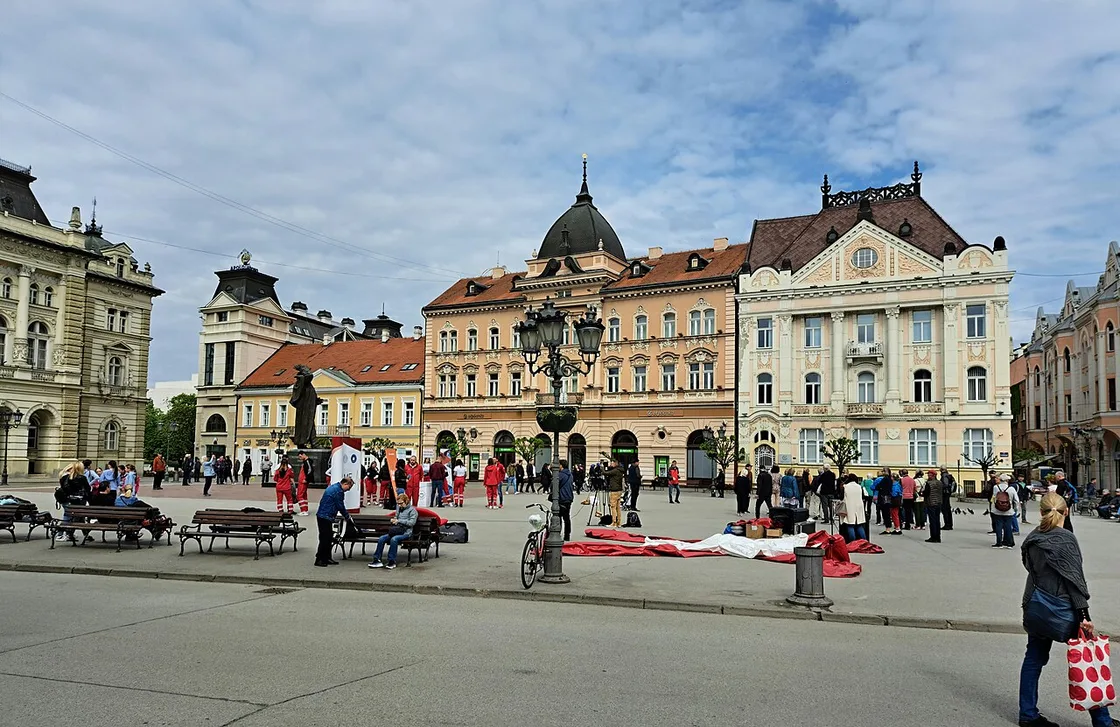
The trade-offs are the usual ones for any old town. It’s the priciest area to sleep in, rooms fill first in summer, and the streets right around Zmaj Jovina can be lively into the evening, so a light sleeper should ask for a room off the main café run. One local detail worth knowing: much of the core is pedestrianised, which is lovely on foot but means driving in and parking is a real nuisance, and the paid, zoned street parking catches people out. If you’re coming without a car, none of that matters and this is the base to pick. For what to actually do once you’ve checked in, our Novi Sad travel guide walks through the fortress, the square and the beach in a day.
The riverside and Liman: for the Danube and a calmer stay
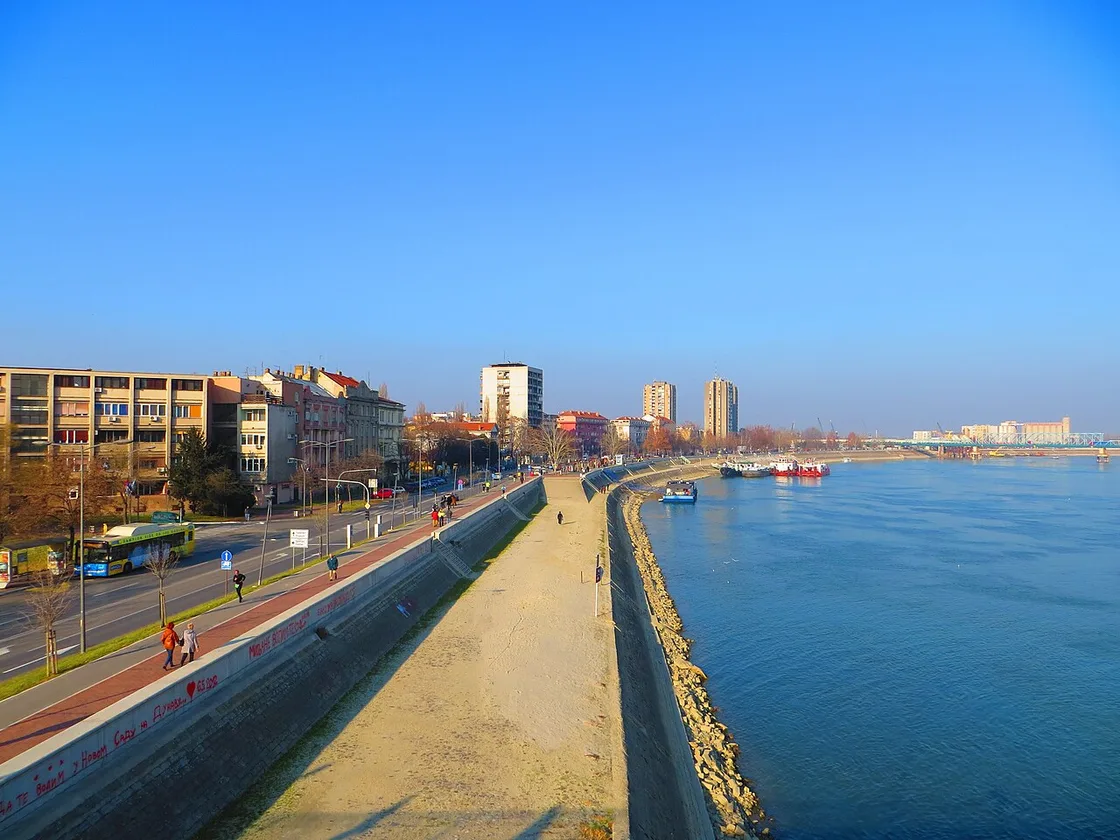
Follow Dunavska down to the water and you reach the side of Novi Sad that turns a “nice day trip” into a reason to stay the night. The Danube quay and the riverside park make the best evening stroll in the city, with the fortress lit up across the water, and just south, at the edge of the Liman district, lies Štrand: a broad, sandy Danube city beach, about 500 metres long, that has been the town’s summer playground since 1911. In July and August this is where Novi Sad actually spends its afternoons.
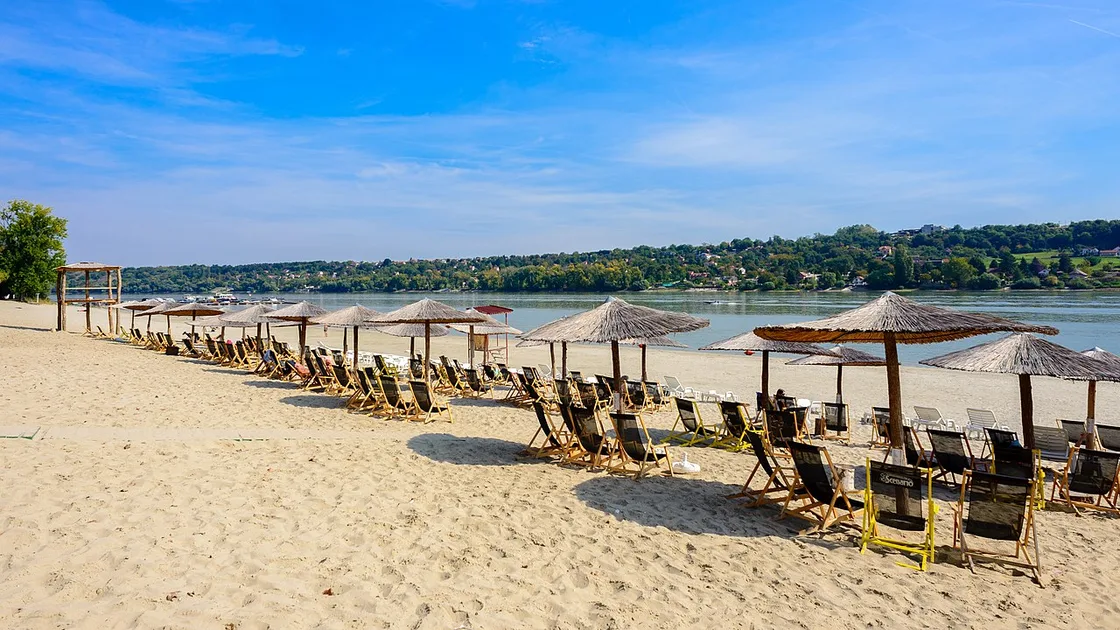
Liman itself is a large, modern, tree-lined residential district right by the water: quiet, green, heavy on students and long-stay renters, and noticeably cheaper for apartments than the old town a short walk away. It suits families, summer visitors who want the beach on their doorstep, and anyone happy to trade cobblestones for a calmer, more local base with the centre still ten to fifteen minutes on foot. Trade-off: Liman is residential rather than pretty, so you sleep among 1970s apartment blocks, not baroque façades. Book here for the river and the value, not the postcard. The beach season runs roughly May to September; outside it, the appeal is mostly the value and the riverside walk.
Petrovaradin: quiet, characterful and under the fortress
For something completely different, cross the Danube and stay in Petrovaradin, the old town on the far bank beneath the great fortress. Until the twentieth century this was a separate settlement on the Habsburg military frontier, and it still feels distinct: steep lanes of low houses, red-tiled roofs, baroque churches and the enormous citadel rising above it all. Accommodation here’s smaller and quieter than in the centre, mostly guesthouses and boutique places tucked into the historic streets, and you wake up to a genuine sense of history rather than a city square.
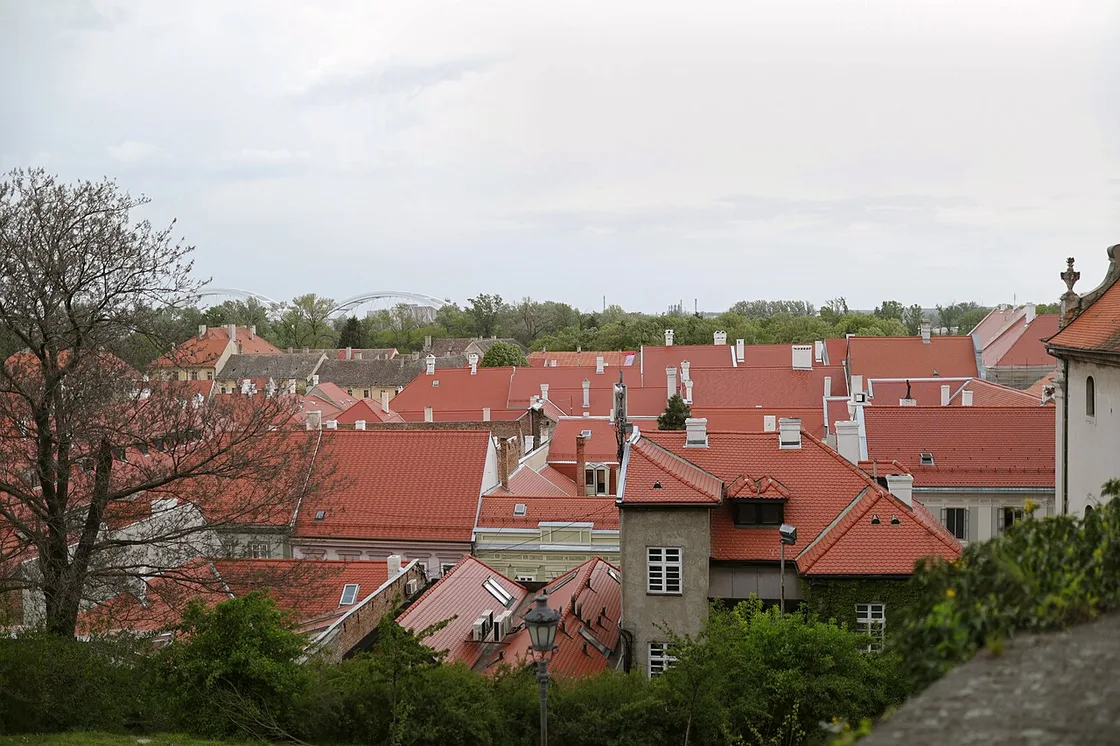
Two things make Petrovaradin work as a base. It’s far more relaxed and often cheaper than the centre, and it’s easier to arrive and park by car, since you’re out of the pedestrianised core. The old town is a walk of about fifteen minutes over the Varadin bridge, which is a pleasant stroll by day but a longer trudge home after a late dinner across the river, so it rewards travellers who want early nights and quiet mornings over being in the thick of the cafés. If you’re here for the fortress itself, its tunnels and the famous “drunken” clock, our Petrovaradin Fortress guide covers what to see on the rock above you.
The EXIT factor: why July used to be a scramble
There’s one date that dominated Novi Sad accommodation for a quarter of a century. Every July the EXIT festival filled Petrovaradin Fortress with tens of thousands of people, and beds across the whole city sold out months ahead while prices climbed hard for that week. If you were coming in early-to-mid July, the old advice was blunt: book as far in advance as you possibly can, or stay out of town and commute in.
That picture is changing. EXIT’s 2025 edition (10-13 July) was announced by the organisers as its last in Serbia - after backing the country’s student protests, the festival says it was cut off from public funding and lost sponsors under pressure, and its founder called leaving “the hardest decision in our 25-year history.” From 2026 the festival is moving to an international tour rather than its fortress home. What that means for a visitor is simple: the guaranteed early-July sell-out that shaped bookings for years may no longer apply. I wouldn’t treat the July crunch as gone for good, though - dates and plans in this saga have shifted more than once, so check whether any large event coincides with your trip before you assume rooms are easy. For festival-free timing across the whole country, our guide to the best time to visit Serbia sets out the seasons.
Budget, mid-range and splashing out
Whatever area you pick, Novi Sad is cheaper than Belgrade across the board, which is part of its appeal. At the budget end you’ve hostels and simple guesthouses, most of them in or near the centre, plus better-value private apartments out in Liman and the residential districts. The mid-range is where the city is strongest: comfortable three- and four-star hotels and a deep supply of modern apartments, concentrated in and around Stari Grad. At the top end the choice is thinner than in a capital - a handful of upmarket hotels in the centre and a few boutique places - so if you want genuine luxury, book early and don’t expect a big-city range.
I’m deliberately not quoting nightly rates here, because they move with the season and with events, and any figure printed today goes stale fast. Check current prices for your actual dates rather than trusting a number in an article.
For most people the sensible play is a mid-range room or apartment in or just off the centre, booked a few weeks ahead in summer. If you’re driving on to the Fruška Gora wine villages or the western mountains, a hire car changes the maths and makes Petrovaradin or the edge of town easier to justify.
Getting there and getting around
Most visitors arrive from Belgrade, and the easy way is the Soko fast train, which does the roughly 75 km in about 40 minutes for a low fare, dropping you a short ride or a twenty-minute walk from the old town; our guide to getting from Belgrade to Novi Sad covers the train, the bus and the drive. Once you’re in the city, the centre is walkable and you’ll barely use transport if you stay in Stari Grad. Base yourself by the river or in Petrovaradin and you add a short bus ride or a longer walk into the mix, which is fine by day and only really tells after a late night out.
If you’re still torn, the old-town centre is the safe default: nine visitors in ten are happiest walking out of the door straight into Freedom Square and the cafés, and only the Danube beach or a car really argues for the riverside or Petrovaradin instead. The bigger thing to get right is timing, not postcode. Book a summer weekend a few weeks ahead, and you can more or less have any of the three.
Photos
On the map
The map loads on click - to keep the page lightweight.
The map didn’t load. Check your connection and refresh the page.
Read also

Before you go · 9 min read
Tipping in Serbia: How Much, Cash or Card
Verified · August 9, 2026Tipping in Serbia: about 10% in restaurants, round up cafes and taxis. Cash is standard - card terminals rarely add a tip. What to leave, by situation.

Before you go · 9 min read
Belgrade or Budapest: Which City Break?
Verified · August 8, 2026Belgrade or Budapest: Budapest wins on flights, baths and sights, Belgrade on free transit and price. Populations, tickets and connections compared.

Before you go · 10 min read
Best Hostels in Belgrade: Party and Budget Picks
Verified · August 8, 2026Belgrade hostels from EUR 6.66 a bed: 3 party picks near the bars and 3 quiet, cheaper ones, with real prices, ratings and exact addresses.

Before you go · 9 min read
What to Pack for Serbia (+ Power Plugs)
Verified · August 7, 2026Pack for Serbia: Type F/C 230V plugs, Belgrade vs mountain layers, and the shoes, eSIM and documents that actually matter on the trip.