
Kopaonik: Serbia's Top Ski & Spa Resort
Kopaonik is Serbia's biggest ski resort and a national park: the pistes and lifts, the 2,017 m Pančić peak, summer hiking, spas and the best month to go.
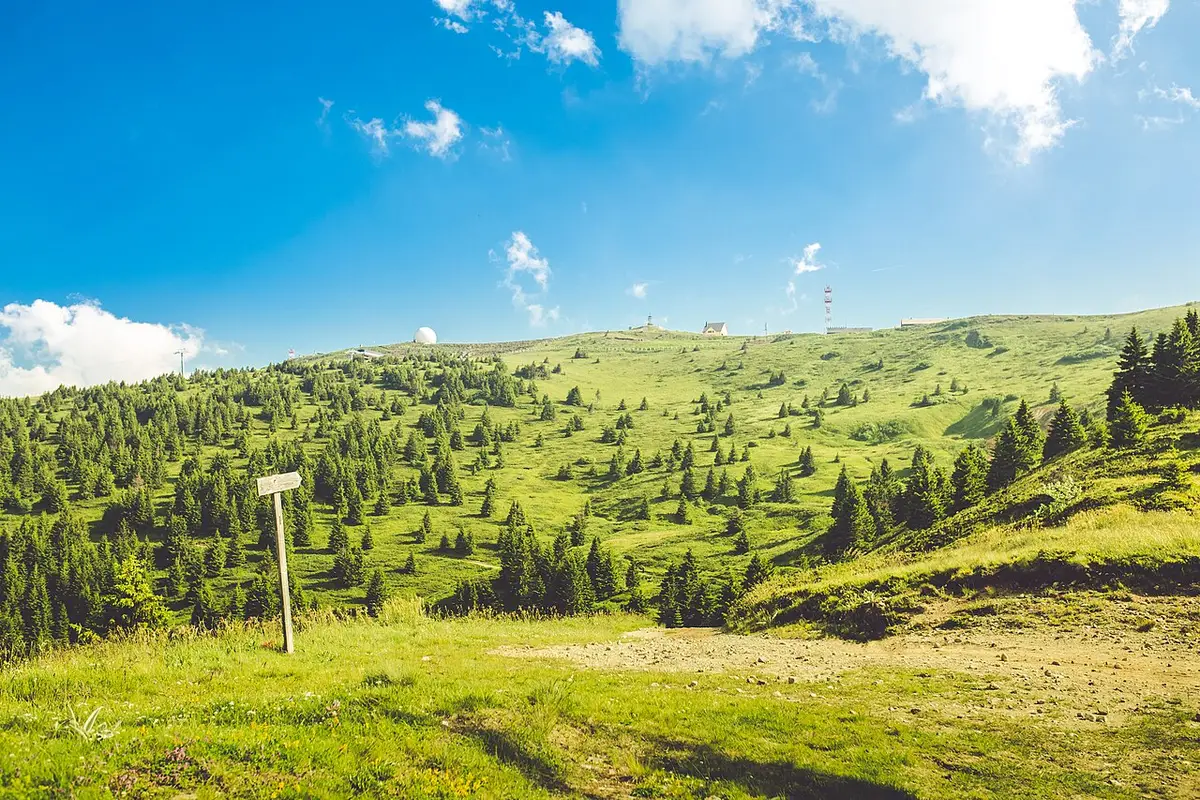
Kopaonik is Serbia’s mountain for snow. It’s the country’s biggest and highest ski resort, sitting on a broad plateau in southern Serbia with its base already above a thousand metres and its top station on the 2,017-metre Pančić peak, and in winter it draws most of the country’s skiers to about 55 kilometres of pistes. But it’s not only a ski station: the whole range is a national park, one of the richest patches of nature in the Balkans, so in summer the same slopes turn into gentle hiking and biking country, and a scatter of thermal spas sits within easy reach for the days you want to do nothing at all. It works as both a winter ski trip and a summer hiking-and-spa escape, though either way it’s a longer haul south from Belgrade than the map suggests.
If you are choosing between Serbia’s mountains, the short version is this: come to Kopaonik if skiing or high-mountain scenery is the point, and to gentler, lower Zlatibor if you want an easy spa-and-walking break closer to the capital. Our full Zlatibor or Kopaonik comparison weighs them up season by season. They’re different kinds of holiday, and the rest of this page is about what makes Kopaonik its own thing.
Where is Kopaonik, and what is it?
Kopaonik is a long mountain range straddling the border of southern Serbia, its highest ground gathered around the Ravni Kopaonik plateau (also called Suvo Rudište) at roughly 1,700 metres. That high, flat base is the single fact that shapes everything here: the resort village, the hotels and the bottom of the lifts all sit up on the plateau rather than down in a valley, which is why the skiing is snow-sure by Serbian standards and why the summer air stays cool.
The name tells you the mountain’s older story. Kopaonik comes from the Serbian kopati, “to dig”, because for centuries this was mining country. In the Middle Ages it was the main mining region of the Serbian state, worked for silver, lead and iron, and it was once known as the “Silver Mountain”. The pits are long closed, but the name stuck.
Above the old mines, the mountain is now protected as Kopaonik National Park, established in 1981 and covering about 120 square kilometres. It’s a genuine biodiversity hotspot: something like 1,600 plant species grow here, of which roughly 200 are found nowhere else on Kopaonik’s scale, a concentration of endemic highland plants that puts the range among the most important in the Balkans. That protected status is the backdrop to everything you do here, on skis or on foot.
Skiing: Serbia’s biggest and highest resort
For most visitors, Kopaonik means winter. It’s comfortably the largest ski area in the country, with around 55 kilometres of marked alpine pistes served by roughly 22 lifts, plus cross-country trails on the plateau. The runs are spread across a friendly range of difficulty: a bit more than half are easy blue slopes, about a third are intermediate reds, and only a small share are genuinely difficult black runs. That mix is why Kopaonik has a reputation as a good place to learn or to ski as a family, rather than a resort built for experts.
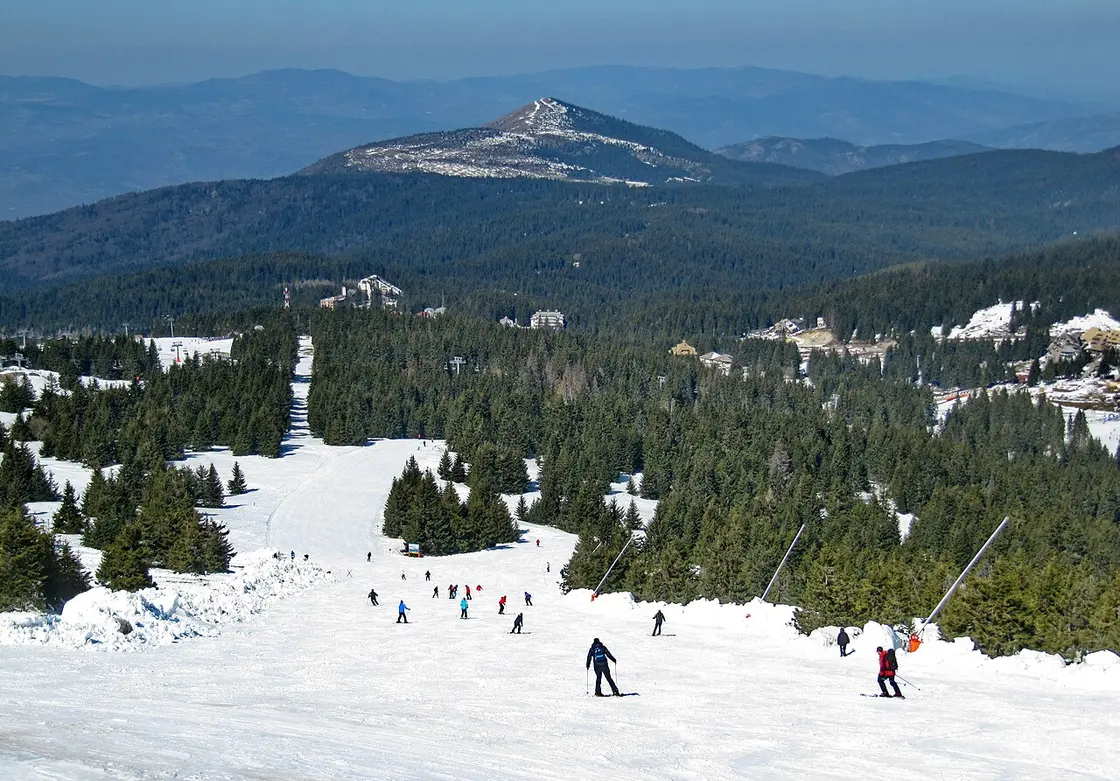
The vertical is modest but real: the lifts run from a base around 1,060 metres up to the 2,017-metre top, a drop of just under a thousand metres. The season normally runs from early December to early April, and Kopaonik has a useful trump card here, the reason locals call it the “sunny mountain”: it averages around 200 sunny days a year, so you get a lot of bright, blue-sky skiing rather than the grey murk that dogs some ranges. Snow is helped along by snowmaking on the main runs, but this is still a southern European mountain, so it pays to check current conditions before booking a ski week around fixed dates.
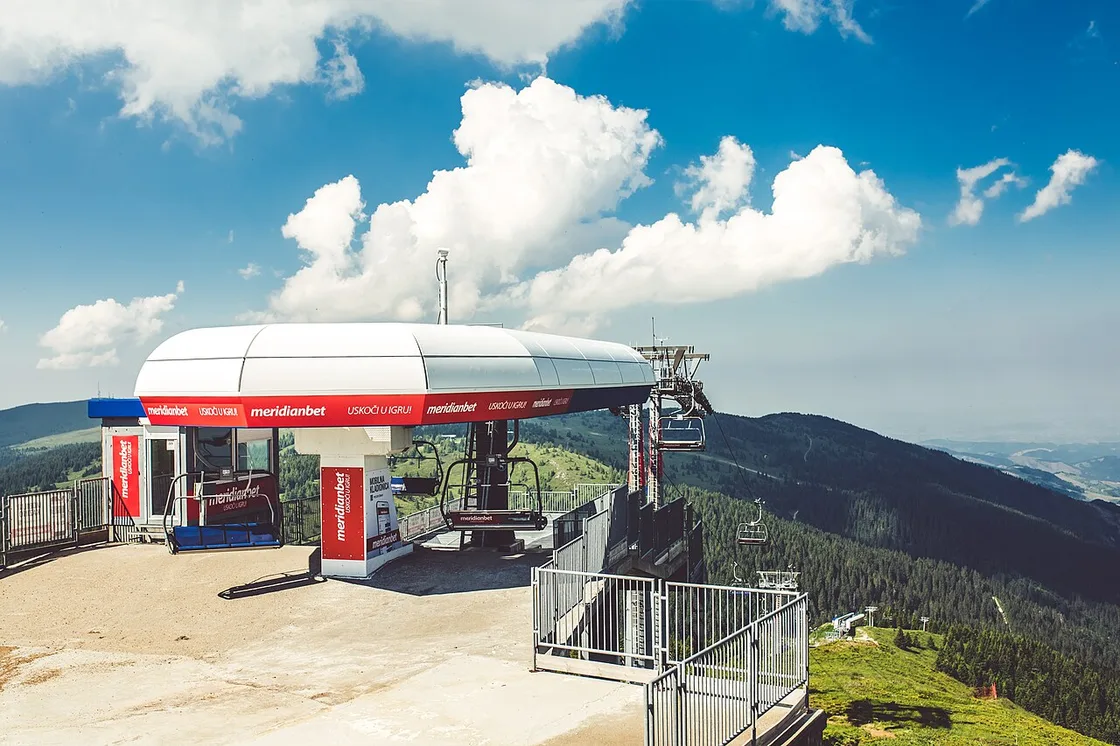
I’m not printing a current lift-pass price here: passes are set season by season, and the 2026-27 list had not been published when we checked, so any figure would be stale by the time you read it. For the 2025/26 bands and the web-shop pre-sale discount ladder, which is where the real saving sits, see our guide to Serbia in winter; confirm the current rates with the resort before you go.
The 2026-27 season: dates and when to book
Expect the 2026-27 season to run from early December to early April, the usual window here. One caveat worth knowing: Skijališta Srbije had not published the exact 2026-27 dates when we last checked in July 2026, and the precise span you’ll see quoted around the web comes from forecast aggregators rather than the lift operator, so confirm the opening and closing dates with the resort before you book flights. Both lift passes and hotel rates are split into price bands across the season, and knowing them saves real money. The dearest and busiest stretch is the high season around New Year and Orthodox Christmas, roughly 25 December to 7 January, plus a February peak: the Sretenje school break falls on 15 to 19 February 2027, and last season the operator’s high-price band sat on the equivalent mid-February week. Most of January and late February into March fall into mid-season, and the cheapest, quietest skiing is early December before the holidays and from late March to the close, when the sun is stronger and the crowds thin out.
That pattern matters most for beds. Ski-in hotels and apartments up on Ravni Kopaonik are limited, and the good ones sell out for the New Year and February peaks months ahead, so if your dates are locked to a school holiday, book the room first and the pass second. Our guide to where to stay in Kopaonik compares the plateau centre against the cheaper weekend settlement and Brzeće, with what each one really costs once you add the bus, the parking and the park fee. If you can travel in the second half of January or in early December, you get the same slopes and hotels for noticeably less. As always with a southern mountain, confirm the resort’s actual opening once the snow reports start, since exact dates and prices are set season by season.
The Pančić peak and the summit
The high point of the mountain, and of the ski area, is Pančić’s Peak (Pančićev vrh) at 2,017 metres. It’s named after Josif Pančić, the nineteenth-century botanist who catalogued Serbia’s flora and famously identified the Serbian spruce (Picea omorika), a rare relict conifer. Pančić asked to be buried on the mountain he loved, and a small stone mausoleum stands on the summit holding his remains. It’s an unusual thing to find at the top of a ski lift, and it gives the peak a quiet significance beyond the panorama.
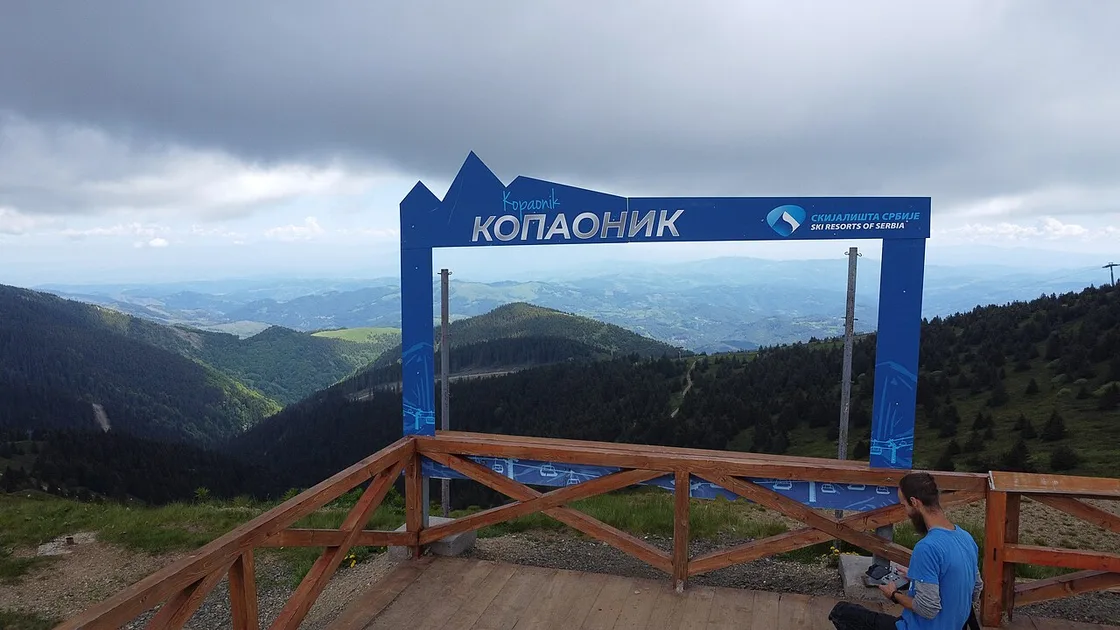
From the top, on a clear day, the view runs a long way across southern Serbia and toward the mountains of the Kosovo border. In winter you reach it on skis or by lift; in summer you can walk up from the plateau in a gentle hour or two, which is one of the mountain’s most popular easy hikes.
Summer on Kopaonik: hiking, biking and the national park
Kopaonik has quietly become a year-round mountain, and summer is the season people underrate. Once the snow goes, the plateau turns into green, rolling walking country: marked hiking trails thread across the meadows and through the spruce forest, the lifts keep running to carry you up for the views, and the cool altitude is a genuine relief when Belgrade is baking in July. Cyclists have it good too, with the plateau and the forest roads opening up a network of mountain-biking routes.
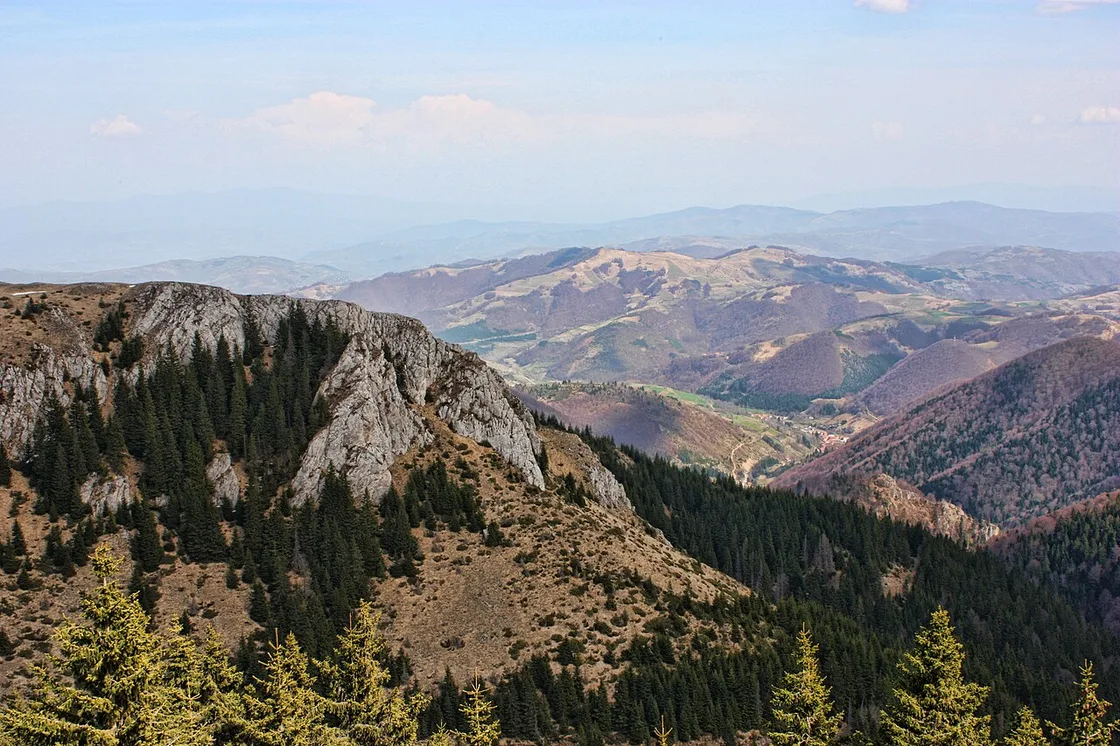
The national park is the draw. The signature natural sights are the rocky outcrops and viewpoints scattered across the range and, for walkers willing to go further, the Jelovarnik waterfall, which at around seventy metres is the third-highest in Serbia, tucked into forest on the mountain’s eastern side. Because so much of the range is protected, the summer feels wild in a way the groomed winter slopes do not, and the wildflower meadows in June and July are a large part of why botanists still make the trip that Pančić did.
Spas near Kopaonik
Part of the region’s appeal is that you can pair the mountain with a soak. Kopaonik sits among some of Serbia’s thermal spa towns (banje), and two are worth knowing. On the western flank of the mountain, in the Raška valley, lies Jošanička Banja, a small spa whose hot mineral springs have been used since the nineteenth century - their healing properties were formally examined back in 1834, at the request of Prince Miloš. Further round, above the Kuršumlija side, is Lukovska Banja, which at around 680 metres claims the title of the highest spa in Serbia, with a cluster of thermal pools and wellness hotels. If you want a full spa town rather than a roadside pool, the region’s best-known one, Vrnjacka Banja, sits about 61 km north - roughly an hour and a half by car - with seven mineral springs and a green central park, and it makes a comfortable base for pairing the mountain with a proper resort.
Neither is on the plateau itself, so treat them as a separate leg of a trip rather than a stroll from your ski hotel; you’ll want a car to combine the mountain with a spa comfortably. And a note of common sense: spa waters are marketed for all sorts of complaints, but take any health claim with a doctor rather than a brochure. As a place to ease tired legs after a day on the slopes or the trails, though, they’re a lovely add-on.
Fitting Kopaonik into a Serbia trip
Budget a proper journey for it. Kopaonik looks close on the map but sits in a remote corner of southern Serbia with no train to the resort: it’s roughly 265 to 300 kilometres from Belgrade depending on which approach road you take, about four hours by car on clear roads and four to five once there’s snow on the climb up to the plateau, or a slow daily coach with a limited timetable that changes with the season. The coach, the transfer and the drive are priced against each other, with the winter tyre and chain rules on the climb, in our guide to getting from Belgrade to Kopaonik. What the mountain itself asks for is a car, because the spas and the wider region are out of reach by coach - getting around Serbia explains why that holds for most of the country beyond the Belgrade-Novi Sad corridor. Up on the plateau the resort village is compact and walkable, and in winter you ski or lift between the slopes; for when the snow is good and when the summer trails are at their best, see our guide to the best time to visit Serbia.
Really there are two Kopaoniks, and the one you meet depends entirely on the month. Turn up in February for Serbia’s longest, most reliable ski runs; turn up in July for wildflower meadows, cool forest air and a thermal spa an hour down the valley. Both are worth the long drive south, as long as you know which mountain you booked for. The same corner of Serbia holds its medieval heart: the white-marble UNESCO monastery of Studenica is an hour or so west toward the Ibar valley, an easy cultural detour on the way to or from the mountain. For a gentler peak closer to Belgrade, Zlatibor is the natural alternative; for the full sweep of Serbia’s peaks and landscapes, browse the attractions section.
Photos
On the map
The map loads on click - to keep the page lightweight.
The map didn’t load. Check your connection and refresh the page.
Distance ≈285 km · ~4 h by car, 4-5 h in winter
- Belgrade ≈285 km · ~4 h by car, 4-5 h in winter Roughly 265-300 km depending on which approach road you take; a long daily bus also runs, but there is no train to the resort.
Read also

What to see · 10 min read
Fruska Gora Monasteries: Which to Visit
Verified · September 3, 2026Sixteen preserved Orthodox monasteries on Fruska Gora: Krusedol, Novo Hopovo, Grgeteg and Vrdnik, plus dress code and a day route from Novi Sad.

What to see · 9 min read
Viminacium: Rome and Mammoths near Belgrade
Verified · September 3, 2026Roman Viminacium near Kostolac: adult tickets 1,050 RSD, hours by season, last tour two hours before close, and why the mammoth park is shut.

What to see · 12 min read
Vinca: The Neolithic Site on Belgrade's Doorstep
Verified · August 29, 2026Vinca's Belo Brdo site is 14 km downstream from Belgrade (16 km by road): 2026 hours, tickets, what the small museum shows, and how to get there.

What to see · 10 min read
Skull Tower of Niš: Story, Tickets, Visiting Tips
Verified · August 25, 2026Ćele Kula in Niš: 1809 Battle of Čegar, chapel hours, 300 RSD tickets and how to visit respectfully from the centre or INI airport.