
The Most Beautiful Monasteries in Serbia
Which Serbian monasteries are worth the drive: Studenica, Sopocani, Mileseva, Manasija, Ravanica and Zica, with frescoes, dress code and logistics.
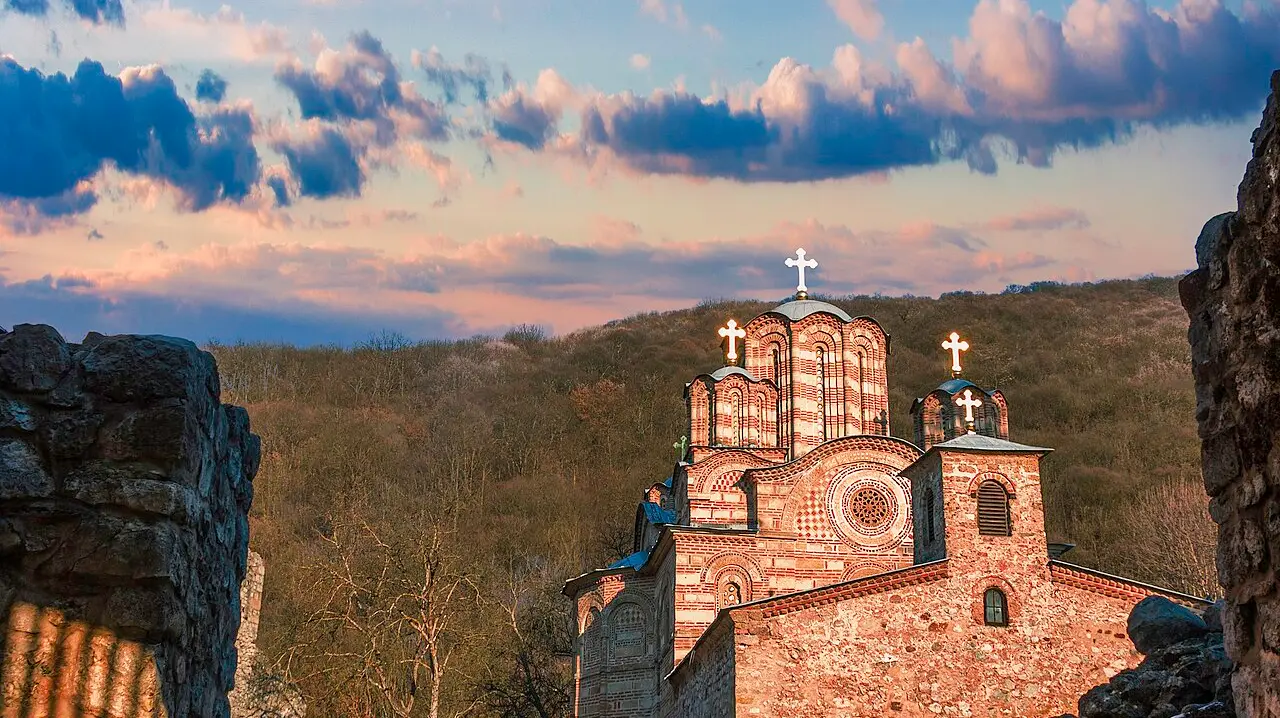
Serbia keeps its best art behind monastery walls, not in museums, and six places carry most of it: Studenica and Sopocani in the southwest, Mileseva near Prijepolje, Zica outside Kraljevo, and Manasija and Ravanica in the hills east of the motorway. All six are working monasteries, all normally free to walk into, and between them they hold frescoes that art historians rank with anything painted in Europe in the 13th and 14th centuries.
None of them are on a bus route worth using. That’s the first thing to plan around: they sit in river valleys and forest clearings an hour or more from the nearest town, which is exactly why they were built there and exactly why a hire car or a guided day trip is the only sane way to string more than one together. Our guide to car rental in Serbia covers the practical side of the driving.
Studenica: the mother house
If you see only one, see Studenica. Stefan Nemanja, the man who assembled the medieval Serbian state, founded it in the late 12th century in a wooded valley about 39 km southwest of Kraljevo, and it’s been lived in ever since. UNESCO listed it in 1986 for two churches sheathed in white marble and for frescoes that include a Crucifixion painted in 1209, done on a deep blue ground that still looks impossibly modern.
The scale surprises people the other way round: the King’s Church, added in 1314, is small enough to stand in the middle of and turn a full circle. Our full Studenica guide covers the three churches, the tomb of the founder and how to get there without a car.
Sopocani: the finest frescoes in the country
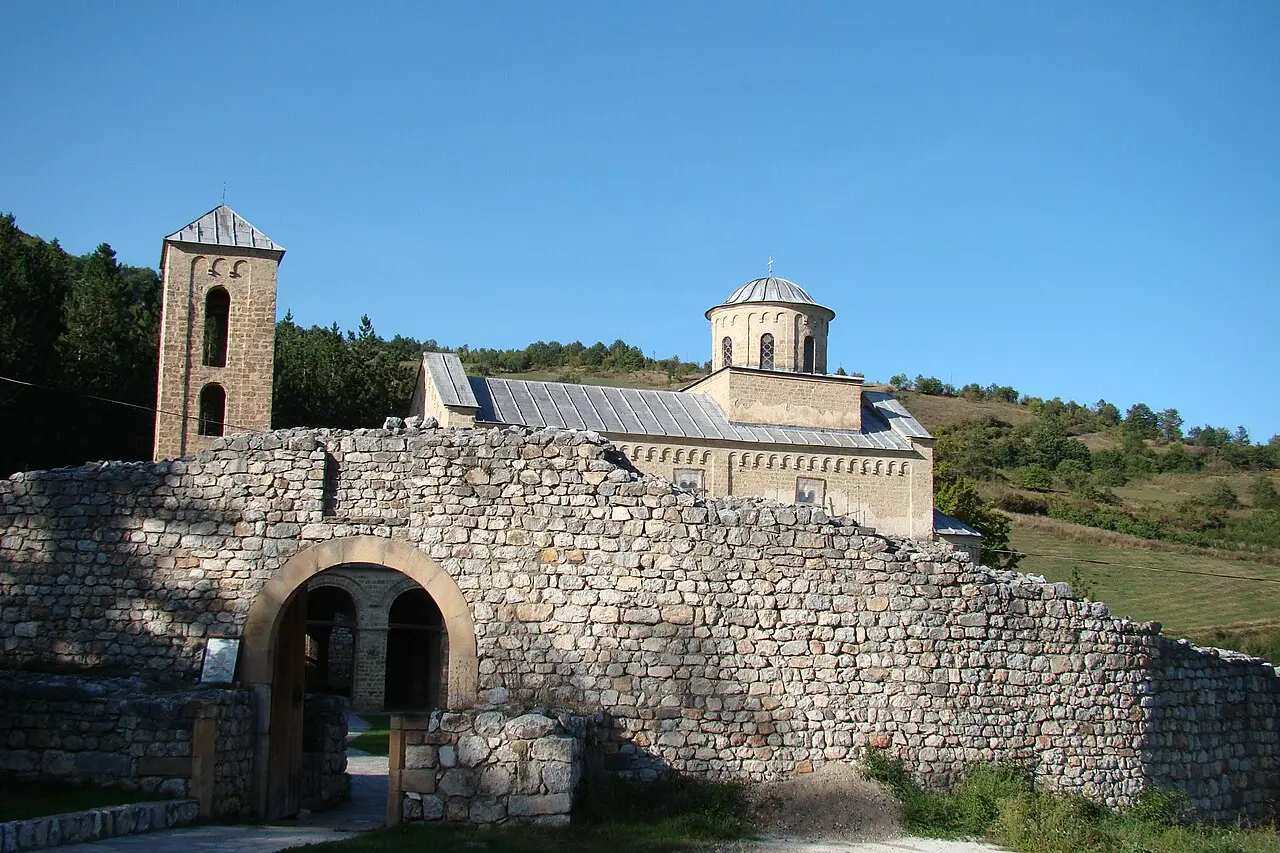
An hour and a half south, in the hills about 15 km west of Novi Pazar, Sopocani is the one the art historians argue for. It was the endowment of King Stefan Uros I, who founded it around 1260; the church of the Holy Trinity went up over the following years and its frescoes were painted through the 1260s.
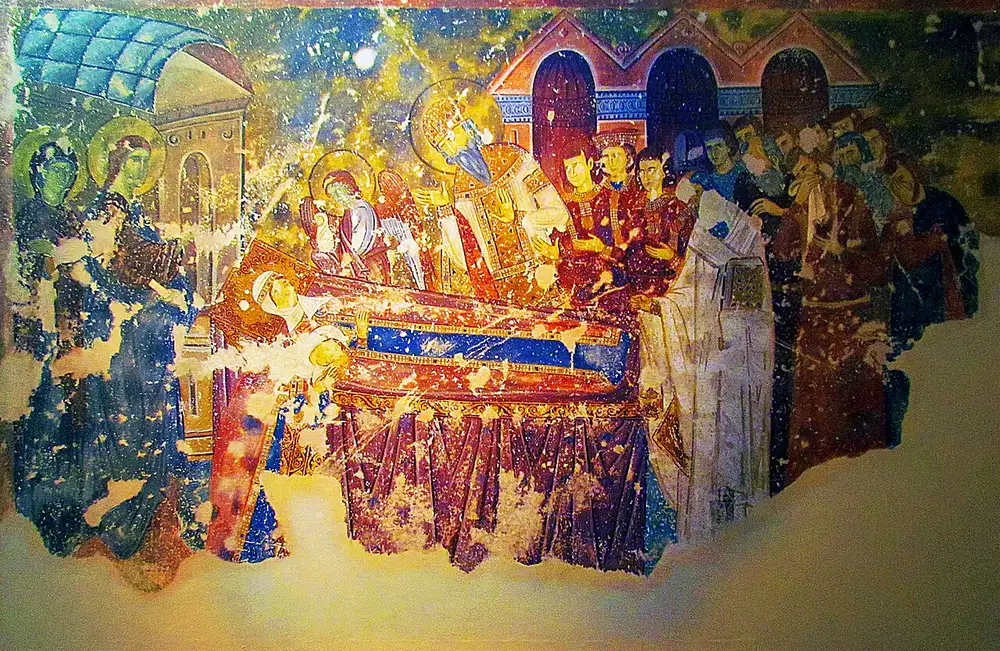
What you come for is the Dormition of the Virgin on the west wall of the nave: a single composition covering over 30 square metres, so calm and so classical that specialists routinely call it the high point of Serbian medieval painting. The church itself is plain to the point of austerity from outside, which makes the interior land harder. UNESCO inscribed it in 1979 as part of Stari Ras and Sopocani, a group listing that also takes in the ruins of Serbia’s first capital just up the road, so this stop pairs naturally with a day around Novi Pazar - you’ll want both if you’re already this far south. To string Studenica, Sopocani and the Stari Ras group into a single self-drive loop from Belgrade, follow our Southern Serbia UNESCO monasteries road trip.
Mileseva and the White Angel
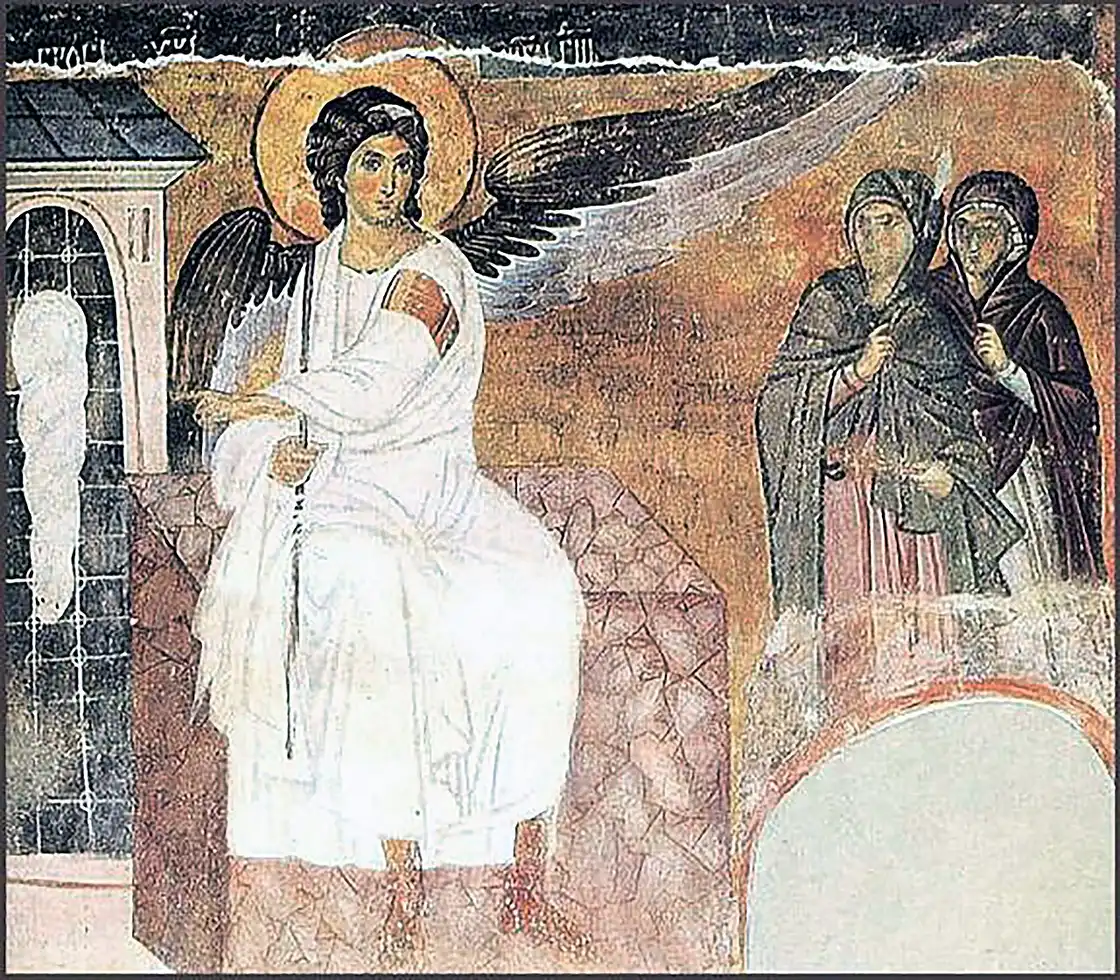
Mileseva, in a valley near Prijepolje, was built by King Stefan Vladislav between 1234 and 1236, and it holds the most reproduced image in Serbian art: the White Angel, an angel in white robes sitting at Christ’s empty tomb, painted in the 1230s. You’ve seen it on stamps, book covers and at least one satellite broadcast; standing in front of it in a half-dark church is a different experience entirely.
Mileseva also explains a Belgrade landmark. The relics of Saint Sava were brought here from Bulgaria in 1236, and in the 1590s - sources give 27 April 1594 or 1595 - the Ottomans carried them to Belgrade and burned them in public on Vracar hill. The Temple of Saint Sava was later raised on the spot tradition assigns to that fire, and that’s the reason it stands where it does.
Manasija: the monastery built as a fortress
Two hours southeast of Belgrade, near Despotovac, Manasija looks like a castle because it’s one. Despot Stefan Lazarevic raised it between 1406 and 1418, in the decades when Serbia was squeezed between the Ottomans and Hungary, and he wrapped the church in a ring wall with eleven towers and a moat.
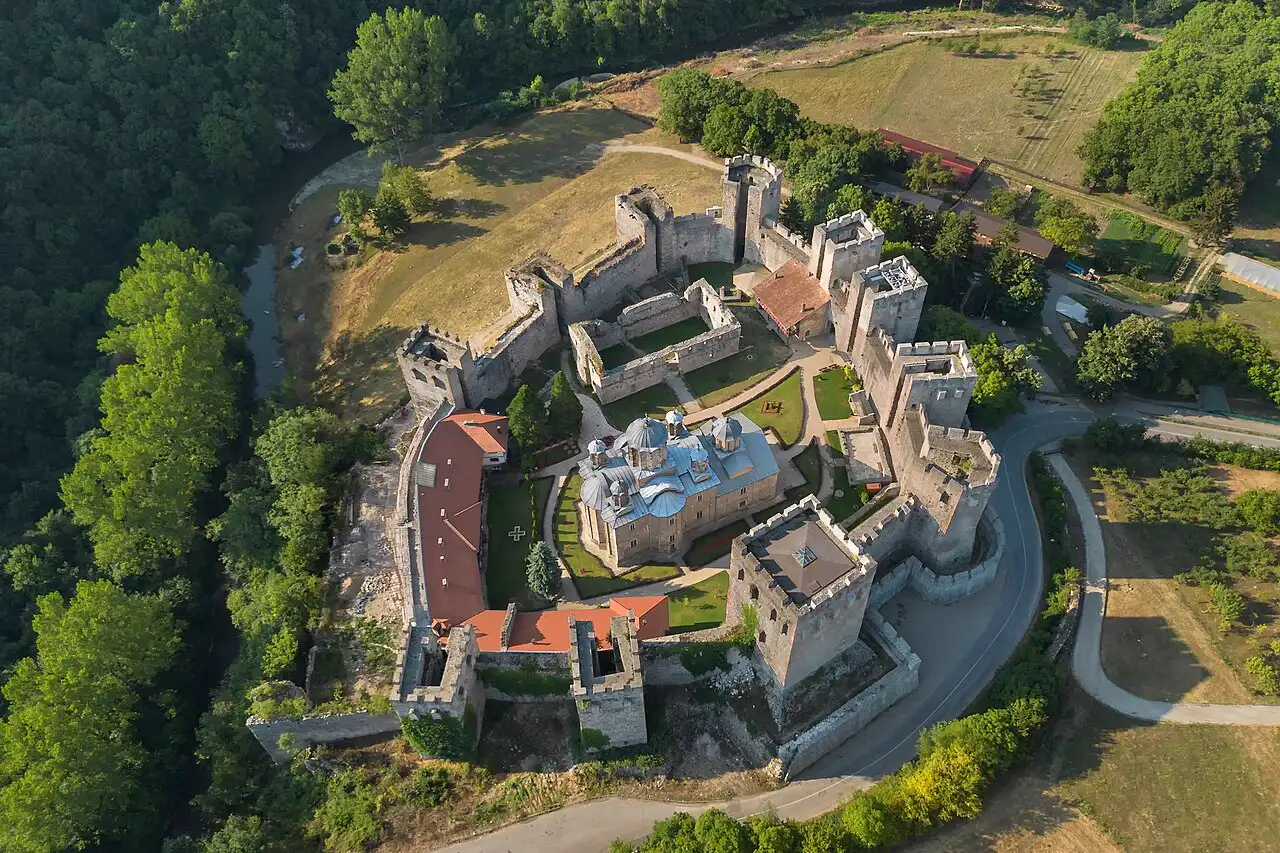
Inside those walls he founded the Resava School in 1407, a scriptorium where monks copied and translated manuscripts for two centuries. It’s the easiest of the six to fold into a day out of the capital: our eastern Serbia wonders loop links it with Resava Cave and the Krupaj spring.
Ravanica: Prince Lazar’s endowment
Half an hour southeast of Manasija - 25 to 30 km, above the village of Senje near Cuprija - Ravanica was built by Prince Lazar between 1375 and 1377 and counts as the first monument of the Morava school - the last flowering of Serbian medieval architecture, with its chequerboard courses of stone and brick and its carved rosettes. It also went up behind a defensive wall with seven towers, part of which still stands and frames the church beautifully.
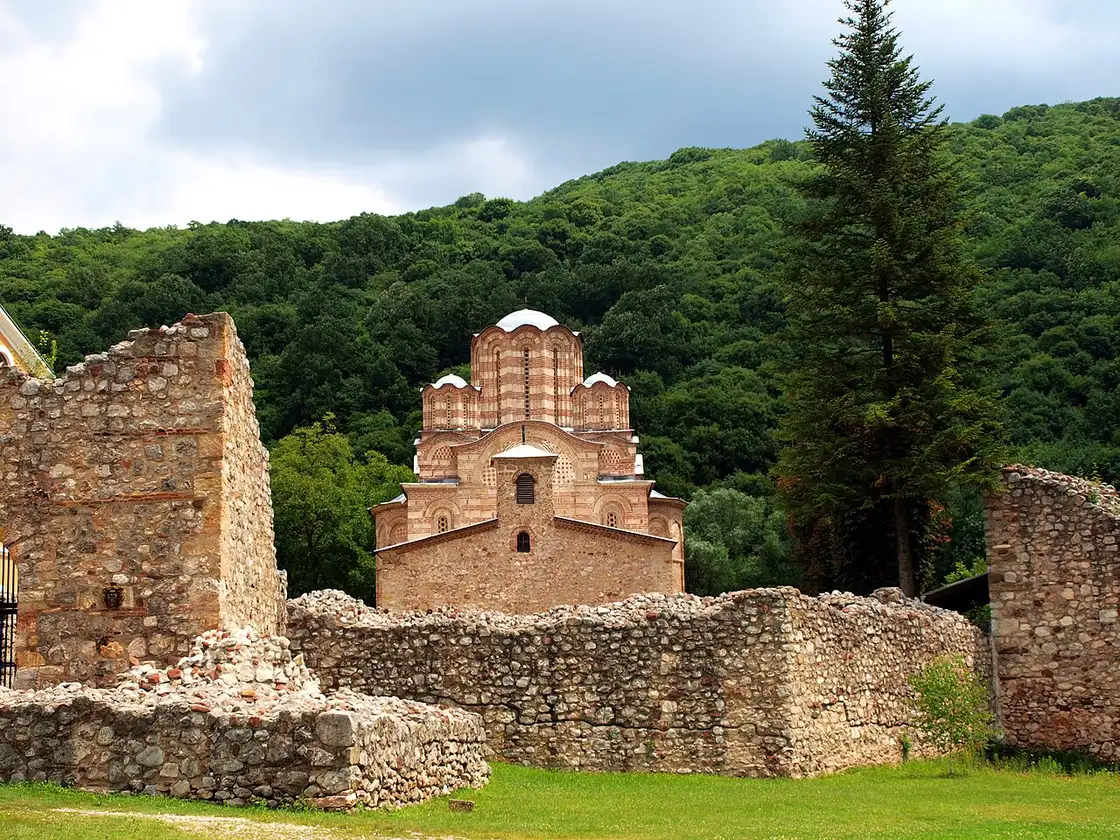
Lazar was killed at Kosovo in 1389 and buried here, and his relics then travelled for three centuries: the monks fled with them in 1690, they rested at Vrdnik on Fruska Gora from 1697 to 1942, and they came back to Ravanica on 9 September 1989. Knowing that turns a quiet church into the end of a very long story.
Zica: the red one
Zica, five kilometres outside Kraljevo, is the odd one out visually - the whole complex is washed a deep, unmissable red. Stefan the First-Crowned and his brother Sava built it in the early 13th century, roughly 1208-1230, and in 1219, when the Serbian church won its independence from Constantinople, Zica became its first seat and held that role until 1253.
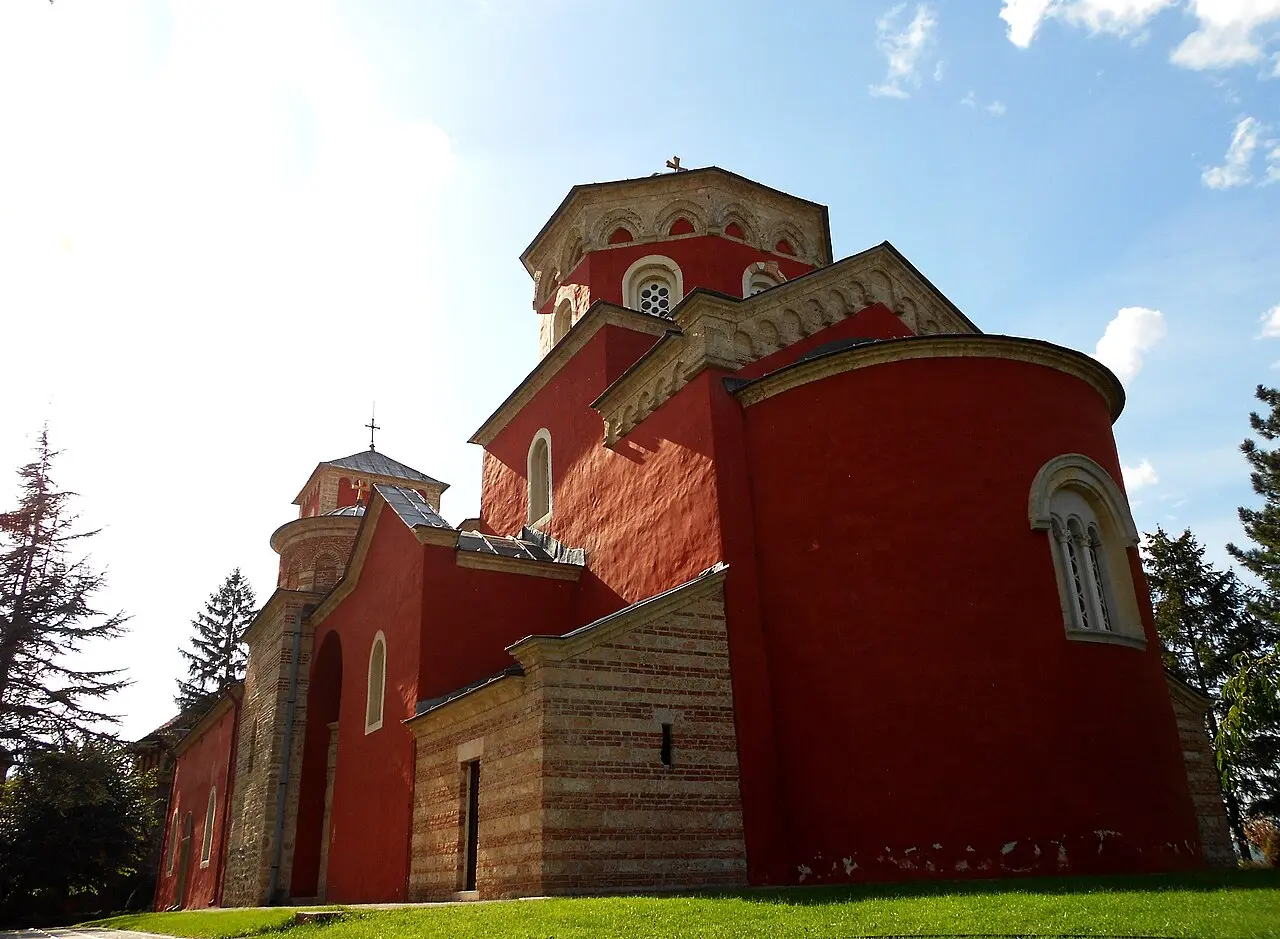
It was the coronation church: by tradition a Serbian king wasn’t fully a king until he had been anointed here. The building has taken a beating for it - burned by the Cumans in the late 13th century, rebuilt by King Milutin between 1292 and 1309, and badly damaged when the Germans bombed Kraljevo in October 1941. Zica and Studenica sit on the same road out of Kraljevo, roughly 40 km apart, and doing both in one day is the single most efficient monastery outing in Serbia.
Fruska Gora, if you’re short on time
If you’re based in Novi Sad or Belgrade and don’t fancy a four-hour drive, the Fruska Gora hills north of the Sava hold a cluster of monasteries dense enough that people call the range the Serbian Mount Athos. They’re smaller and later than the six above, but they’re 40 minutes from Novi Sad and come with vineyards attached. See our Fruska Gora monasteries guide for which ones to pick, and the national park page for combining them with a tasting.
The monasteries in Kosovo
Four of the greatest medieval Serbian churches - Visoki Decani, the Patriarchate of Pec, Gracanica and Our Lady of Ljevis - stand in Kosovo. UNESCO inscribed Decani in 2004 and extended the listing to the other three in 2006 as Medieval Monuments in Kosovo, and the property has been on the List of World Heritage in Danger since 2006, a status tied to conservation and management difficulties in a politically unsettled region. In the unrest of 2004, 35 Orthodox churches were desecrated, damaged or destroyed, Our Lady of Ljevis among them.
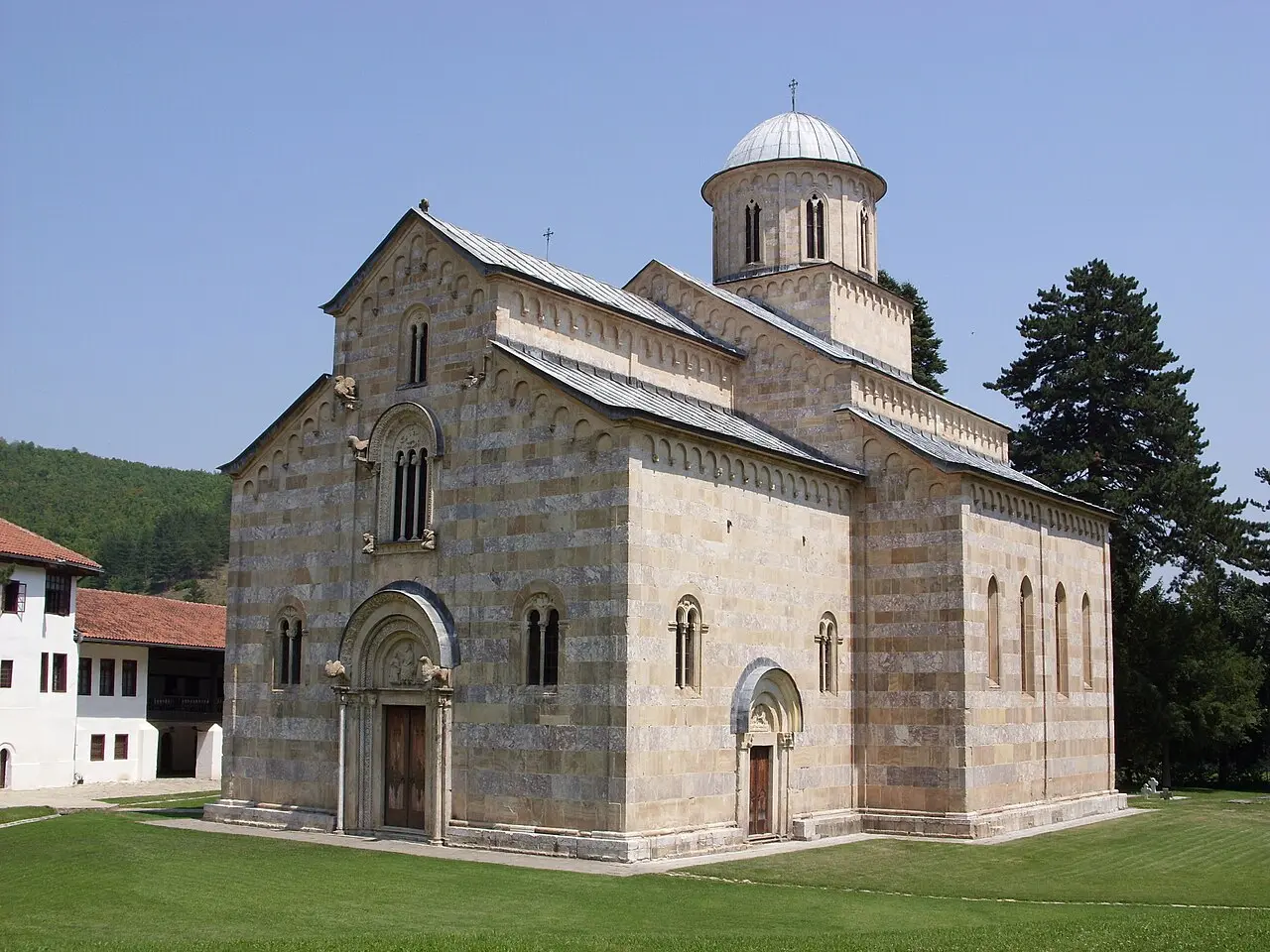
They can be visited, and the sites themselves are welcoming, but the practicalities of crossing depend on where you enter from and which stamps are in your passport. Read our guide to crossing between Serbia and Kosovo before you plan that leg, and expect security at the monastery gates.
How to visit: dress, hours and photography
These are homes, not attractions, and the etiquette is simple once you know it.
- Entry is normally free. Donations are welcome, and a candle costs small change. Nobody will sell you a ticket at Studenica or Zica.
- Dress modestly. Shoulders and knees covered for everyone; women are usually expected to cover their legs, and wraps and long skirts are often lent at the gate. Nobody is rude about it, but you’ll be turned back at the church door in shorts.
- Hours bend around services. Roughly 08:00 to 17:00 is the pattern, with a break, and the churches close during liturgy. Ring ahead if you’re driving three hours for one building, and expect the sacristan rather than a guide.
- Expect dim light and no photos. The interiors are dark on purpose and the best frescoes sit high in the gloom, so give your eyes a minute to adjust; photography inside is usually not allowed, though the courtyards are generally fine. Ask before you lift a phone.
- Allow time inside. Budget three-quarters of an hour to an hour at most of them, and a bit longer at Studenica and Sopocani, where the frescoes reward a slow second look.
- Pair them up, and pick your base to match. Zica plus Studenica in one day from Kraljevo; Sopocani plus Stari Ras from Novi Pazar; Mileseva from Prijepolje; Manasija plus Ravanica from the E75 in a single eastern loop. Trying to combine the southwest and the east in one day doesn’t work.
- Sundays and feast days are the liveliest and the most crowded; a Tuesday morning gets you an empty church and the sound of your own footsteps.
If you would rather not drive the mountain roads, monastery day tours from Belgrade are common and usually pair two sites with a lunch stop. Either way, go early: the light inside these churches is at its best in the first half of the day, and the frescoes deserve it.
Serbia’s monastic heritage is the through-line of the country’s history, from Nemanja’s marble at Studenica to Lazar’s chequerboard walls at Ravanica. Browse more of the country’s landmarks in the attractions section, or work a couple of these into a longer drive with our routes.
Photos
Read also

What to see · 10 min read
Fruska Gora Monasteries: Which to Visit
Verified · September 3, 2026Sixteen preserved Orthodox monasteries on Fruska Gora: Krusedol, Novo Hopovo, Grgeteg and Vrdnik, plus dress code and a day route from Novi Sad.

What to see · 9 min read
Viminacium: Rome and Mammoths near Belgrade
Verified · September 3, 2026Roman Viminacium near Kostolac: adult tickets 1,050 RSD, hours by season, last tour two hours before close, and why the mammoth park is shut.

What to see · 12 min read
Vinca: The Neolithic Site on Belgrade's Doorstep
Verified · August 29, 2026Vinca's Belo Brdo site is 14 km downstream from Belgrade (16 km by road): 2026 hours, tickets, what the small museum shows, and how to get there.

What to see · 10 min read
Skull Tower of Niš: Story, Tickets, Visiting Tips
Verified · August 25, 2026Ćele Kula in Niš: 1809 Battle of Čegar, chapel hours, 300 RSD tickets and how to visit respectfully from the centre or INI airport.