
Serbia Monasteries Road Trip: The UNESCO South (4 Days)
A 4-day self-drive loop through southern Serbia: Zica, Maglic, Studenica, the Stari Ras UNESCO sites, Sopocani, Kopaonik and Vrnjacka Banja.
Four days is the sweet spot for the monasteries of southern Serbia. String them down the Ibar valley from Belgrade and you cover two World Heritage sites - Studenica and the Stari Ras group around Novi Pazar - plus a red coronation church, a cliff-top castle, the finest fresco in the country, and two nights that have nothing to do with medieval anything: a mountain and a spa town. It runs as a loop, roughly 600 km all told, and you drive back into Belgrade on the fourth evening.
You need your own car for this one. The monasteries sit in river valleys and forest clearings that were chosen precisely because they were hard to reach, and buses still treat them that way - a couple a day to Kraljevo and Novi Pazar, nothing to the church gates themselves. A hire car turns a logistical headache into an easy drive on good roads, and it lets you photograph Maglic from a layby and detour 15 km to Sopocani without checking a timetable. Our guide to car rental in Serbia covers deposits and the motorway tolls south.
Day 1: Belgrade to Novi Pazar, three stops on the way down
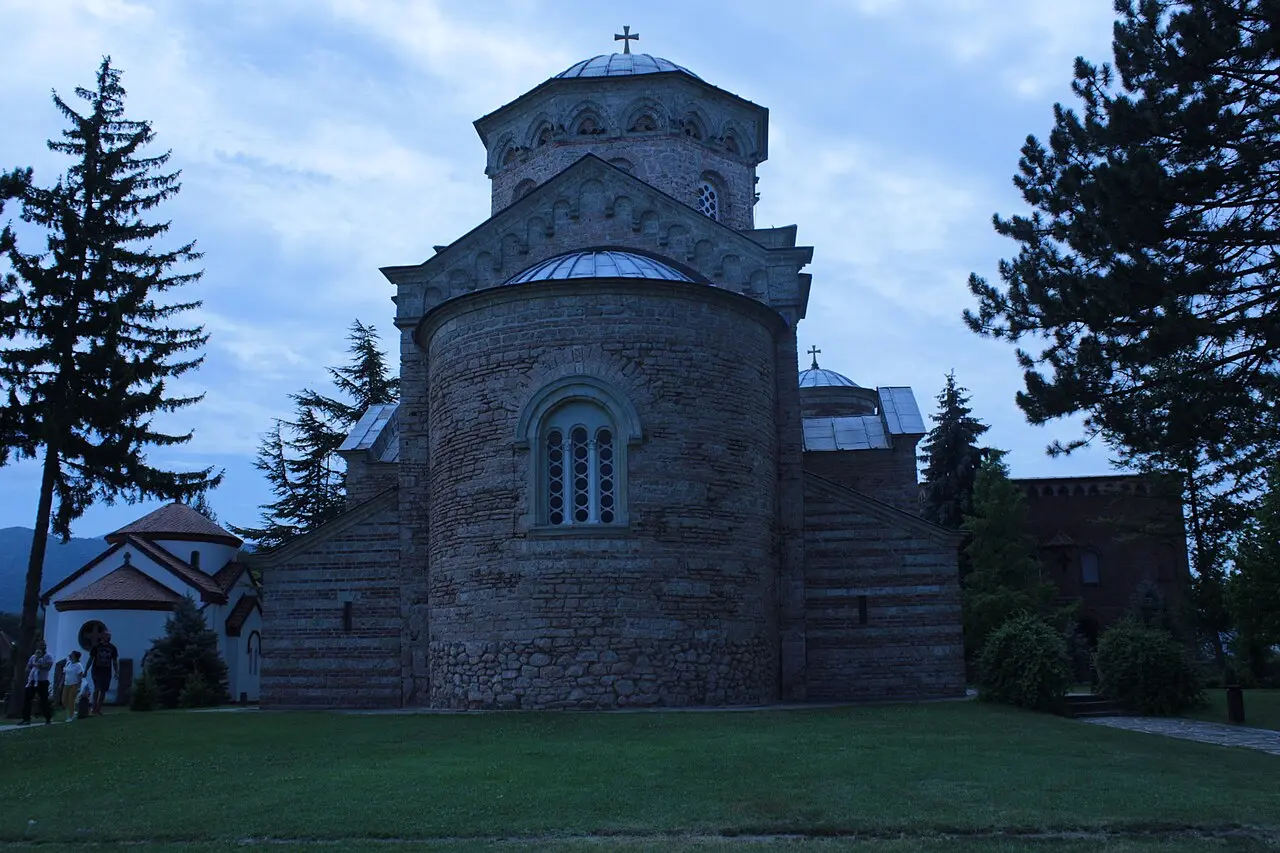
Leave Belgrade early and take the A2 “Milos Veliki” motorway south toward Cacak. It’s about 193 km and two and a half hours to Kraljevo, and the first monastery is barely off the road. Zica sits five minutes outside town, and you’ll know it when you see it: the whole complex is washed a deep, unmissable red. Stefan the First-Crowned and his brother Saint Sava built it between 1208 and 1230, and in 1219, when the Serbian church won its independence from Constantinople, Zica became its first seat. It was the coronation church, too - by tradition a Serbian king wasn’t fully a king until he had been anointed here.
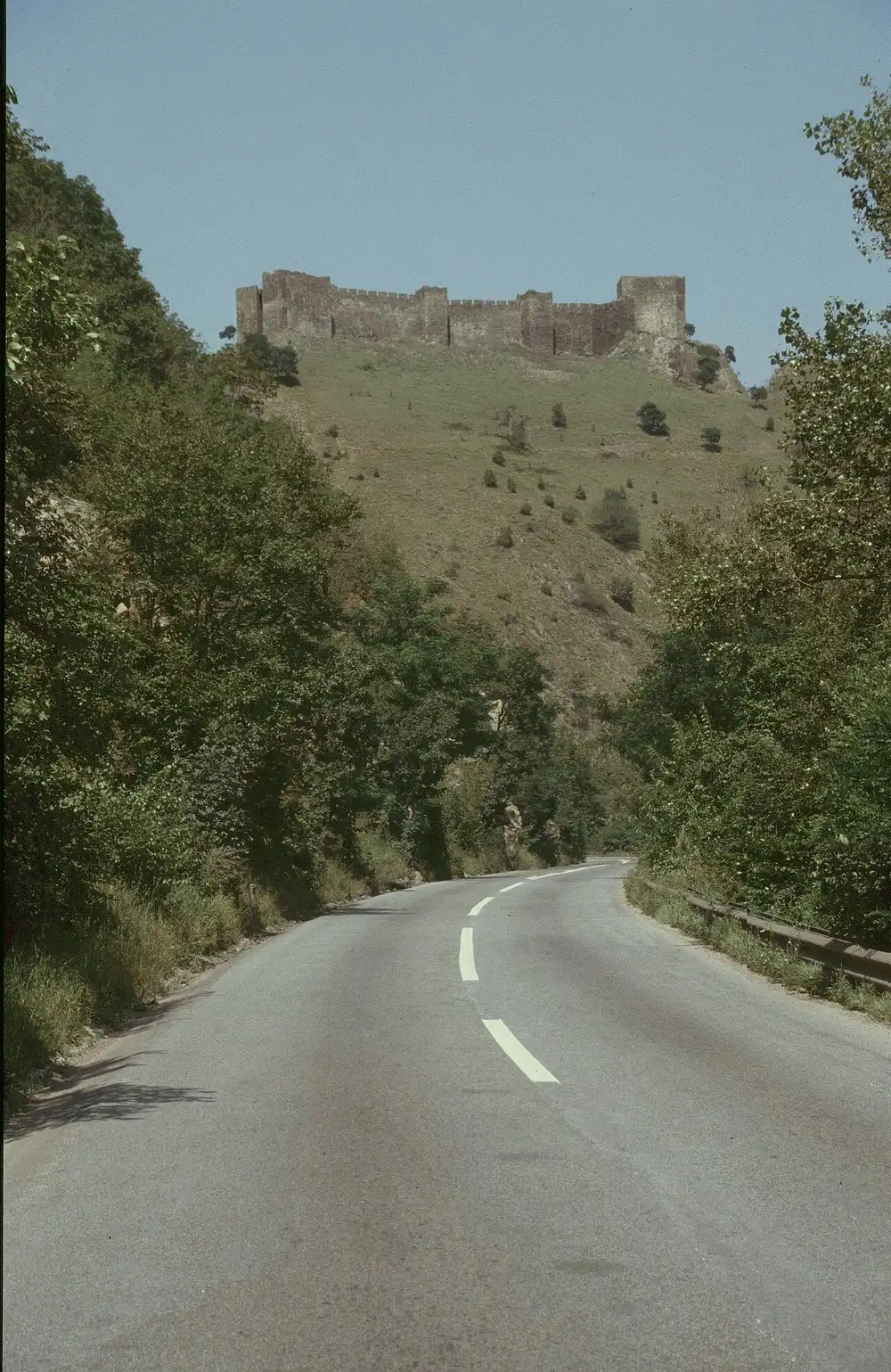
From Kraljevo the road follows the Ibar into its gorge, and about 15 km south you round a bend and there’s a castle on the skyline. Maglic is the best-preserved medieval fortress in Serbia, built in the first half of the 13th century - most likely by King Uros I after the Mongol scare, to guard this exact chokepoint on the way to his family’s monasteries. It stands on a hill the Ibar wraps around on three sides, about 100 metres above the water, ringed by eight towers. You don’t have to climb it to enjoy it; the classic view is straight up from the valley road, and there’s a restaurant and a footbridge at the foot if you want to stretch your legs. The path to the walls is short but genuinely steep, so wear something other than flip-flops if you’re going up.
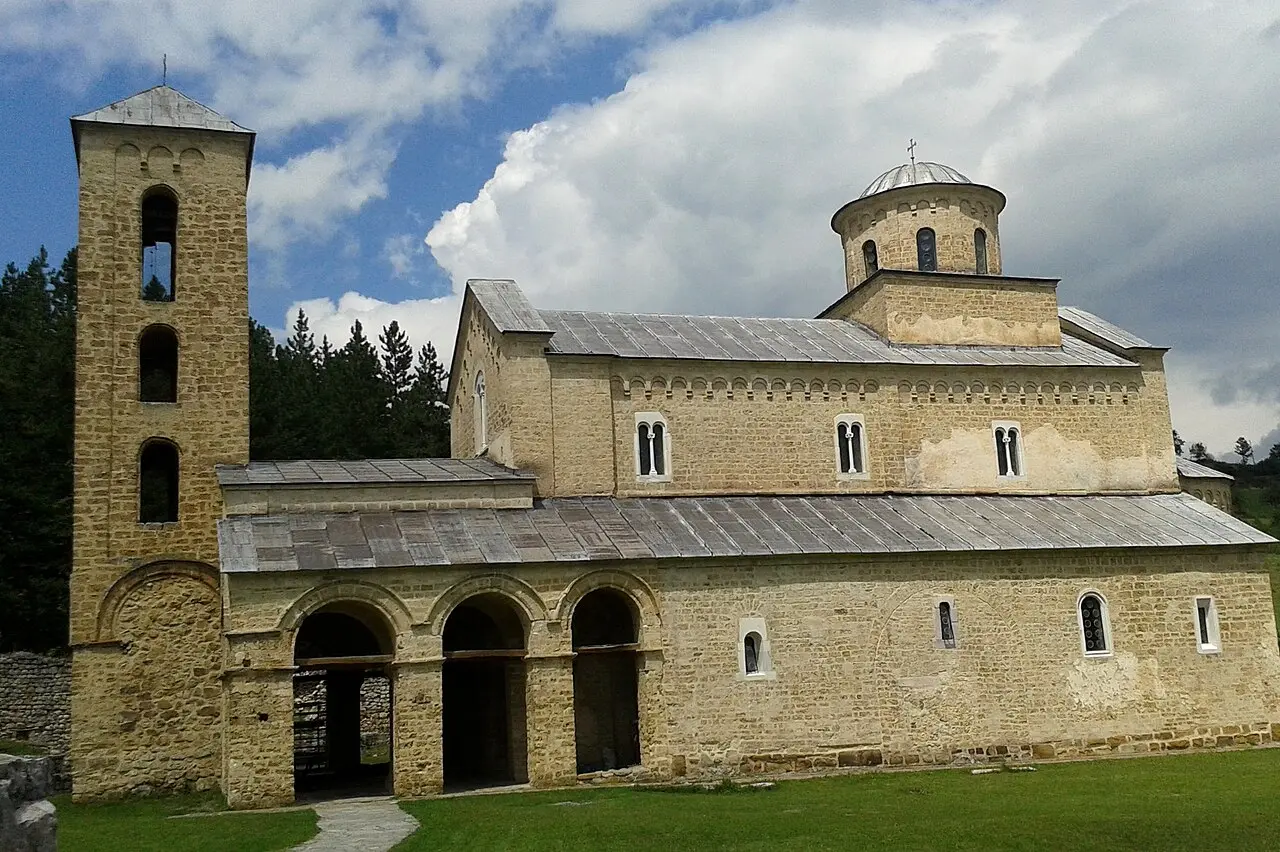
A little further south a signed side road climbs about 12 km up the Studenica river to Studenica itself, and this is the one to slow down for. It’s the oldest and grandest monastery in the country, founded in the late 12th century by Stefan Nemanja, the man who pulled the medieval Serbian state together, and it has been lived in ever since. UNESCO put it on the list in 1986 for two churches sheathed in white marble and for a Crucifixion painted in 1209 on a deep blue ground that still looks impossibly modern. The King’s Church, added in 1314, is small enough to stand in the middle of and turn a full circle. Give it a proper hour; our full Studenica guide has the detail on the three churches and the founder’s tomb.
Then push on to Novi Pazar for the night - about 55 km further south, an easy hour on. It’s the most Ottoman town in Serbia and the best base for tomorrow, with plenty of rooms and the best cevapi in the country waiting for you.
Day 2: Stari Ras, Djurdjevi Stupovi and Sopocani
This is the day the trip earns its name. The Stari Ras and Sopocani World Heritage site, inscribed in 1979, isn’t one building but a scatter of them around Novi Pazar, and you can see the lot in a morning. Start with Djurdjevi Stupovi, the “Pillars of St George”, on a wooded hill a couple of kilometres above town. Stefan Nemanja founded it around 1170 in thanks for getting out of a family dungeon alive, and it’s named for the two towers that once flanked the church. It was badly knocked about over the centuries and has been slowly rebuilt; the walk up is short and the view back over the valley is the reward.
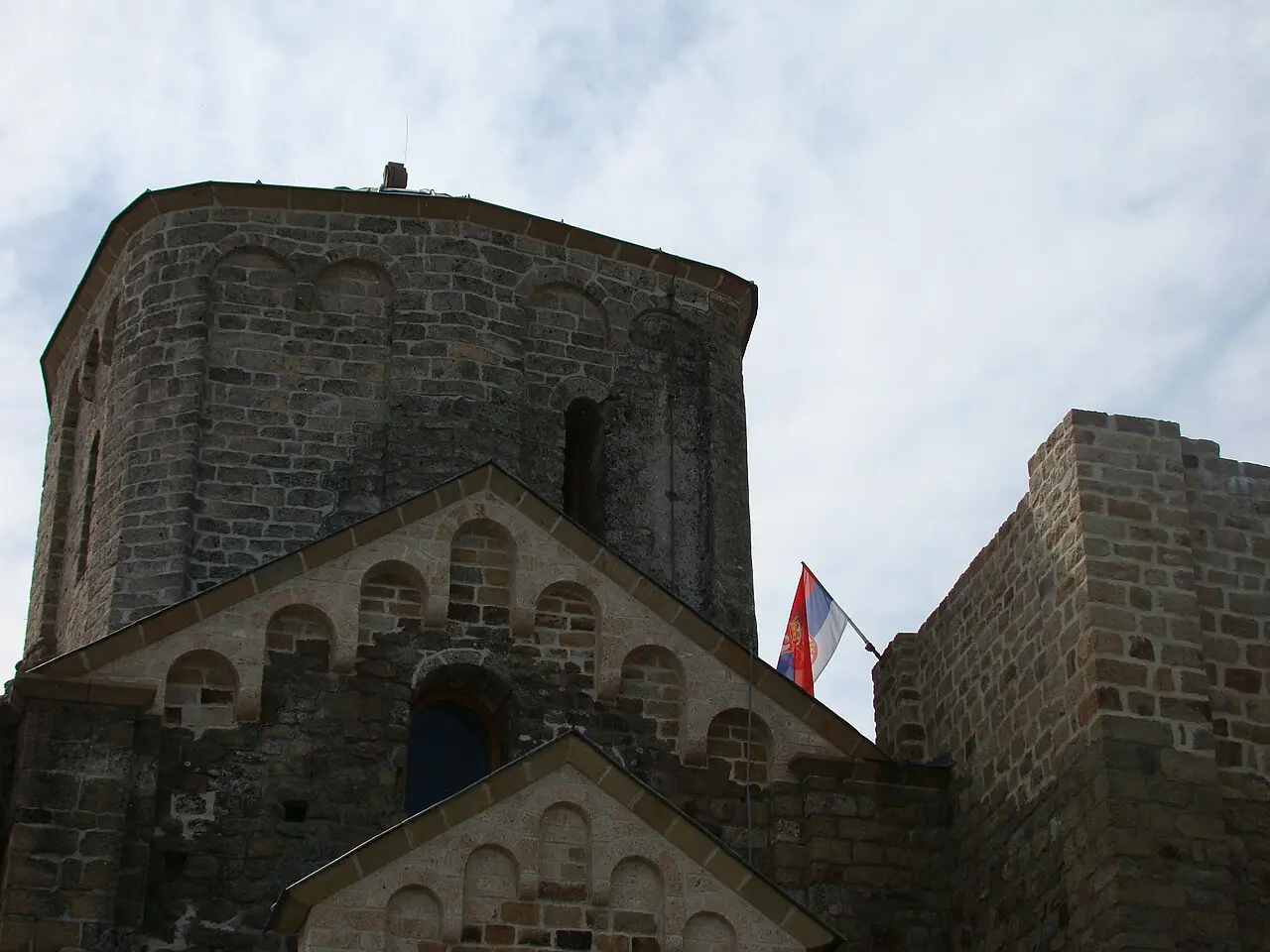
The other two pieces of the listing are close by. Stari Ras, the ruined fortress of the first Serbian capital, sits on the hill outside town, and the small Church of St Peter on its terrace is the oldest intact church in Serbia, founded around 820 - Nemanja was baptised in it before 1163. You can happily lose an hour on the Ottoman side of Novi Pazar too, between a 16th-century mosque, a Turkish bath and a caravanserai; our Novi Pazar guide maps all of it and where to eat.
Save the best for last. Drive 15 km west to Sopocani, a plain stone church in a fold of the hills that hides the single greatest thing on this whole trip. On the west wall of the nave is the Dormition of the Virgin, a fresco so calm and so classical that specialists routinely call it the high point of Serbian medieval painting. King Stefan Uros I founded the monastery around 1260 and the church went up over the following decade. Stand in front of that wall and you understand why the art historians single Sopocani out; the building is austere from outside on purpose, so the interior lands harder.
A second night in Novi Pazar makes sense if you dawdle, but most people are done with the sites by mid-afternoon and would rather sleep on the mountain. Either works.
Day 3: over the shoulder of the mountain to Kopaonik
Time to change gear completely. From Novi Pazar it’s about 53 km back up through Raska and onto Kopaonik, Serbia’s biggest ski mountain and a national park, and after two days of dim churches the open plateau comes as a relief. In winter this is the country’s main ski station, with the top station on the 2,017-metre Pancic peak; come in summer, which is when this trip makes sense, and the same slopes are gentle walking country with wildflowers, marked trails and a chairlift or two running for the view.
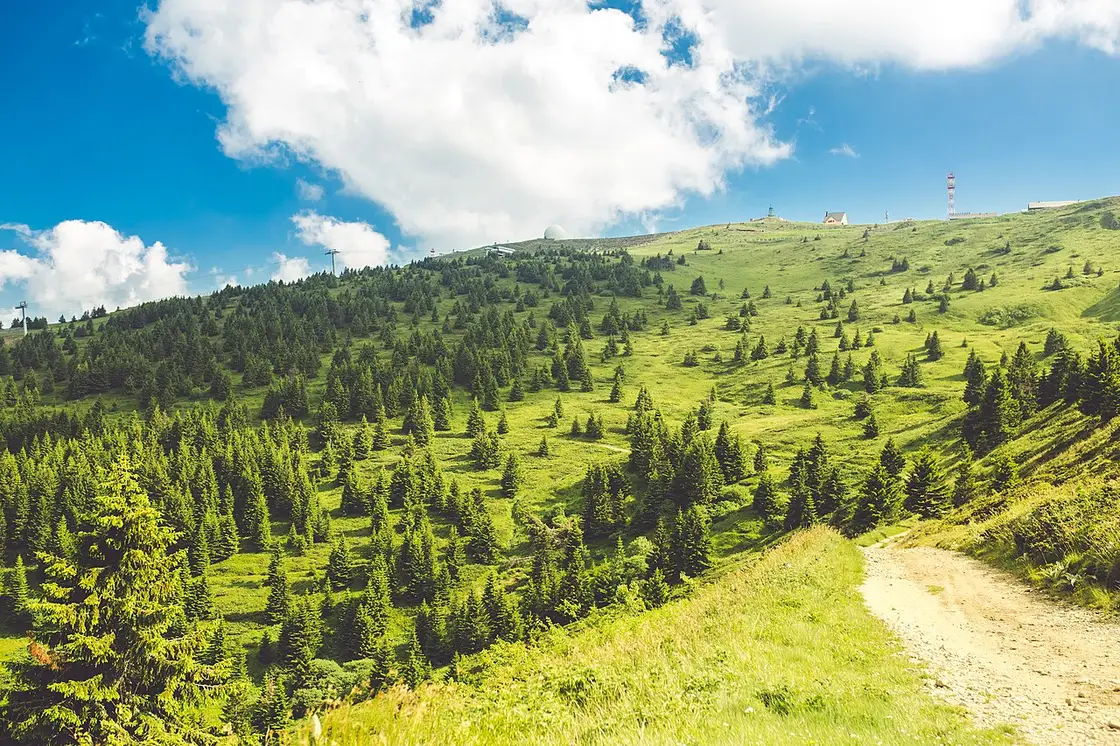
The practical case for stopping here’s simple: it has the highest concentration of hotel beds anywhere in the south, so a room is easy to find and you get a genuinely different night out of the drive. Walk a loop of the plateau in the late afternoon, eat well, sleep at altitude. If you’re weighing it against Serbia’s other mountain, our Kopaonik guide and the Zlatibor or Kopaonik comparison spell out the difference; for this loop Kopaonik simply sits in the right place.
Day 4: Vrnjacka Banja, then the road home
Come down off the mountain and it’s about an hour and a half north to Vrnjacka Banja, Serbia’s most visited spa town and the gentlest possible end to a driving trip. People have been taking the waters here since the Romans; seven mineral springs feed the pools and drinking fountains, and a long shaded park runs the length of the centre. In that park is a small footbridge, the Bridge of Love, where the padlock-on-a-railing habit is said to have started long before anyone tried it in Paris. There’s not a fresco in sight, which by day four is rather the point.
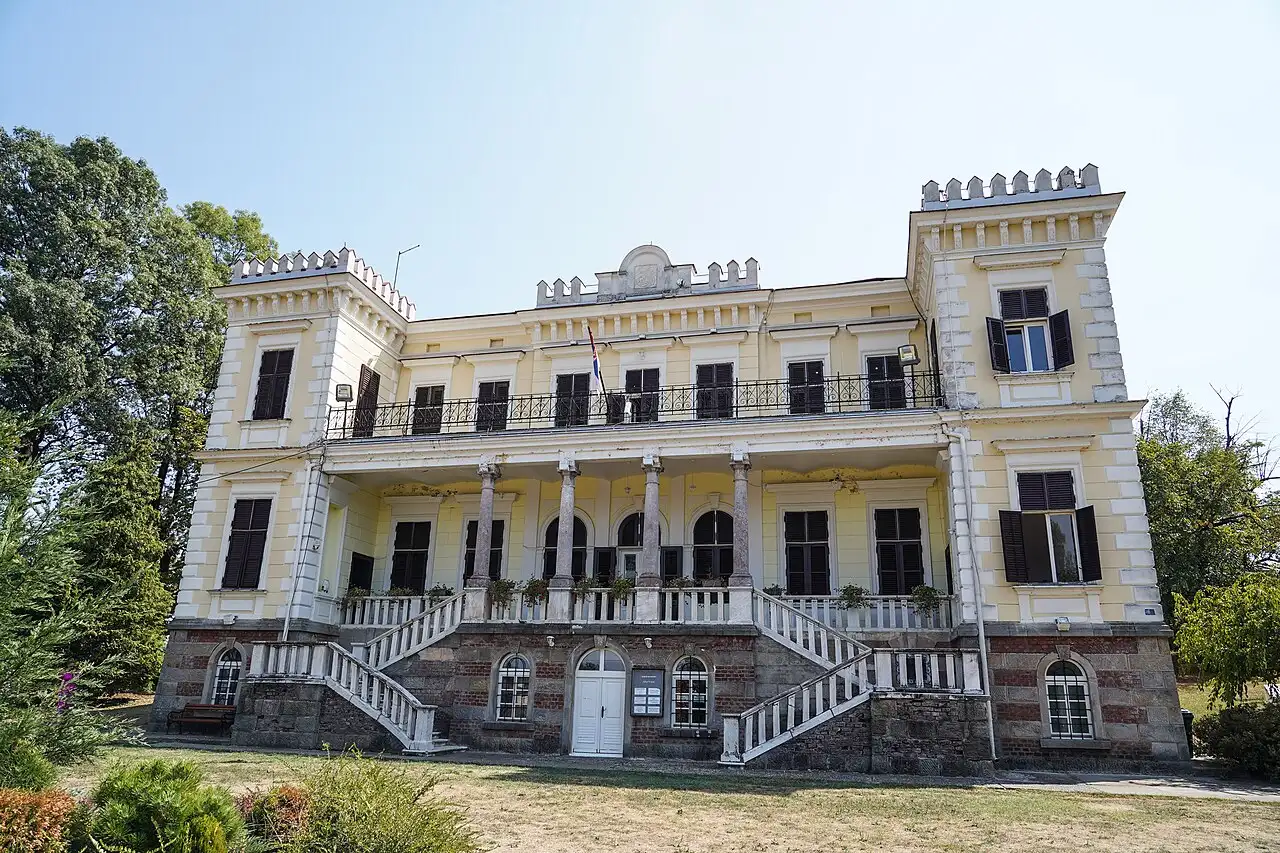
Do a slow lap of the park with an ice cream, drink a glass of the warm mineral water if you’re brave, and then it’s roughly 200 km and two and a half hours back to Belgrade on the motorway. Our Vrnjacka Banja guide has the spa detail if you want to build in a treatment before you leave. With a spare day you could bolt an extra night here or fold in a fourth monastery, but four days is honestly enough to do this corner justice without rushing.
What the UNESCO listing actually covers
It is worth being clear, because the marketing blurs it. Two of the stops carry World Heritage status and the rest don’t. Studenica is a listing on its own, inscribed in 1986. Stari Ras and Sopocani is a separate, older listing from 1979, and it’s a group of four things around Novi Pazar: the Stari Ras fortress ruins, the Church of St Peter, Djurdjevi Stupovi and Sopocani monastery. Between them that’s a genuine cluster of the earliest and most important medieval Serbian architecture.
Zica and Maglic aren’t on the UNESCO list. Zica is a Monument of Exceptional Importance and every bit worth the five-minute detour; Maglic is simply the best castle in the region and happens to be on the way. Treat them as the stops that make the drive better, not as the headline, and you’ll have the emphasis right. If you want to see how these places rank against the rest of the country, our roundup of the most beautiful monasteries in Serbia puts them in order.
How to visit the monasteries: dress, hours and etiquette
These are working communities, not ticketed attractions, and the etiquette is simple once you know it.
- Entry is free. Donations are welcome and a candle costs small change. Nobody sells you a ticket at Zica, Studenica or Sopocani.
- Dress modestly. Shoulders and knees covered for everyone; women are usually expected to cover their legs, and wraps or long skirts are often lent at the gate. Turn up in shorts and you’ll be turned back at the church door.
- Hours bend around services, and the churches close during liturgy. Roughly 08:00 to 17:00 is the pattern at Studenica, with a break; the smaller places keep looser hours, so if you’re driving out of your way, ring ahead rather than trust a posted time.
- Expect dim light and no photos inside. The frescoes sit high in the gloom on purpose; give your eyes a minute. Courtyards are generally fine, but ask before you lift a phone.
- A weekday morning gets you an empty church. Sundays and feast days are the busiest, and also the liveliest if that’s what you want.
Where to sleep, and how to split it
The version above puts nights in Novi Pazar, Kopaonik and Vrnjacka Banja, and that split works for most people: the two UNESCO clusters early while you’re fresh, then two soft nights winding home. A few tweaks are worth knowing.
- Base both monastery days in Novi Pazar if you would rather not pack up every morning - the Stari Ras sites are all within 20 minutes of town, and it saves a hotel change.
- Skip Kopaonik and sleep in Raska or Kraljevo if the mountain detour doesn’t appeal; you trade the plateau for a shorter, flatter drive.
- Book Kopaonik and Vrnjacka Banja ahead in July and August. Both are domestic holiday spots, and the good rooms go weeks in advance; the monastery towns are easier.
A quick word on timing. May to October is the season, with September the pick: warm days, thin crowds and clear light for the frescoes. In deep winter the Ibar road gets slick, Studenica cuts its hours, and Kopaonik turns back into a ski resort with ski-resort prices - a different trip entirely.
This loop packs more history per kilometre than anywhere else in Serbia: two World Heritage sites, a castle, the country’s finest fresco and a mountain, all inside four days and one tank or two of fuel. Browse more drives in the routes section, or read up on the monasteries before you set the alarm for that early start out of Belgrade.
Route day by day
- Days on the road
- 4
- Distance
- ≈600 km
- Budget from
- 250 EUR
- Best season
- May, June, July, August, September, October
The route at a glance
-
Belgrade
Route startstop ≈0 min
Start point. Pick up the car and head south on the A2 "Milos Veliki" motorway toward Cacak and Kraljevo - about 193 km and two and a half hours to the first stop. Fill up before you turn off the motorway.
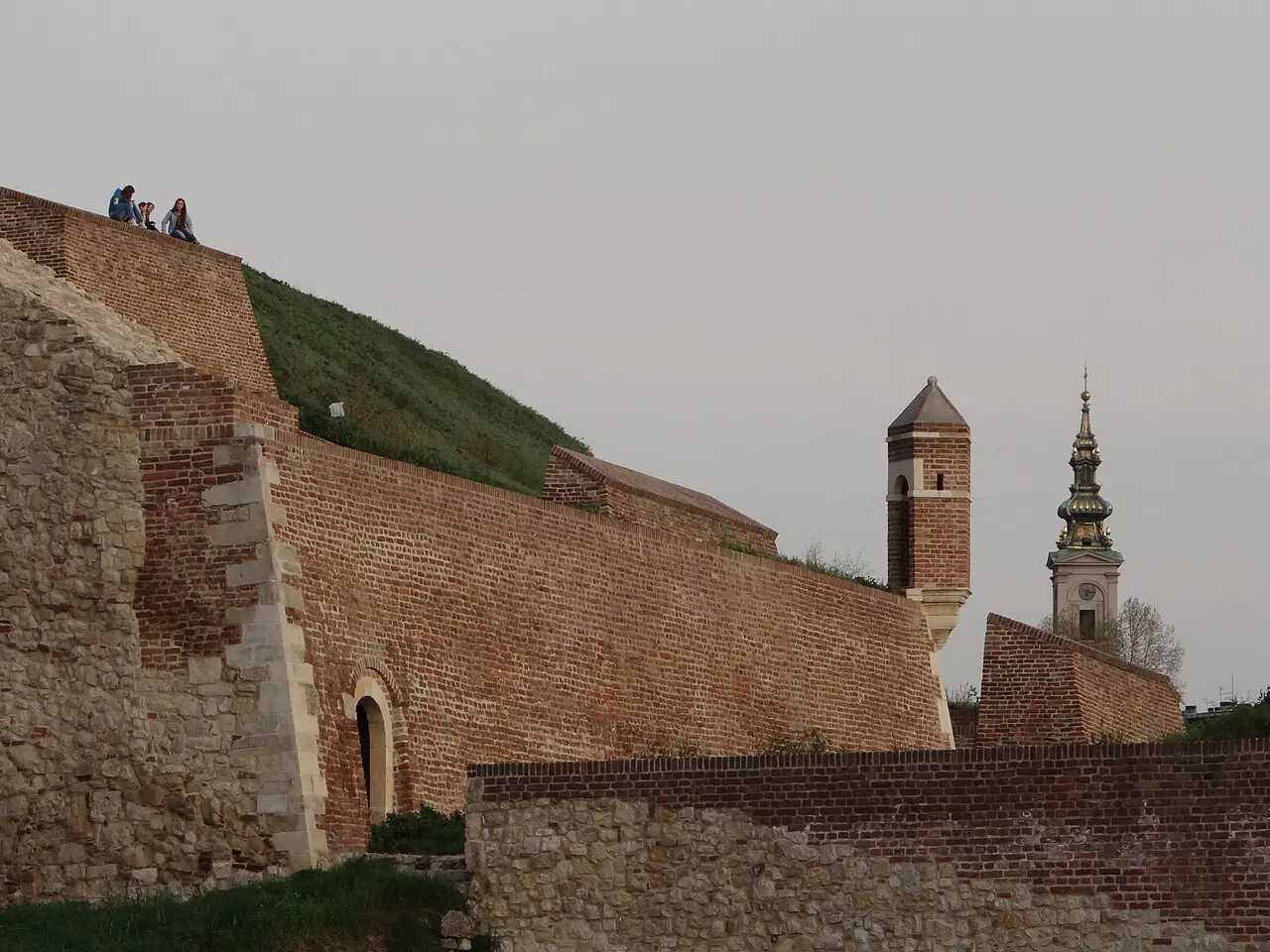
Photo: Dekanski / Wikimedia Commons, CC BY-SA 4.0 ( source) -
Zica Monastery (Kraljevo)
195 km from the startstop ≈60 min
Five minutes off the road just outside Kraljevo. The deep red coronation church of the medieval Serbian kings, built 1208-1230 by Stefan the First-Crowned and Saint Sava. Free, working monastery, modest dress.
Photo: Ljiljana Kostadinovic / Wikimedia Commons, CC BY-SA 4.0 ( source) -
Maglic Fortress (Ibar gorge)
213 km from the startstop ≈60 min
A 13th-century castle on a hill around which the Ibar loops, about 100 m above the water. Best photographed from the road; the climb to the walls is short but steep. There is a restaurant and a footbridge at the foot.
Photo: Ziegler175 / Wikimedia Commons, CC BY-SA 3.0 ( source) -
Studenica Monastery
240 km from the startstop ≈90 min
UNESCO 1986. Serbia's mother house, founded in the late 12th century by Stefan Nemanja; white marble churches and a Crucifixion fresco painted in 1209. About 12 km up a side road off the Ibar valley. Free entry.
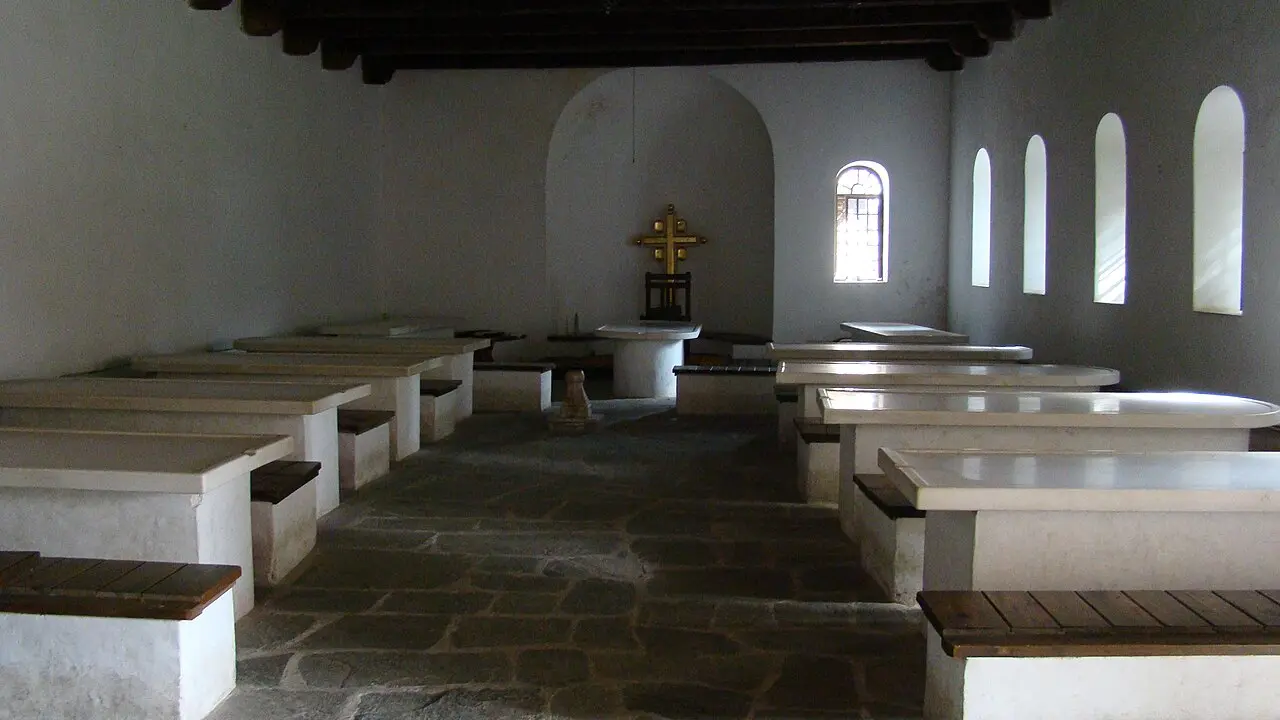
Photo: Dekanski / Wikimedia Commons, CC BY-SA 4.0 ( source) -
Novi Pazar (Stari Ras and Djurdjevi Stupovi)
295 km from the startstop ≈720 min
Night one. The base for the densest UNESCO cluster in Serbia: the ruins of the first capital Stari Ras, the 9th-century Church of St Peter and Djurdjevi Stupovi (c. 1170) on its hill. Ottoman old town, cevapi and beds.
Photo: Dekanski / Wikimedia Commons, CC BY-SA 4.0 ( source) -
Sopocani Monastery
310 km from the startstop ≈75 min
15 km west of Novi Pazar and part of the same 1979 UNESCO listing. The Dormition of the Virgin on the west wall is rated the finest fresco in Serbian medieval painting. Founded by King Stefan Uros I, church built 1260.
Photo: Zlatnogrivasti Marmozet / Wikimedia Commons, CC BY-SA 4.0 ( source) -
Kopaonik
365 km from the startstop ≈720 min
Night two. Serbia's biggest ski mountain and a national park; the top station sits on the 2,017 m Pancic peak. In summer the pistes are gentle hiking, and the resort has the highest concentration of beds in the south.
Photo: DjordjeMarkovic / Wikimedia Commons, CC BY-SA 4.0 ( source) -
Vrnjacka Banja
425 km from the startstop ≈600 min
Night three. Serbia's most visited spa town, an hour and a half down off the mountain: seven mineral springs, a long green park and the little Bridge of Love. A soft landing before the two-and-a-half-hour drive back to Belgrade.
Photo: Sunce Nis / Wikimedia Commons, CC BY-SA 4.0 ( source)
Route map
The map with stops loads on click - to keep the page lightweight.
The map didn’t load. Check your connection and refresh the page.