
Temple of Saint Sava: Visiting Guide
How to visit the Temple of Saint Sava in Belgrade: free entry, the gold mosaic dome, the dazzling crypt most people miss, hours and dress code.
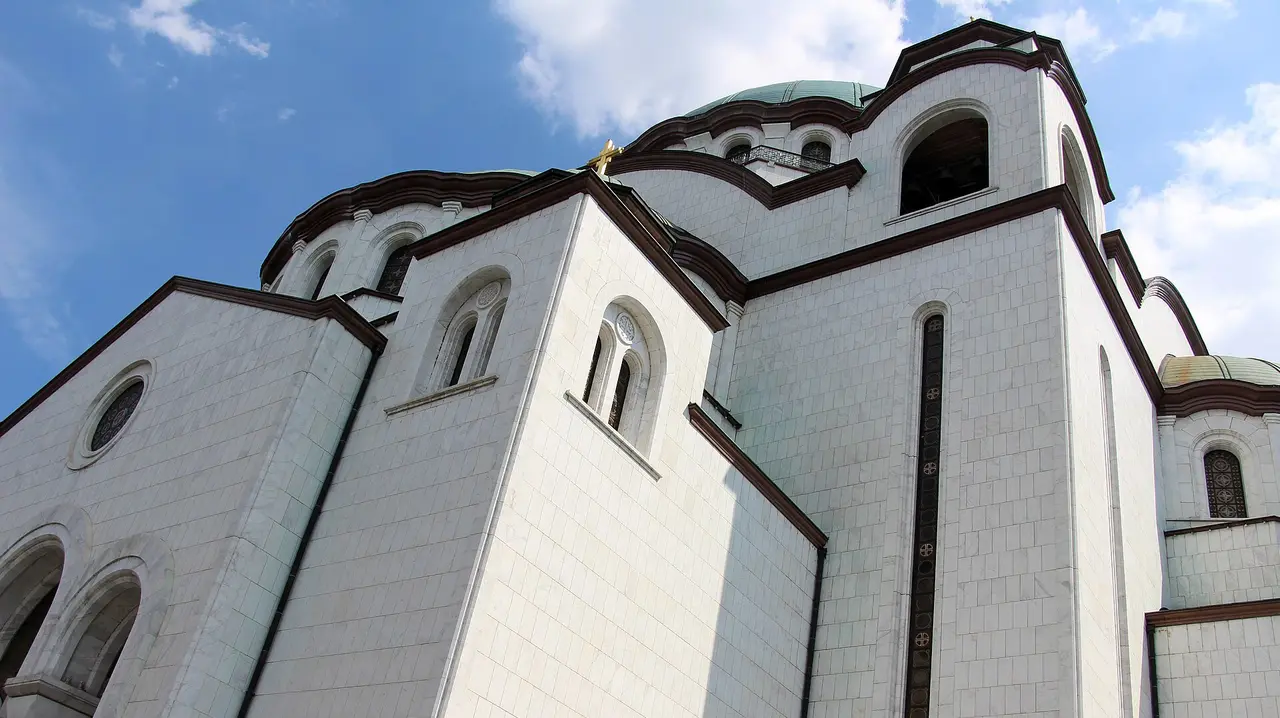
The Temple of Saint Sava is free to enter, open long hours daily, and floodlit at night, so it’s one of the easiest sights in Belgrade to fit in - but the part most visitors get wrong is what to look at. The vast main hall is the headline, yet the room that actually stops you is the crypt downstairs, a low, gold-drenched chapel that half the crowd walks straight past. This is the largest Orthodox church in the Balkans and one of the biggest in the world, built on the hilltop where the Ottomans are said to have burned Saint Sava’s bones, and it rewards knowing a little before you climb the steps.
Free, open and floodlit: the practical basics
Entry is free - there’s no ticket booth, just a donation box inside - and the church keeps long hours, roughly 07:00 to about 19:00 daily, though as a working place of worship the exact times flex around services. That makes it a flexible stop: early morning is quietest, late afternoon light on the white marble is best, and after dark the whole thing is floodlit and visible from half the city, so it is worth a look twice.
It stands on the Vračar plateau, an easy walk uphill from Slavija Square and the same district as the Nikola Tesla Museum. Because Belgrade scrapped city transit fares, a bus or tram to the nearest stop costs nothing. Two rules matter at the door: this is an active church, so dress modestly - shoulders and knees covered, and many women cover their heads, though it is not required of visitors - and keep your voice down and your camera discreet if a service is under way.
Just how big it is
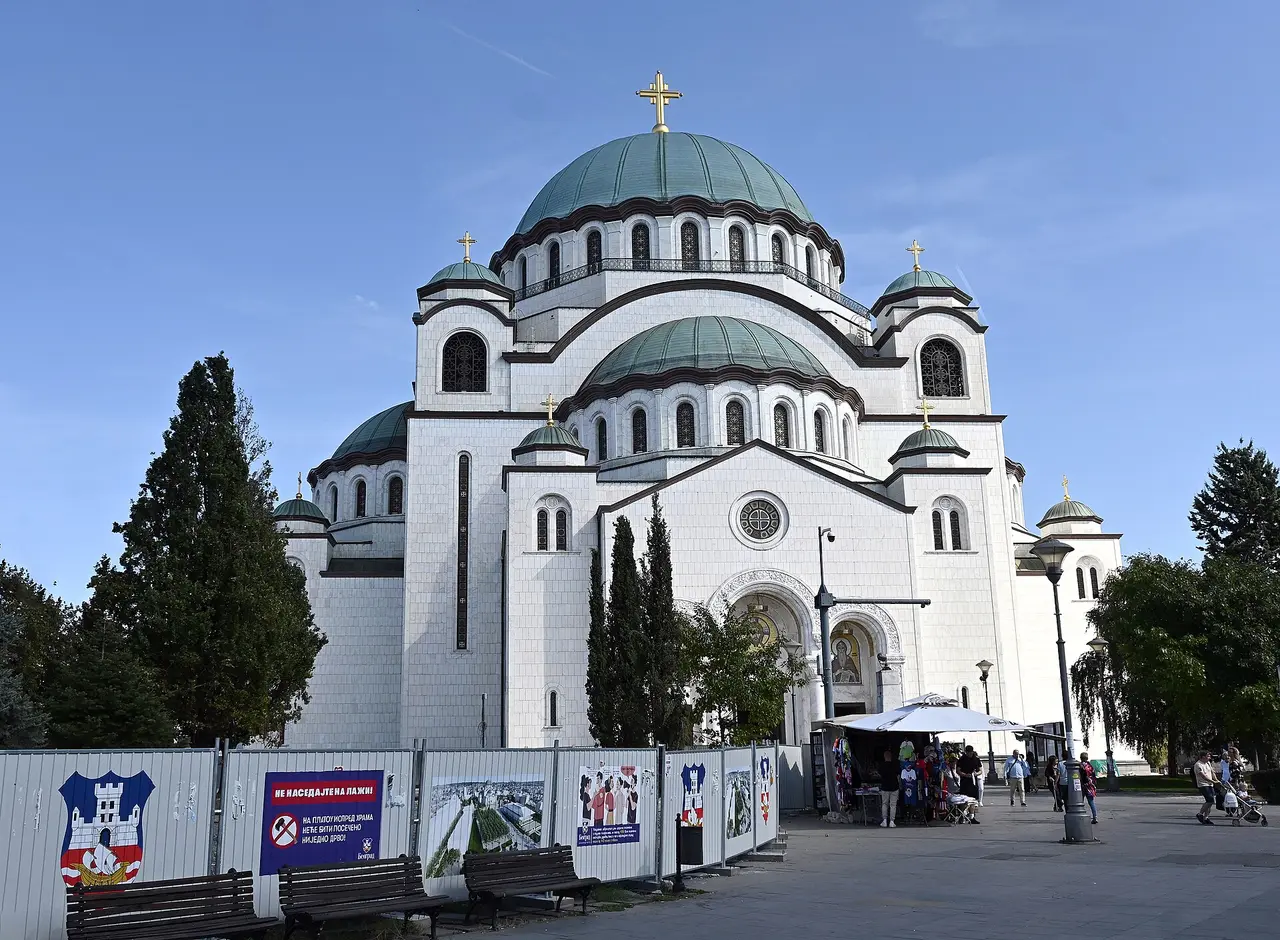
The numbers are the point, because the scale is what you feel first. The church is 91 metres long and 81 metres wide, and it rises about 70 metres to the top of the main dome, with a gilded cross carrying it another dozen metres higher - it holds its own on the Belgrade skyline from kilometres away. It’s built to take 10,000 worshippers standing at once. The central dome alone is a 4,000-tonne structure that was assembled on the ground and then lifted into place in one astonishing engineering job in 1989.
For all that heft, the design is graceful rather than heavy: a white marble and granite Serbo-Byzantine form modelled loosely on Hagia Sophia in Istanbul, which is exactly the echo the builders wanted. The winning design came from architect Aleksandar Deroko early in the twentieth century and was carried through in its later phases by Branko Pešić.
Why it took nearly a century
Manage your expectations on one point: this is a building that has been “nearly finished” for a very long time, and knowing the story stops the half-empty feel of the main nave from disappointing you. Serbs first resolved to raise a great church here in 1895; the foundation was laid and building began in 1935; then the Second World War stopped everything, and under the postwar state the half-built shell sat idle for decades. Work only resumed in 1985, the dome went up in 1989, and the main structure was substantially complete by the mid-2000s. Decoration has run on well beyond that.
So the church you walk into is genuinely ancient in ambition but very modern in finish, and that tension - a thousand-year-old form completed with cranes and concrete in living memory - is part of what makes it interesting rather than just big.
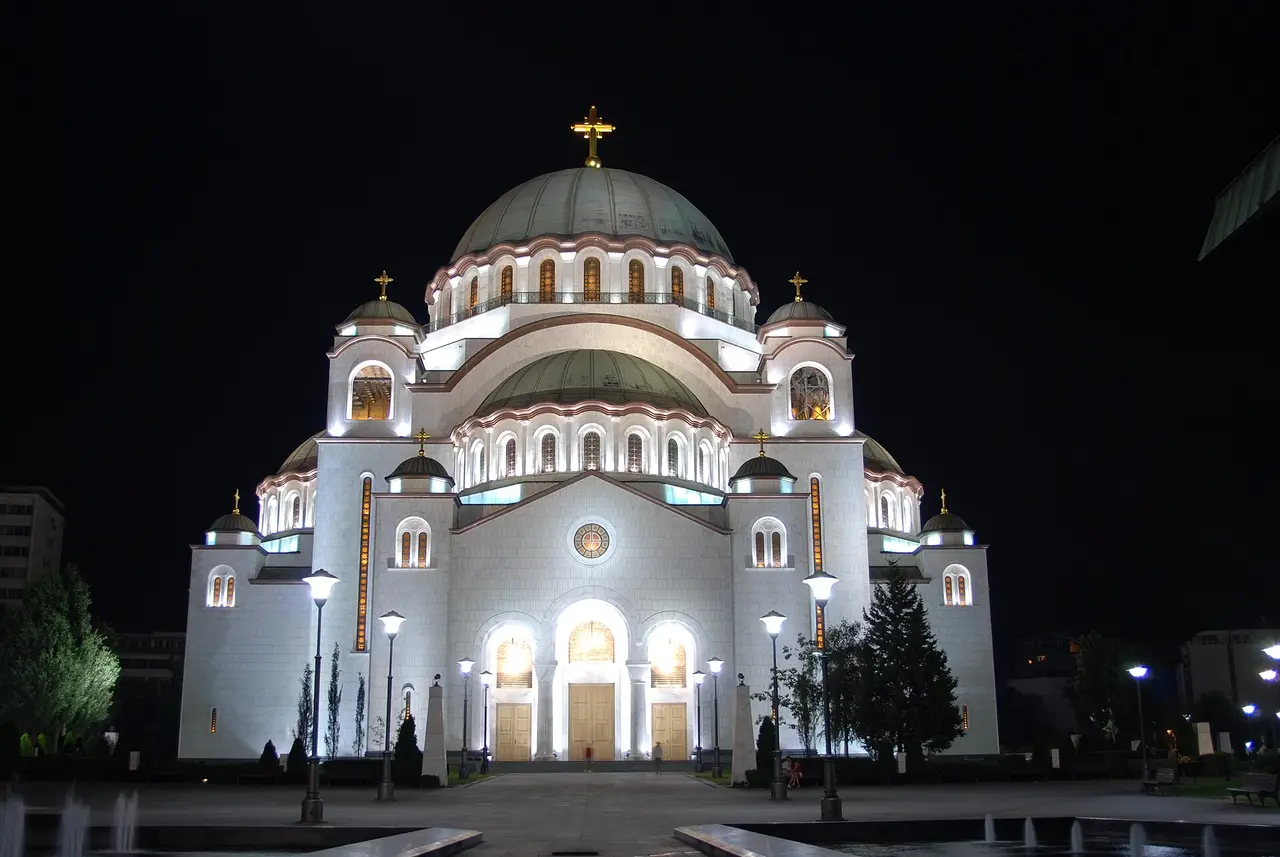
The gold dome mosaic
The single change that transformed the visit came around 2020, when the scaffolding finally came down from the interior and the great dome mosaic was revealed. Overhead now floats a colossal Christ Pantocrator, part of roughly 15,000 square metres of gold-ground mosaic that make this one of the largest mosaic ensembles anywhere. The figure is on a scale that’s hard to take in from the floor - the eyes alone are about three metres across - and the whole ceiling reads as a sheet of shimmering gold when the light catches it. The dome mosaic was largely a Russian-backed gift, executed by Russian and Serbian mosaicists, and it’s the reason the upper church is finally worth craning your neck for.
Be honest with yourself about the rest of the main hall, though: below the dome, stretches of wall are still comparatively plain, and decoration continues in phases. The scale still lands - voices and footsteps rise and lose themselves somewhere up in the dome - but if you’re expecting every surface to drip with Byzantine detail like an old monastery, that part is still a work in progress.
Don’t skip the crypt - it is the best bit
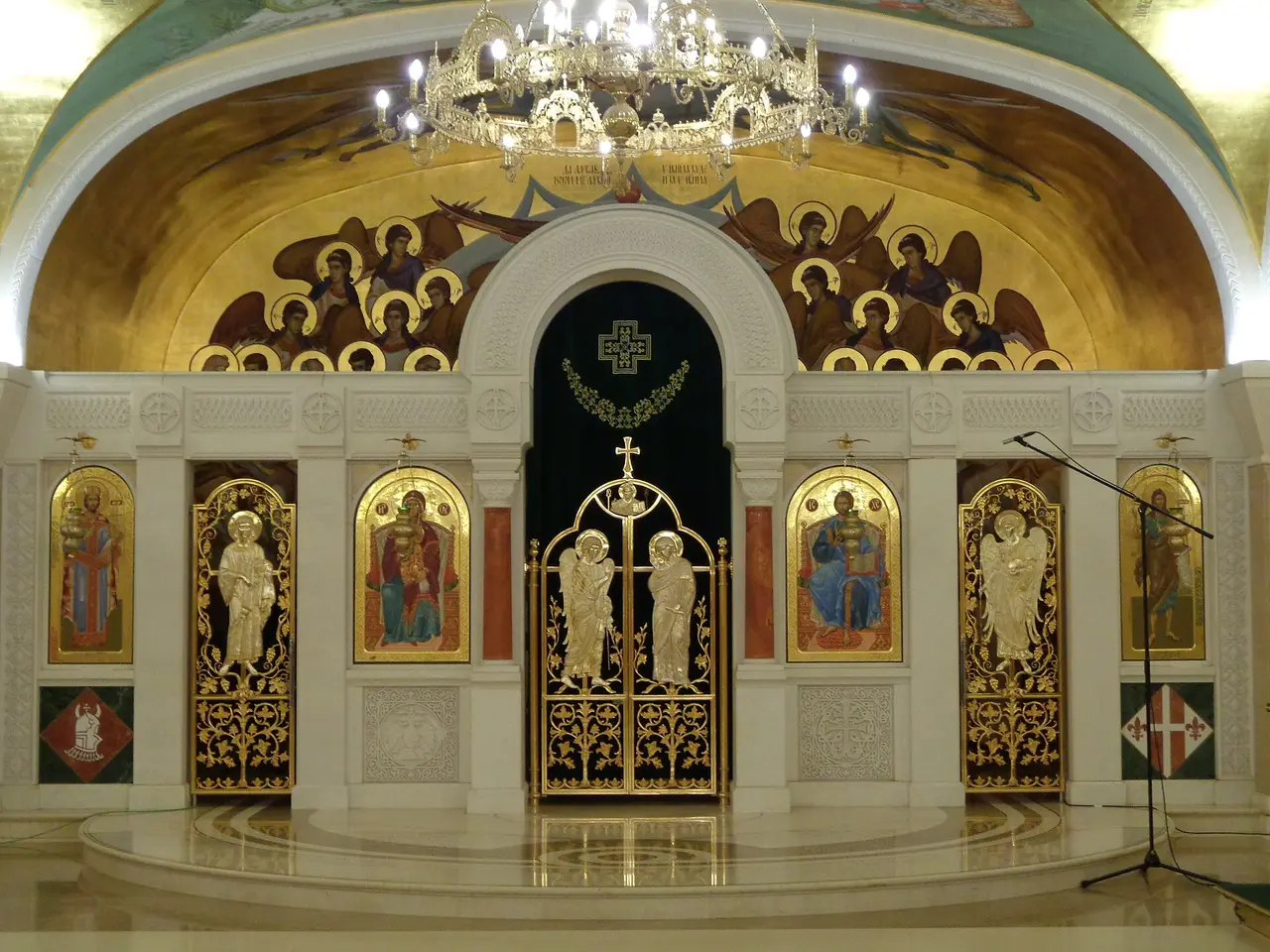
This is the tip that changes the visit: go downstairs. Beneath the main floor lies the crypt, and it is, for my money, the most beautiful interior in Belgrade. Where the upper church is vast and still filling in, the lower church is finished, intimate and completely covered - every arch, vault and column is worked in gold mosaic, painted frescoes and rich colour, so you step out of a huge echoing hall into a warm, glowing, low-ceilinged treasure box. It holds the treasury of Saint Sava and a grave church, and it’s where much of the artistry people travel to Serbia to see actually lives.
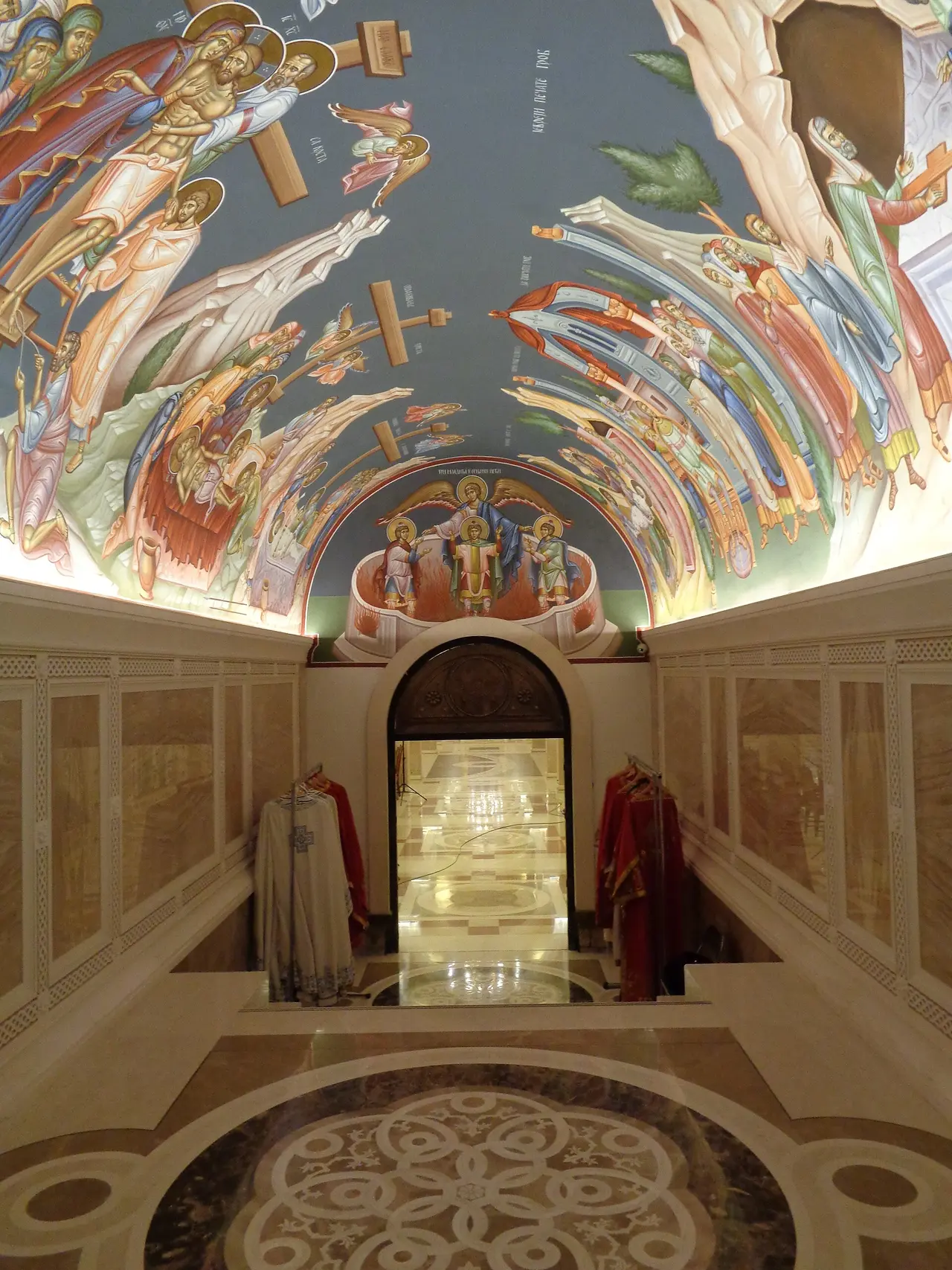
The entrance down is easy to overlook amid the scale upstairs, so look for the stairs to the lower level and take them - plenty of visitors admire the dome, snap a photo and leave without ever knowing the crypt is there. Give it a slow ten minutes; it’s the emotional heart of the place.
Who was Saint Sava, and why here
A little context makes the hill mean more. Saint Sava was a medieval prince who became the first archbishop of an independent Serbian church in the thirteenth century and is revered as the founder of Serbian religion, law and literacy - the country’s patron saint. His story really began far to the south, at Studenica, the white-marble monastery his father Stefan Nemanja founded and where Sava wrote the rule that shaped Serbian monastic life; this vast Belgrade church is the modern echo of that medieval root. This exact spot on Vračar is charged: tradition holds that in 1595 the Ottoman commander Sinan Pasha, trying to crush a Serbian uprising, had Sava’s relics carried here and burned in public. Building the largest Orthodox church in the region on the very ground of that act was the whole idea - defiance rendered in marble and gold.
How long, and what to pair it with
Half an hour covers the church comfortably; give it 45 minutes to an hour if you take the crypt slowly and sit a while. It costs nothing, so there is no reason to rush it or skip it. The natural pairing is the Nikola Tesla Museum a short walk away on the same Vračar hill - one hour for the temple, one for the museum. From there it’s downhill toward the river and Kalemegdan Fortress, and our guide to things to do in Belgrade ties the whole day together. For Yugoslavia’s twentieth century and Tito’s resting place, plan a separate trip to the Museum of Yugoslavia in Dedinje rather than trying to squeeze it into the same Vračar loop. Come in the late afternoon, do the crypt before you leave, and swing back past after dark to see it lit.
Photos
On the map
The map loads on click - to keep the page lightweight.
The map didn’t load. Check your connection and refresh the page.
Admission and opening hours
- Admission price
- Free (donations welcomed)
- Opening hours
- Roughly 07:00-19:00 daily; a working church, hours can vary
Modest dress (shoulders and knees covered); quiet during services
Details checked: July 16, 2026
Read also

What to see · 10 min read
Fruska Gora Monasteries: Which to Visit
Verified · September 3, 2026Sixteen preserved Orthodox monasteries on Fruska Gora: Krusedol, Novo Hopovo, Grgeteg and Vrdnik, plus dress code and a day route from Novi Sad.

What to see · 9 min read
Viminacium: Rome and Mammoths near Belgrade
Verified · September 3, 2026Roman Viminacium near Kostolac: adult tickets 1,050 RSD, hours by season, last tour two hours before close, and why the mammoth park is shut.

What to see · 12 min read
Vinca: The Neolithic Site on Belgrade's Doorstep
Verified · August 29, 2026Vinca's Belo Brdo site is 14 km downstream from Belgrade (16 km by road): 2026 hours, tickets, what the small museum shows, and how to get there.

What to see · 10 min read
Skull Tower of Niš: Story, Tickets, Visiting Tips
Verified · August 25, 2026Ćele Kula in Niš: 1809 Battle of Čegar, chapel hours, 300 RSD tickets and how to visit respectfully from the centre or INI airport.