
Kalemegdan Fortress & Belgrade Old Town: Visiting Guide
Belgrade Fortress at the Sava-Danube meeting: the Victor, the open-air Military Museum, Ružica church and the best sunset view. Free and open 24/7.
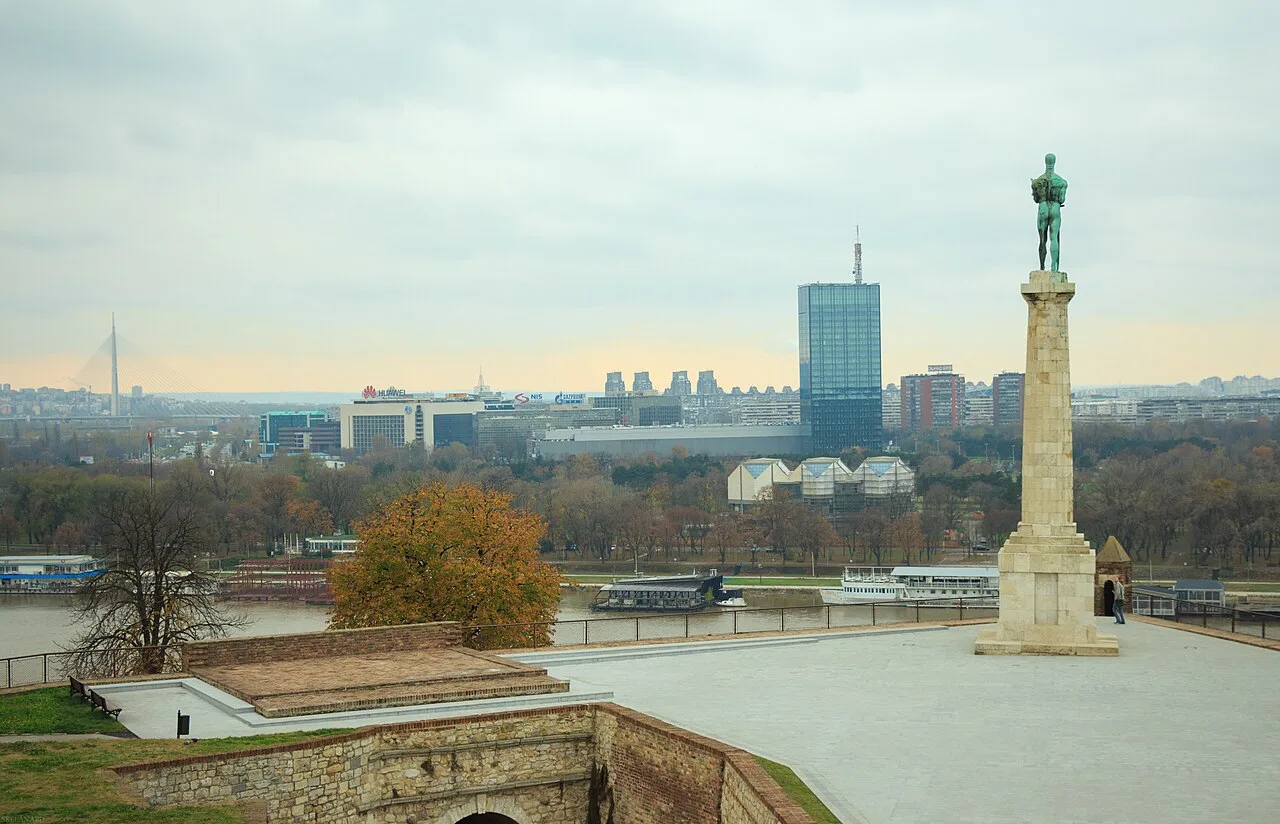
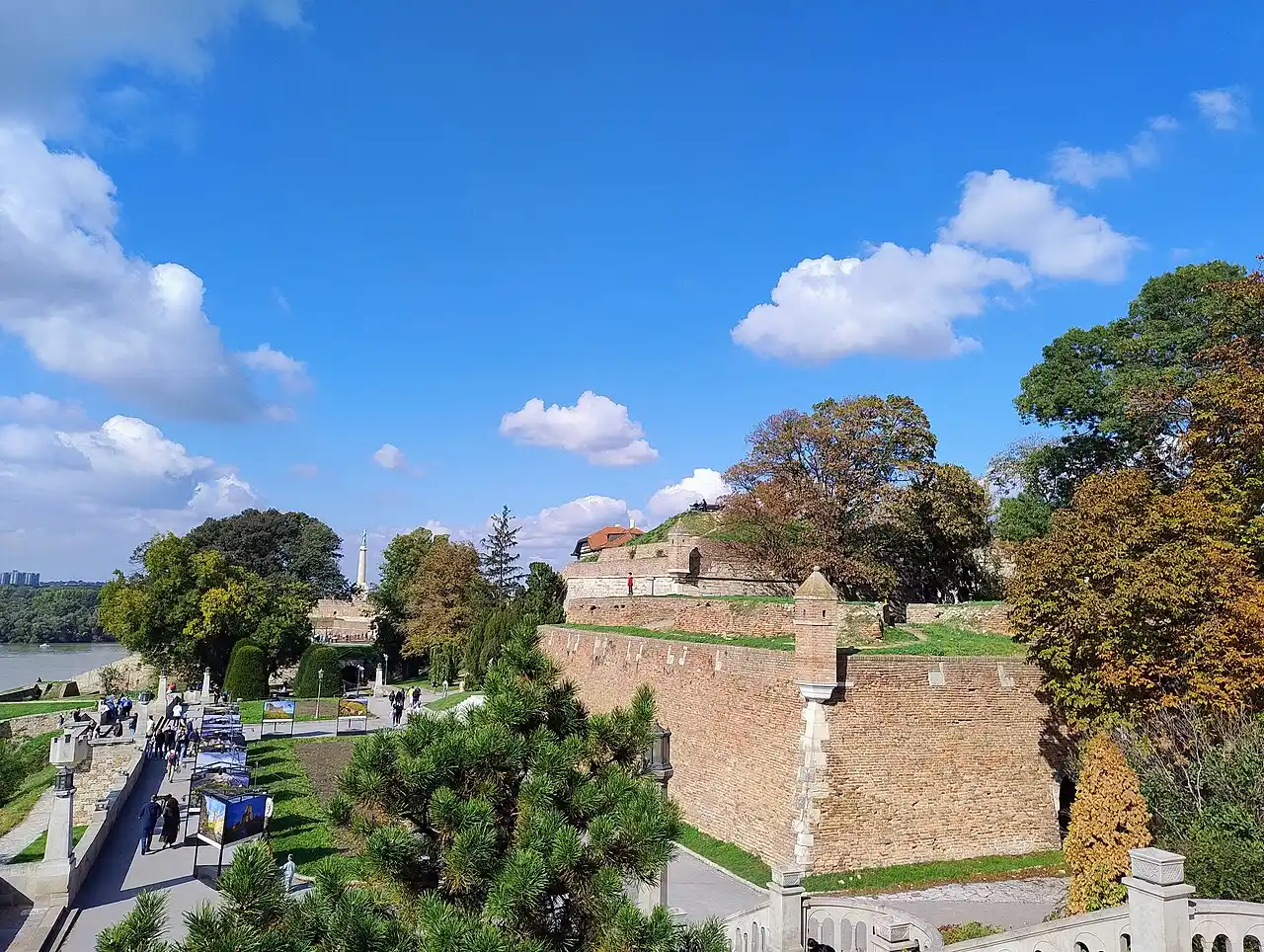
Kalemegdan is the one sight in Belgrade you should not skip, and the good news is that walking into it costs nothing: the fortress grounds and the surrounding park are free. Since June 2026, four named gates into the Upper Town - Sahat, Kralj, Defterdar and Despot Stefan - lock roughly 00:30-04:30; the park, the ramparts and the rest of the fortress don’t close at all. Daytime and evening walks are still the normal visit. This is where the city was born - a stone citadel on the bluff where the Sava flows into the Danube - and a slow loop of the ramparts, the Victor monument and the old gates takes about two hours. Aim to arrive an hour or so before sunset: the light going down over the confluence is the whole reason people fall for this city.
A few things inside the walls do charge a small ticket, and they’re worth knowing about before you go, so let’s start with what actually costs money and what doesn’t.
Is Kalemegdan free? What you pay for and what you don’t
The short answer: the park, the ramparts, the gates, the churches and the outdoor military hardware are all free, and you can wander them at any hour. What you pay for are the enclosed historical objects - the ones you physically step inside - and two of the five aren’t a casual walk-up at all.
The current list, checked 30 August 2026, combines the fortress operator’s English visitor page for hours and ticket prices with its Serbian-language page for two booking footnotes the English version leaves out, in Serbian dinars (RSD) (beogradskatvrdjava.co.rs):
- Roman Well - 170 RSD (pupils/students/pensioners 100) - Tuesday-Sunday, walk-up April through October; November-March needs advance booking
- Nebojša Tower - 270 RSD (150) - Wednesday-Sunday, the reliable walk-up year-round
- Big Gunpowder Warehouse - 270 RSD (150) - pre-booked group visits only, year-round
- Military Bunker - 120 RSD (80) - pre-booked group visits only, year-round
- Casemates (medieval torture display) - 400 RSD (300) - Tuesday-Sunday, walk-up April through October; November-March needs advance booking
If you’re on your own and just turn up between April and October, the range you can actually buy on the spot is 170-400 RSD, across the Roman Well, the Nebojša Tower and the Casemates - still pocket change in euros; outside that window, the Nebojša Tower is the only one still taking walk-ups. The Powder Magazine and the Bunker only take organised groups booked in advance, year-round: the operator’s own Serbian-language page spells this out, even though the English page doesn’t flag it, so don’t plan on walking into either one without calling ahead. The operator page does not list a combined five-site ticket (older boards and guides sometimes still mention 450 RSD). Bring cash in dinars - the ticket kiosks are not set up for tapping a card, and neither is much of old Belgrade.
Two more practical notes. All five interiors are closed on Monday, and the Nebojša Tower stays shut on Tuesday too, so don’t build an interiors-heavy visit around either day. Hours run 1 April-30 September, 11:00-19:00 in summer, then 1-31 October, 10:00-17:00 for everyone; from November through March only the Nebojša Tower keeps a fixed public schedule - the Roman Well and the Casemates need advance arrangement in that window, same as the Powder Magazine and Bunker do year-round. The Serbian-language page, not the English one, also posts a last-ticket cutoff half an hour before closing for the Roman Well, the Big Gunpowder Warehouse, the Military Bunker and the Casemates; the Nebojša Tower’s own listing carries no such cutoff on either page. The park around them stays free regardless of season; only specific Upper Town gates lock overnight, and the grounds themselves never close.
The Victor (Pobednik): why he faces the rivers
Every photo of Kalemegdan has the same figure in it - a bronze man on a tall stone column, sword in one hand, falcon in the other, standing right on the edge of the Upper Town above the water. This is the Victor, Pobednik in Serbian, and it’s the unofficial symbol of the whole city.
It’s the work of Ivan Meštrović, the great Croatian sculptor, cast in 1913 and finally put up in 1928 to mark Serbia’s victories over the Ottoman and Austro-Hungarian empires in the Balkan Wars and the First World War. The figure itself stands about 14 metres, and one detail locals love to explain is why it ended up on the ramparts at all: it was meant to go up in the city centre, but a giant nude man on a downtown fountain scandalised enough people that the plan was quietly dropped. The compromise was to set him high on the fortress ridge instead, at the very tip above the confluence - which is why the Victor has his back to Belgrade and gazes out over the two rivers. What began as prudishness gave the city its best-placed statue by pure accident.
Stand at the base of the column at sunset and you’ll see why nobody minds anymore. Below you the Sava slides in from the left and empties into the wider Danube, New Belgrade spreads across the far bank, and the light does the rest. This is the single best free view in the city, and it’s busiest - deservedly - in the last hour before dark. After dark the party drops to the water: the splavovi, Belgrade’s floating clubs, moor on the Sava directly below.
The open-air Military Museum: tanks you can walk right up to
The thing that surprises first-time visitors most is the hardware. Along the Upper Town ramparts the Military Museum lines the walls with an open-air collection of tanks, field guns and artillery, and - this is the part people don’t expect - the outdoor rows are free to walk among. You don’t need a ticket to stand next to a tank; you only pay if you go into the indoor halls.
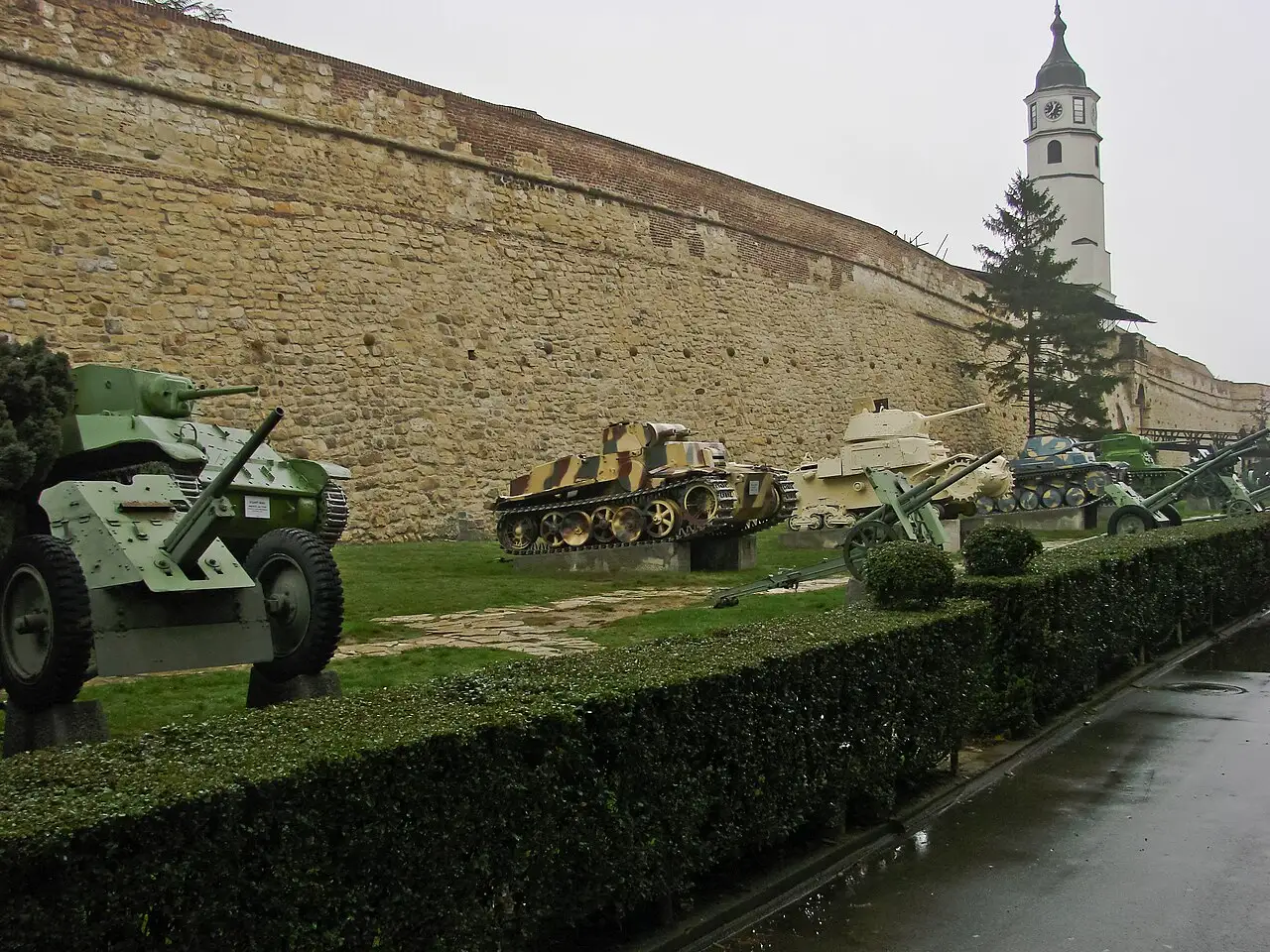
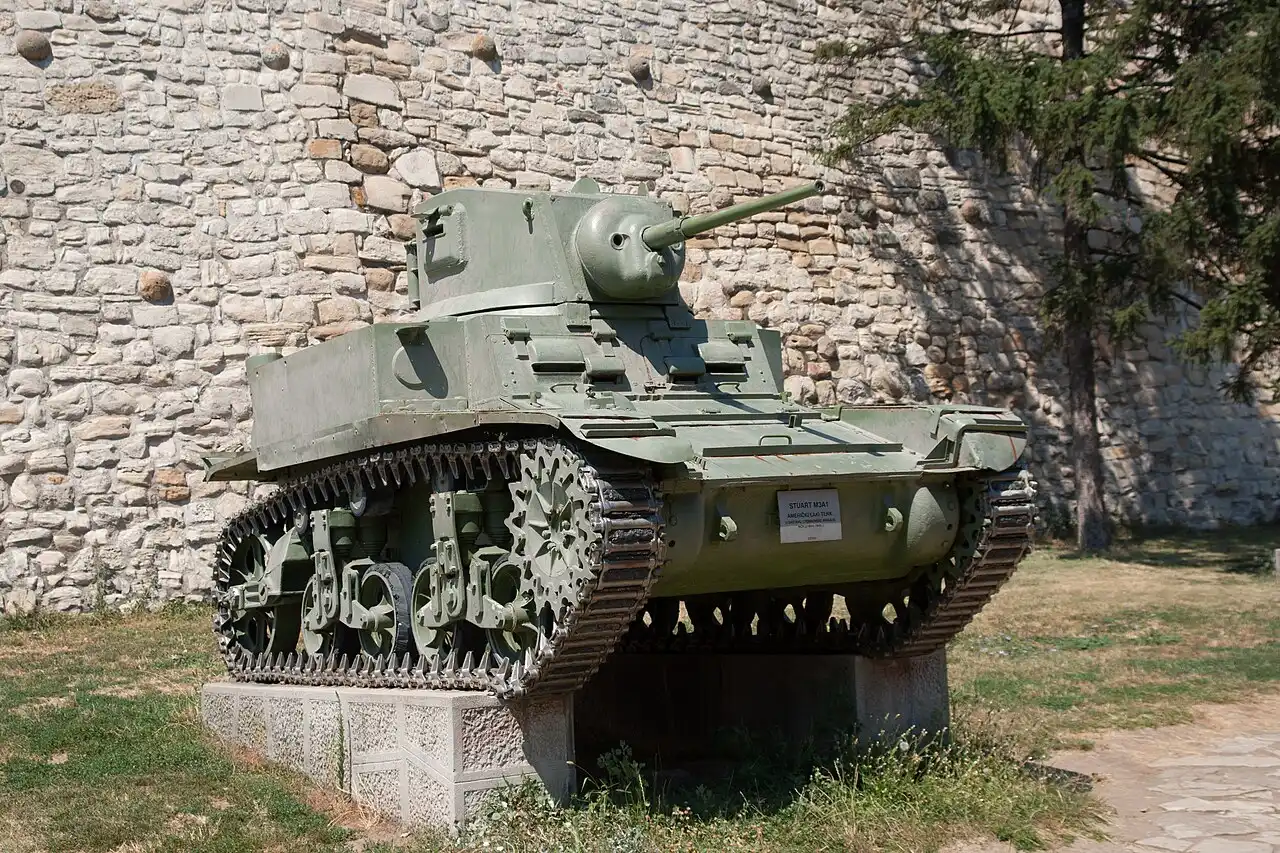
It reads like a century of European war laid out in metal. There’s a spindly Renault FT-17 from the First World War - the tank that basically invented the shape of every tank since - a couple of American M3 Stuart light tanks, captured German armour, a Soviet T-34 and long lines of cannon. Kids clamber on the barrels; military-history buffs lose an hour here. If you have any interest in how the twentieth century actually played out on this ground, it’s a quietly extraordinary thing to find sitting in a public park. Families often fold the outdoor tanks into the same half-day as Belgrade Zoo next door - ticket prices and a practical kids’ loop are in our Belgrade with kids guide.
A word on tone, because this is a real battlefield: Kalemegdan changed hands violently more times than almost any fortress in Europe, and the exhibits aren’t a celebration so much as an inventory of what was fought over here. Treat it the way you would any war site - worth understanding, not a theme park.
Ružica and St Petka: the church with chandeliers made of weapons
Tucked against the Lower Town wall, half-hidden under ivy, is a small church that’s easy to miss and a mistake to skip. Ružica - “Little Rose” - is a modest Orthodox church with one unforgettable detail inside: its chandeliers are assembled from spent bullet casings, sabres and cannon parts, put together by Serbian soldiers from the debris of war. Step in, look up, and it takes a second to register what you’re actually looking at.
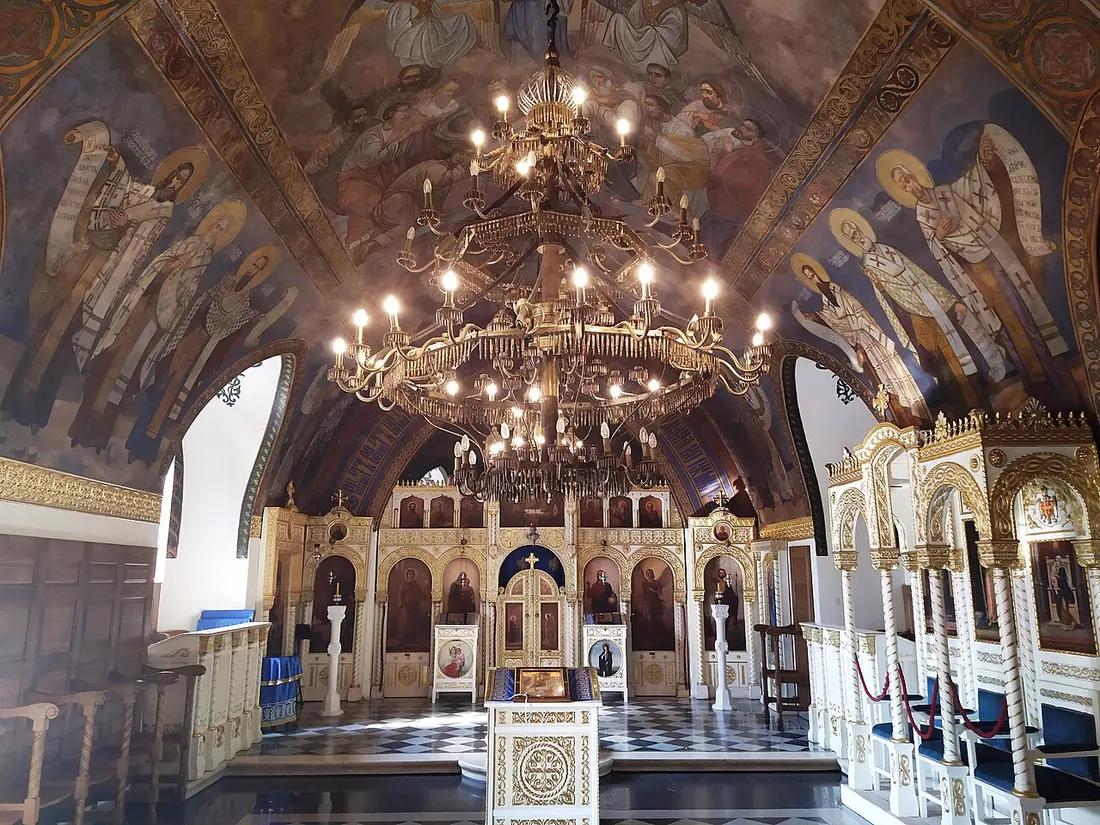
Right beside it is the tiny Chapel of St Petka, built over a spring that pilgrims still come to for its water. Both are free and both are working churches, so dress modestly and keep it quiet - this isn’t a museum stop, it’s a place people actually pray. Together they’re the most affecting few minutes on the whole walk, and almost nobody rushing the ramparts above even knows they’re down there.
Reading the layers: Roman, Ottoman, Habsburg
Part of what makes Kalemegdan fascinating is that it’s not one fortress but a stack of them, each empire building on the rubble of the last. The name itself is a giveaway - from the Turkish kale (fortress) and meydan (battleground) - “the battlefield fortress.”
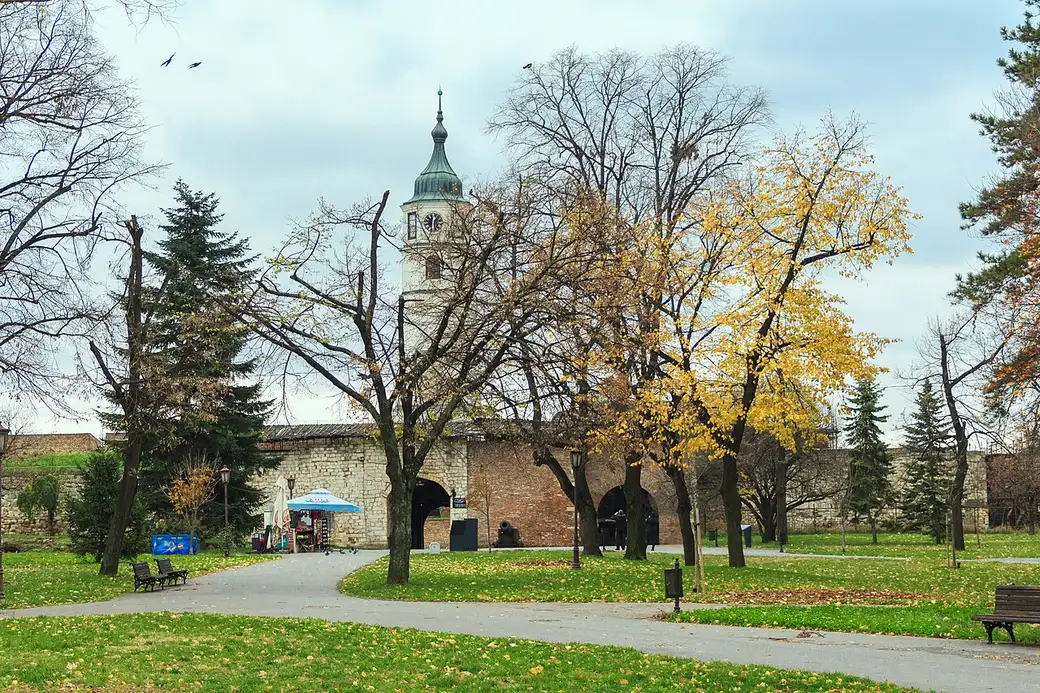
The Romans got here first. The city started as Celtic and then Roman Singidunum, and when Legio IV Flavia Felix arrived around AD 86 they laid out a rectangular fort right where the Upper Town stands today; you can still find Roman stonework worked into the walls. For much of the medieval and early-modern era the fortress was the prize in a long tug-of-war between the Ottomans and the Habsburgs - the Ottomans took Belgrade in 1521 and held it, on and off, for three centuries, leaving mosques, a türbe and the odd hammam, while the Austrians rebuilt the defences in stone with the baroque gates and angular bastions you walk through now. Come with even a rough sense of that timeline and the whole site turns from “nice old walls” into something you can genuinely read.
Down to the water: the Nebojša Tower
If you’ve got the legs for it, walk down through the Lower Town toward the river to the Nebojša Tower, a stout medieval cannon-tower right on the Danube bank. It’s one of the ticketed objects (270 RSD on the Aug 2026 board, and unlike the others it takes walk-ups without notice), and inside it’s now a small, well-done museum. Its darker fame is as a former prison - the Greek revolutionary poet Rigas Feraios was strangled here in 1798 - and there’s a memorial plaque to him on the wall outside. It’s a genuine haul down and back up the hill, so save it for when you’ve got energy to spare; on a hot day, plenty of people admire it from the promenade and leave it at that.
How long to spend, and when to come
Give the fortress a comfortable two hours for a proper loop: the Stambol Gate and the ramparts, the Victor, the outdoor military collection, and Ružica down below. Add a third hour if you’re going inside the ticketed towers or you just want to sit with a coffee and the view - there are cafés and a kiosk or two up top.
The best time, without much competition, is late afternoon into sunset. The light on the confluence is the payoff, the heat has come off the stone, and the park fills with locals doing exactly what you’re doing. Spring and autumn are ideal; summer is fine if you dodge the midday sun; and even in winter the grounds are open and the view is arguably starker and better, just wrap up warm.
Kalemegdan is the natural first stop on any tour of the capital. Pair it with our 4-hour Belgrade walking route for a timed loop through to Skadarlija, or see our guide to things to do in Belgrade for the rest of the city, and browse more of the country’s forts and landmarks in the attractions section. Getting there costs nothing extra, too: Belgrade scrapped city transit fares in 2025, so the bus or tram to the nearest stop is free - and from there it’s a short, uphill walk into a thousand years of history.
Photos
On the map
The map loads on click - to keep the page lightweight.
The map didn’t load. Check your connection and refresh the page.
Read also

What to see · 10 min read
Fruska Gora Monasteries: Which to Visit
Verified · September 3, 2026Sixteen preserved Orthodox monasteries on Fruska Gora: Krusedol, Novo Hopovo, Grgeteg and Vrdnik, plus dress code and a day route from Novi Sad.

What to see · 9 min read
Viminacium: Rome and Mammoths near Belgrade
Verified · September 3, 2026Roman Viminacium near Kostolac: adult tickets 1,050 RSD, hours by season, last tour two hours before close, and why the mammoth park is shut.

What to see · 12 min read
Vinca: The Neolithic Site on Belgrade's Doorstep
Verified · August 29, 2026Vinca's Belo Brdo site is 14 km downstream from Belgrade (16 km by road): 2026 hours, tickets, what the small museum shows, and how to get there.

What to see · 10 min read
Skull Tower of Niš: Story, Tickets, Visiting Tips
Verified · August 25, 2026Ćele Kula in Niš: 1809 Battle of Čegar, chapel hours, 300 RSD tickets and how to visit respectfully from the centre or INI airport.