
Belgrade to Skopje by Bus: Times & Price 2026
Belgrade to Skopje by bus in 2026: several coaches a day, roughly every four hours, about six to seven hours south. Prices, the drive and flying compared.
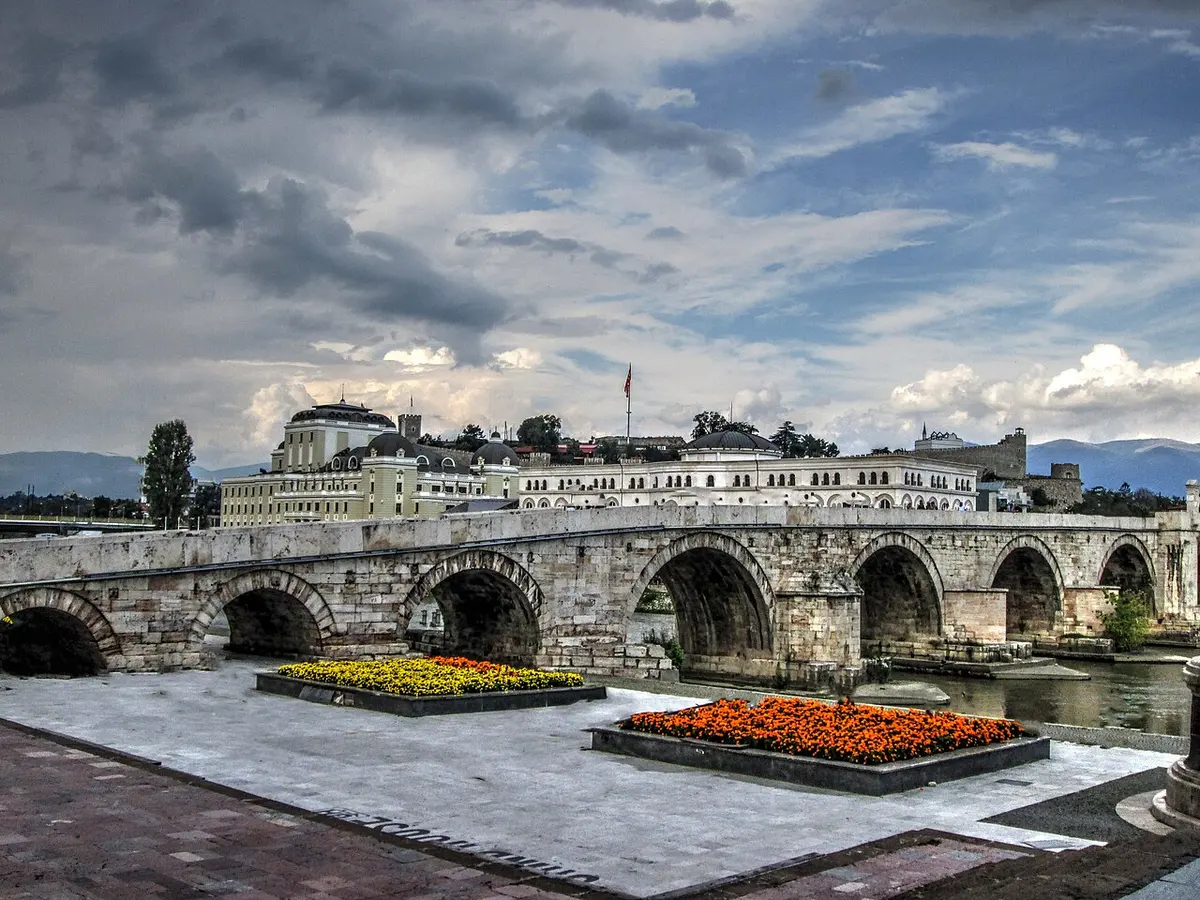
The short answer for Belgrade to Skopje is simple, because there’s only one real way to do it overland: take the bus. Coaches run several times a day, roughly every four hours, and cover the 424 km south to the Macedonian capital in about six to seven hours depending on the operator. There’s no train on this route at all, so unlike some Balkan city pairs there’s no agonising over modes. The only decisions worth making are which coach line to pick and whether to bother flying, and for most people the answer to that second one is no.
That makes this an easy trip to plan. Buses leave from Belgrade’s main station, drop you at Skopje’s central bus station beside the train station, and cost little. Below is how the operators differ, what the drive involves, and the one routing detail worth knowing before you book.
The quick verdict
- Best for nearly everyone: the bus, and specifically a direct one. Six to seven hours, several a day, cheap, no changes.
- Fastest coach: FlixBus, at around six and a quarter hours, usually a shade quicker than the Serbian lines.
- Cheapest coach: the local operators like Niš-ekspres, from as little as €13 to €15 booked ahead, for a slightly longer ride.
- Skip it: the flight. Air Serbia does fly the route, but it’s expensive and, once you count the airports, barely faster than the coach.
- Only if you want the freedom: a car, about four hours down the motorway with one border crossing.
If you just need to get to Skopje, book a direct coach and you’re done. The rest of this is detail for choosing between the operators and weighing the alternatives.
The bus: your only sensible option, and a good one
Belgrade to Skopje is a busy, well-served corridor, so the lack of a train barely matters. Several companies run it, including FlixBus, Niš-ekspres, Fudeks, Kanis and BS Tours, and between them they put out something like four to six departures a day, spread so you can leave in the morning, the afternoon or the evening. Buses go from Belgrade’s new main bus station out in New Belgrade (the terminal moved across the river in late 2024, so aim for the new one in Block 42, not the demolished old riverside site that lingers on stale maps) and arrive at Skopje’s central bus station, which sits right beside the railway station a short ride from the centre.
The operators split into two camps. FlixBus is usually the quickest, doing the run in about six hours and a quarter, with the slick app booking and fixed seat that come with the brand. The Serbian coach lines, led by the venerable Niš-ekspres, take a little longer at around seven to seven and a half hours, but tend to undercut FlixBus on the cheapest fares. Neither is wrong; it is a straight trade of maybe an hour of your day against a few euros.
Fares are low across the board. Book a day or two ahead and you can pay somewhere in the region of €13 to €30 for a seat, with walk-up prices on a busy departure climbing higher. The single most useful habit here’s to book online in advance rather than rolling up at the counter, both to lock in the low fare and to guarantee a place on the departure that suits you. The route passes through Niš roughly a third of the way down, so if you fancy breaking the journey, our guide to Belgrade to Niš covers stopping at Serbia’s third city, where the roads to Skopje and to Sofia part ways.
The one routing detail: take the direct bus
There is a wrinkle worth knowing. The straightforward direct coach runs south through Serbia the whole way, down the Corridor 10 motorway through Niš to the border at Preševo, crossing into North Macedonia at Tabanovce and on to Skopje. That’s the fast, simple routing, and it stays entirely within Serbia until the Macedonian frontier.
You may also see a longer, cheaper-looking option that routes via Pristina in Kosovo, with a change along the way. It takes well over eight hours and only makes sense if you actually want to visit Pristina. For a clean Belgrade to Skopje trip, filter for the direct service: it’s quicker, involves no transfer, and keeps the journey to a single, predictable road south. Check the routing when you book rather than sorting purely by price, because the indirect one can look tempting on the fare alone.
One thing applies whichever coach you pick: this is a real border. Serbia and North Macedonia are both outside the EU and Schengen, so expect passport control on each side at Preševo and Tabanovce, and allow a little slack for it, especially on a busy summer weekend when the crossing can back up.
Flying: possible, but rarely worth it
Air Serbia flies Belgrade (BEG) to Skopje (SKP), roughly twice a day, and the hop is only about an hour and a quarter in the air. On paper that beats a seven-hour bus easily. In practice it usually doesn’t add up, because the flight is nearly all overhead: the trip out to Nikola Tesla airport, check-in, security, the wait and the ride into Skopje from its airport push the real door-to-door time to around four hours, for a fare that typically runs €90 to €180 and up. That is several times the cost of the coach to save a couple of hours you’ll partly spend in queues. Flying earns its place only if the fare drops unusually low or you are connecting onward through one of the airports.
Driving and transfers: for the freedom to stop
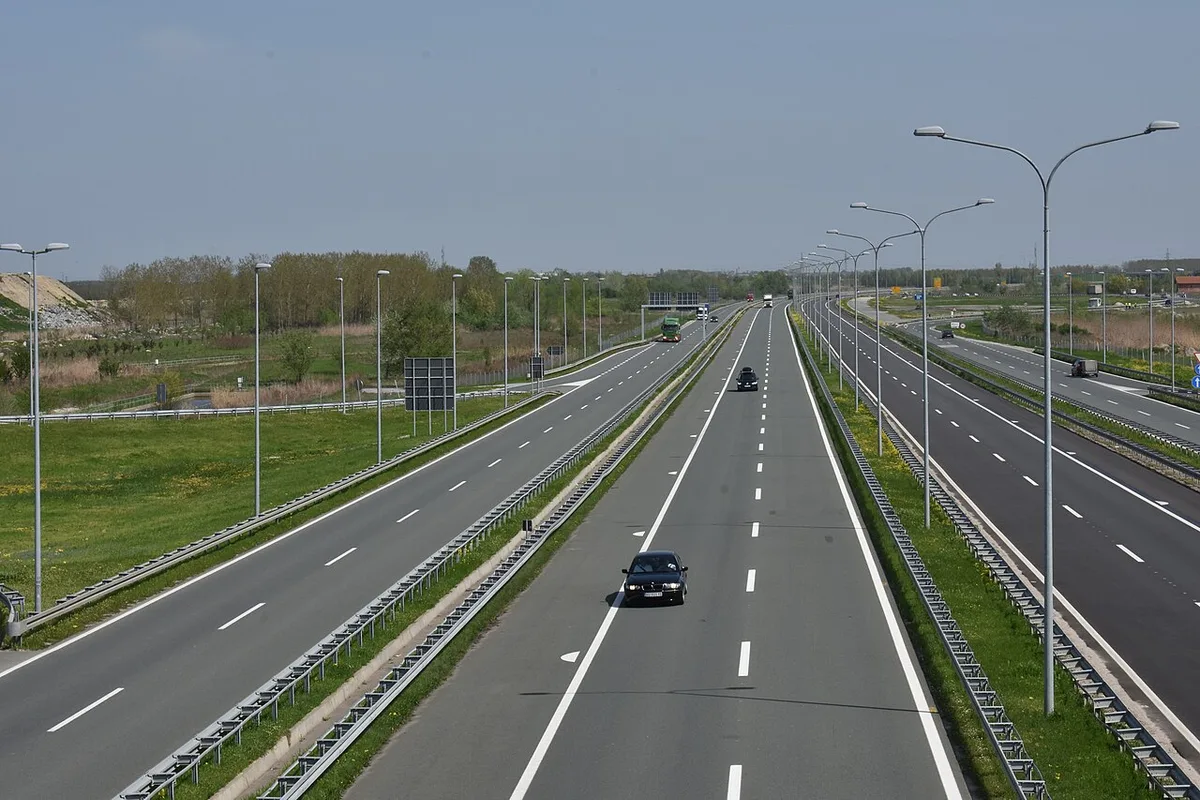
The drive is quick and easy: about 424 km and just over four hours on the motorway straight down the middle of Serbia and across the border into North Macedonia. A Serbian quirk keeps the road simple, there’s no motorway vignette to buy; you take a ticket on entry and pay the toll at a booth as you leave. Budget for fuel, tolls and the border wait, and if you’re hiring, confirm with the rental company that the car is allowed across an international frontier, since not every firm permits it. A car makes sense mainly if Skopje is one stop on a wider road trip, or you want to detour on the way; for a plain city-to-city hop the bus is cheaper and saves you the driving.
If you would rather not drive and want a fixed door-to-door option, a booked transfer takes the border and the logistics off your plate, which is handy if you’re landing at Belgrade airport and heading straight for Skopje without going into the city first. For weighing when a car earns its keep across the rest of the country, our guide to getting around Serbia covers the trains, buses and driving in one place.
So how should you travel?
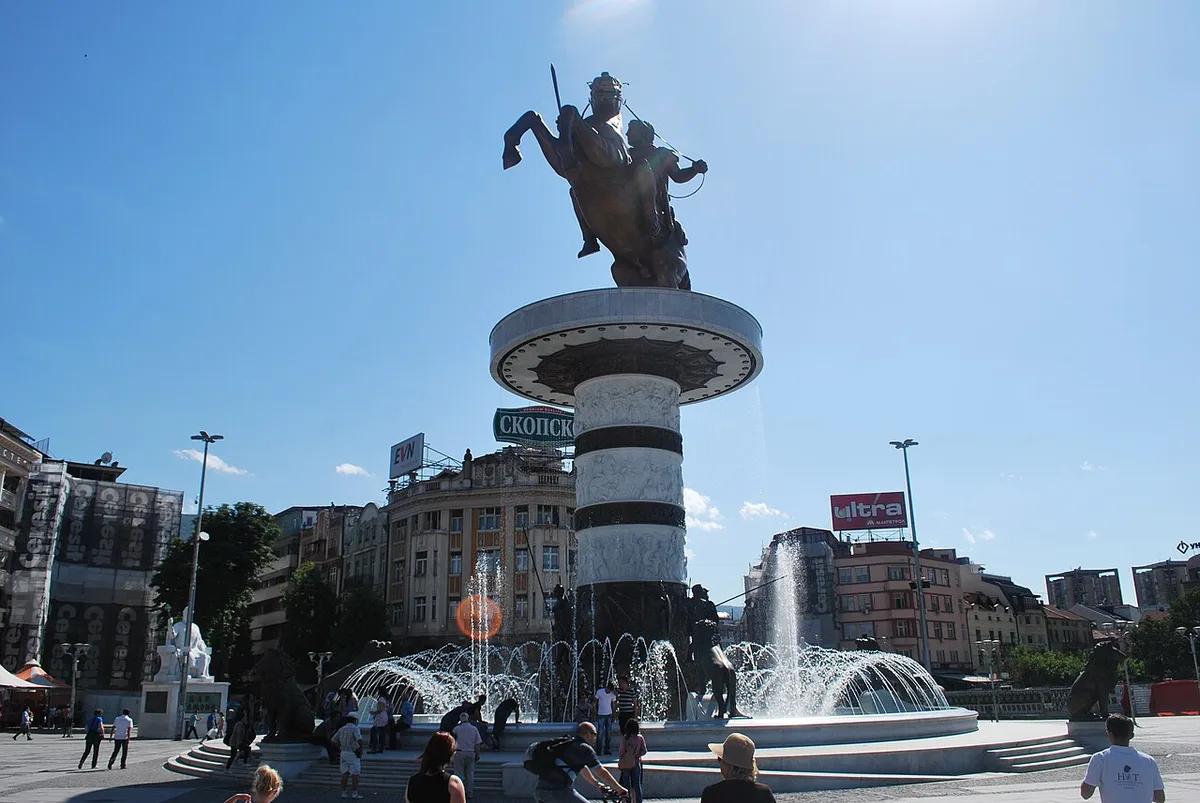
Book a direct bus. It’s the right call for almost every trip: several a day, six to seven hours south, cheap, and no changes, with the only homework being to pick a direct service rather than the slow one via Pristina. Choose FlixBus if you want the quickest ride and the app, or a Serbian line like Niš-ekspres if you want the lowest fare and don’t mind an extra hour. Fly only if the price collapses or you’re connecting onward, since a short flight turns into a half-day once the airports are counted. Drive when Skopje is part of a bigger road journey. Whichever way you go, keep your passport handy for the border and give the crossing a little time in summer. Skopje is also the mid-point of the longer haul south to Greece, so if the Aegean is your real destination our guide to Belgrade to Thessaloniki carries the route on from here. And once you arrive, the sister guide to things to do in Skopje lays out the Stone Bridge, the Old Bazaar and the rest of the remodelled capital waiting at the end of the road.
Photos
Read also

Transport · 11 min read
Novi Sad to Budapest: Train, Bus & Driving
Verified · September 1, 2026From Novi Sad to Budapest in 2026: FlixBus in 4h45 from EUR 20, drive about 300 km, or Soko train to Subotica then Hungary.

Transport · 10 min read
Belgrade to Istanbul: Bus, Flights & Long Way
Verified · August 26, 2026Belgrade to Istanbul in 2026: coach about 15.5h from €45, flights about 1h45 BEG-IST, no through train. Times, borders and the Sofia relay.

Transport · 11 min read
Belgrade Airport to Novi Sad: Transfer, Bus, Train
Verified · August 23, 2026No direct bus BEG to Novi Sad: a transfer or shared shuttle covers about 90 km in 70 minutes, or take the free airport bus plus the Soko train.

Transport · 12 min read
Belgrade to Kopaonik: Transfers, Bus & Driving
Verified · July 27, 2026Belgrade to Kopaonik is 265-300 km and about 4 hours, 5 in winter. Coach fares, transfer and taxi prices, the two mountain approaches, winter tyre rules.