
Belgrade to Sarajevo Bus: Times & Price 2026
Belgrade to Sarajevo by bus in 2026: several a day plus a night coach, about 7-8 hours for €25-40. The Drina drive and the East Sarajevo arrival trap.
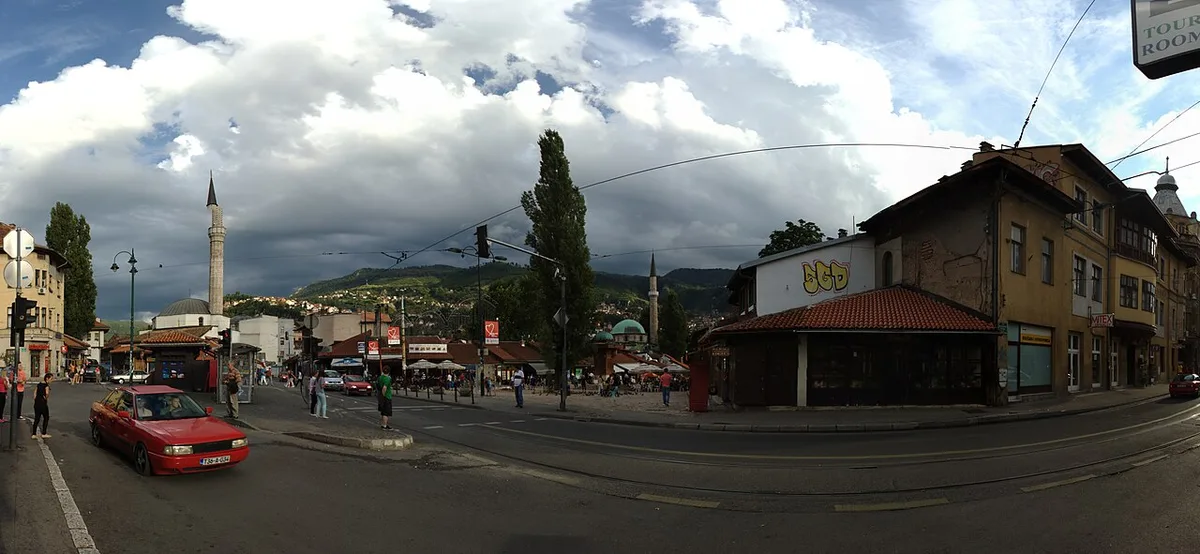
The simplest way from Belgrade to Sarajevo is the direct bus: it runs several times a day, takes roughly seven to eight hours for the 290-odd kilometres, and costs about 25 to 40 euros. There’s no through train worth taking, so it comes down to the bus, your own car, or the short Air Serbia flight if you would rather skip the road. For most visitors the bus wins on price and simplicity, though there’s one thing about where it drops you that nobody warns you about, and it can add a taxi ride you didn’t budget for. More on that below.
If you have a few days and want to actually see the country between the two capitals, driving is the better story. The road tracks the Drina for a long, beautiful stretch and passes within sight of the famous bridge at Višegrad. But it’s a proper mountain road, not a motorway, and that is why even the fastest bus takes almost twice the time the map promises for the distance.
Bus, car or plane: the quick verdict
- Direct bus: the default. Several departures daily including at least one overnight service, about 7-8 hours, roughly 25-40 euros. Book a day or two ahead in summer.
- Drive yourself: best if you want to stop along the Drina and in Višegrad. The pure driving time is around 4 hours, but with the border and a mountain road, budget 5-6 hours door to door and a whole relaxed day if you sightsee.
- Fly: Air Serbia links Belgrade (BEG) and Sarajevo (SJJ) in about 50 minutes, but only a few times a week, and once you add airport time and transfers at both ends the bus is often no slower in practice for a city-centre-to-city-centre trip.
The train deserves its own line because people keep asking: there is no useful direct train between the two cities. You can technically piece together a slow train from Belgrade toward Zvornik and then a bus, but it’s longer and more awkward than simply taking the coach the whole way. Treat the railway as a non-option on this route.
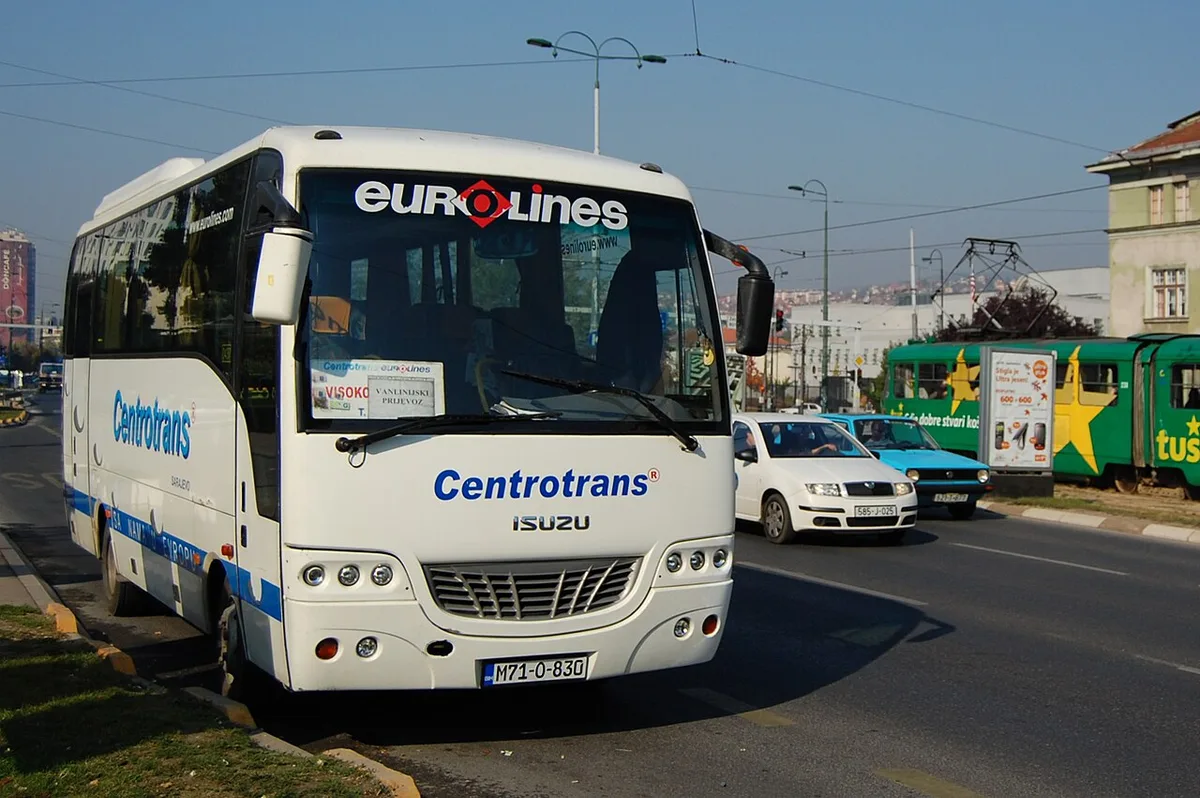
Taking the bus: times, price and the night option
Buses leave from Belgrade’s main bus station (BAS), which moved in September 2024 to a new building in New Belgrade, Block 42, out across the Sava from the old centre. It’s modern and easy to use, but it’s no longer a short walk from the tourist streets, so leave time to reach it and double-check you’re heading to the new location rather than the demolished riverside one that still lingers on old maps. Our guide to getting around Serbia has the full picture on the station move and the intercity network.
Several companies work the corridor, with Centrotrans (and its Eurolines arm) among the most frequent, alongside Serbian operators and smaller lines such as Aroma and City Lines. Between them you get around three or four direct departures a day in 2026, clustered in the late morning and early afternoon (indicative times around 11:30 and just after 13:00), plus one evening service that runs overnight. Journey time is about 7 hours 35 minutes on the fastest Centrotrans coach, stretching to eight or nine hours on the slower ones, depending on the route, the mid-trip rest stop, and how busy the border is. Fares sit in the region of 25 to 40 euros one way (very roughly 2,900 to 4,700 dinars); the cheapest advance economy seats start near 26 euros, and you save by booking ahead through the operator or an aggregator rather than paying at the counter on the day. Prices and exact times shift with the season, so confirm the current schedule before you commit.
Day or night is a genuine choice on this route. The daytime departures put the Drina valley and its long green defile outside your window in daylight, which is half the reason to make the trip overland at all. The overnight bus, on the other hand, is a bit of a Balkan rite of passage: it leaves Belgrade in the evening and rolls into Sarajevo early the next morning, saving you a hotel night and handing back a full day at the other end. The trade-off is scenery for sleep, since you cross the dark hills unseen and get woken for the border check, so bring a neck pillow and low expectations and you’ll be fine.
The East Sarajevo arrival trap
This is the practical detail that catches nearly everyone. Buses from Serbia don’t pull into the main Sarajevo station near the centre. They arrive at the East Sarajevo bus station (Istočno Sarajevo, also called Lukavica), which sits in Republika Srpska on the edge of the city and is around 7 to 8.5 kilometres from the old town and Baščaršija. So when you step off after seven hours, you are not where you thought you would be.
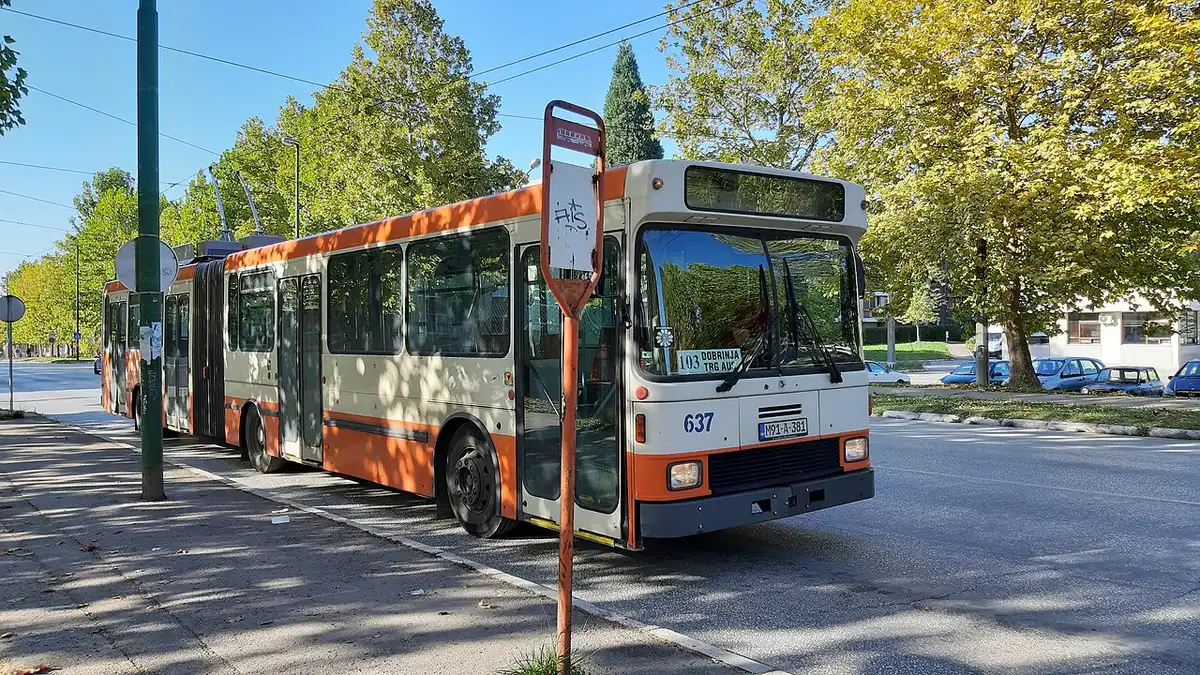
It’s easily solved once you know. A taxi to the old town takes 20 to 30 minutes and costs in the region of 15 to 20 convertible marks; agree the fare or insist on the meter first. If you would rather go cheap, trolleybus 103 runs from near the station toward the centre. None of this is a problem, but arriving at night with no plan, expecting a five-minute walk to your guesthouse, is how people end up overpaying a taxi tout. Budget for the transfer and it’s a non-event.
Driving it yourself: the Drina, Višegrad and the border
If you have a hire car, this is where the trip becomes a pleasure rather than a transfer. The route runs southwest out of Belgrade and then hugs the Drina, the river that marks much of the Serbia-Bosnia frontier, through a long green defile of steep wooded hills. For a good stretch it’s genuinely one of the loveliest drives in this corner of the Balkans, and it explains why the numbers feel off: the straight-line pure driving time is only about four hours, but this is a two-lane mountain road with villages, trucks and switchbacks, so real door-to-door time is more like five to six even without stopping.
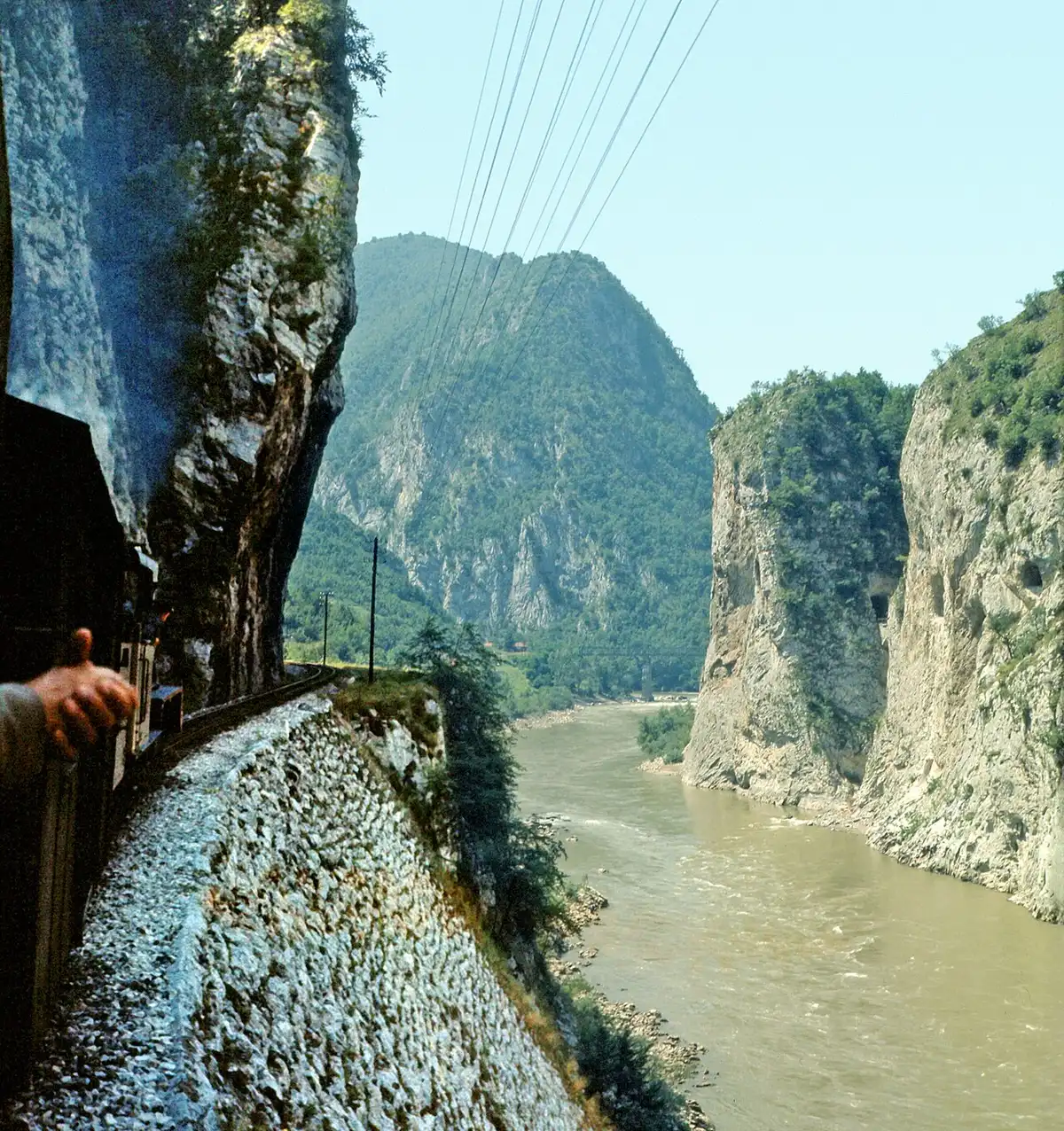
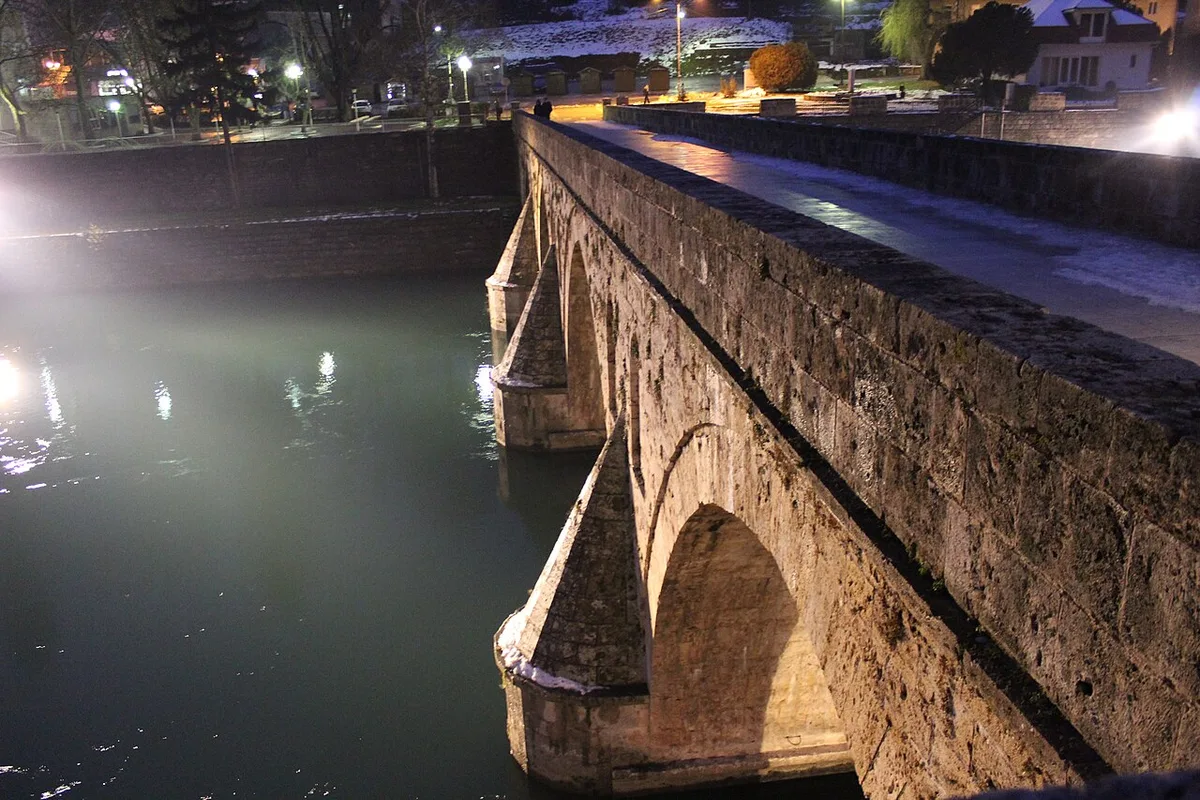
The scenic western line takes you right past Višegrad, home to the UNESCO-listed Mehmed Paša Sokolović Bridge, the sixteenth-century Ottoman span made famous by Ivo Andrić’s novel. It’s an easy and worthwhile stop, a chance to stretch your legs on a monument that has watched this crossing for four hundred years. If you build the drive around it, the trip stops being a slog between capitals and becomes a proper day out.
Two things to sort before you go. First, check your rental contract allows you to cross into Bosnia, and check whether a green card is actually required - Bosnia is inside Serbia’s plate-based insurance agreement, so for a Serbian-registered car it usually is not (the international insurance certificate) from the rental desk for Bosnia and Herzegovina. Cross-border permission is easy to arrange but easy to forget, and being turned back at the frontier for want of a document is a miserable way to lose a morning. If you’re still choosing a car, our guide to picking one up in Belgrade covers deposits, cross-border rules and the practicalities.
Second, the border itself is straightforward but not instant. The good news for 2026 is that the EU’s new Entry/Exit System does not apply here, because neither Serbia nor Bosnia is in the Schengen area, so there’s no biometric registration and none of the queues that have hit the Croatian crossings. Expect a passport check and, in a car, a look at your green card. Waits are typically 5 to 15 minutes out of season and 20 to 40 in summer, longer around religious holidays. Entry is visa-free for citizens of the EU, UK, US, Canada, Australia and many other countries, typically for up to 90 days, but rules vary by nationality, so verify your own status with the Serbian foreign ministry if in doubt.
Flying, and how to choose
Air Serbia flies Belgrade (BEG) to Sarajevo (SJJ) in about 50 minutes, which sounds like the obvious winner until you look closer. The service runs only a few times a week rather than daily, fares start well above the bus, and once you factor in getting to Belgrade’s airport, checking in, and the transfer from Sarajevo’s airport at the far end, the total time advantage over the bus shrinks to almost nothing for a city-centre-to-city-centre journey. It earns its place if the schedule happens to line up with your dates or you simply want to skip the long road, but it’s rarely worth planning a trip around.
So how should you decide? If your priority is cheap and simple, take the bus, ideally the overnight one, and budget a taxi at the East Sarajevo end. If you want to see the country and the Drina, hire a car, sort the green card, and make Višegrad a lunch stop. And only reach for the flight if the timetable is a lucky fit. Whichever you pick, this is one of the more rewarding cross-border legs in the region, so give it a full slot in your plans rather than treating it as dead time, and line up the best things to do in Sarajevo before you set off so you hit the ground knowing where to head.
Planning the Serbian half of the trip first? Our Belgrade to Novi Sad guide covers the fast train north, and if you’re still deciding what to fit in before you head for Bosnia, our roundup of things to do in Belgrade will help you spend those last days well.
Photos
Read also

Transport · 11 min read
Novi Sad to Budapest: Train, Bus & Driving
Verified · September 1, 2026From Novi Sad to Budapest in 2026: FlixBus in 4h45 from EUR 20, drive about 300 km, or Soko train to Subotica then Hungary.

Transport · 10 min read
Belgrade to Istanbul: Bus, Flights & Long Way
Verified · August 26, 2026Belgrade to Istanbul in 2026: coach about 15.5h from €45, flights about 1h45 BEG-IST, no through train. Times, borders and the Sofia relay.

Transport · 11 min read
Belgrade Airport to Novi Sad: Transfer, Bus, Train
Verified · August 23, 2026No direct bus BEG to Novi Sad: a transfer or shared shuttle covers about 90 km in 70 minutes, or take the free airport bus plus the Soko train.

Transport · 12 min read
Belgrade to Kopaonik: Transfers, Bus & Driving
Verified · July 27, 2026Belgrade to Kopaonik is 265-300 km and about 4 hours, 5 in winter. Coach fares, transfer and taxi prices, the two mountain approaches, winter tyre rules.