
Belgrade Public Transport: Free & How to Ride 2026
Belgrade public transport is free in 2026: buses, trams, trolleybuses and city trains, no ticket needed. The one paid catch is the airport minibus.
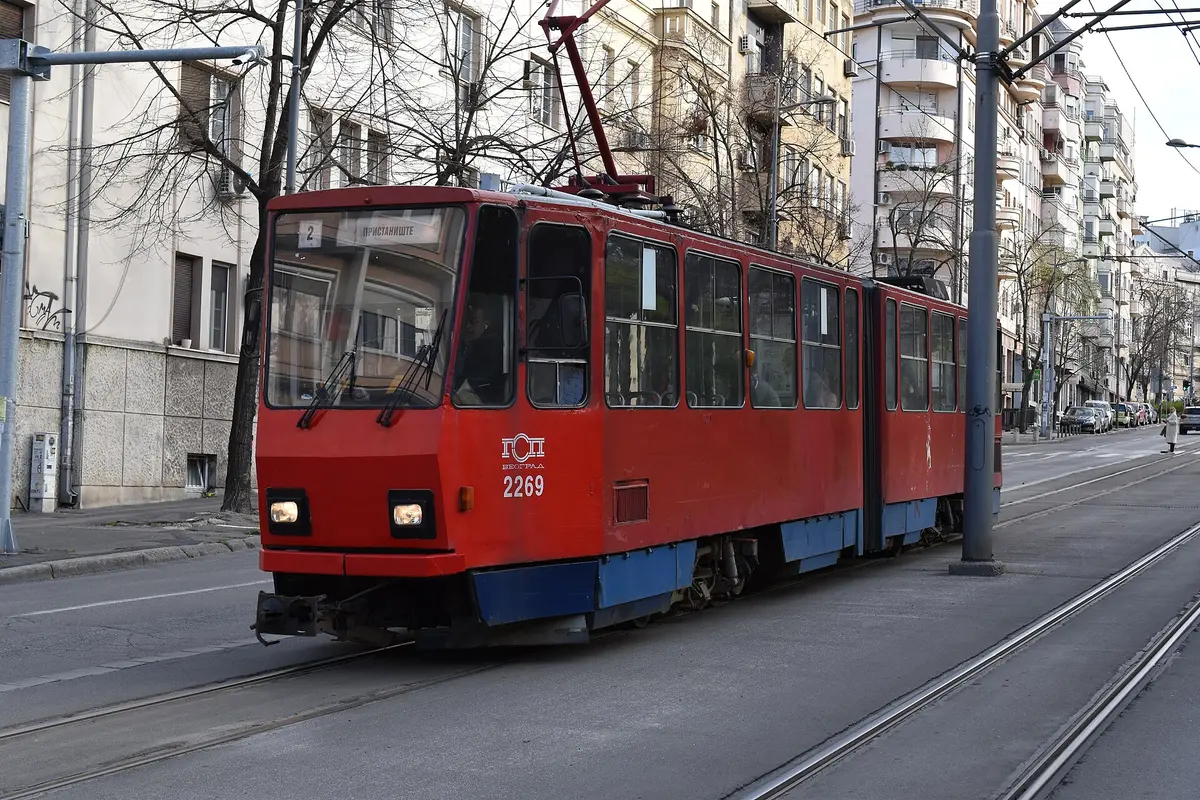
Belgrade public transport is free. Not discounted, not free for residents only, but genuinely free for everyone, tourists included: since 1 January 2025 the city scrapped fares on every regular bus, tram, trolleybus and city train, so you simply get on and ride. There’s no ticket to buy, no card to tap, no app to fumble with at the door. The single thing to watch is that the A1 bus to the airport is not part of this and still costs money, which is exactly the trap that catches new arrivals.
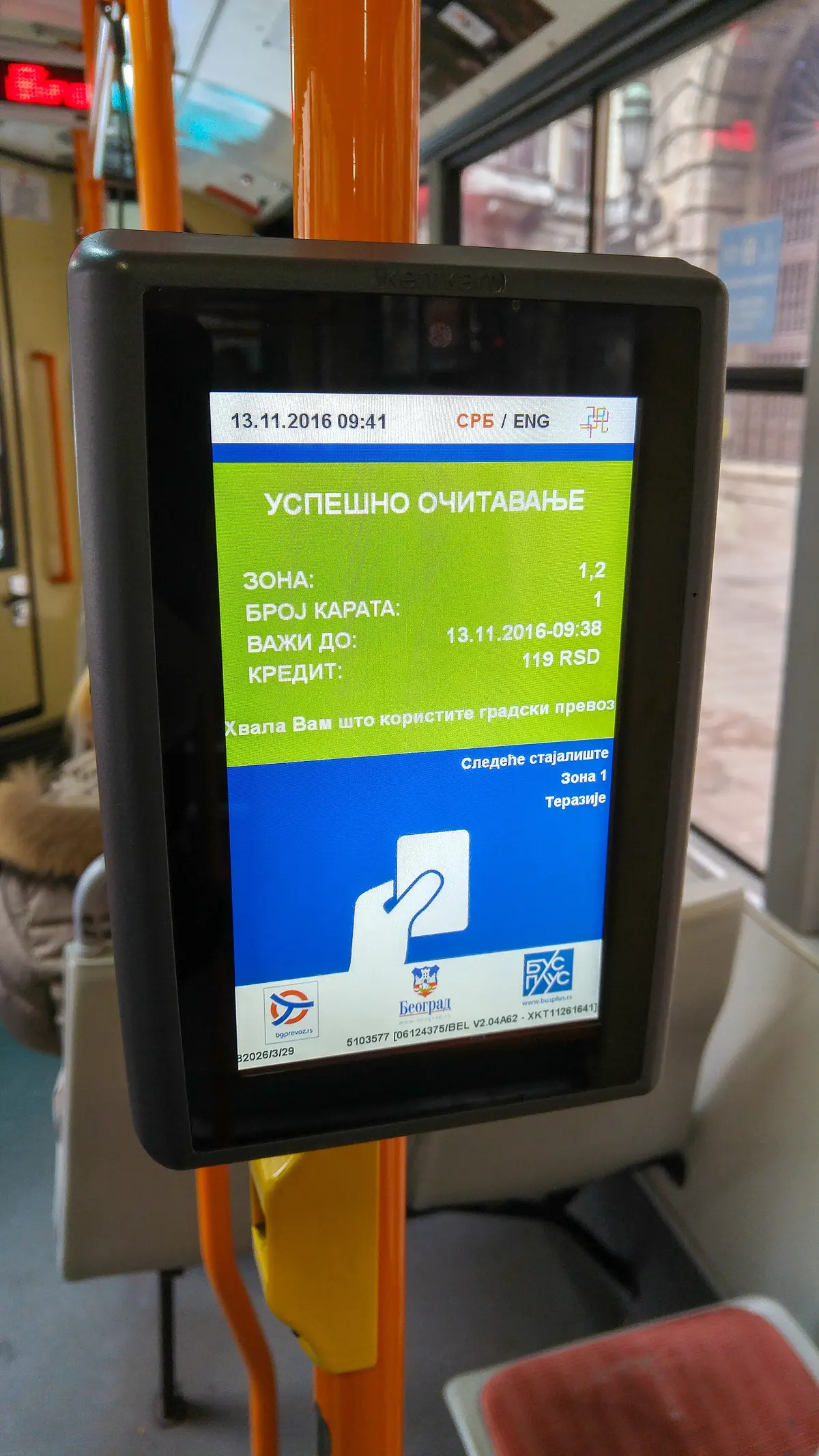
This makes Belgrade one of the easiest big cities anywhere to get around, and it surprises almost everyone who reads an older guidebook first. The city went further than the usual “free on weekends” gesture: it is the largest city in Europe, at roughly 1.7 million people, to drop fares entirely, a decision pushed through by mayor Aleksandar Šapić. The practical upshot is that the ticket validators still bolted inside the trams and trolleybuses now sit dark and ignored. Don’t go hunting for a machine or a kiosk. Just board.
What “free” actually means (and the one exception)
The free fare covers all of the regular city and suburban network: GSP Beograd’s buses, the trams, the trolleybuses, and the BG Voz city train, including the night lines that run after midnight. No proof of payment, no zones to worry about, no fine to fear. For a visitor this quietly removes the single most annoying bit of Belgrade travel that older blogs still describe at length, the old Bus Plus card you had to find, load and validate.
The exception is worth committing to memory, because it is the one that costs people. The special airport service, the A1 minibus between Trg Slavija and Nikola Tesla Airport, isn’t free: it costs 400 dinars a ride, paid to the driver in cash (dinars only), and leaves Slavija roughly every 20 minutes by day (thinning to every hour and a half in the evening, with the last at 01:00), taking around 40 minutes each way. A small set of express minibus lines badged with an “E” (E1, E2, E6, E9) sit outside the free system too, at roughly 200 dinars. Everything else, the buses and trams you will actually use day to day around the centre, costs nothing. If the airport is where your trip starts, our guide to getting from Belgrade Airport to the city centre lays out the A1 bus, the fixed-price taxi voucher kiosks and transfers side by side so you don’t overpay on arrival.
The network: buses, trams, trolleybuses and the BG Voz
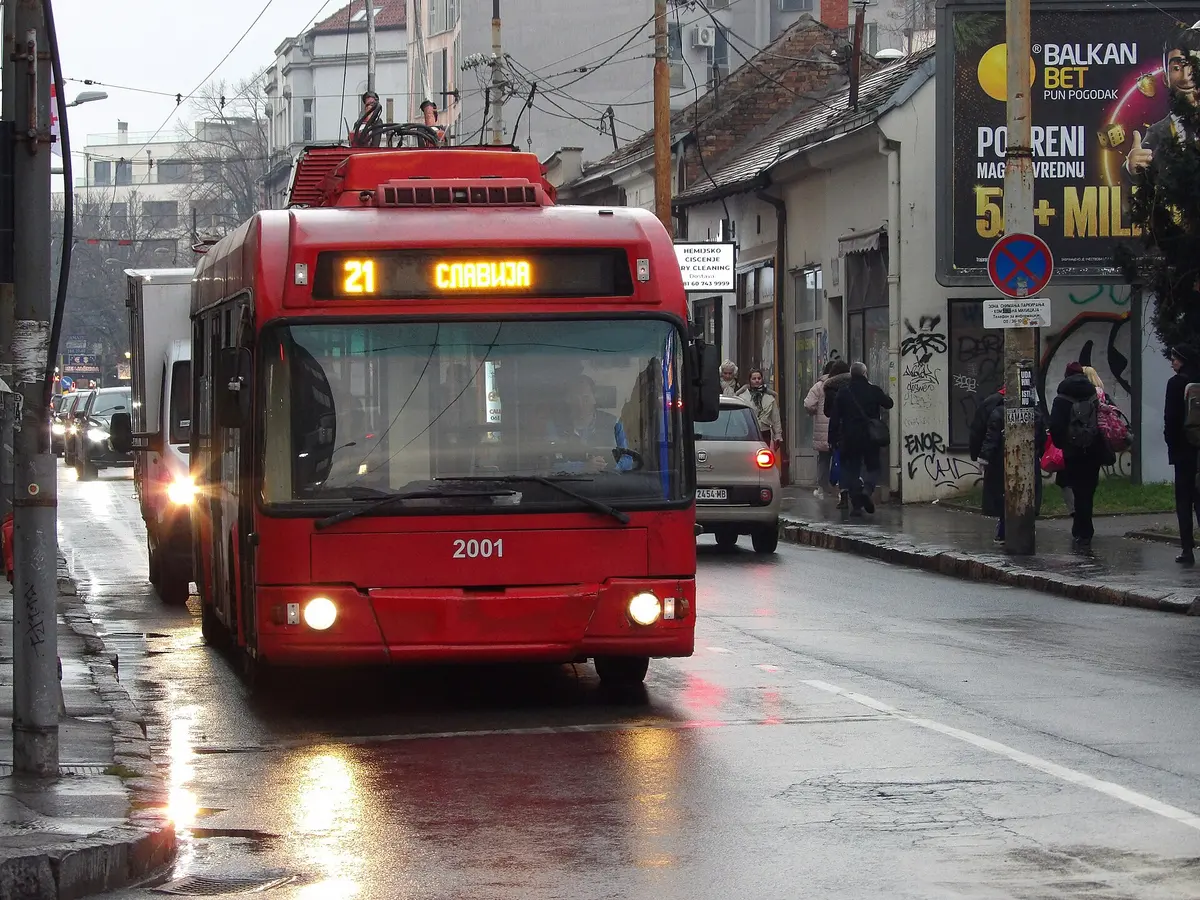
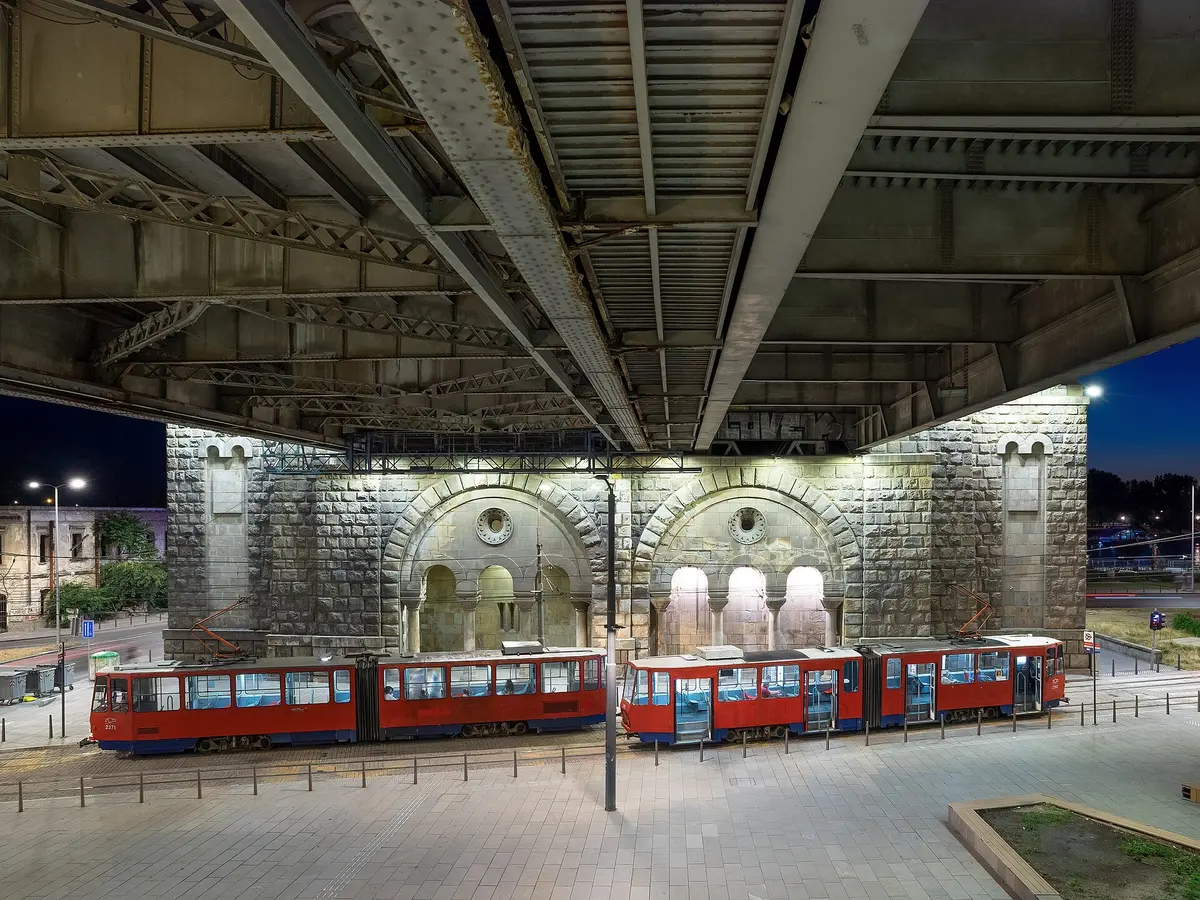
The system is run mainly by the city operator GSP Beograd, alongside a few private carriers, and it is bigger than most visitors expect: well over a hundred bus lines, including around two dozen night routes, plus about a dozen tram lines and a handful of trolleybus routes. Buses go everywhere and are the backbone; trams are slower but handy along the river and through the old centre; trolleybuses fan out to the southern neighbourhoods like Banjica and Konjarnik. One tram is worth riding for its own sake: line 2, the circular “krug dvojke”, loops right around the old-town core past Kalemegdan, Slavija and Vukov Spomenik, so for the price of nothing it doubles as a slow lap of central Belgrade.
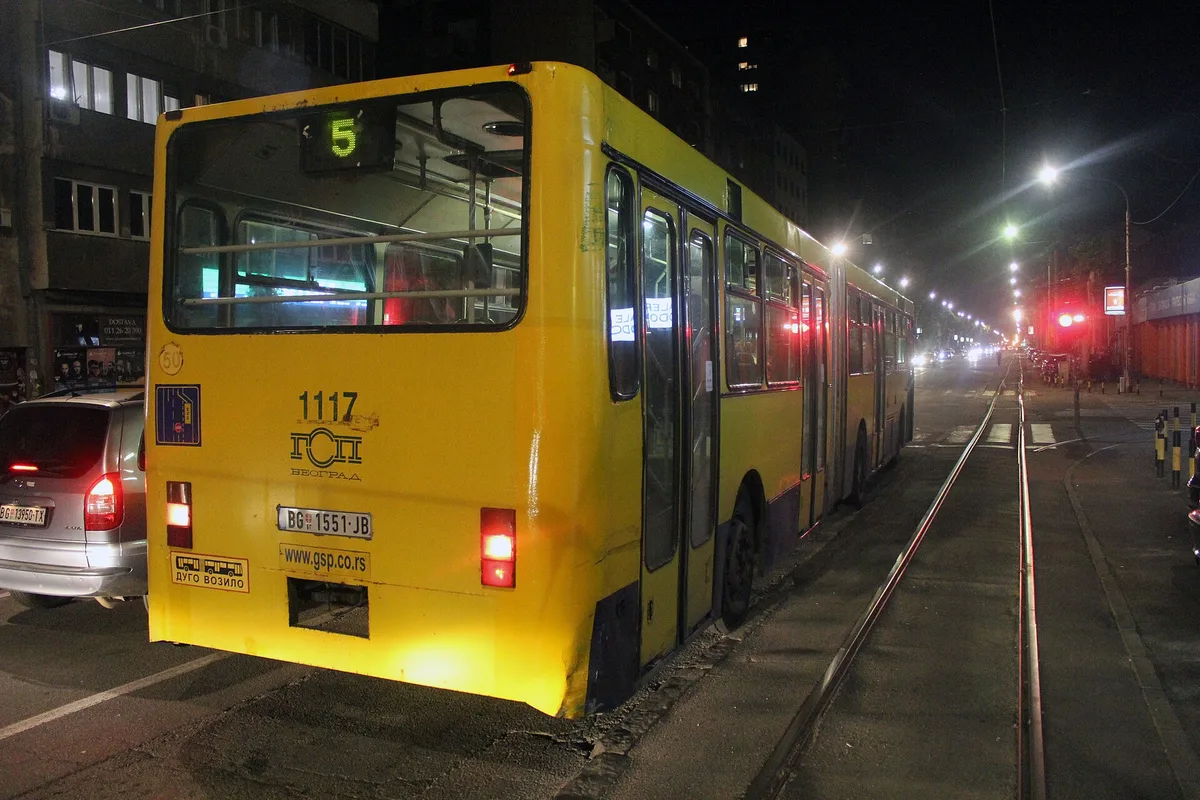
Two honest things about the fleet. It’s a mix of old and new, so one tram might be a smart low-floor CAF and the next a rattling Tatra from another era, and the older vehicles can be hot and crowded at rush hour. And the trams in particular aren’t fast; on many routes through the centre you’ll walk it quicker. The city is midway through renewing the fleet with new buses and trams, but for now, temper your expectations on comfort and speed even as you enjoy the price.
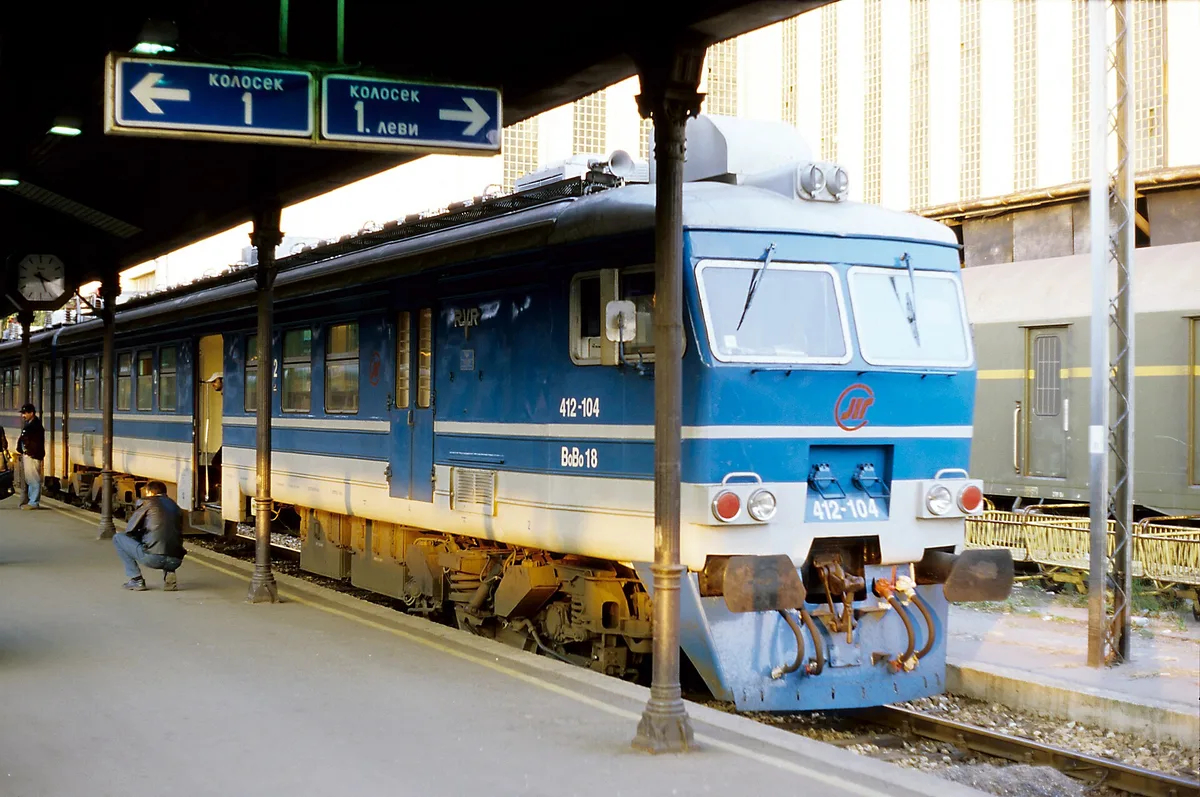
The most underused option for visitors is the BG Voz, the city rail line that works like a light metro, running partly underground through the centre with stops such as Vukov Spomenik and Novi Beograd. There are two routes, and Line 1 is the one you want: it runs the length of the city from Batajnica to Ovča via Beograd Centar, calling at fifteen stations in about 48 minutes, with trains roughly every 15 minutes at the peak and every half hour off-peak, from around 05:30 until about 21:00. Line 2 is shorter and thinner, worth a glance if a journey planner throws it up but not something to build a plan on. It is quick, it dodges the traffic entirely, and it’s free like everything else, yet most tourists never think to use it. If your route lines up with it, it’s often the fastest way across town.
How to actually find your bus
With no ticketing to learn, the only real skill is route-finding, and that is easy. Google Maps has live Belgrade transit directions, and Moovit is the local favourite for real-time arrivals; the official Beograd Plus app shows lines and stops too. Punch in your destination and it tells you which number to catch and where. Line numbers and end destinations are displayed on the front of every vehicle, written in both Cyrillic and Latin script, so even if you can’t read Cyrillic you’ll find the same number and a recognisable place name.
A couple of local habits smooth the ride. Because there’s no fare to validate, people board by any door, which keeps things moving. Daytime services on the main lines are frequent, roughly every few minutes, so you rarely wait long; after about midnight the night lines take over on a thinner timetable, running roughly once an hour and fanning out from a few central hubs like Trg Republike and Slavija, so those are worth checking in the app rather than assuming, since a missed one means a long wait. Keep a hand on the rail: Belgrade drivers are enthusiastic, and the older trams lurch.
What about the metro?
You’ll hear about a Belgrade metro, and it’s finally moving forward: in March 2026 the French firm Alstom signed a contract worth around 915 million euros to build and equip the first automated line. But no line has opened to passengers yet, and it will not help your trip in 2026. For now, the “metro” you actually have is the BG Voz above, plus the surface network. Treat the real metro as a thing to look forward to, not to plan around.
When to skip transit
Free is compelling, but it is not always the right tool. The historic core around Knez Mihailova and Kalemegdan is small and walkable, and you’ll often beat a slow tram on foot. When transit doesn’t reach, or it is late and the night lines are sparse, ride-hailing is cheap and painless; our guide to Belgrade taxi apps covers CarGo and Yandex and how to avoid the airport-taxi sharks. And once you’re heading beyond the city, to Novi Sad, Niš or the mountains, the rules change entirely, which is where our overview of getting around Serbia picks up with the intercity trains, buses and when a hire car earns its keep.
For a city this size, though, the headline is hard to beat: hop on almost anything that rolls past, ride for free, and save the taxi money for a long rakija instead.
Photos
Read also

Transport · 11 min read
Novi Sad to Budapest: Train, Bus & Driving
Verified · September 1, 2026From Novi Sad to Budapest in 2026: FlixBus in 4h45 from EUR 20, drive about 300 km, or Soko train to Subotica then Hungary.

Transport · 10 min read
Belgrade to Istanbul: Bus, Flights & Long Way
Verified · August 26, 2026Belgrade to Istanbul in 2026: coach about 15.5h from €45, flights about 1h45 BEG-IST, no through train. Times, borders and the Sofia relay.

Transport · 11 min read
Belgrade Airport to Novi Sad: Transfer, Bus, Train
Verified · August 23, 2026No direct bus BEG to Novi Sad: a transfer or shared shuttle covers about 90 km in 70 minutes, or take the free airport bus plus the Soko train.

Transport · 12 min read
Belgrade to Kopaonik: Transfers, Bus & Driving
Verified · July 27, 2026Belgrade to Kopaonik is 265-300 km and about 4 hours, 5 in winter. Coach fares, transfer and taxi prices, the two mountain approaches, winter tyre rules.