
Belgrade to Vienna: Train, Bus & Flights
How to get from Belgrade to Vienna in 2026: the bus (about 9 hours, from EUR 25), the 90-minute flight, and why there is still no direct train.
There is no direct train from Belgrade to Vienna in 2026, however much the search results tease one, so your real choices are a direct coach (roughly nine hours, from about €25), a short flight (about 90 minutes in the air on Air Serbia or Austrian Airlines), or a rail workaround that changes trains in Budapest and eats the best part of a day. Most travellers end up on the coach by default, with the flight as the upgrade when time is tight, and the train stays a niche pick for anyone who wants the ride itself to be part of the trip.
The reason a train keeps coming up is that a proper one is genuinely on the way, just not yet. Austria’s ÖBB and Hungary’s MAV have confirmed plans to extend two of their daily Budapest-Vienna trains all the way down to Belgrade, a run of a little over six hours. But the start date is still “sometime in 2026,” it’s not in any timetable you can actually book, and it hangs on the rebuilt Belgrade-Budapest high-speed line finally opening to through traffic, which has slipped repeatedly. Until that happens, plan around the bus and the plane, and treat the direct train as a nice thing to come back for.
The quick verdict
- The default pick: the direct coach. About nine hours (the fastest scheduled runs come in near 8h30), from roughly €25, with around eleven departures a day between FlixBus, Fudeks and FENIKS GiZ. One border stop and no changes.
- Fastest: the flight. Air Serbia and Austrian Airlines fly Belgrade (BEG) to Vienna (VIE) in about 90 minutes, roughly five times a day between them. Add airport time and it’s still half a day rather than a whole one.
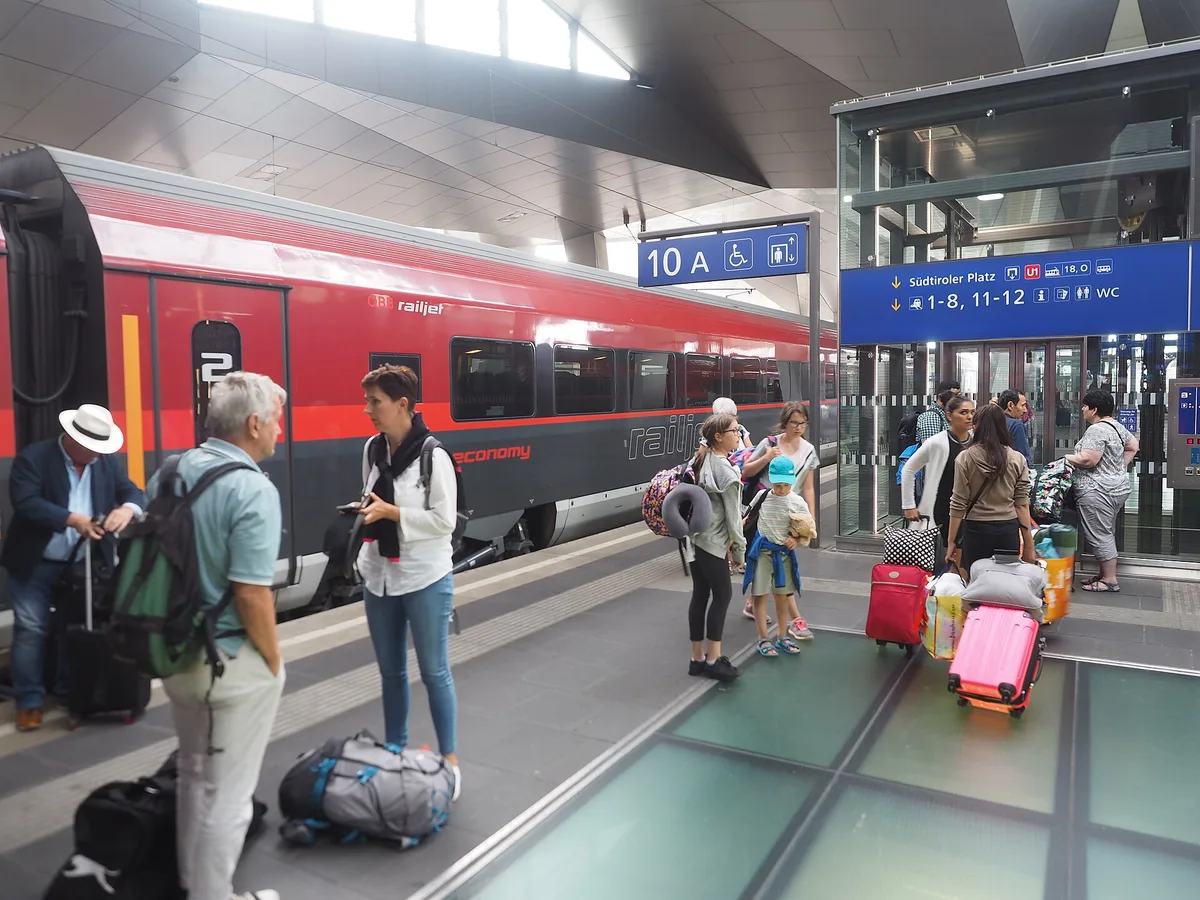
- For rail lovers only: the workaround via Budapest. Fast Soko train, a local across the Hungarian border, then a Railjet on to Vienna: about ten to eleven hours with the change. Lovely if the trains are the treat, daft otherwise.
- Coming, but not here: the direct EuroCity. Promised for 2026 at a little over six hours, twice a day. Not carrying passengers yet, so don’t build a trip around it.
If you just want to be in Vienna without fuss, book a daytime coach or a well-timed flight and stop reading. The rest is for weighing the options and understanding exactly where that much-hyped direct train has got to.
The train everyone is searching for (and why it isn’t here yet)
This is the part that trips people up, so it’s worth getting straight. In November 2025, ÖBB told the Serbian outlet N1 that, together with MAV, it plans to run trains 144 and 148 through from Belgrade via Budapest to Vienna once the line allows it, with two departures a day in each direction and a headline time of just over six hours. That would turn a whole-day slog into a comfortable single-seat ride, and it’s a real plan, not a rumour.
What it’s not, yet, is a service you can catch. The Belgrade-to-Vienna trains depend entirely on the rebuilt Belgrade-Budapest high-speed railway opening to cross-border passenger traffic, and that has been delayed again and again while the ETCS signalling is certified on both sides. The concrete is finished and Serbian officials keep calling the line “done,” but a completed track and a bookable ticket are two very different milestones, and only the first one has actually arrived. The shared first leg, and the current state of play on the through service, is covered in full in our Belgrade to Budapest guide. Until the express opens, any blog promising a direct Belgrade-Vienna train today is running on wishful thinking.
The coach: eleven a day and no fuss
Three operators cover this corridor between them, FlixBus, Fudeks and FENIKS GiZ, and together they put roughly eleven departures a day on the road, spread from early morning to late at night, enough that choosing a daytime run over an overnight sleeper is really just a matter of preference. Not all of those eleven are equal, though: the fastest scheduled services come in around 8h30 to 8h45, while some routings wander through extra towns and stretch past twelve hours for a lower fare, so don’t book on price alone - you’ll want to read the journey time first. Expect fares from around €25, climbing into the €60-70 range at peak times and short notice - still cheaper than almost any flight.
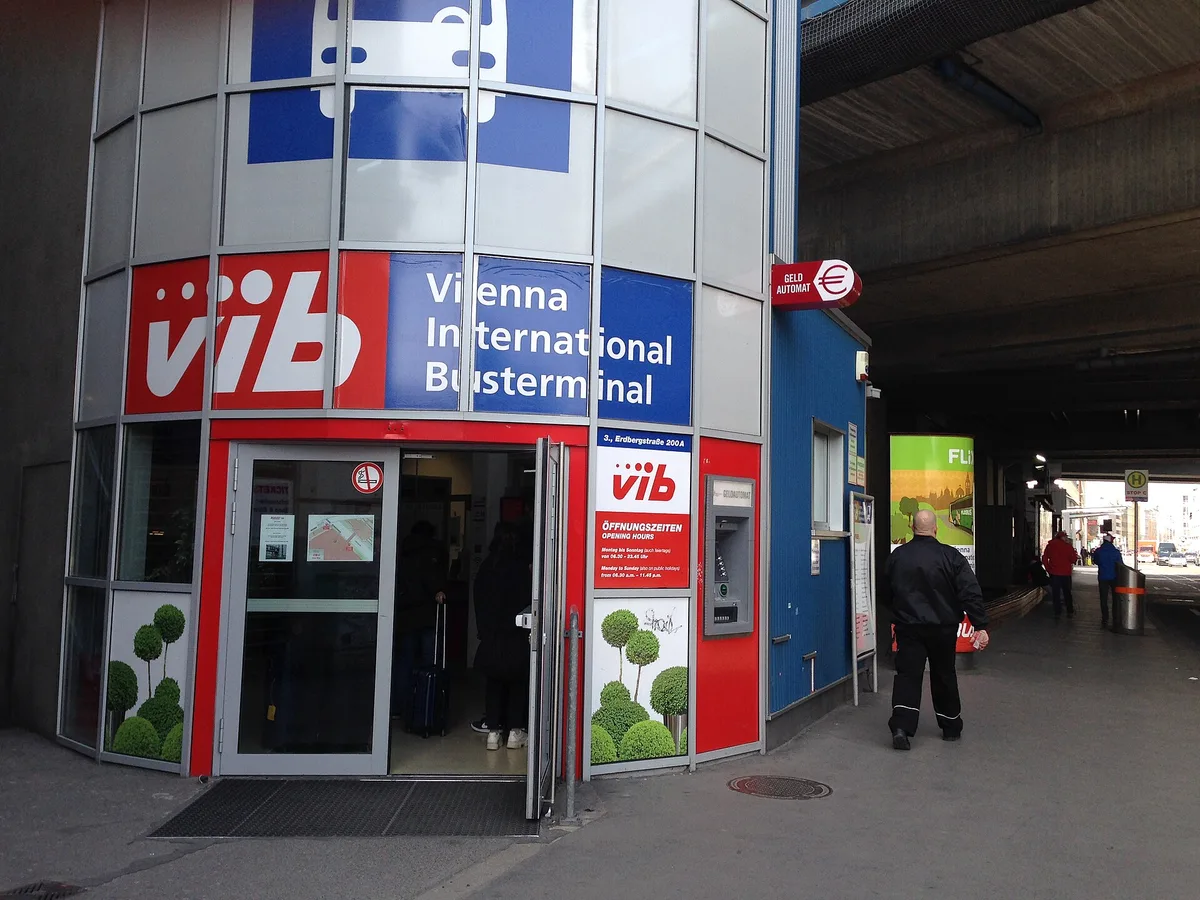
Covering about 607 km, this is a route where the border is the one variable no timetable controls. The departure point itself needs an update if you last checked a while back: Belgrade’s main bus station (BAS) has operated out of New Belgrade (Block 42), across the Sava, since 2024, and the old riverside building some maps still list no longer exists. A small quirk catches first-timers too - reaching the platforms costs a station fee of around 300 dinars in cash, paid separately from your ticket at the counter, so keep a few coins handy. At the Vienna end, most services pull into the Vienna International Busterminal (VIB) at Erdberg, on the U3 metro, with some continuing on to the Hauptbahnhof.
You’ll cross two borders on this run, though only the first one bites. Leaving Serbia at the Horgoš-Röszke crossing into Hungary means a passport check for everyone and, in summer, a vehicle search that can run long - budget an extra hour on a busy August weekend, since it’s the same crossing shared with the Belgrade-Budapest coach further down this corridor. Once you’re inside Hungary, the Hungary-Austria leg is internal Schengen and the bus doesn’t even slow down. Carry your passport somewhere you can reach it without digging through the hold, and leave slack around any connection booked right after the bus arrives. One local detail worth knowing: this is also the route Austria’s large Serbian community uses to get home for holidays and long weekends, so overnight departures around public holidays fill up days in advance. Want to skip the Belgrade-end logistics entirely, especially arriving straight off a flight with bags? A fixed-price transfer takes the guesswork out of it.
The flight: fastest, and a hub at the far end
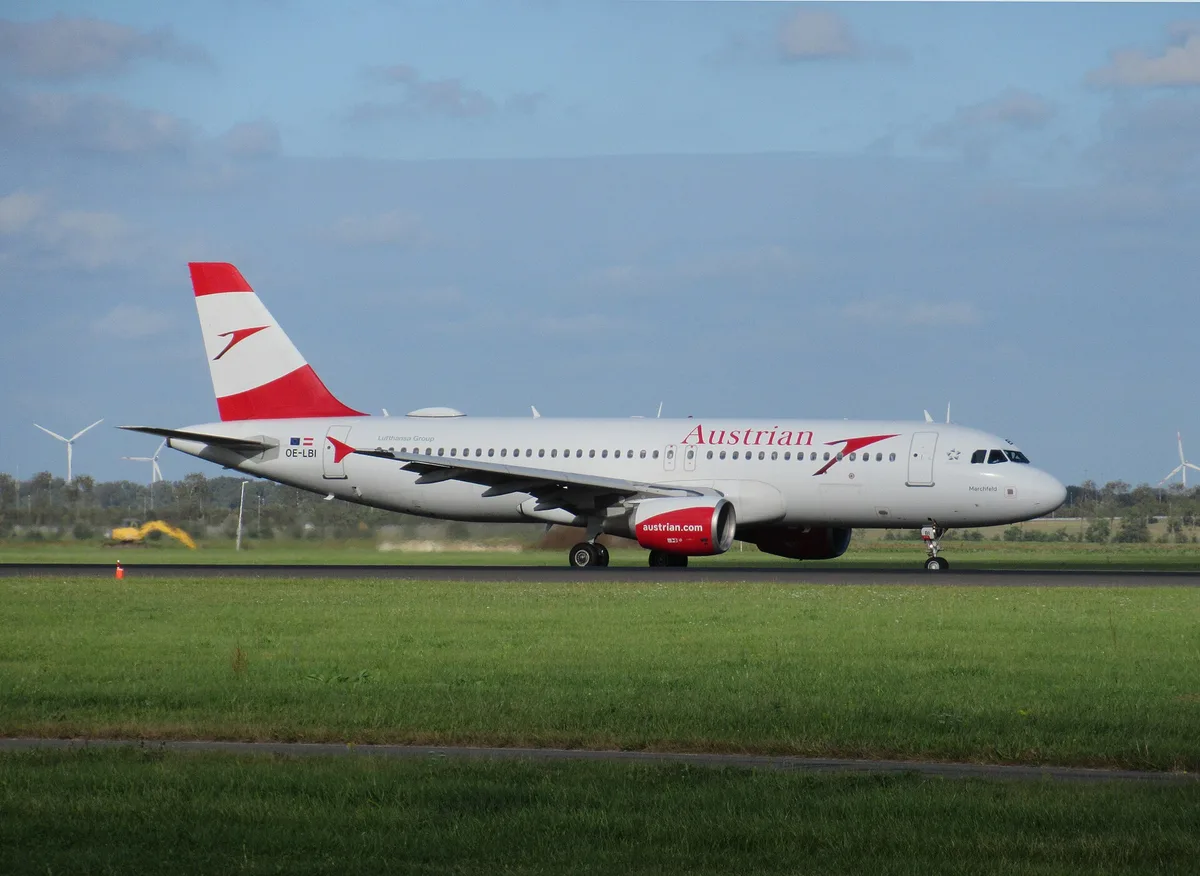
Vienna is the one Belgrade route with two airlines competing head-to-head: Air Serbia and Austrian Airlines both fly Belgrade (BEG) to Vienna (VIE) nonstop, about 90 minutes in the air, with roughly five departures a day between them from early morning to evening. That competition helps keep fares reasonable - they start around $79 - and a flight booked with a little notice can beat a bad-traffic day on the coach once you put a price on the hours it saves.
Two things worth knowing before you book. The 90-minute flight time flatters the trip: once you count reaching Nikola Tesla airport, clearing security and the ride from Vienna’s airport into town, the real door-to-door figure runs close to double that, which is exactly what our Belgrade Airport to city centre guide is for. On the upside, Vienna offers something Budapest can’t on this corridor - Austrian’s Star Alliance hub sits right there, so the same flight works neatly as the opening leg of a longer trip if you’re connecting onward rather than stopping in the city.
The rail workaround: for enthusiasts, until the direct train opens
Rail is still possible end to end here, provided you don’t mind assembling the trip yourself one ticket at a time. Four legs make up the chain: the 200 km/h Soko fast train north from Beograd Centar as far as Subotica, a local hop over the frontier into Szeged in Hungary, a Hungarian InterCity on to Budapest, and finally a Railjet or EuroCity for the last stretch into Vienna. The Serbian and Hungarian legs to Budapest run around seven hours from roughly €26; the polished Budapest-Vienna stretch adds about 2h40 from €19.90 in second class. Stitch in the waits between connections and you’re looking at ten to eleven hours all told.
A few practical notes if you do go this way: the cross-border legs are often easier bought in person at the station than assumed online, so don’t rely on every ticket being app-bookable; build in generous margins between changes so one late train doesn’t wreck the next connection; and confirm that day’s Soko departure on the Srbija Voz site before you travel, since the timetable moves with the season. The Soko line and the rest of the domestic network are covered in more depth in our getting around Serbia guide. The moment the direct EuroCity opens, this whole relay becomes pointless overnight, which is exactly why it’s one for people who want the trains to be the holiday.
So which should you book?
The direct coach is the right default for nearly every trip here: cheap, frequent, one seat, and nothing to plan around beyond the border queue. Choose the flight with Air Serbia or Austrian when the fare looks good and Vienna time matters more than motorway time, or when the onward connection through the airport is the whole point. Take the Soko-and-Budapest rail route only if riding the trains is the reason you’re travelling. And whatever you do, don’t wait on the direct express: it’s a real plan for 2026, but it’s not carrying passengers yet, and the line it depends on has a long history of “nearly there.” If Vienna is your first stop in the region, our overview of how to get to Serbia is worth a look for planning the trip in reverse.
Photos
Read also

Transport · 11 min read
Novi Sad to Budapest: Train, Bus & Driving
Verified · September 1, 2026From Novi Sad to Budapest in 2026: FlixBus in 4h45 from EUR 20, drive about 300 km, or Soko train to Subotica then Hungary.

Transport · 10 min read
Belgrade to Istanbul: Bus, Flights & Long Way
Verified · August 26, 2026Belgrade to Istanbul in 2026: coach about 15.5h from €45, flights about 1h45 BEG-IST, no through train. Times, borders and the Sofia relay.

Transport · 11 min read
Belgrade Airport to Novi Sad: Transfer, Bus, Train
Verified · August 23, 2026No direct bus BEG to Novi Sad: a transfer or shared shuttle covers about 90 km in 70 minutes, or take the free airport bus plus the Soko train.

Transport · 12 min read
Belgrade to Kopaonik: Transfers, Bus & Driving
Verified · July 27, 2026Belgrade to Kopaonik is 265-300 km and about 4 hours, 5 in winter. Coach fares, transfer and taxi prices, the two mountain approaches, winter tyre rules.