
Šargan Eight: Serbia's Heritage Railway
Ride the Šargan Eight (Šarganska osmica) narrow-gauge railway at Mokra Gora: the figure-eight loop, tickets, timetable and Kusturica's Drvengrad.
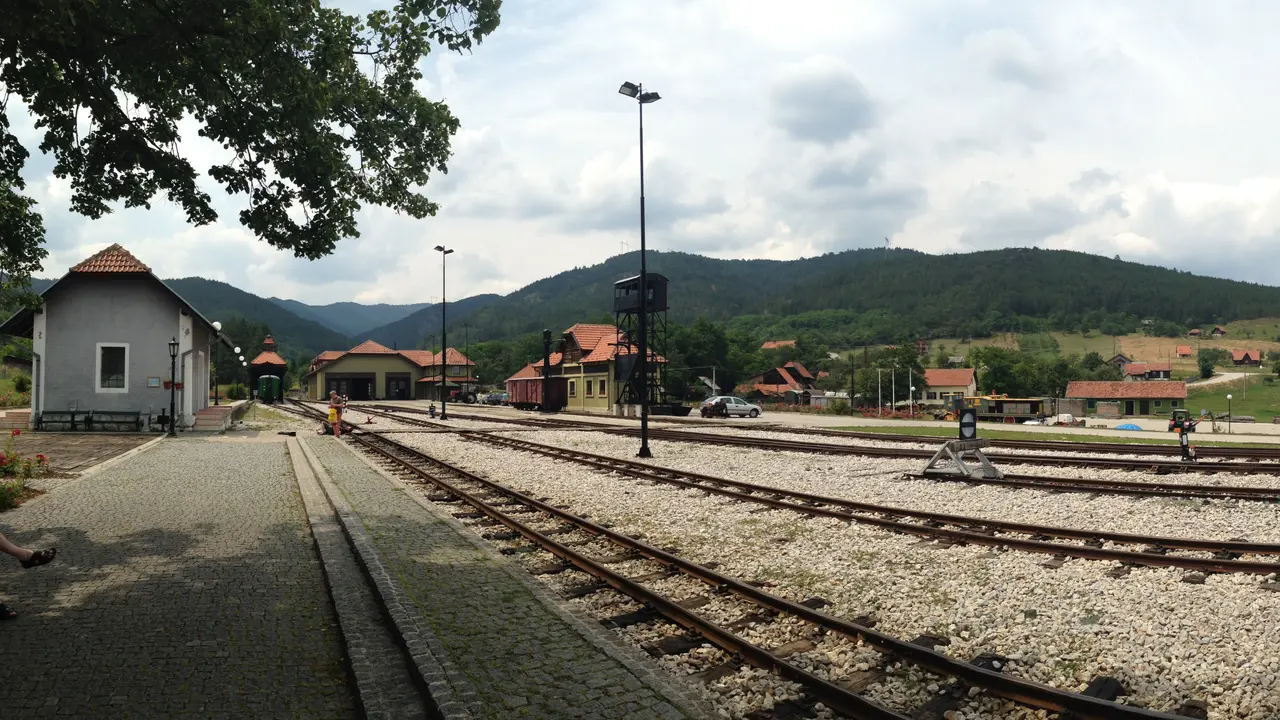
The Šargan Eight is a restored 760 mm narrow-gauge railway at Mokra Gora in western Serbia, and its trick is right there in the name: to climb a mountainside far too steep for a normal railway, the track ties itself into a giant figure of eight, looping back over its own path to gain height. A vintage train hauls you around that loop through 22 tunnels and over a string of viaducts, and the whole thing sits a short hop from Zlatibor and Emir Kusturica’s wooden village of Drvengrad. It’s one of the most enjoyable half-days in the country - part scenery, part engineering marvel, part film set.
Below we get into what the ride actually is, how the eight works, what it costs and when it runs in 2026, and why you should build a Mokra Gora day around it rather than just the train.
What the Šargan Eight is
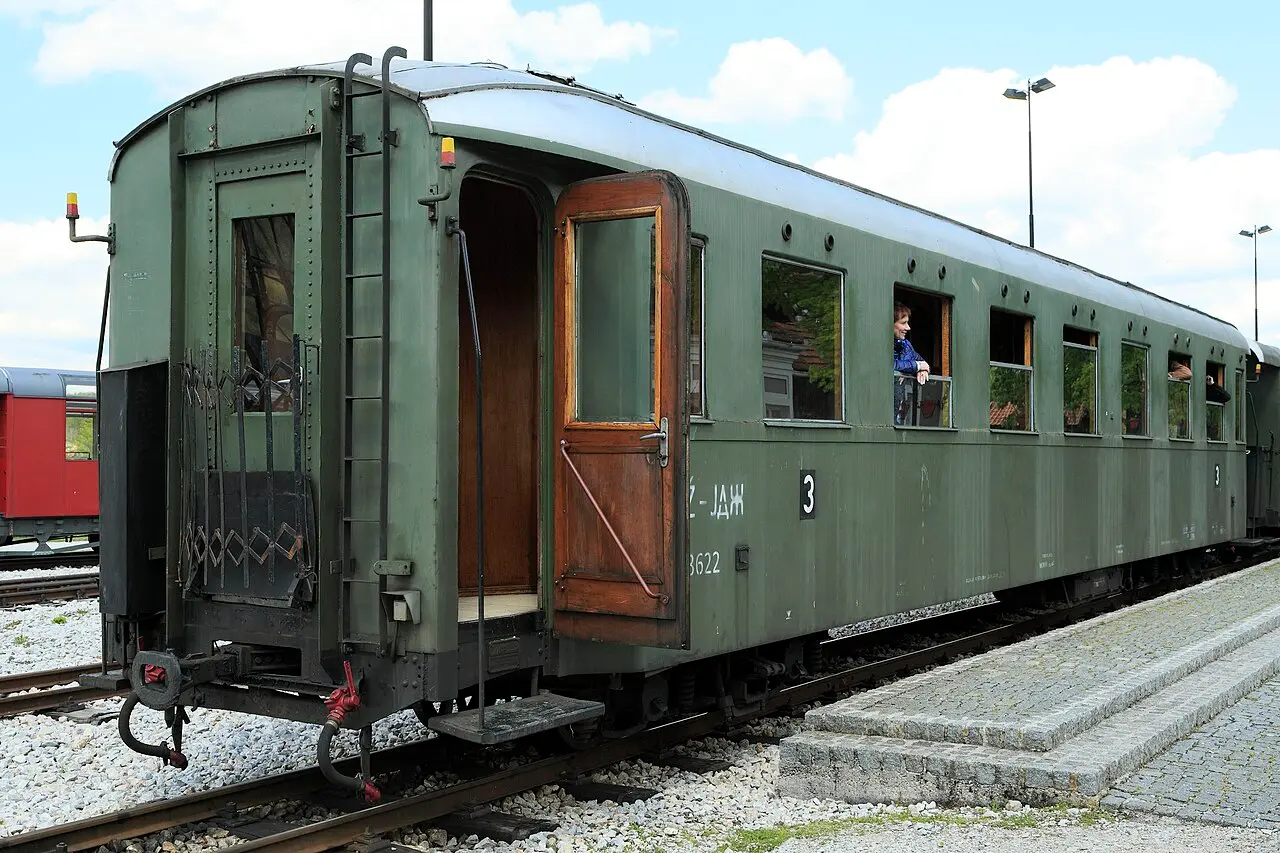
Picture a toy-sized railway - the track is just 76 centimetres wide, the so-called Bosnian gauge - running a roughly 15.5 km loop between the stations of Mokra Gora and Šargan-Vitasi. It’s not a means of getting anywhere any more; it’s a heritage line run purely for the ride, with restored locomotives and old wooden carriages, and the point is the journey itself, not the destination.
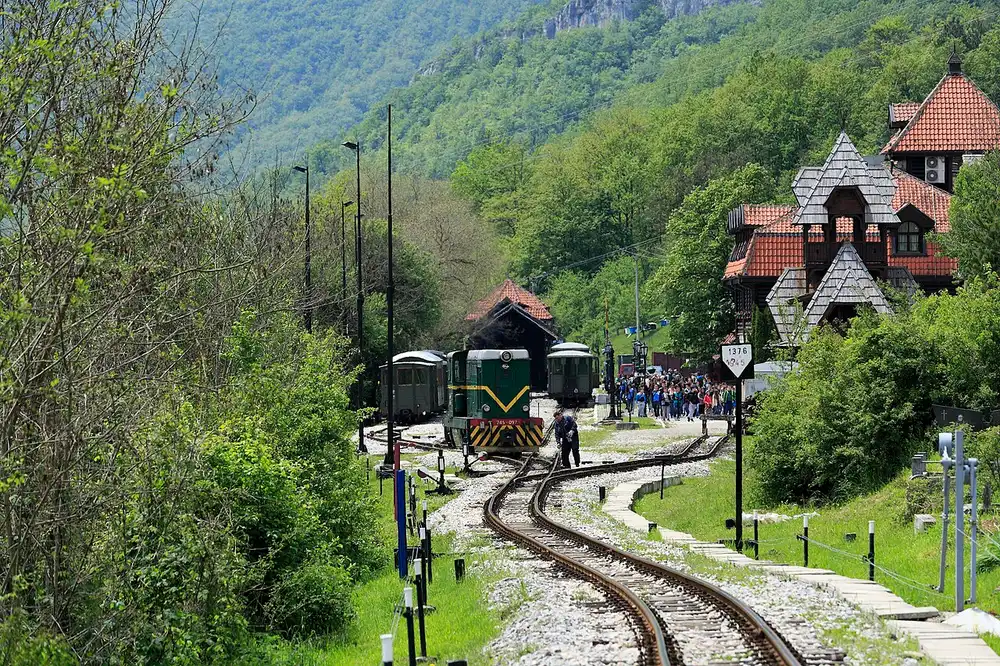
The reason it exists at all is more interesting than most heritage railways. This stretch was once part of the old narrow-gauge line that linked Belgrade with Sarajevo, threading through Užice and Višegrad, and the section over the Šargan pass was the single hardest piece of the whole route to build. Construction dragged across two eras - begun during the First World War, resumed in 1921 - and the first train finally got through in January 1925. The line served for decades until narrow gauge fell out of use and it was closed in 1974. It sat abandoned until it was rebuilt as a tourist attraction and reopened in 2003, which is the railway you ride today.
How the figure-eight works
The clever bit is a problem of geography. Between Mokra Gora and the top of the pass, the railway has to gain something like 300 metres of height over a very short horizontal distance - a gradient a conventional train simply can’t pull. You can’t build a steep straight line up a mountain and expect an old locomotive to climb it. So the engineers did the next best thing: they made the track longer to make the climb gentler, curling the route into the shape of a number 8 so it doubles back over itself, crossing above its own lower level, and gains altitude in a long, looping spiral instead of a brutal straight haul.
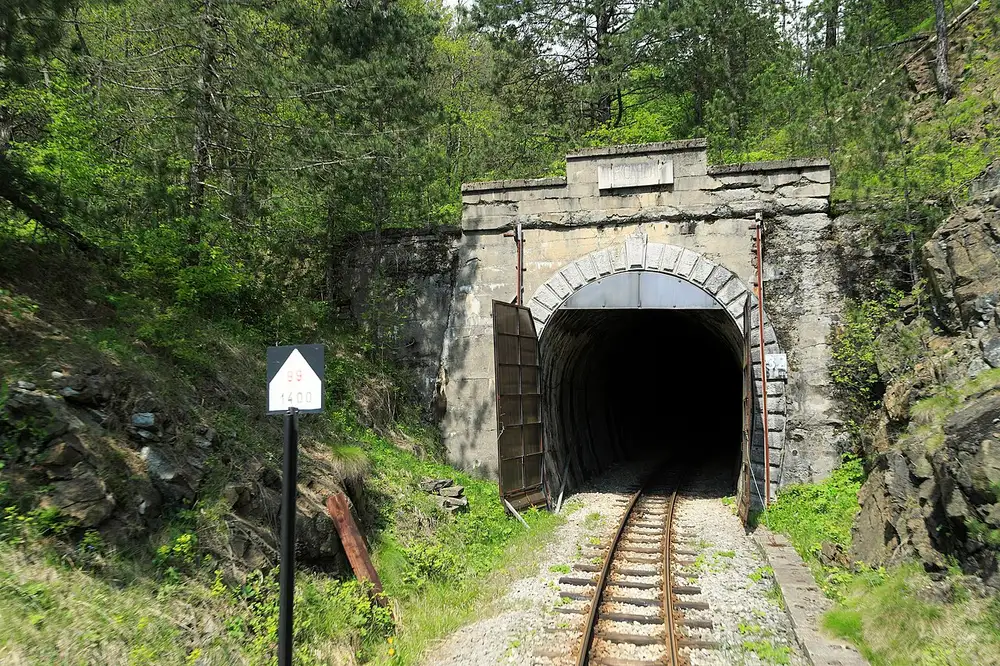
The result is a genuine piece of mountain engineering packed into a small space: 22 tunnels and five larger bridges and viaducts along the way, with the longest tunnel running about 1,666 metres. As the train works its way up, you get the strange, delightful sensation of looking down on a bit of track you rolled along a few minutes earlier. It’s the kind of thing that’s hard to picture from a description and obvious the moment you’re on board.
The train pauses at little stations and viewpoints along the way - Jatare, Golubići, Šargan-Vitasi - so it’s a stop-start ride with time to get out, take photos and stretch, rather than a straight-through commute. Count on the full round trip taking around two and a half to three hours, photo stops included.
Tickets, timetable and how to ride it in 2026
The line is operated by Serbian Railways under the “Nostalgija” heritage-train branding. The operator’s 2026 announcement gives departures from Mokra Gora at 10:30 and 13:30 daily from 28 March through 31 October, with an extra 16:10 departure from 15 June through 1 September. From 1 to 15 November, a shorter Mokra Gora-Jatare service is announced at 11:45, with a 13:30 run when demand warrants it. Confirm the current schedule before building a day around the train.
On price, at the time of writing a diesel-hauled return between Mokra Gora and Šargan-Vitasi is in the region of 1,500 dinars for adults and 750 for children over six, with under-sixes free if they don’t take up a seat. Steam-hauled runs are dearer at 2,200 and 1,100 dinars, and the through run from Mokra Gora to Višegrad in Bosnia is also 2,200. Fares change, so check before you go.
Two practical tips make or break the day. Book ahead in peak summer: seats on the vintage carriages are limited and the popular midday departures sell out, especially in July and August and at weekends. And get there early for your slot, because the station car park and the little cluster of cafés fill up fast when a tour-bus crowd arrives. Tickets come from the Mokra Gora station ticket office or authorised agencies, and you can reserve through the railway in advance.
If the logistics of getting yourself out to this corner of the country feel fiddly, an organised tour is a genuinely sensible option here - plenty run from Belgrade and from Zlatibor, bundling the train ride with Drvengrad and the drive, so you skip the car and the ticket scramble entirely.
Drvengrad: Kusturica’s wooden village next door
Don’t do the train and drive straight off, because the other half of the Mokra Gora experience is a five-minute hop away. Drvengrad - also called Küstendorf or Mećavnik - is the timber village that film director Emir Kusturica built on the hill above the railway as the set for Life Is a Miracle and then kept as a permanent retreat, complete with cobbled lanes, a gallery, a cinema and a small Orthodox church. Together the train and the village fill a satisfying half to full day, and our full guide to Drvengrad, Kusturica’s wooden village covers its story, the streets named after directors and the winter Küstendorf festival.
Making a trip of it
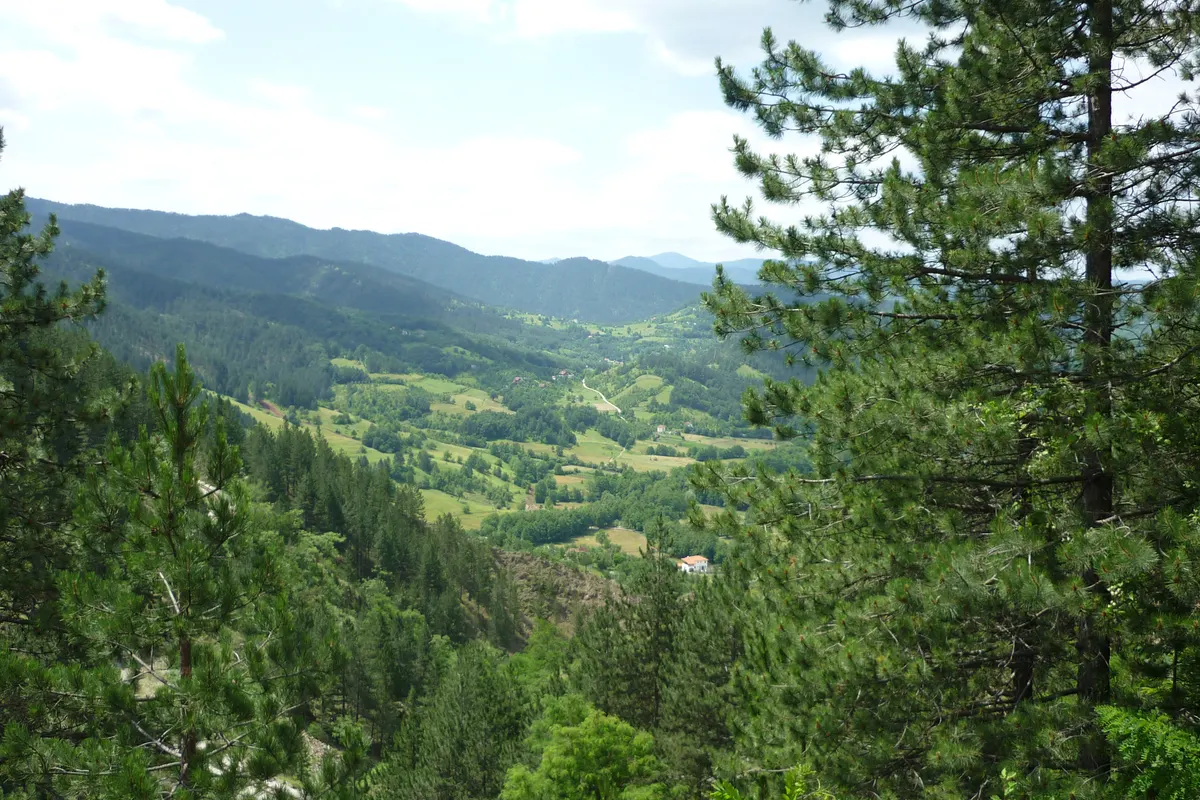
Mokra Gora is tucked into the far west of Serbia, and while it’s doable as a very long day trip from Belgrade - reckon on around 243 km and three to three and a half hours each way by the usual road through Užice - it makes far more sense as part of a wider western Serbia loop. The obvious base is Zlatibor, 40 km away according to the Šargan-Mokra Gora Nature Park, with hotels, restaurants and spas; our guide to getting from Belgrade to Zlatibor covers reaching that base by bus or car. From there the region opens up: the Drina canyon and the viewpoints of Tara National Park are close by, the meandering Uvac Canyon with its griffon vultures is a day trip to the southeast, and this whole corner strings together into an easy two- or three-day road trip.
If you’re coming from the capital, our guide to things to do in Belgrade covers the city end of the journey, and if you’d rather chase big rivers and fortresses on the other side of the country, the Iron Gate gorge and Golubač Fortress on the Danube make the natural eastern counterpart to Mokra Gora’s mountains. Wherever you slot it in, the Šargan Eight earns its place - few train rides anywhere are this much fun for this little effort.
Photos
On the map
The map loads on click - to keep the page lightweight.
The map didn’t load. Check your connection and refresh the page.
Admission and opening hours
- Admission price
- Diesel-hauled return, Mokra Gora-Šargan Vitasi-Mokra Gora: around 1,500 RSD adults, 750 RSD children (6+); under-6 free without a seat. Steam runs cost more.
- Opening hours
- 2026 season: 10:30 and 13:30 daily from 28 March through 31 October; 16:10 also runs from 15 June through 1 September. A shorter Mokra Gora-Jatare service is announced for 1-15 November.
The 2026 schedule comes from a Srbijavoz announcement; confirm current service and book ahead in peak summer.
Details checked: August 6, 2026
Distance ≈243 km · ~3-3.5 h by car
- Belgrade ≈243 km · ~3-3.5 h by car E763 motorway toward Užice, then on to Mokra Gora - an overnight or a long day trip, best paired with Zlatibor or Tara.
Read also

What to see · 10 min read
Fruska Gora Monasteries: Which to Visit
Verified · September 3, 2026Sixteen preserved Orthodox monasteries on Fruska Gora: Krusedol, Novo Hopovo, Grgeteg and Vrdnik, plus dress code and a day route from Novi Sad.

What to see · 9 min read
Viminacium: Rome and Mammoths near Belgrade
Verified · September 3, 2026Roman Viminacium near Kostolac: adult tickets 1,050 RSD, hours by season, last tour two hours before close, and why the mammoth park is shut.

What to see · 12 min read
Vinca: The Neolithic Site on Belgrade's Doorstep
Verified · August 29, 2026Vinca's Belo Brdo site is 14 km downstream from Belgrade (16 km by road): 2026 hours, tickets, what the small museum shows, and how to get there.

What to see · 10 min read
Skull Tower of Niš: Story, Tickets, Visiting Tips
Verified · August 25, 2026Ćele Kula in Niš: 1809 Battle of Čegar, chapel hours, 300 RSD tickets and how to visit respectfully from the centre or INI airport.