
Western Serbia Loop: Zlatibor, Tara and the Drina (4 Days)
A 4-day western Serbia road trip from Belgrade: Valjevo, Zlatibor, the Sargan Eight, Drvengrad, Tara and the Banjska Stena viewpoint over the Drina.
Four days is the sweet spot for western Serbia: enough to reach the far mountains without the trip becoming one long drive, and enough to slow down where it counts. This loop runs from Belgrade out to the Zlatibor plateau, across to the toy-train switchbacks at Mokra Gora, up to the Drina canyon in Tara National Park, and back through Uzice, covering roughly 570 km. It takes in the single best natural view in the country, the most photographed cabin in the Balkans and a narrow-gauge railway that loops back over its own track, and none of it involves an early alarm or a checklist. Short on time? The Valjevo and Divcibare escape covers the same first leg over two days.
The new A2 “Milos Veliki” motorway is what makes it work in four days rather than five. Until recently the drive southwest from Belgrade was a slow crawl on a two-lane road; now the motorway carries you most of the way to Uzice at speed, which buys you the time to linger at the viewpoints instead of the wheel. You’ll want your own car for this. Buses reach Zlatibor and Uzice, but the whole point of the west is the stuff between the towns - a viewpoint down a forest track, a riverbank pull-off, a village that no timetable stops at - and that only works on wheels. Our guide to car rental in Serbia covers deposits, tolls and why nearly every car here’s a manual.
Is a western Serbia road trip worth four days?
Yes, and the reason is variety packed into a small area. Within a two-hour radius of Zlatibor you get a mountain resort with spas and cured ham, a heritage railway, an ethno-village built by a film director, a canyon that rivals anything in the Balkans, and a lonely wooden house on a rock that went around the world on the internet. It’s the most scenic corner of a country most people only see the flat, urban half of.
Four days is the honest number. Three is a rush that turns the best day into a drive-through; five lets you add the Uvac canyon and its vulture-haunted meanders to the south, which is a genuinely good extension if you have the time - our Uvac, Zlatar and Mileševa loop covers that extension as its own two-day trip. But four gives each headline its due: two nights on Zlatibor as a comfortable base, a full day for Mokra Gora, and a slow morning at the Drina before the run home. If you would rather not drive at all, plenty of operators run the same highlights as day tours from Zlatibor, but you’ll see them on their clock, not yours.
Day one: Belgrade to Zlatibor, by way of Valjevo
Leave Belgrade after breakfast and break the drive at Valjevo, about an hour and a half out. Most people blow straight past it, which is a small mistake. Its old quarter, Tesnjar, is one of the few 19th-century craft streets left intact in Serbia - a cobbled run of low houses and workshops that still smells faintly of a market town, good for a coffee and a stretch.
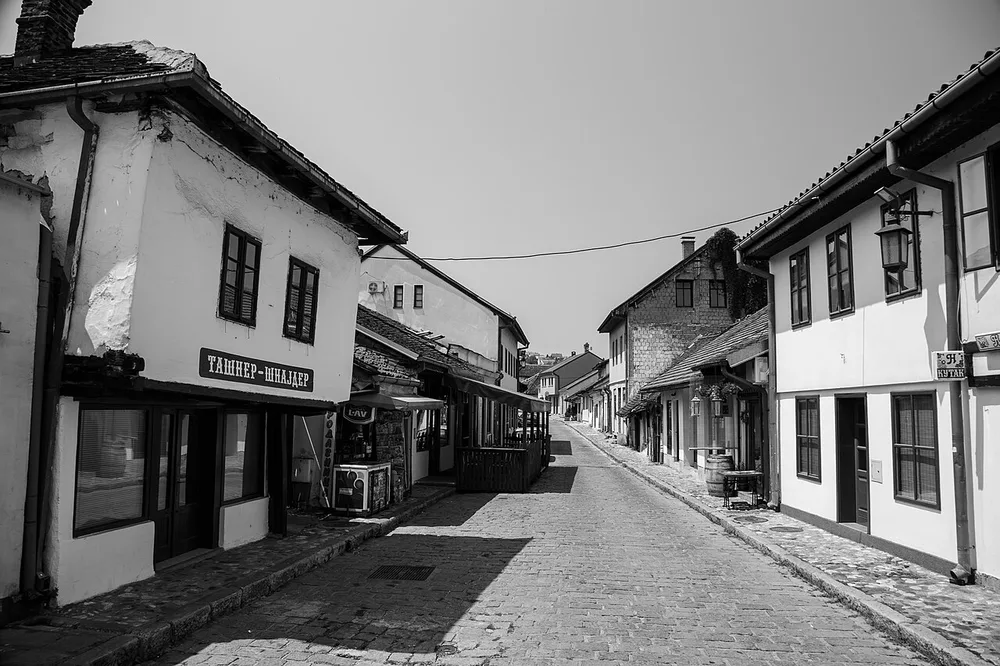
If you like your history dark, find Muselim’s Residence, the oldest building in town: in its cellar the local dukes Aleksa Nenadovic and Ilija Bircanin were imprisoned before being beheaded in February 1804, the killing that helped trigger the First Serbian Uprising. Our Valjevo city guide covers that museum and the rest of the old quarter in full if a coffee stop turns into a longer look. From Valjevo it’s another couple of hours through Kosjeric and Uzice up onto the plateau to Zlatibor, your base for the next two nights.
Zlatibor is a proper little resort town rather than a cluster of huts - hotels, spas, a lakeside promenade and some of the best cured ham and cheese in the country. If it’s not too late when you arrive, ride the Gold Gondola, which at 9 km is the longest panoramic cable car in the world; it climbs from the centre to the 1,496 m summit of Tornik in about 25 minutes and the view over the rolling plateau is the gentle warm-up act for the drama to come. Our Zlatibor guide covers the gondola, Stopica Cave and the Sirogojno open-air museum, and where to stay in Zlatibor sorts out the beds.
Day two: Mokra Gora, Drvengrad and the Sargan Eight
Day two is the one people remember, and it’s a short drive: about half an hour down off the plateau to Mokra Gora. Book your train seats before you leave the hotel, because this is the single most popular thing in western Serbia and the midday departures sell out in July and August.
The Sargan Eight (Sarganska osmica) is a restored narrow-gauge railway that ties itself into a giant figure of eight to climb a mountainside far too steep for a normal train, and the odd delight of the ride is looking down on a stretch of track you rolled along ten minutes earlier. Count on two and a half to three hours for the round trip and a diesel-hauled return around 1,500 dinars, and check the current timetable in our full Sargan Eight guide before you build the day around it.
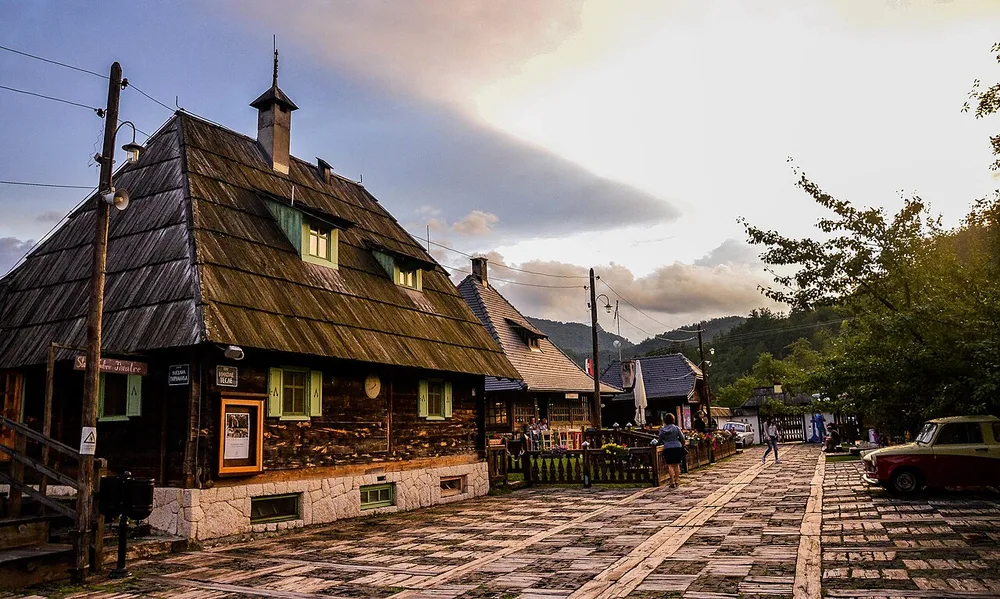
Don’t drive off after the train, because the other half of Mokra Gora is a five-minute hop uphill. Drvengrad - “Timber Town,” also called Kustendorf - is the wooden village the director Emir Kusturica built in 2003 to 2004 as a film set and then kept as a cultural retreat. Its cobbled lanes are named after directors, there’s a cinema and a small Orthodox church, and each winter it hosts the anti-glitz Kustendorf film festival. An hour of wandering is the right dose. Our Drvengrad guide tells the full story. Drive back to Zlatibor for a second night, or push on to a guesthouse near Bajina Basta if you would rather wake up by the river.
Day three: Tara and the Drina canyon
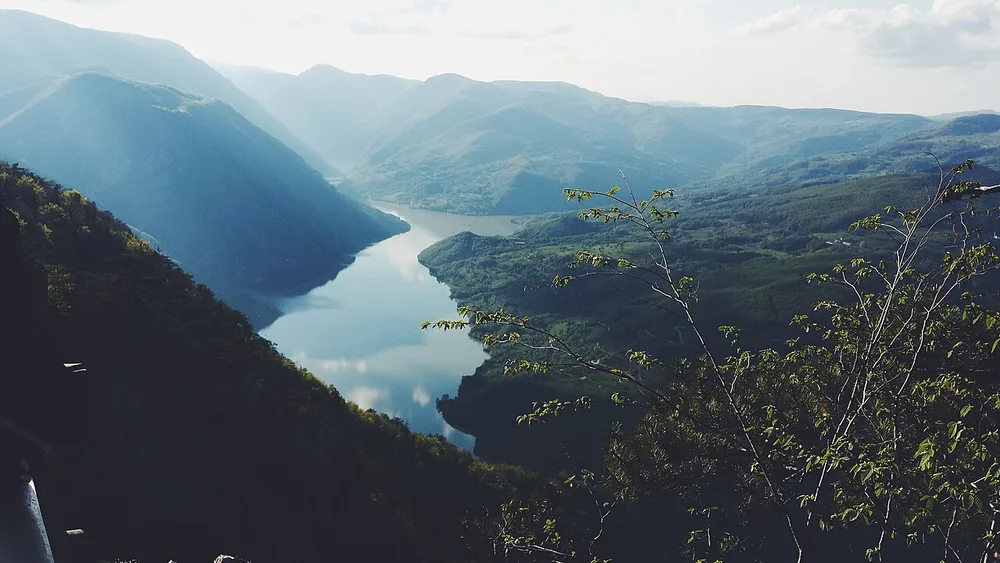
This is the day the country changes shape. From Zlatibor it’s about an hour northwest onto the high, forested plateau of Tara National Park, and the one place to point the car is Banjska Stena. It’s a bare rock ledge that looks straight down, roughly 500 m, onto Lake Perucac and the emerald horseshoe of the Drina. There’s no gentle argument about it: this is the finest natural viewpoint in Serbia, and the last few kilometres of forest track are worth the jolts. The plateau around you is cloaked in the slender Serbian spruce, a conifer that grows wild almost nowhere else. The full Tara National Park guide covers the hiking and the lesser-known viewpoints if you want to stay longer.
Then drop down to the river at Perucac and Bajina Basta, home to two of the loop’s small wonders that sit a short drive apart on the Drina. The Drina River House is a modest timber cabin balanced on a rock in the middle of the river, first thrown up by a gang of local teenagers in 1968 and rebuilt roughly seven times since whenever the Drina swept it off; the current cabin dates from 2011. The free viewpoint on the Serbian bank is where every famous photo is taken - come in low light and mind the water level. Ten minutes upstream at Perucac, by the dam, runs the Vrelo, a stream so short (about 365 m from spring to waterfall) that locals nicknamed it the “Year River” and you can walk its whole length in a few minutes. From Perucac, local boatmen also run trips up the canyon on the lake. Our Drina River House guide explains how to see it and why it keeps washing away. Sleep near Bajina Basta or back on Zlatibor.
Day four: Uzice and the road home
Save an easy last morning for Uzice, the biggest city of the west and a genuine surprise. The old fortress clings to a cliff above the Detinja river gorge right at the edge of town, first recorded in the 14th century and later held by the Ottomans. Directly below it sits the reason engineers make the pilgrimage: the “Pod Gradom” hydroelectric plant, built on the Detinja in 1900 on Nikola Tesla’s alternating-current principles and among the first plants of its kind in Europe - and, remarkably, still generating. It’s a fitting bookend to a trip through the country that produced Tesla.
From Uzice the A2 motorway carries you the roughly 195 km back to Belgrade in a little over two hours. One honest caveat: in summer the motorway into the capital clogs on Sunday evening with returning weekenders, so leave Uzice by mid-afternoon or have an early dinner and drive back after the rush. Get your times from our Belgrade to Zlatibor guide if you want to reverse a leg by bus.
Practical notes for the loop
A few things worth knowing before you set off:
- The car and the tolls. The A2 “Milos Veliki” motorway (E763) is fast and tolled by distance - there’s no vignette, you take a ticket and pay at the barrier or use an ENP tag. Keep a card handy. Most Serbian rentals are manual; ask for an automatic when you book if you need one.
- Mountain roads once you leave the motorway. The stretches up to Zlatibor, across to Tara and down to the Drina are two-lane and winding, not hard but slower than the map suggests. Reckon on real driving time being longer than the kilometres imply, and do the forest tracks in daylight.
- Book the train, and go midweek if you can. Seats on the Sargan Eight are limited and the July-August weekend crowds are real; a Tuesday in June is a different, quieter trip from a Saturday in August.
- When to go. Late spring to early autumn is the window - the plateau is greenest and the Sargan Eight is in season, though the heritage timetable shifts every year, so check the dates before you plan a shoulder-season trip. Midsummer works but gets hot and busy; September is arguably the sweet spot, with warm days, thinner crowds and the first turn of colour on Tara.
That’s the loop: a craft street, the world’s longest panoramic gondola, a train that climbs in a figure of eight, the best view in the country and a stubborn little house on a rock - four days, about 570 km, and the half of Serbia the motorway crowd never turns off for. Browse more ideas in the routes section, and start day one early enough to give the west the slow pace it rewards.
Route day by day
- Days on the road
- 4
- Distance
- ≈570 km
- Budget from
- 220 EUR
- Best season
- April, May, June, July, August, September, October
The route at a glance
-
Belgrade
Route startstop ≈0 min
Start point. Pick up the car, cross the Sava and pick up the A2 "Milos Veliki" motorway (E763) heading southwest.
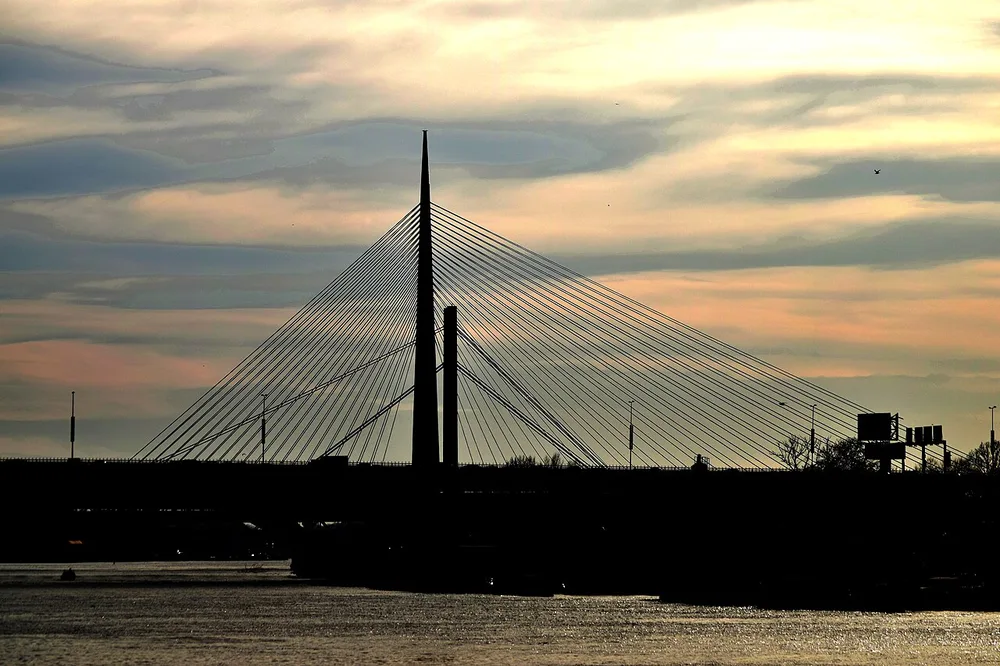
Photo: Miomir Magdevski / Wikimedia Commons, CC BY-SA 4.0 ( source) -
Valjevo
101 km from the startstop ≈90 min
Coffee stop in Tesnjar, the cobbled 19th-century craft quarter, and a look at the Muselim Residence, where two Serbian dukes were held before their execution in 1804.
Photo: Thruserbia / Wikimedia Commons, CC BY-SA 4.0 ( source) -
Zlatibor
205 km from the startstop ≈0 min
Base for nights one and two. A resort plateau just over 1,000 m: ride the Gold Gondola, the longest panoramic cable car in the world, up to Tornik peak.
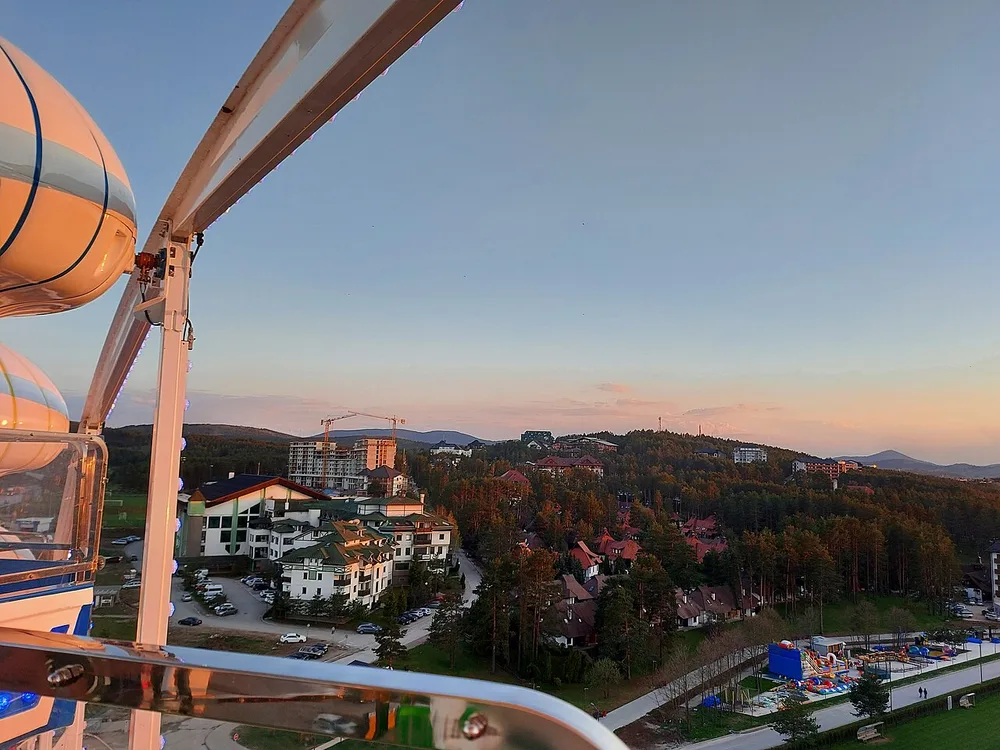
Photo: Gzanag / Wikimedia Commons, CC BY-SA 4.0 ( source) -
Mokra Gora (Drvengrad & Sargan Eight)
235 km from the startstop ≈240 min
Ride the Sargan Eight, the narrow-gauge railway that ties itself into a figure of eight to climb the pass, then walk the timber village of Drvengrad that Emir Kusturica built next door.
Photo: DioloDiolo / Wikimedia Commons, CC BY-SA 4.0 ( source) -
Tara National Park: Banjska Stena
290 km from the startstop ≈120 min
The Banjska Stena viewpoint drops sheer to Lake Perucac and the Drina canyon, roughly 500 m below - the finest natural view in Serbia. Endemic Serbian spruce cloaks the plateau.
Photo: Ana Starcevic / Wikimedia Commons, CC BY-SA 4.0 ( source) -
Perucac & the Drina River House
320 km from the startstop ≈90 min
Down by Bajina Basta: the tiny cabin marooned on a rock mid-river, the "Year River" Vrelo that runs just 365 m, and boat trips into the Drina canyon from Perucac lake.
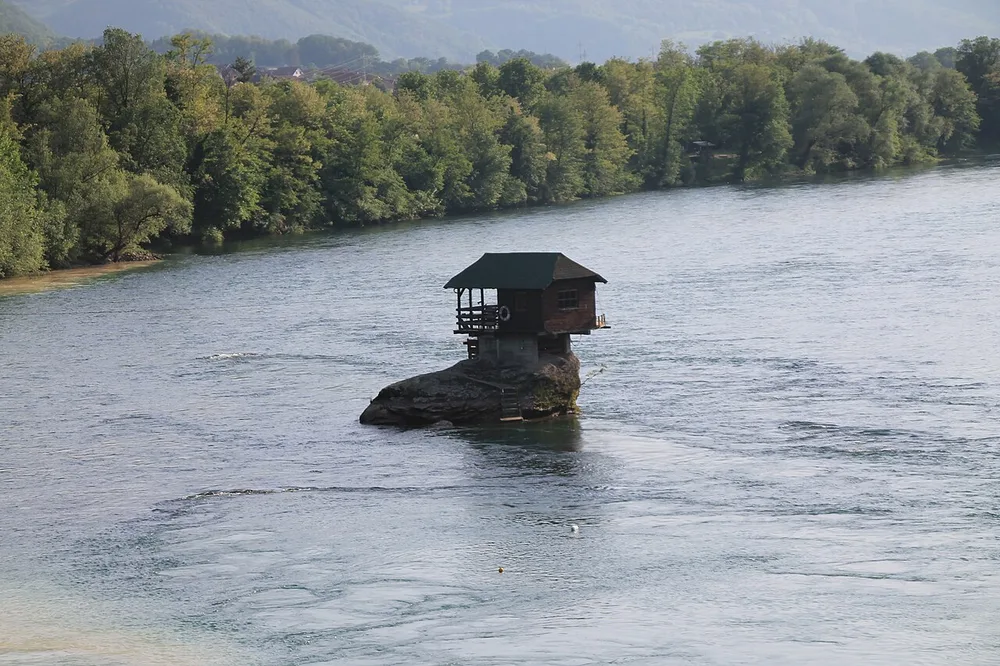
Photo: Vanilica / Wikimedia Commons, CC BY-SA 4.0 ( source) -
Uzice
375 km from the startstop ≈90 min
The biggest city of the west: the old fortress on a cliff above the Detinja gorge, and below it the 1900 hydro plant built on Nikola Tesla principles, still running.
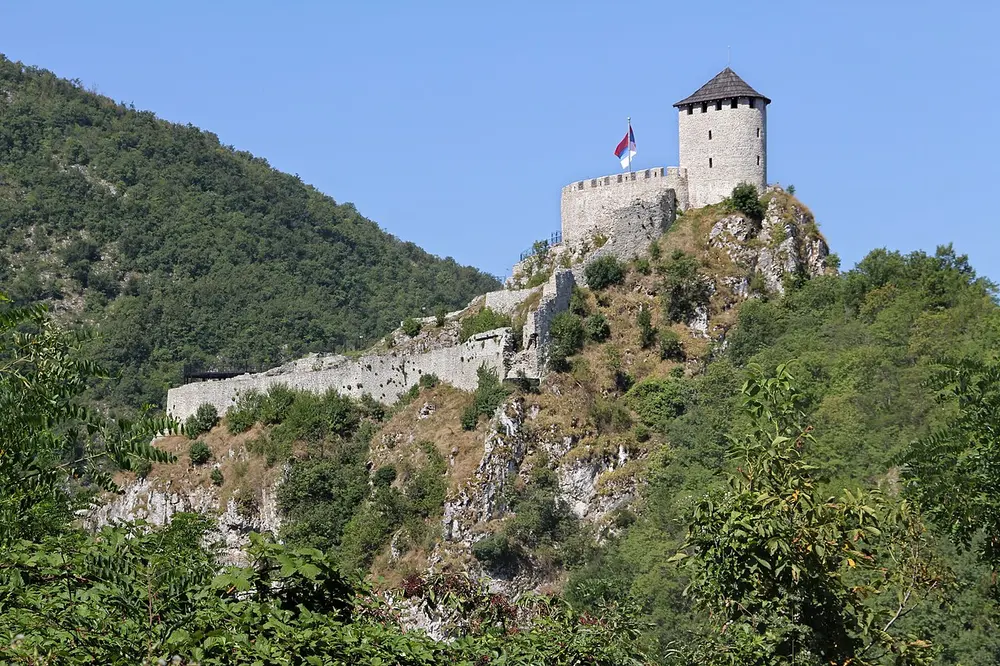
Photo: BrankaVV / Wikimedia Commons, CC BY-SA 4.0 ( source) -
Back to Belgrade
570 km from the startstop ≈0 min
From Uzice it is about 195 km back up the A2 to Belgrade, roughly two and a quarter hours if you miss the Sunday-evening rush.
Route map
The map with stops loads on click - to keep the page lightweight.
The map didn’t load. Check your connection and refresh the page.