
Uvac Canyon: Meanders & Griffon Vultures
Uvac canyon, Serbia: the famous river meanders, the Balkans' biggest griffon vulture colony, the boat cruise and Ice Cave, and how to visit from Zlatibor.
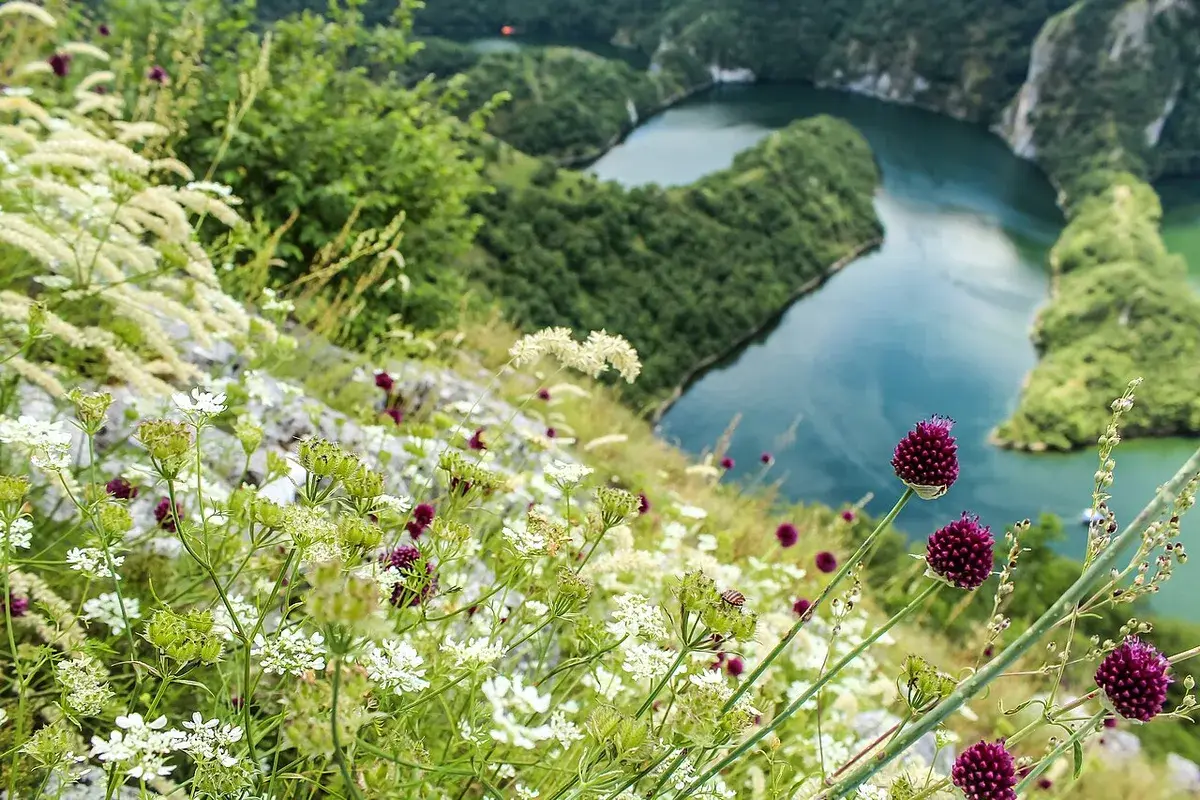
Uvac is the sight that launched a thousand Serbian postcards: a river that loops back on itself in tight, dizzying meanders, carving a limestone canyon in the southwest of the country, with the largest colony of griffon vultures in the Balkans wheeling overhead. It is a protected nature reserve rather than a town or a single lookout, and the way you see it’s a combination of three things - a clifftop viewpoint over the bends, a boat cruise along the water, and a walk into the Ice Cave in the canyon wall. Most people do all of it on a day tour from nearby Zlatibor. This guide explains what Uvac actually is, what the visit involves, and how to reach a place that has no easy public transport of its own.
The short version, if you are deciding whether to go: this is one of the most spectacular natural sights in Serbia, and the meanders genuinely look like the photos. It works best as a full-day outing with your own car or on an organised trip, and it pairs naturally with Zlatibor, the western mountain resort an hour up the road that most visitors use as a base.
What is the Uvac reserve?
The Uvac Special Nature Reserve protects the canyon of the Uvac river, straddling the municipalities of Nova Varoš and Sjenica in southwestern Serbia. It was first protected back in 1971 and covers roughly 75 square kilometres of canyon, plateau and water. The landscape is limestone karst, cut deep: the valley runs on average 200 to 300 metres below the plateau rim, and at its deepest the walls drop about 350 metres to the river.
What makes it famous are the meanders - the extravagant, near-circular loops the river makes as it winds through the gorge. The most photographed of them, near the hamlet of Gornje Lopiže, have become a shorthand for Serbia’s wild scenery, and seeing them from above is the single image most people come for. The vivid green-blue of the water is worth explaining, too: the Uvac here’s dammed into a chain of reservoirs (the Radoinja, Zlatar and Sjenica lakes, built between 1960 and 1979 for hydroelectric power), which is why the river reads as a series of still, deep, turquoise pools rather than a rushing stream.
The griffon vultures: the reserve’s real headline
The meanders get the photographs, but the griffon vulture (Gyps fulvus) is what makes Uvac internationally important. This is one of the largest colonies of griffon vultures in the Balkans, and its story is a genuine conservation success. In the 1970s the birds had all but vanished from here, down to a handful of pairs, poisoned and starved out. A long reintroduction and feeding programme turned that around: by recent counts the colony numbers in the region of 500 to 600 birds, nesting on the canyon cliffs.
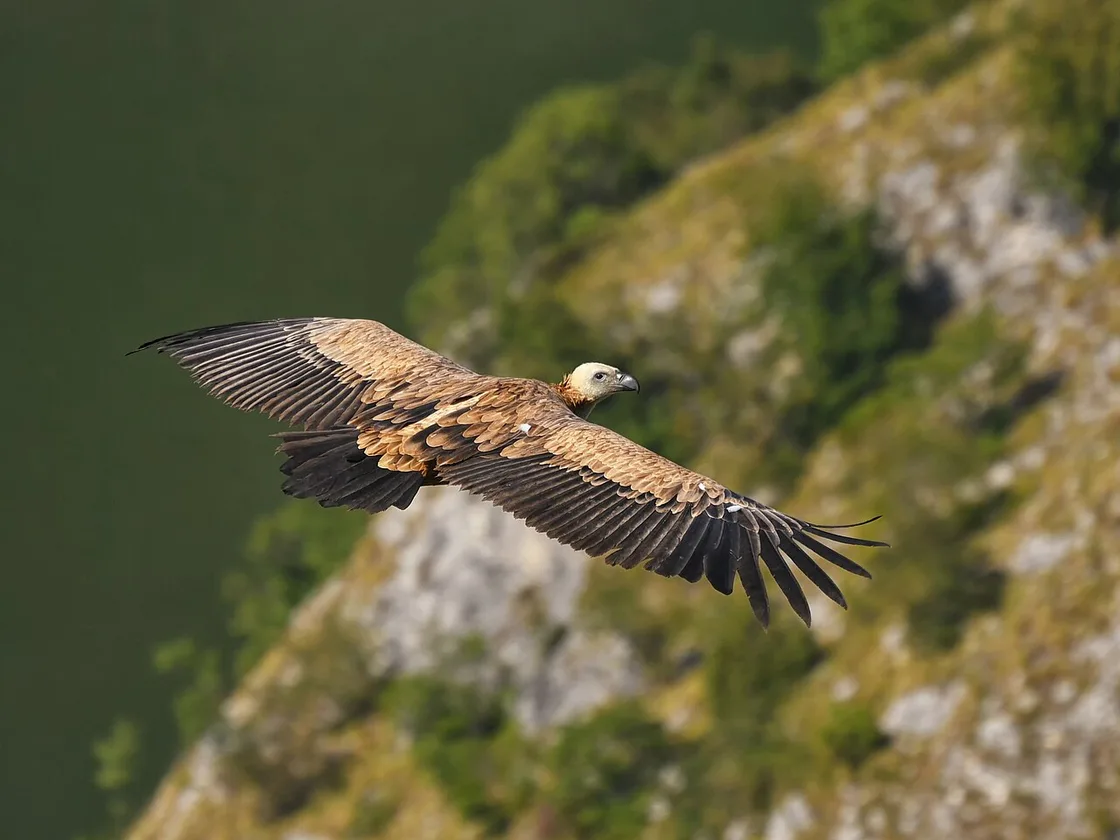
These are huge birds - a griffon’s wingspan runs to well over two and a half metres - and watching them ride the thermals out of the gorge, sometimes at eye level from a clifftop, is the moment that stays with people. They’re one reason Uvac is such a draw for birdwatchers; the reserve has recorded more than 170 bird species in all. A practical note, and an honest one: the vultures are wild and wide-ranging, so sightings are likely but never guaranteed, and the odds are best in warm, clear weather when the thermals are strong and the birds are up and hunting.
The viewpoints: seeing the meanders from above
The classic Uvac experience is looking down on a meander from the cliff edge, and the reserve has around a dozen arranged lookouts for exactly this. The three you’ll hear named are Molitva, Veliki Vrh and Veliki Krš.
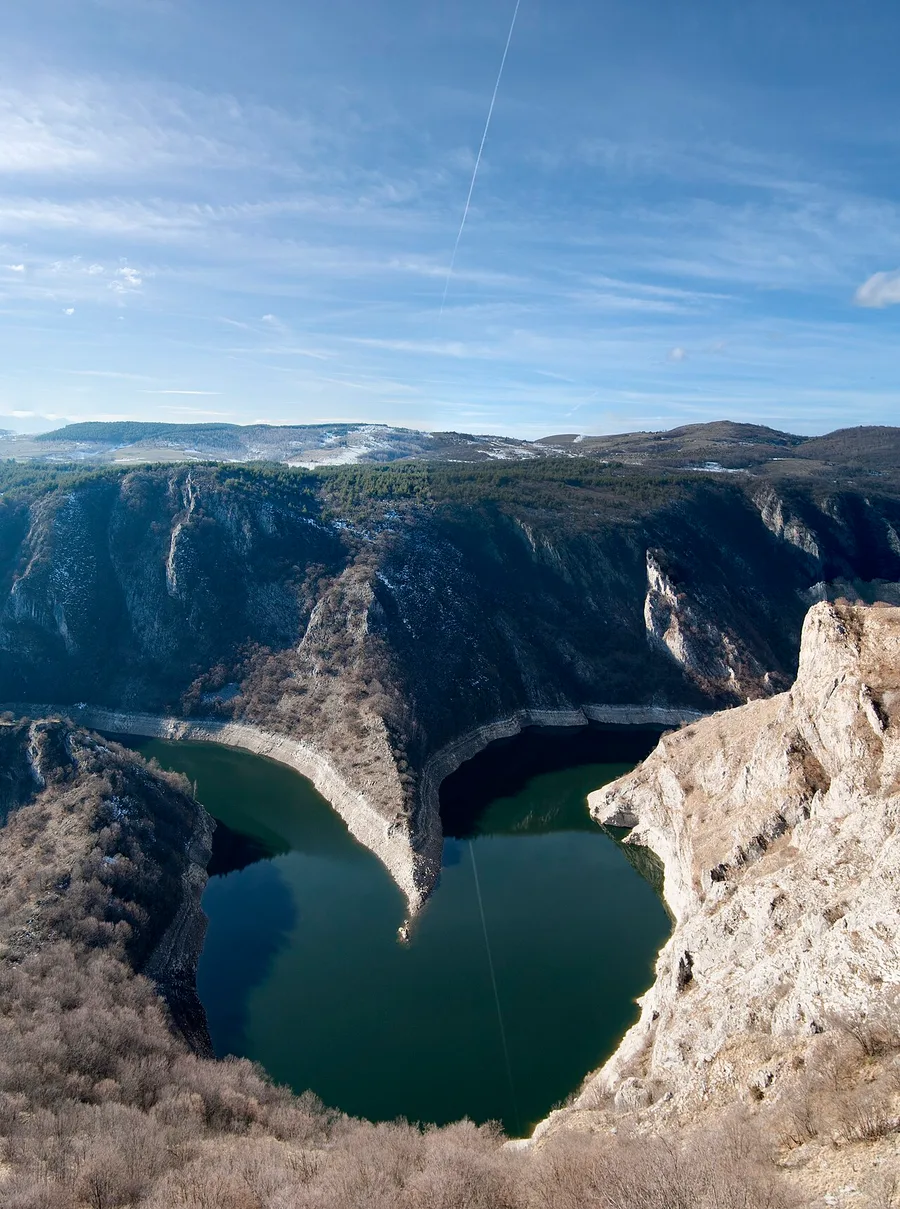
The most popular is Molitva (“prayer”), which delivers the archetypal horseshoe-bend view, and it is not a drive-up: the reserve’s own manager puts the walk in from the Krstac trailhead at about 6 km each way, roughly three and a half to four hours there and back at an easy pace, or you arrive by boat and climb up from the water. Veliki Vrh is the easy one. There’s a trailhead at the village of Gornje Lopiže that you can reach by car, motorbike or even bicycle, and the viewpoint sits about 500 metres from it - a stroll rather than a hike, with roughly another 1.5 km of path on to Ravni Krš. Times quoted elsewhere vary wildly because operators start from different places, so ask where your walk begins. Wear proper shoes, bring water and a hat in summer, and time it for the light: mid-morning or the golden late afternoon flatter the canyon far more than harsh midday sun.
The boat cruise and the Ice Cave
The other half of a full Uvac visit happens down on the water. Small guided tourist boats run cruises along the reservoir, threading into the narrow neck of the meanders and under the cliffs where the vultures nest, reaching parts of the gorge you simply can’t see from the rim. It is a calm, scenic ride, and the best way to sense the sheer scale of the walls closing in above you.
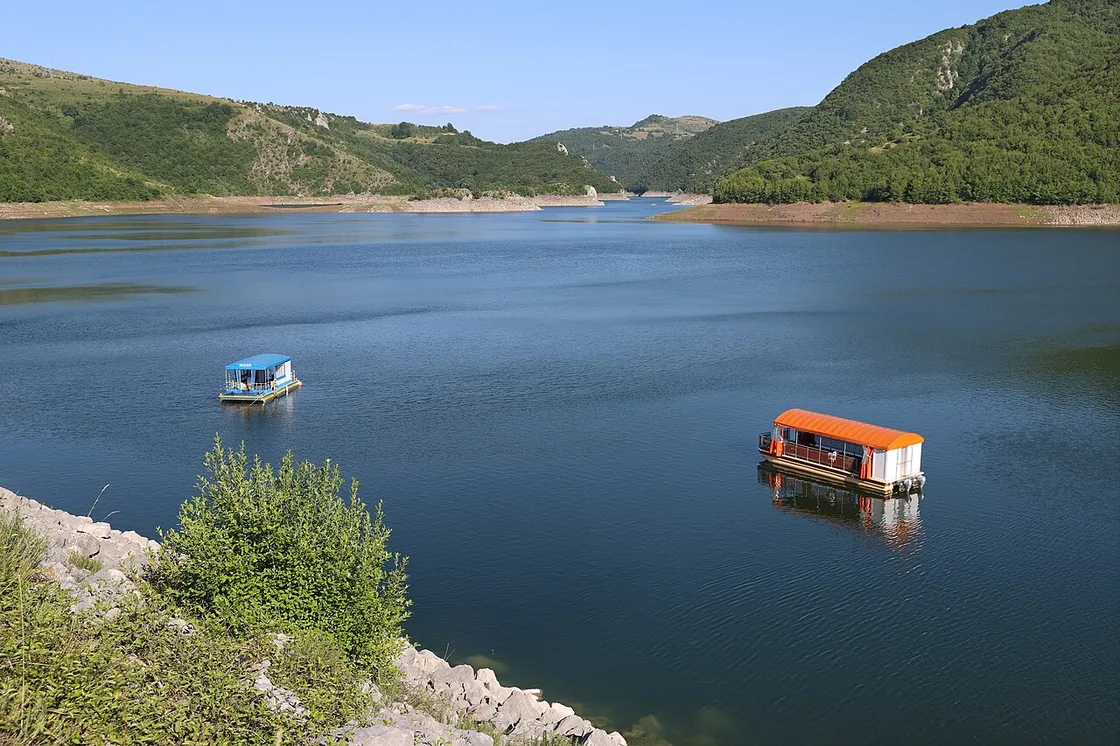
The cruise usually includes the reserve’s underground showpiece, the Ice Cave (Ledena pećina), part of the Ušak cave system in the canyon’s left wall. The full system is enormous - more than six kilometres of passages have been explored, making it the third-longest cave in Serbia - and guided visits take you through a decorated section of stalactite chambers reached from the boat landing. It stays cool inside year-round, so bring a layer even in high summer.
The prices are published, and they’re modest. The reserve’s manager, Rezervat Uvac in Nova Varoš, charges 10,000 dinars for a whole boat (up to 12 people including the guide) for the roughly three-hour cruise with the Ice Cave, or 1,000 dinars per person if you join a departure instead of chartering one; the combined trip that adds a climb to Molitva, Ravni Krš or Veliki Vrh runs four to six hours at 13,000 dinars a boat, or 1,000 to 1,400 dinars a head individually. On top of that come the reserve ticket (100 dinars, 50 for ages 8 to 18) and the Ice Cave ticket (150 dinars over the age of eight). Visits have to be booked in advance on 033 64 198, weekdays 08:00 to 16:00. Prices checked with the official site in August 2026; confirm before you go, and check the boats are running at all in the cold months.
How to visit Uvac
Uvac sits in a thinly populated corner of southwestern Serbia, with no direct public transport to the viewpoints or the boat landings, so you can’t simply turn up by bus. There are two sensible ways in.
The easiest for most travellers is a day tour from Zlatibor. Operators there run Uvac trips that bundle the drive (about an hour to the lakes), a viewpoint walk, the boat cruise and the Ice Cave into a single four-to-five-hour outing, with a guide and the logistics handled. If you’re already basing yourself on the mountain, this is the low-effort option, and it is why Uvac and Zlatibor are so often done together.
The alternative is to drive yourself, heading for Nova Varoš and the reserve, which gives you freedom over timing and lets you linger at the viewpoints for the best light. A car also opens up the wider region: the same trip out west takes in the Šargan Eight heritage railway and the Mokra Gora valley, and Zlatibor itself. If you are reaching the area from the capital in the first place, our guide to getting from Belgrade to Zlatibor covers the drive and the coach up to the mountain, from where Uvac is a short hop further. If you want to turn the reserve into a proper two-day trip rather than a single outing, our Uvac, Zlatar and Mileševa loop route strings it together with the Zlatar lakes and a UNESCO-listed monastery on the way home.
When to go
Uvac is at its best from late spring to early autumn (roughly May to October), which is when the boats run reliably, the walks are dry underfoot and the vulture-watching is at its peak. June and July add wildflowers along the clifftops, though high summer also brings the most day-trippers and the hottest midday climbs to the viewpoints, so an early start pays off. September and early October are arguably the sweet spot: warm, quieter, and softer light on the canyon. Outside that window the picture gets less certain - the boat cruises wind down and can stop altogether in the cold months, and winter can leave the reserve iced and the tracks tricky, though a crisp, snow-dusted meander under blue sky (as in many of the most dramatic photos) is a reward for those who catch it. Whenever you plan to come, confirm that the boats are running before you build a day around them, because that’s the part most likely to be seasonal.
The mistake people make is squeezing Uvac into a half-day. Between the uphill walk to Molitva, the boat leg and the cave, the reserve quietly eats five or six hours, and hurrying it means arriving at the ledge sweaty and leaving before a single vulture has climbed the thermals. Come on a clear day, let it take as long as it takes, and the moment a griffon slides out over that horseshoe bend below you is the one you’ll still be describing to people back home. For more of the country’s canyons, caves and mountains, browse the attractions section.
Photos
On the map
The map loads on click - to keep the page lightweight.
The map didn’t load. Check your connection and refresh the page.
Read also

What to see · 10 min read
Fruska Gora Monasteries: Which to Visit
Verified · September 3, 2026Sixteen preserved Orthodox monasteries on Fruska Gora: Krusedol, Novo Hopovo, Grgeteg and Vrdnik, plus dress code and a day route from Novi Sad.

What to see · 9 min read
Viminacium: Rome and Mammoths near Belgrade
Verified · September 3, 2026Roman Viminacium near Kostolac: adult tickets 1,050 RSD, hours by season, last tour two hours before close, and why the mammoth park is shut.

What to see · 12 min read
Vinca: The Neolithic Site on Belgrade's Doorstep
Verified · August 29, 2026Vinca's Belo Brdo site is 14 km downstream from Belgrade (16 km by road): 2026 hours, tickets, what the small museum shows, and how to get there.

What to see · 10 min read
Skull Tower of Niš: Story, Tickets, Visiting Tips
Verified · August 25, 2026Ćele Kula in Niš: 1809 Battle of Čegar, chapel hours, 300 RSD tickets and how to visit respectfully from the centre or INI airport.