
Drvengrad: Kusturica's Wooden Village
Drvengrad (Küstendorf), the wooden village Emir Kusturica built at Mokra Gora: streets named after his heroes, a cinema, the film festival and how to visit
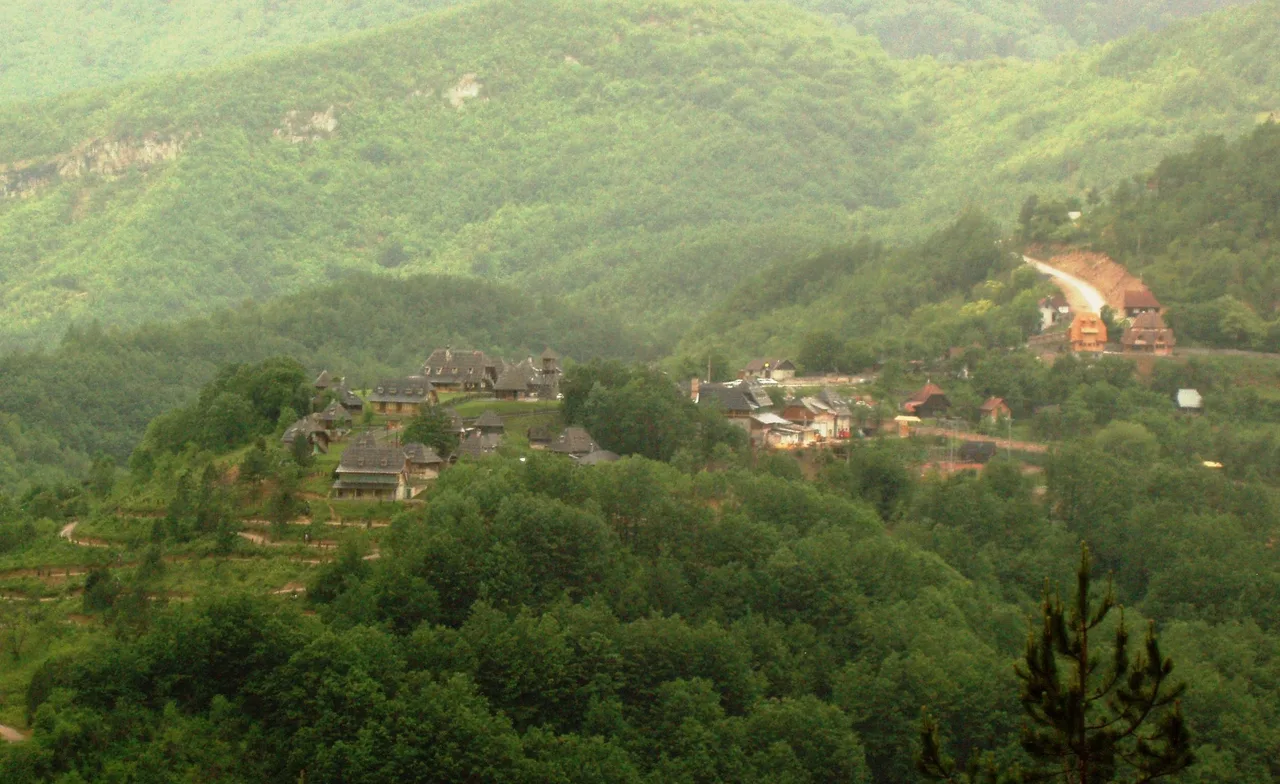
Drvengrad is a small wooden village in the far west of Serbia that the film director Emir Kusturica invented from scratch, first as a film set and then as a permanent home for his own idea of the good life. It stands on a hill called Mećavnik above the Mokra Gora valley, a cluster of timber houses, cobbled lanes and a little Orthodox church, and its streets are named after the people Kusturica admires most - Fellini, Bergman, Tesla, Maradona, Che Guevara. You come here to wander a place that’s part traditional highland hamlet, part cinephile theme park, and to feel the sensibility of one of the Balkans’ most famous filmmakers made solid in wood. It sits right next to the Šargan Eight railway, so most people do the two together in a single western-Serbia half-day.
The village goes by three names, which trips people up. Drvengrad is Serbian for “Timber Town”; Küstendorf is Kusturica’s own coinage, a joke that splices the German word for village onto his nickname “Kusta”; and Mećavnik is simply the hill it stands on. All three point at the same place. What it actually is, why it exists, and how to slot a visit into a trip are what we get into next.
Why Kusturica built a village
The story behind Drvengrad is the reason it feels different from Serbia’s other ethno-villages, which are mostly earnest open-air museums. This one was born as a film set. Kusturica put it up between 2003 and 2004 as the location for his film Life Is a Miracle (Život je čudo), a tragicomedy set on a remote railway during the Bosnian war, and when filming wrapped he simply kept the village and turned it into a permanent cultural retreat. His own explanation is disarmingly personal: having lost Sarajevo, the city he grew up in, during that war, he wanted to build a town of his own to replace it.
That origin gives the place its particular flavour. It’s not a reconstruction of how people really lived; it’s a director’s set-dressing of how mountain life ought to look and feel, assembled from genuine old timber and then arranged with an eye for the frame. The result is undeniably charming, and it is also, if you think about it while you walk, a fascinating piece of one man’s imagination built at full scale. The critics agreed on the craft, at least: Kusturica was given the Philippe Rotthier European Architecture award in 2005 for the village.
Streets named after Kusturica’s heroes
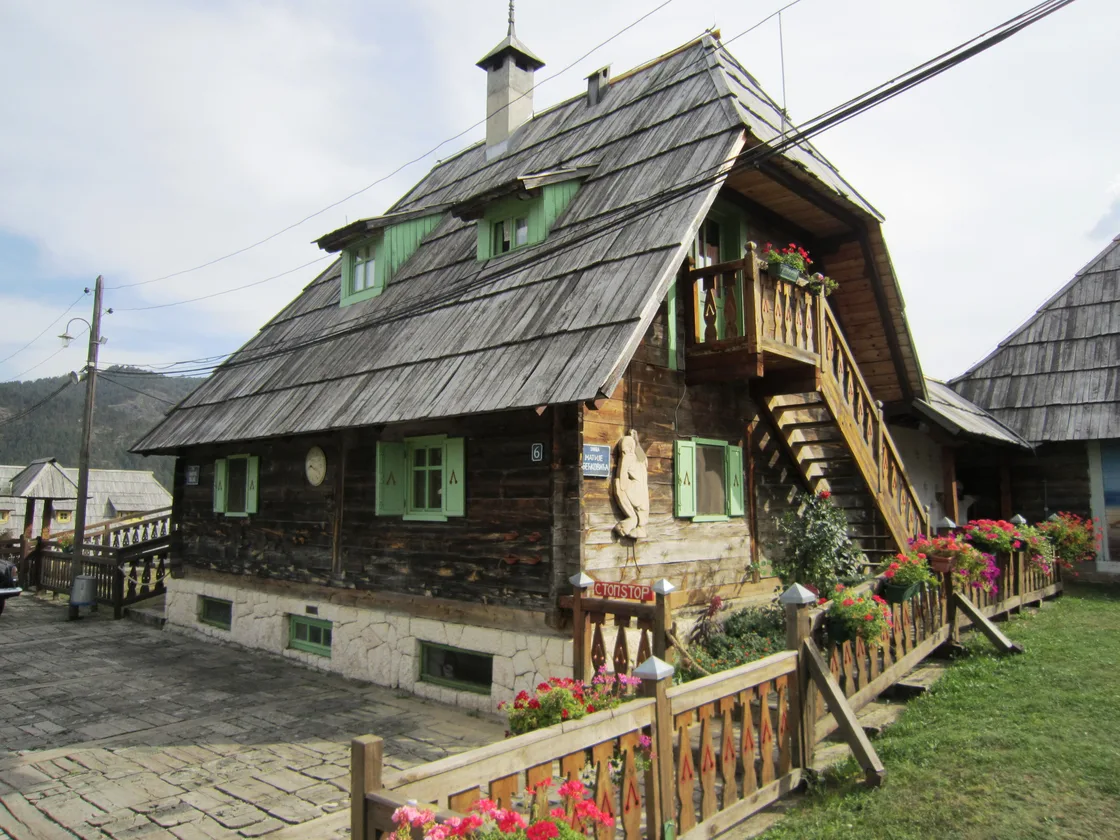
Look down as you walk and the village reveals its cleverest running joke. Every lane carries a street sign named after someone Kusturica reveres, and reading them is a quick tour of the director’s mind. The main street belongs to Ivo Andrić, the Yugoslav Nobel laureate whose novels haunt this corner of the map. Branch off and you’ll find lanes for Nikola Tesla and Federico Fellini, Ingmar Bergman and Che Guevara, the footballers Diego Maradona and, more recently, the tennis player Novak Djoković, even the Clash’s Joe Strummer. It is a wildly eclectic pantheon of directors, scientists, revolutionaries, writers and athletes, and it tells you more about Kusturica than any plaque could.
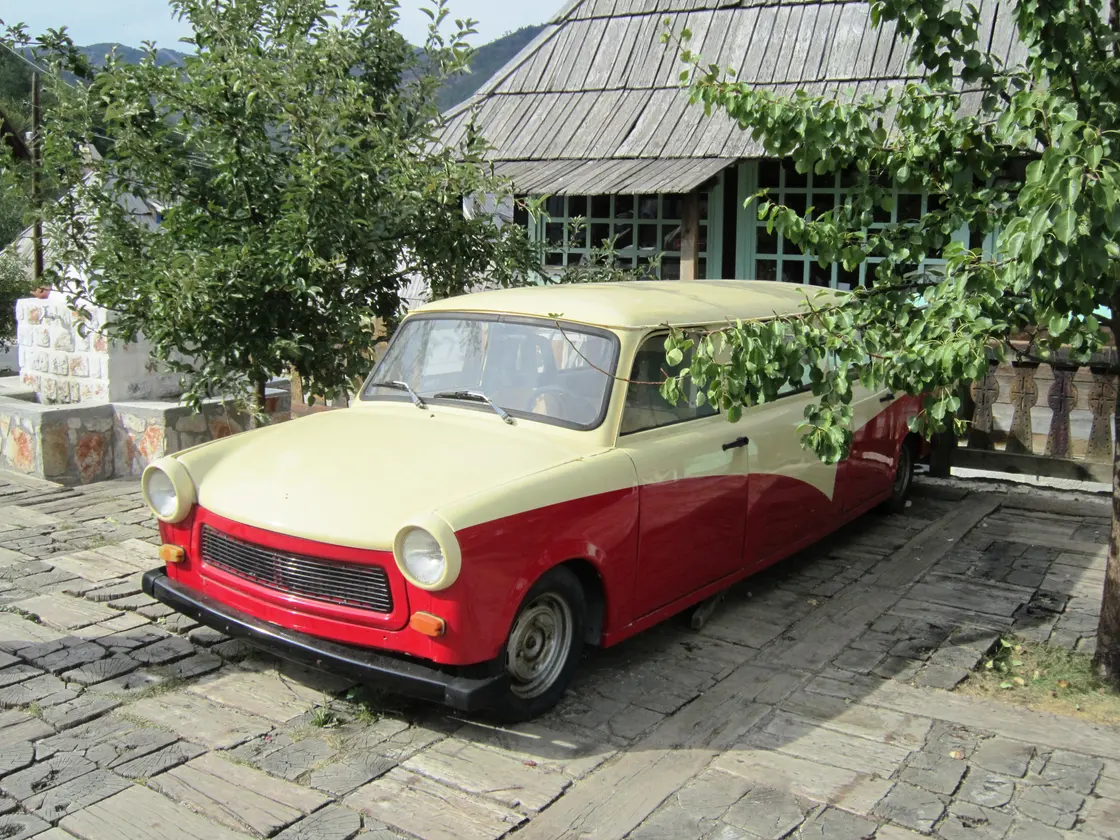
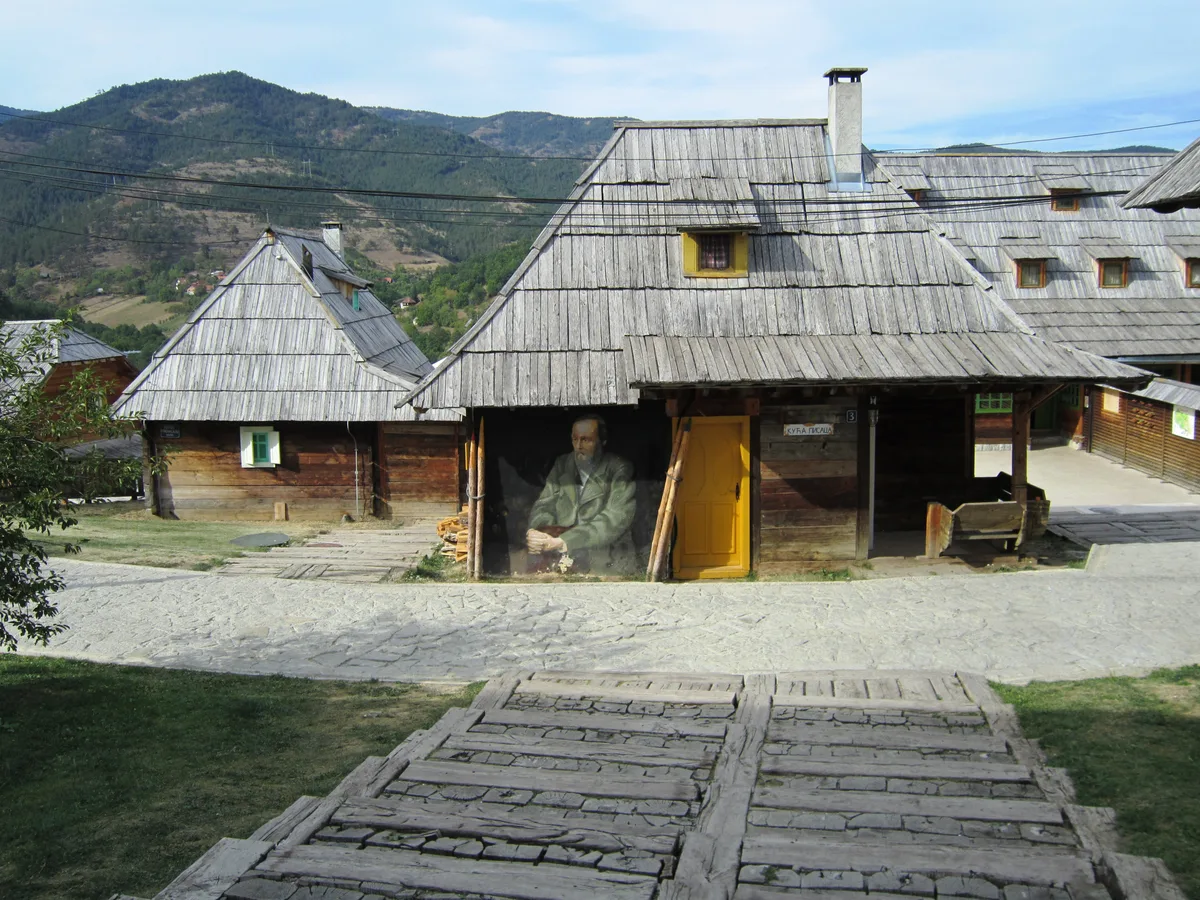
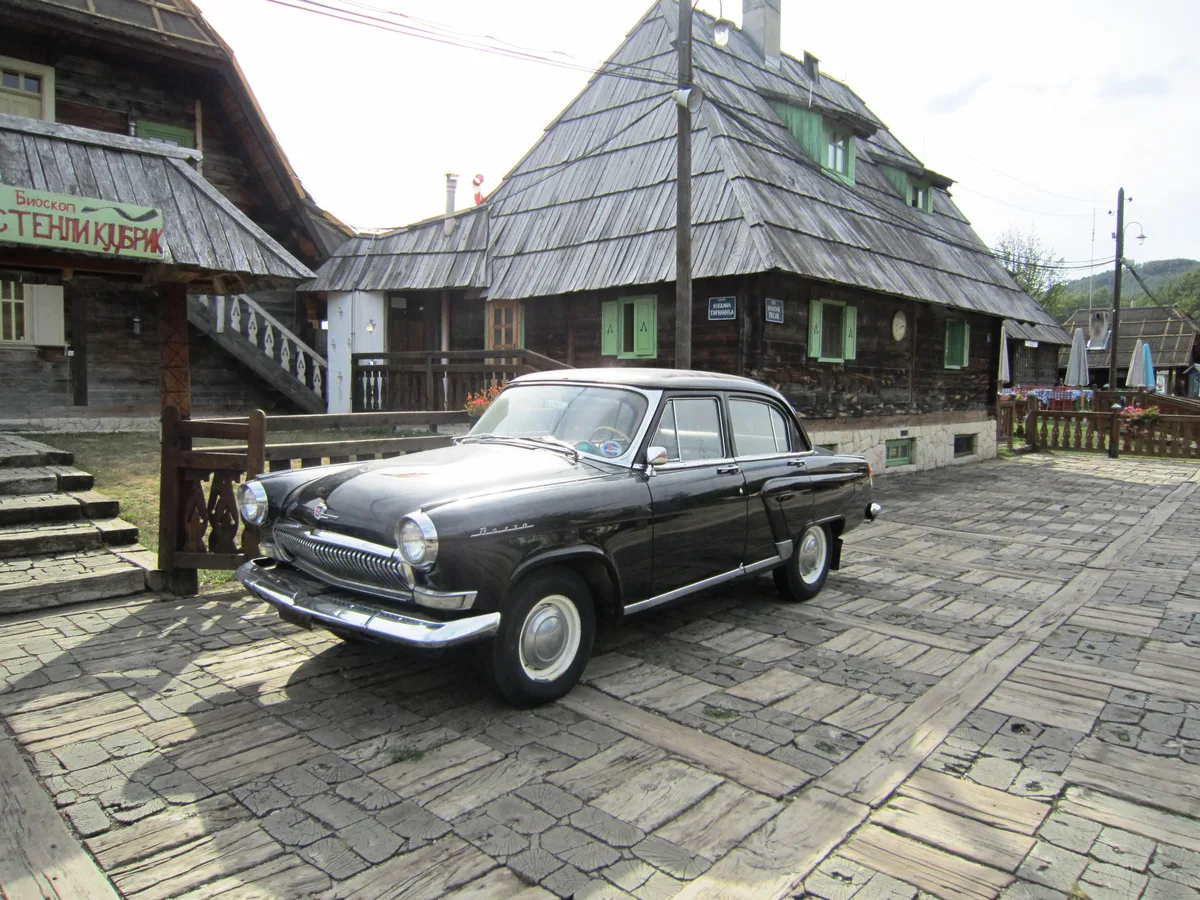
The film-buff jokes don’t stop at the signs. Dotted around the village you’ll spot painted portraits mounted on house fronts, film references worked into the décor, and a fleet of gloriously incongruous vintage cars - a stretched Trabant, an old black Volga - parked on the cobbles like props waiting for a shot. Half the pleasure of Drvengrad is simply catching these details, so give yourself time to poke around rather than march through.
What there is to see and do
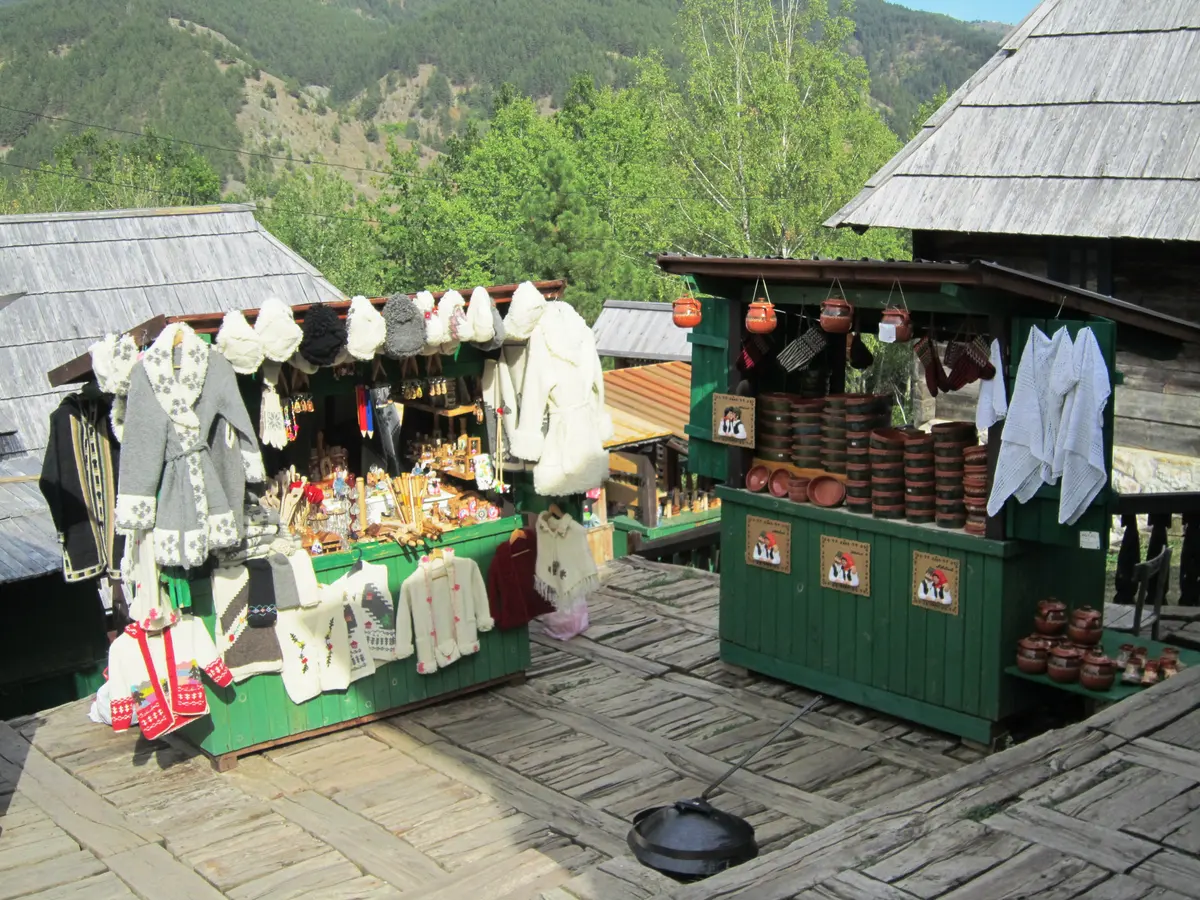
Drvengrad is compact - you can walk the whole thing in twenty minutes - but it packs in more than its size suggests, all of it in keeping with its maker’s tastes. There’s a cinema, named the Stanley Kubrick, where films screen through the year; a library named after Ivo Andrić; an art gallery; and a small Serbian Orthodox church dedicated to St Sava anchoring the square. Scattered among the houses are a restaurant serving hearty western-Serbian mountain food, a cake shop, craft stalls selling knitted wool and pottery, and the odd sauna and sports hall, because the village doubles as a working resort.
Practically, the village is a ticketed attraction: you pay a small entrance fee at the gate to walk in, and cash in dinars is the easiest way to handle it. I’m not going to quote a figure, because entrance and food prices drift year to year and the numbers you find online go stale; check the current cost when you arrive and treat any price you read, including in older blogs, as a rough guide. Set aside an hour to wander, or longer if you stop for lunch and a coffee and let the mountain views do their work.
The Küstendorf film festival
Since 2008, Kusturica has used the village to host the Küstendorf Film and Music Festival, usually for one week in the depths of January (the pandemic forced a gap in 2021 and pushed the 2022 edition into May). It’s a deliberate rebuke to the industry’s glitz: no red carpet, no competition for stars, no marketing circus, but a programme built around young and student filmmakers, masterclasses, world cinema and live music, all in a village buried in mountain snow. That anti-glamour stance has, paradoxically, drawn some big names up the hill anyway - Johnny Depp visited in 2010 and was given a statue for his trouble.
Worth being clear about the timing before you plan around it: this is a deep-winter, mostly invitation-and-selection event, not something a passing summer tourist drops in on, and the calendar has gone quiet lately. The last confirmed edition is the 18th, held 22-25 January 2025; as of August 2026 no dates for a newer edition had been published, and no cancellation has been announced either, so check the festival’s own site, kustendorf-filmandmusicfestival.org, for the current state of play. Either way, the festival is the reason Drvengrad is more than a pretty film set - it’s a genuinely working cultural project, and that history adds a layer to a summer stroll through the empty cinema and screening spaces.
How to visit, and what to pair it with
Drvengrad sits above Mokra Gora in the far west of Serbia, tucked into the mountains near the Bosnian border, roughly 243 km and three to three and a half hours from Belgrade by the usual road through Užice (the operator’s own distance table has shorter mountain routings down to 197 km, but this is the one you’ll actually drive). That’s too far to sensibly do as a day trip from the capital, so treat it as one leg of a wider western Serbia loop rather than a standalone errand.
The single most natural pairing is the railway right below it. The Šargan Eight heritage railway - the restored narrow-gauge line that loops itself into a figure of eight to climb the mountainside - starts at Mokra Gora station a five-minute drive down the hill, and the ride plus the village make a satisfying half to full day together. Most organised tours out of Belgrade or Zlatibor bundle the two, which spares you the drive and the ticket logistics.
For a base, the obvious choice is Zlatibor, the big mountain resort a short drive east, with all the hotels, spas and restaurants you could want; there are also a handful of places to stay in and around Mokra Gora itself, including on-site at the village, if you would rather wake up on the mountain. From Zlatibor the rest of the region falls into place - the Drina canyon and the clifftop viewpoints of Tara National Park are within reach, along with the lonely house on the Drina on its midstream rock near Bajina Bašta, and two or three unhurried days will cover the western corner comfortably. However you get here, Drvengrad rewards the detour: there’s nowhere else in Serbia quite like a village a film director dreamed up and then decided to live in.
Photos
On the map
The map loads on click - to keep the page lightweight.
The map didn’t load. Check your connection and refresh the page.
Distance ≈243 km · ~3-3.5 h by car
- Belgrade ≈243 km · ~3-3.5 h by car By road to Mokra Gora in the far west, best as part of a Zlatibor or western-Serbia trip, not a day trip from the capital.
Read also

What to see · 10 min read
Fruska Gora Monasteries: Which to Visit
Verified · September 3, 2026Sixteen preserved Orthodox monasteries on Fruska Gora: Krusedol, Novo Hopovo, Grgeteg and Vrdnik, plus dress code and a day route from Novi Sad.

What to see · 9 min read
Viminacium: Rome and Mammoths near Belgrade
Verified · September 3, 2026Roman Viminacium near Kostolac: adult tickets 1,050 RSD, hours by season, last tour two hours before close, and why the mammoth park is shut.

What to see · 12 min read
Vinca: The Neolithic Site on Belgrade's Doorstep
Verified · August 29, 2026Vinca's Belo Brdo site is 14 km downstream from Belgrade (16 km by road): 2026 hours, tickets, what the small museum shows, and how to get there.

What to see · 10 min read
Skull Tower of Niš: Story, Tickets, Visiting Tips
Verified · August 25, 2026Ćele Kula in Niš: 1809 Battle of Čegar, chapel hours, 300 RSD tickets and how to visit respectfully from the centre or INI airport.