
Srem & Sava Day Loop: Roman Sirmium and Zasavica
A one-day loop from Belgrade through Srem: Roman Sirmium at Sremska Mitrovica, the Zasavica wetland reserve, and the south side of Fruška Gora.
You can drive out of Belgrade after breakfast, stand in a Roman imperial capital by mid-morning, meet a Balkan donkey on a wetland by lunch, and be back in the city for dinner. This one-day loop stays south of the Danube in Srem, pairing Sirmium - the Roman capital buried under modern Sremska Mitrovica - with the Zasavica nature reserve and a swing back over the quiet south slope of Fruška Gora. It’s around 200 km all in, on fast motorway and easy country roads, and it packs in far more history and wildlife than a single day has any right to.
A car makes this trip. Sremska Mitrovica has trains and buses from Belgrade, but Zasavica sits across the Sava down a country road with no useful public transport, and stitching the two together plus a monastery on the way home only works on wheels. Pick the car up in Belgrade and drop it back the same evening; our guide to car rental in Serbia has the deposit and toll details. If you would rather not drive at all, this is also an easy pairing for a guided day out.
Is Srem worth a day trip from Belgrade?
Yes, and it’s one of the most underrated days out from the capital precisely because it mixes things most day trips keep separate: serious Roman archaeology and a hands-on nature reserve, an hour apart. If you’ve already done the obvious runs, this is the one to add. Our full guide to the best day trips from Belgrade ranks the options, and Srem sits high for anyone who likes ruins and wildlife over yet another fortress. If today’s dose of Roman Serbia leaves you wanting more and you have a second day, the bigger eastern version is our Timok Valley wine and Rome loop, an overnight out to the imperial palace of Felix Romuliana and the old wine cellars of Rajac - the two-day sibling to this single-day run.
One thing to get straight up front: this is Srem, the flat country south of the Danube, not the vineyard-and-monastery ridge most people picture when they hear Fruška Gora. You clip the quiet southern edge of that ridge on the way home rather than driving its scenic crest; if the wine road and the big northern monasteries are what you want, that’s a separate outing built around Novi Sad, and our Fruška Gora National Park guide covers it. Today is about the Roman capital and the wetland, with a monastery as a bonus.
On cost and timing: the drive to Sremska Mitrovica is about 70 km and an hour on the tolled A3/E70, so keep a card for the booth. A full day self-driving, with site and reserve tickets, a boat ride and lunch, starts around €45 a person plus fuel and tolls. Leave Belgrade by nine and you’ll not feel rushed.
Morning: Roman Sirmium at Sremska Mitrovica
An hour west of Belgrade, in the middle of an ordinary provincial town, you walk up to a fenced pit of brick and stone that was once one of the most powerful places in the Roman world.
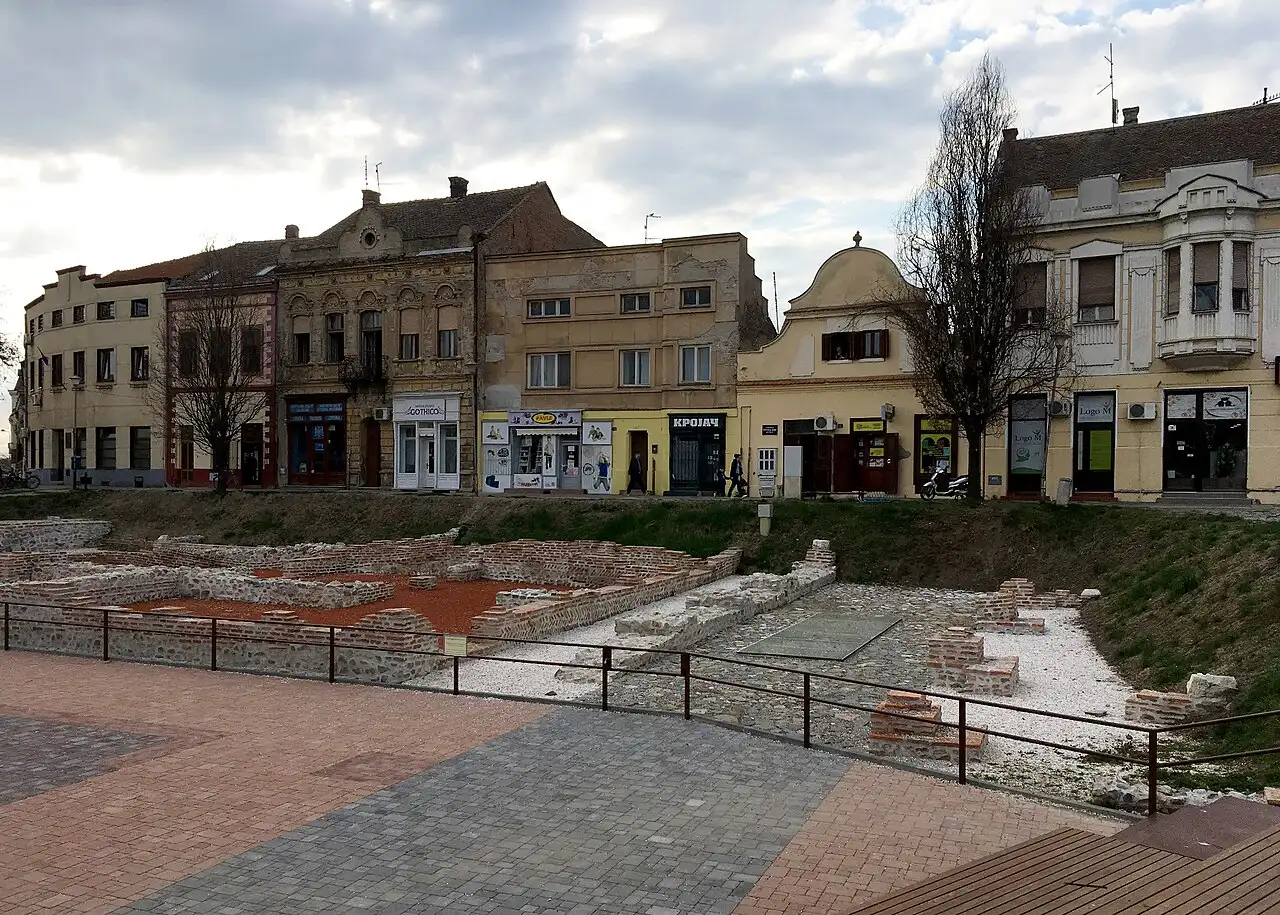
This is Sirmium, and the detail that never quite lands until you’re standing there’s its rank. When Diocletian reorganised the Empire into the Tetrarchy in 293, Sirmium became one of the four imperial capitals - the equal, on paper, of Trier, Milan and Nicomedia. The emperor Maximian was born here, and a whole string of Roman rulers came from this stretch of the Sava. What you see now are the foundations of the imperial palace, laid open in the town centre, with late-Roman mosaic floors among the finest anywhere; archaeologists have uncovered more than 10,000 square metres of them across the site.
Do the ruins and then walk to the Museum of Srem a short step away, because that’s where the mosaics, sculpture and the lapidarium of Roman stonework are properly displayed and labelled - the open site is the skeleton, the museum is the flesh. The archaeological park keeps daylight hours (roughly 09:00 to 17:00 April to October, shorter in winter); entry is a small fee, which I would confirm on the day rather than quote, as it’s not published consistently. Give the whole thing two hours.
Midday: the Zasavica wetland
From Sremska Mitrovica you cross the Sava and drop about 20 km south into a different world: Zasavica, a special nature reserve of slow green water, reed beds and reintroduced beavers that has become Serbia’s flagship eco-tourism site.
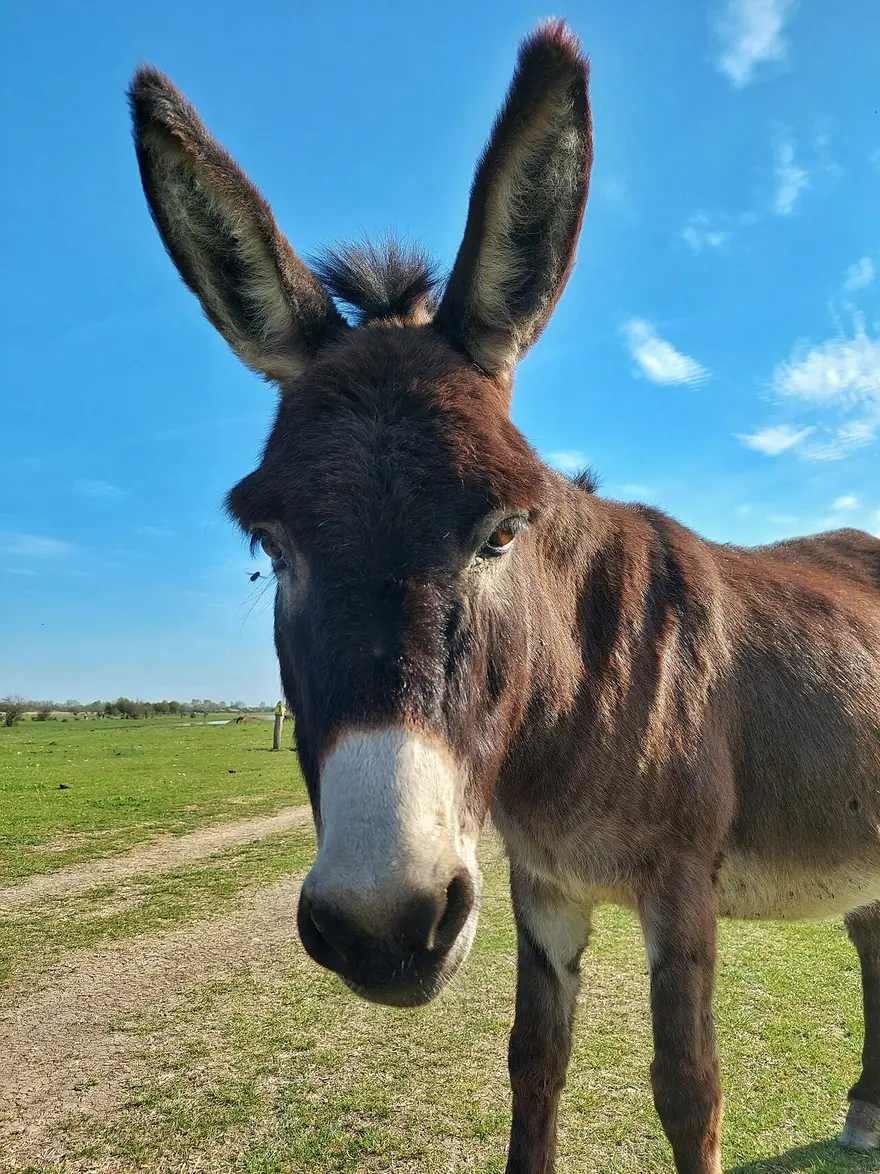
The reserve is best known for its farm of old domestic breeds: the curly-coated Mangulica pig, the Balkan donkey (whose milk goes into one of the world’s most expensive cheeses), Podolian cattle and the domestic mountain horse. The set-piece is the Umbra boat, a slow flat-bottomed cruiser that runs a roughly 40-minute, 4 km loop from the Valjevac visitor centre through the prettiest stretch of the marsh - well worth it for the birdlife and the stillness. The visitor centre itself is a wooden lodge with an 18-metre viewing tower over the meadow.
Here’s the useful part, because Zasavica actually publishes its prices, which is rare out here. As of the 2026 list, entry is 700 RSD for adults (600 for children and pensioners), the Umbra boat is another 700, and a safari electric-bus ride is 700 as well - so budget around 1,400 RSD (about €12) a head to do the reserve and the boat together. The area is open daily 08:00 to 20:00. If you want the boat at a set time, call ahead, as departures depend on numbers. This is the point of the day to slow down: bring an hour’s patience, walk the boardwalk out to the pier, and let the marsh do its thing - you won’t regret the pause.
Afternoon: back over southern Fruška Gora
Rather than retrace the motorway, drive home the pretty way. Cross back over the Sava and pick up the roads that climb the southern flank of Fruška Gora above Sremska Mitrovica, through the villages of Ležimir and Manđelos.
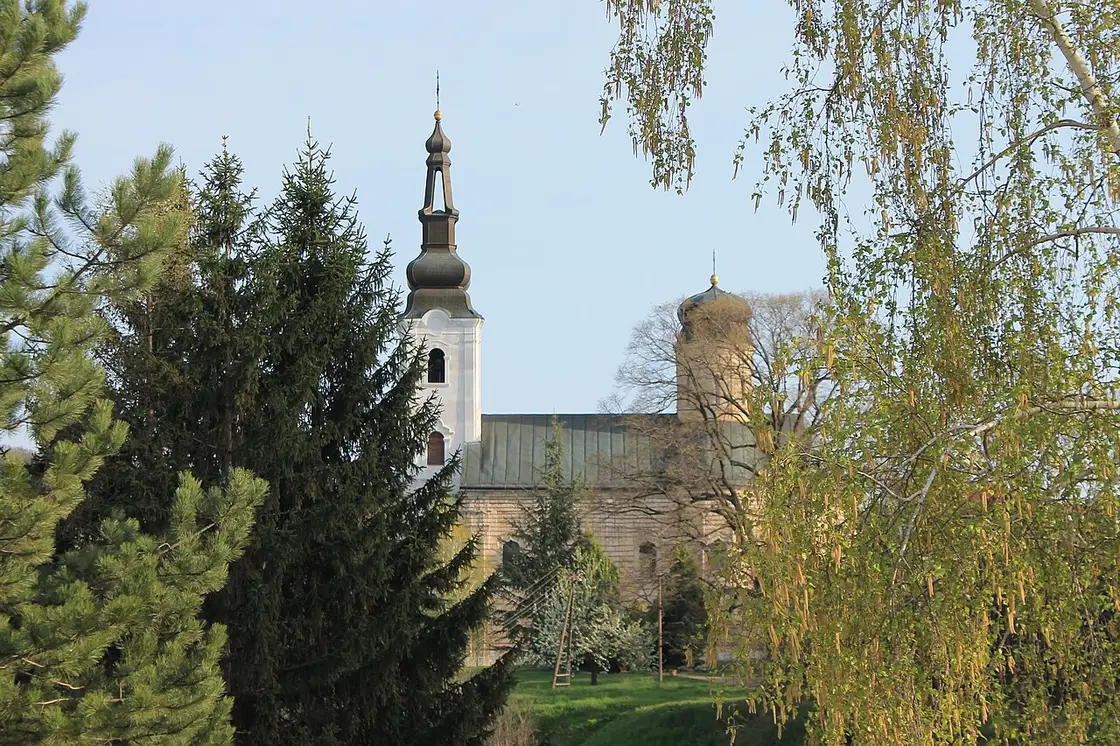
This side of the ridge sees a fraction of the traffic the northern wine road gets, and it holds several of Fruška Gora’s Orthodox monasteries - Šišatovac (built 1758 to 1789), Petkovica, Kuveždin, Bešenovo - tucked into wooded folds with almost nobody about. Pick one, not all: don’t try to stack every courtyard into the same afternoon. An hour at Šišatovac, with its whitewashed church and quiet courtyard, is a gentle full stop to a busy day before the run back to Belgrade. From here the capital is a little over an hour, and you’ll rejoin the E70 for the last leg. The loop closes where it began.
Practical notes for the day
A few things worth knowing:
- The car and the toll. The A3/E70 to Sremska Mitrovica is fast and tolled (booth or tag), so keep a card. Most Serbian rentals are manual; ask for an automatic if you need one. The country roads to Zasavica and over Fruška Gora are simple but rural, so don’t trust the map time alone - allow a bit more than a map suggests.
- Zasavica pays back a slow visit. Do the boat, not just the farm - the 40-minute Umbra cruise is the best of the reserve. Prices are posted (700 RSD each for entry and for the boat, 2026), and the area is open 08:00 to 20:00 daily.
- Sirmium plus the museum. The open ruins are the setting; the Museum of Srem next door is where the mosaics and carvings actually are. Do both, or you’ve only seen half of it.
- When to go. Spring through early autumn is best - Zasavica is greenest and the birdlife busiest from April to June and again in September, and the Fruška Gora roads are at their prettiest. Midsummer works but the reserve is hot and exposed by midday.
That’s the loop: a Roman capital, a wetland full of rare animals and a hillside monastery, all inside a single easy day from Belgrade - about 200 km, and a side of Srem that most visitors drive straight past on the motorway. Browse more ideas near the capital in the attractions section, and start early to give the wetland the slow hour it deserves.
Route day by day
- Days on the road
- 1
- Distance
- ≈200 km
- Budget from
- 45 EUR
- Best season
- April, May, June, September, October
The route at a glance
-
Belgrade
Route startstop ≈0 min
Start point. Pick up the car and take the A3/E70 motorway west toward the Croatian border.
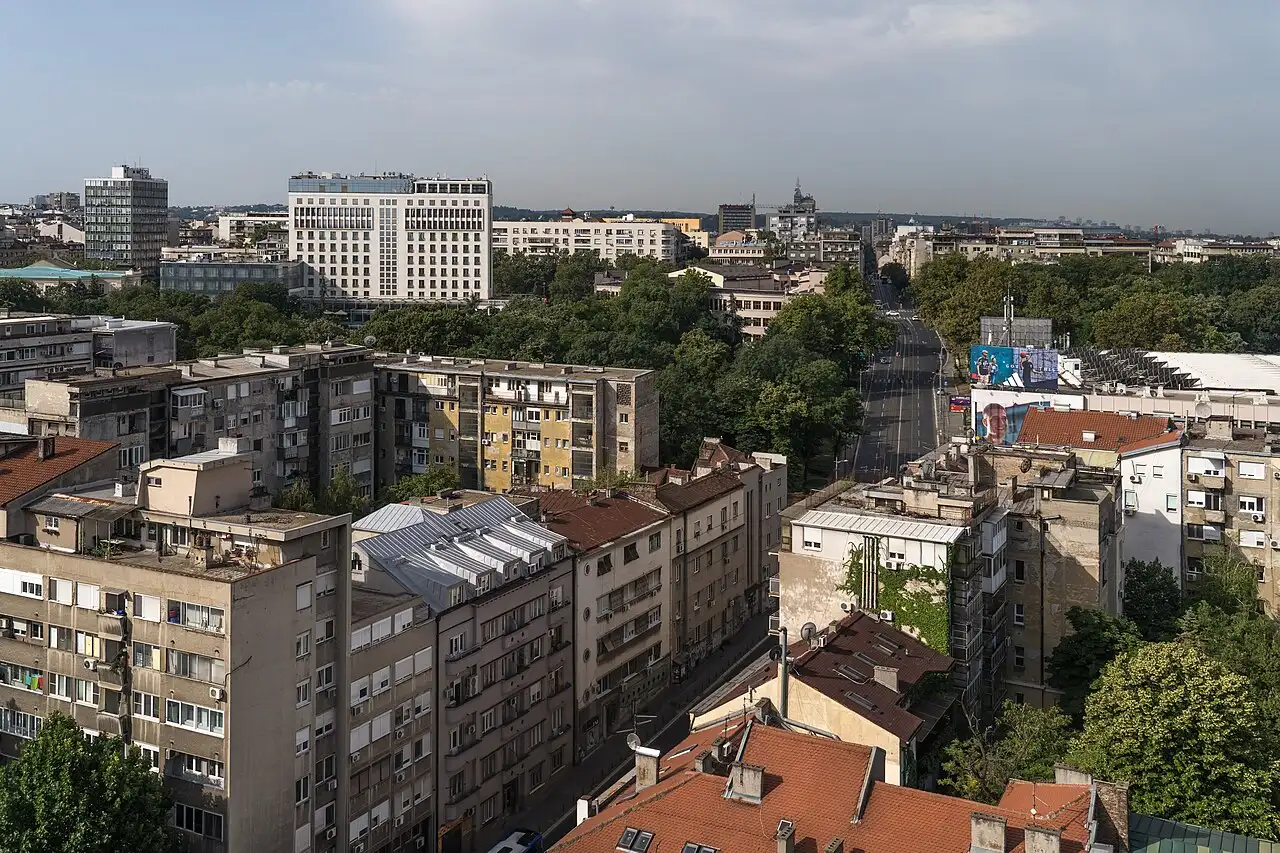
Photo: Alexkom000 / Wikimedia Commons, CC BY 4.0 ( source) -
Sremska Mitrovica (Sirmium)
70 km from the startstop ≈120 min
The Roman imperial palace of Sirmium, one of the four capitals of the Tetrarchy, excavated in the town centre. Archaeological park open Apr-Oct 09:00-17:00.
Photo: Sadko / Wikimedia Commons, CC BY-SA 4.0 ( source) -
Zasavica Nature Reserve
90 km from the startstop ≈150 min
A wetland reserve across the Sava, home to mangulica pigs, Balkan donkeys and the Umbra boat. Open daily 08:00-20:00.
Photo: Geoastra / Wikimedia Commons, CC BY-SA 4.0 ( source) -
Southern Fruška Gora
130 km from the startstop ≈90 min
The quiet south slope of Fruška Gora above the Sava, with monasteries like Šišatovac, on the way back to Belgrade.
Photo: Vanilica / Wikimedia Commons, CC BY-SA 4.0 ( source)
Route map
The map with stops loads on click - to keep the page lightweight.
The map didn’t load. Check your connection and refresh the page.