
Driving Serbia to Greece: Tolls & Borders
Belgrade to Preševo A1 toll: 2,060 RSD (about €18) for a car, checked Aug 2026. Batrovci and Preševo borders, then North Macedonia to Greece.
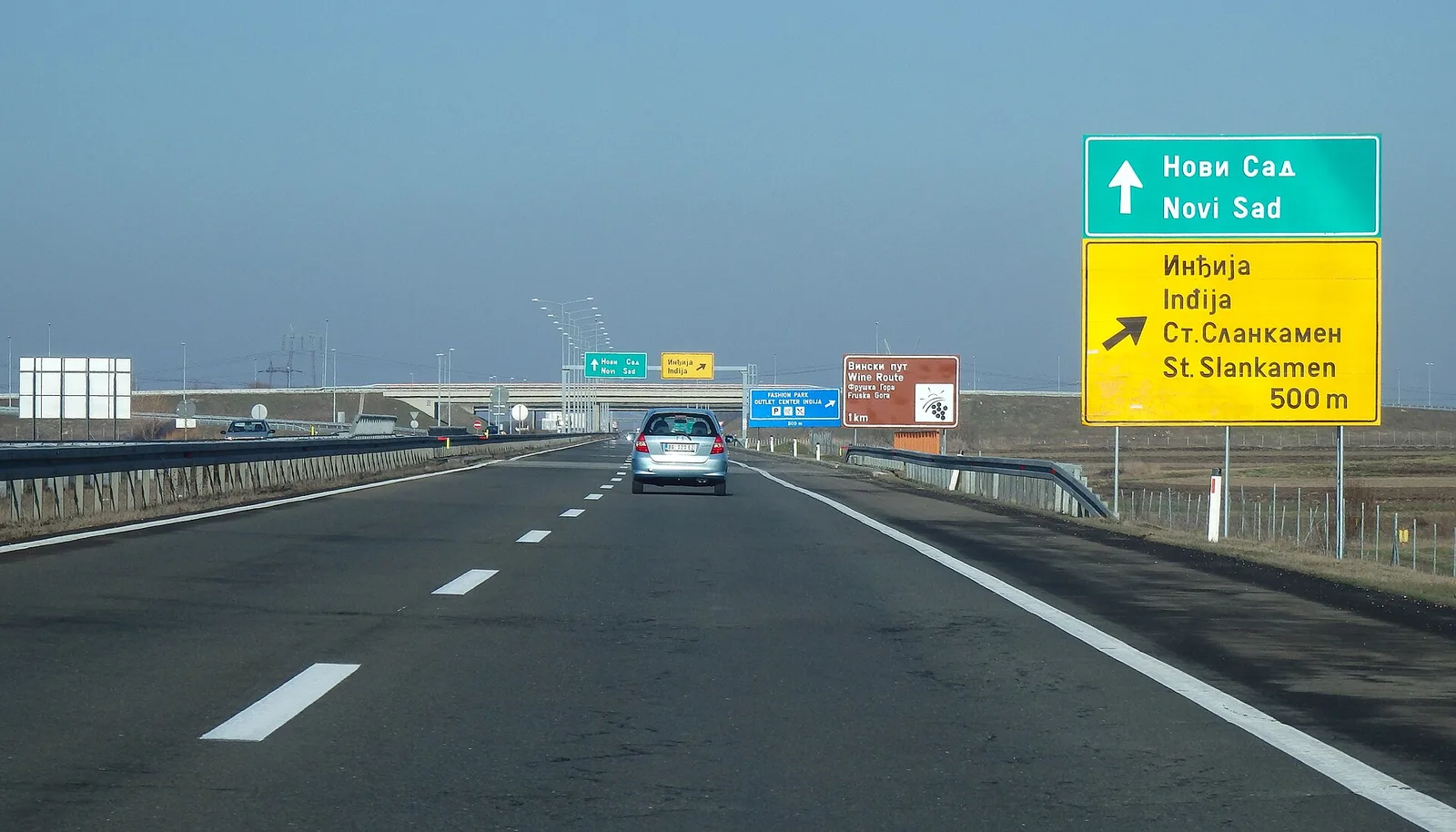
Driving Serbia to Greece on the motorway is a Corridor X transit job, not a sightseeing loop. You stay on the A1 (E75) south through Niš to Preševo, leave Serbia into North Macedonia at Tabanovce, and only then hit Greece at Bogorodica / Evzoni on the way to Thessaloniki. Serbia has no motorway vignette: for a normal Category I car the official Putevi Srbije table prices Belgrade to Preševo at 2,060 RSD (about €18), read on 14 August 2026. Recheck that figure on the live calculator before you rely on it, because the operator revises the list.
There’s no Serbia-Greece land border on this corridor, so you’re managing two exits and one country in the middle, plus rental paperwork if the car isn’t yours. This page is the transit plan - tolls, gates and the order of stops. For the everyday rules (speed, lights, alcohol, winter tyres) use our driving in Serbia guide; for bus and flight options see Belgrade to Thessaloniki.
Transit snapshot
| Leg | What you pay / face | Practical note |
|---|---|---|
| Belgrade → Preševo (A1) | 2,060 RSD / about €18 Category I (checked Aug 2026) | Ticket in, pay at exit; use the official calculator for other entry/exit pairs |
| Belgrade → Niš south | 1,180 RSD / ~€10.50 Category I | Useful if you’re overnighting in Niš and continuing next day |
| West entry via Batrovci | Separate Belgrade-Šid section toll | Price your exact plazas on putevi-srbije.rs - don’t guess reverse rates |
| Preševo → Tabanovce | Passport / ID control | Serbia exit, then North Macedonia entry |
| North Macedonia A1 | Distance tolls at plazas (no vignette) | Official PESR Category IB rates - see section below |
| Bogorodica → Evzoni | Passport / ID control into Greece | Last gate before Thessaloniki; Greece has its own motorway tolls |
Pay attention to the dinar column: that’s what the booth charges. The euro equivalents on the operator’s own sheet lag the exchange rate, so use them for budgeting, not for counting out cash. If your hire car is a tall van, check whether it still sits in Category I or jumps to a higher class on height at the first axle.
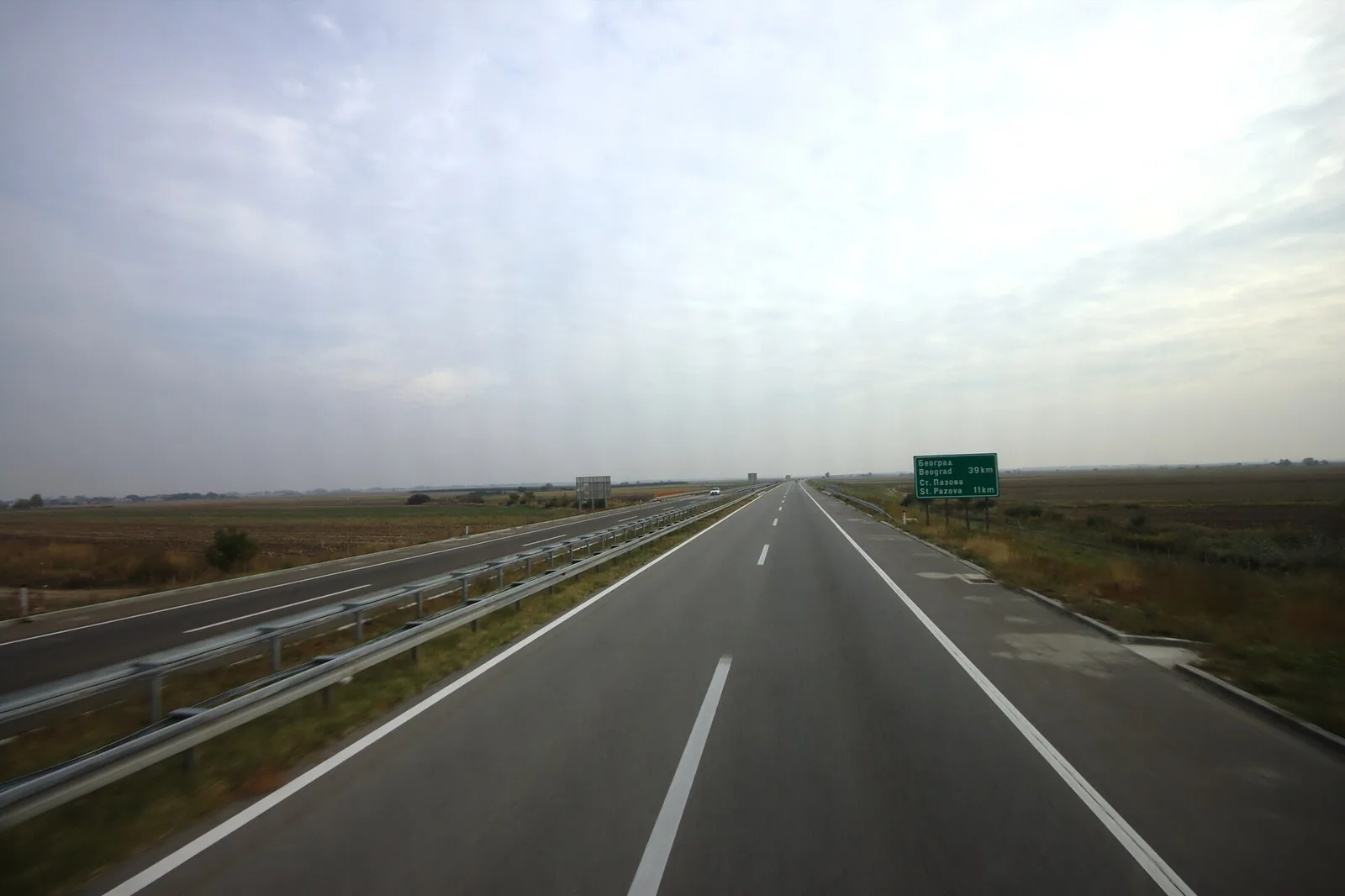
The corridor you’re actually on
Most people who “drive Serbia to Greece” are either starting in Belgrade or arriving from Western Europe through Croatia at Batrovci (Bajakovo on the Croatian side) and then swinging south. Both end up on the same motorway spine.
From Belgrade you join the A1 toward Niš. The road is modern, fast and dull in the useful sense: service areas, clear gantries, and almost no reason to leave it unless you’re breaking the trip. Niš is the natural half-way city if you don’t want a single long day - our Belgrade to Niš page covers that leg if you’re mixing bus and car. South of Niš the same motorway continues toward Leskovac, Vranje and the Preševo exit.
From the west, Batrovci is the busy Croatia-Serbia motorway gate on the A3/E70. You clear both sides, join the Serbian toll network on the Belgrade-Šid corridor, reach the Belgrade ring, then turn south onto the A1. That western leg is a separate toll section from Belgrade-Preševo, so budget two Serbian payments (or more if you exit and re-enter), not one.
Once you leave Serbia at Preševo you’re in North Macedonia on the A1 toward Skopje and Gevgelija. Greece starts at Evzoni. Thessaloniki is then a motorway run with Greek toll plazas of its own - don’t expect the Serbian ticket system to continue.
What Serbian A1 tolls cost on this run
Serbia’s operator is PE Roads of Serbia (Putevi Srbije). Collection is a closed system: take a magnetic card when you enter a tolled section, hand it in and pay when you leave. The official base for the fee is distance in kilometres, plus vehicle category. There’s no sticker to buy in advance.
For the Greece transit the number that matters is the Belgrade → Preševo pair on the operator’s published list, read on 14 August 2026. The euro column in that PDF is pegged to an older National Bank middle rate, so treat the euro figures as indicative and the dinar ones as the real ask:
- Category I (typical passenger car): 2,060 RSD, roughly €18
- Category Ia (motorcycle class): 1,030 RSD
- Category II: 3,080 RSD
If you only drive Belgrade to the Niš south plaza and stop overnight, the same table lists 1,180 RSD / €10.50 for Category I. For any other pair - entering near Šid after Batrovci, joining at Batočina, exiting at Leskovac - use the official calculator on the categorisation/pricelist page rather than extrapolating. Rates move; a blog figure from last summer is the wrong tool.
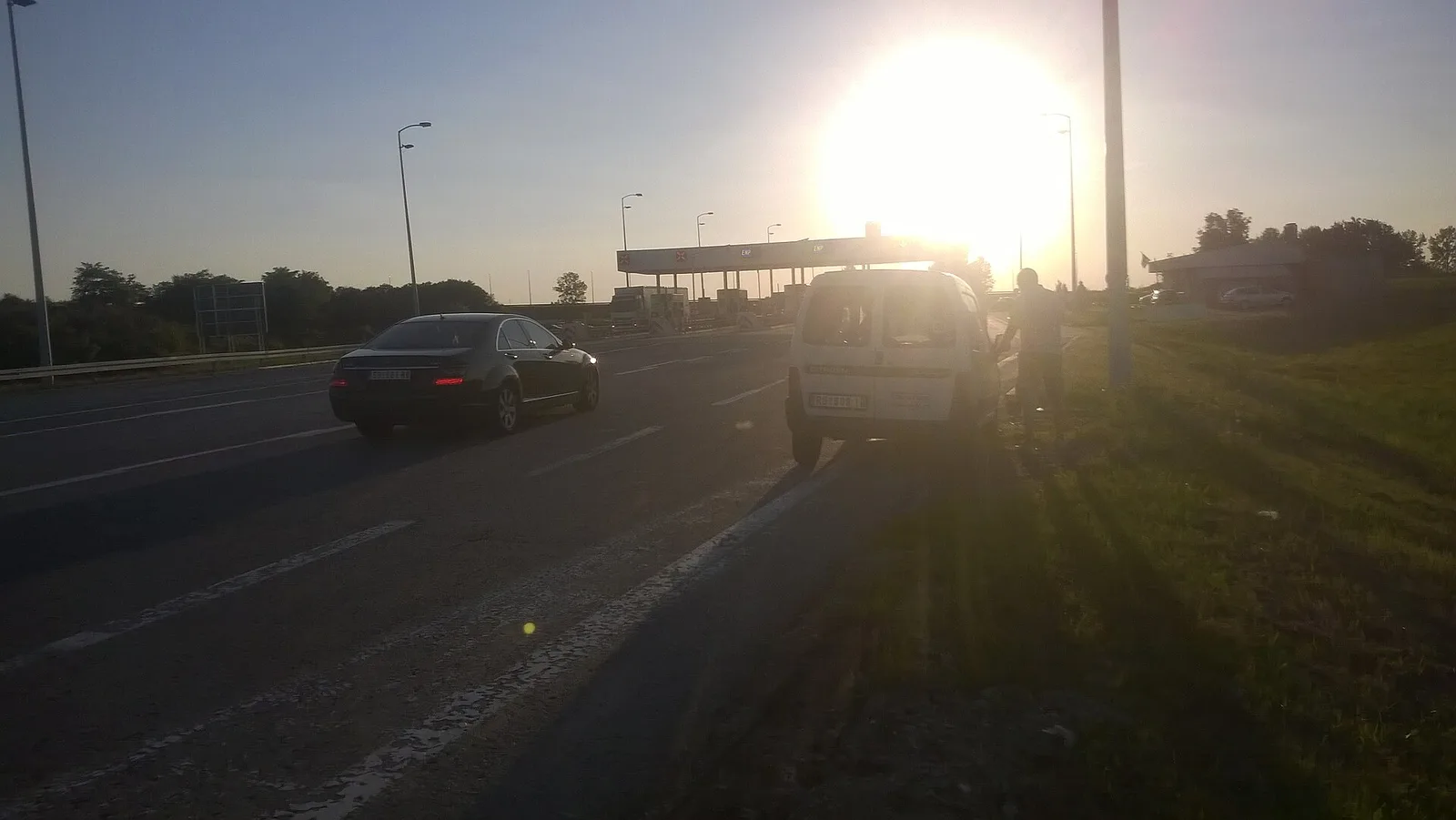
How to pay. At manned booths you can use cash, cards (Visa, Mastercard, Maestro, DinaCard and related cards listed by the operator), prepaid season tickets, or an ETC/ENP tag in the marked lanes. Most rental cars won’t have a tag, so plan on cash or card. Carry some dinars: border plazas often take euros, but an inland booth may not, and a card reader can fail on a Sunday night when you least want a debate.
Don’t lose the ticket. If you can’t produce a valid entry card, the operator’s rules allow charging the longest route on that section plus extraordinary-procedure costs. Keep the card in the same place every time you take one.
Borders: Batrovci in, Preševo out
You’re not buying a “border ticket”. You’re presenting documents and, if you’re in a hire car, proving you’re allowed to take it abroad.
Batrovci is the main motorway gate if you’re arriving from Croatia. It’s open for international traffic around the clock and it’s busy in summer peaks and holiday weekends. Expect full passport control on both the Croatian and Serbian sides - Croatia is in the Schengen area, Serbia isn’t. There’s no separate Serbian road toll for “crossing the line”; the toll starts when you join the motorway network after the border.
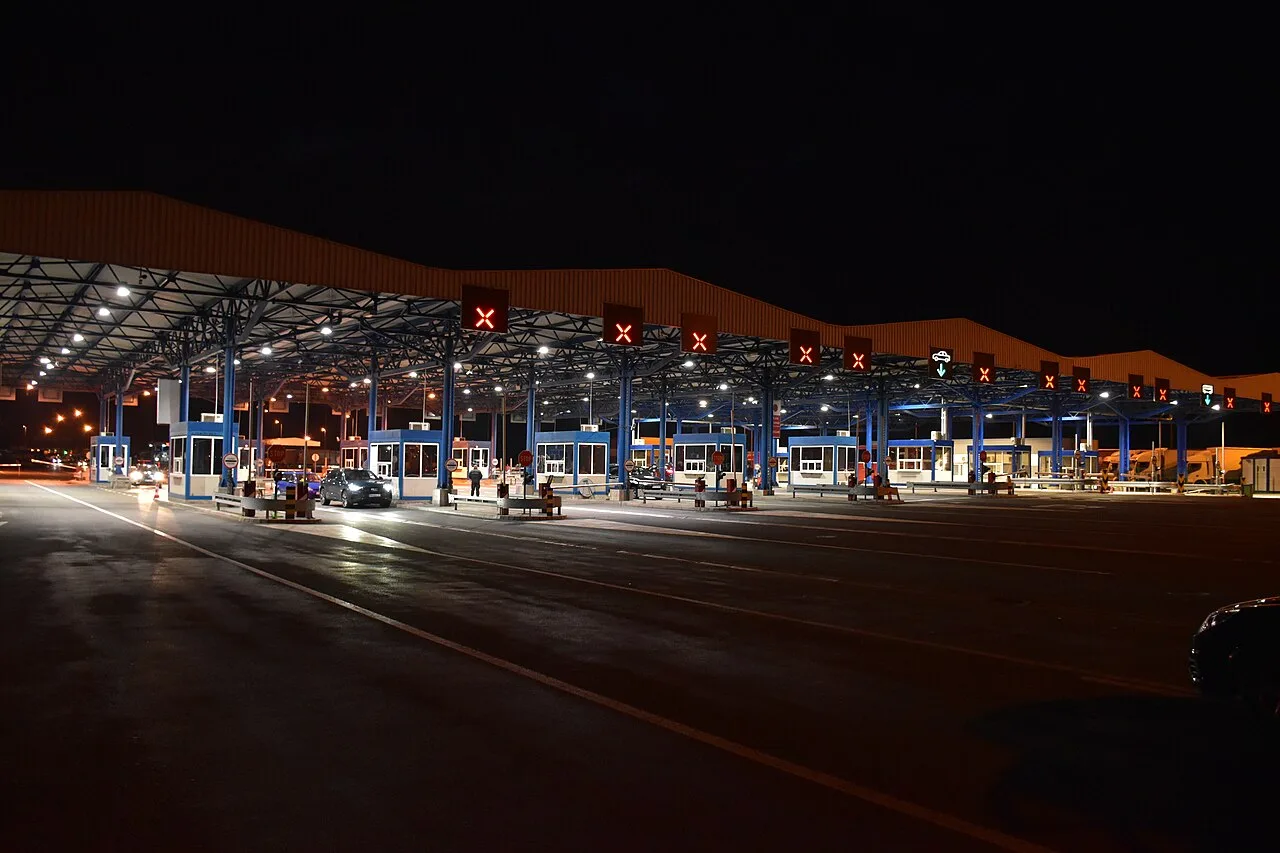
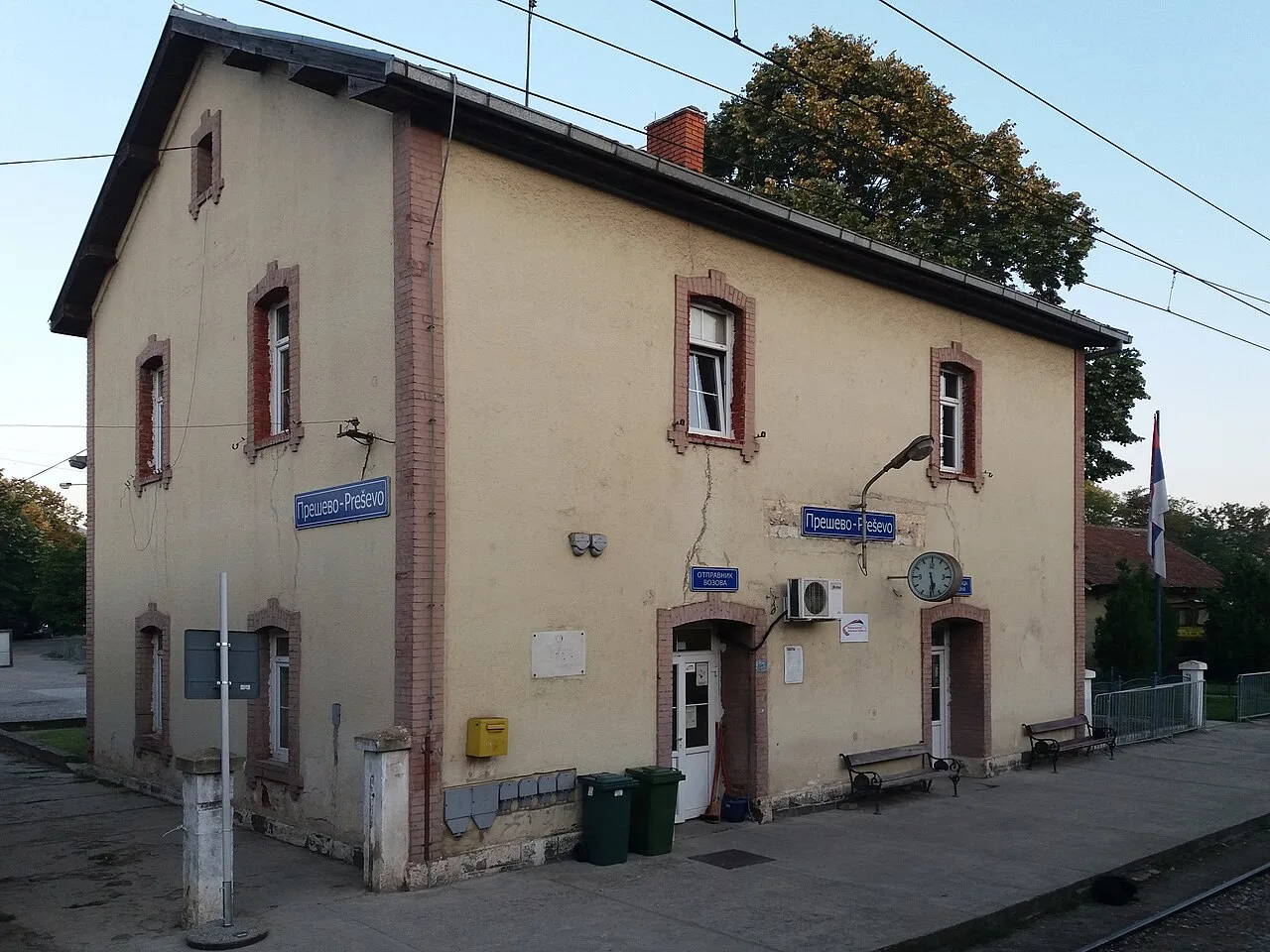
Preševo is your Serbian exit toward Greece. The matching North Macedonian post is Tabanovce. Same pattern: Serbian exit control, then Macedonian entry control. Queues here swell on Friday afternoons and summer Saturdays when the Aegean traffic piles up. Build slack into the day rather than promising yourself a fixed clock time at Thessaloniki.
Entry rules are nationality-specific. Serbia’s Ministry of Foreign Affairs lists general requirements (valid travel document or, where allowed, national ID; visa if your passport needs one; proof of means in some cases) and a per-country visa regime table. EU, Swiss, Norwegian and Icelandic citizens can often enter Serbia on a valid ID card as well as a passport - but you must confirm your own nationality on mfa.gov.rs before you travel, and the same honesty applies to North Macedonia and Greece on their official pages. This isn’t legal advice; border officers apply the rules in force on the day.
North Macedonia and the Greek gate
North Macedonia also runs plaza tolls without a vignette. The Public Enterprise for State Roads publishes Category IB (ordinary car) rates per station. On the straight Serbia-to-Greece A1 path you typically meet several of: Romanovci (60 MKD), Sopot or Otovica (80 MKD), Stobi (60 MKD), Demir Kapija (80 MKD) and Gevgelija (100 MKD). Add those and you’re looking at roughly 380 MKD if you hit that set - check the live PESR table because plaza layouts can change and some interchanges add Miravci/Smokvica variants. Paying in denars is cleaner than hoping the euro cash rate at the booth is kind.
The last border is Bogorodica (North Macedonia) / Evzoni (Greece). After that you’re on Greek motorways into Thessaloniki and beyond. Greek tolls are a separate budget line; I won’t invent a number here - price them from the Greek operator or as you pass the plazas.
If the Aegean is the real destination and you decide the three-country drive isn’t worth a day of your life, the modal comparison lives on Belgrade to Thessaloniki (coach or the short flight). This page assumes you’ve already chosen the car.
Rental cars and the paperwork that actually stops you
The mechanical risk on this route isn’t the motorway. It’s arriving at Preševo without permission to leave Serbia in that vehicle.
Before you book, tell the hire company the full itinerary: Serbia → North Macedonia → Greece. Ask for, in writing:
- Cross-border authorisation naming the countries you’ll enter.
- A Green Card (or equivalent proof of liability cover) that lists those countries for the rental dates.
- Confirmation that every driver on the contract is covered abroad.
Many Serbian rentals allow the run; some don’t, or they charge an add-on, or they exclude Greece while allowing North Macedonia. That’s a contract issue, not a border-fee issue, and it varies by supplier. If you’re comparing agencies, Local Rent is a practical place to start the Belgrade search - then read the cross-border clause before you pay.
For medical cover across three countries, a travel policy that follows you (rather than a single-country add-on) is the usual fix; SafetyWing is one option people use on multi-stop Balkan drives. Neither link replaces reading the policy wording.
Carry the rental agreement, the authorisation letter, the Green Card, your licence and passport (or ID where accepted) in the cabin, not buried under suitcases. Officers ask for the stack in roughly that order.
Timing, fuel and where it makes sense to stop
Moving time Belgrade to Thessaloniki on a clean day is often quoted around six to eight hours. Add Serbian toll stops, Macedonian plazas, two borders and Greek tolls, and a “depart at 08:00, swim by 16:00” plan is how people end up eating a sandwich at Evzoni at dusk. Summer Fridays southbound and Sundays northbound are the ugly ones.
Fuel is straightforward on the A1: large stations take cards. Still keep a little cash for a small pump or a snack stop that doesn’t. Fill up before Preševo if the tank is low - you don’t want a fuel hunt in the queue lane.
Niš is the sensible Serbian overnight if you’re splitting the drive: you’re past the densest Belgrade traffic, you’ve paid only part of the southbound toll, and the city has food and beds without diverting far from the motorway. Skopje works the same way on the Macedonian side if you’d rather break after the first border. Don’t invent a third overnight unless you’re actually touring; the transit point of this page is to keep you moving.
One last calibration. If your question was “how do Serbian roads work in general?”, that’s driving in Serbia. If it was “is the coach smarter than this?”, that’s Belgrade to Thessaloniki. If you’re already committed to the wheel: price Belgrade-Preševo on the official calculator, clear Batrovci or start in Belgrade, exit at Preševo, budget Macedonian plazas and the Greek gate, and don’t leave the hire desk without written permission for all three countries. That’s the whole job.
Photos
Read also

Car rental · 8 min read
Driving in Serbia: Roads, Tolls and Rules
Verified · July 15, 2026Driving in Serbia: the motorway network, how distance-based tolls work with no vignette, speed limits, the winter-tyre law and the near-zero alcohol limit.

Car rental · 10 min read
Car Rental in Serbia: Tips & Where to Book
Verified · July 3, 2026How to rent a car in Serbia: where to book, licence and IDP rules, deposits, tolls without a vignette, Belgrade parking zones, fuel and crossing borders.

Food · 10 min read
Belgrade Food Tours: What You Eat and Pay
Verified · September 4, 2026Belgrade food tours run 2-4 hours: from €34 per person on a street walk to €165 solo on the operator flagship, €810 for a group of six.

What to see · 10 min read
Fruska Gora Monasteries: Which to Visit
Verified · September 3, 2026Sixteen preserved Orthodox monasteries on Fruska Gora: Krusedol, Novo Hopovo, Grgeteg and Vrdnik, plus dress code and a day route from Novi Sad.