
Serbia Residence Permit (Boravak): A Guide
How Serbia temporary residence (boravak) works in 2026: the grounds, the 2023 single-permit reform, how to apply, timelines and what to check with MUP.
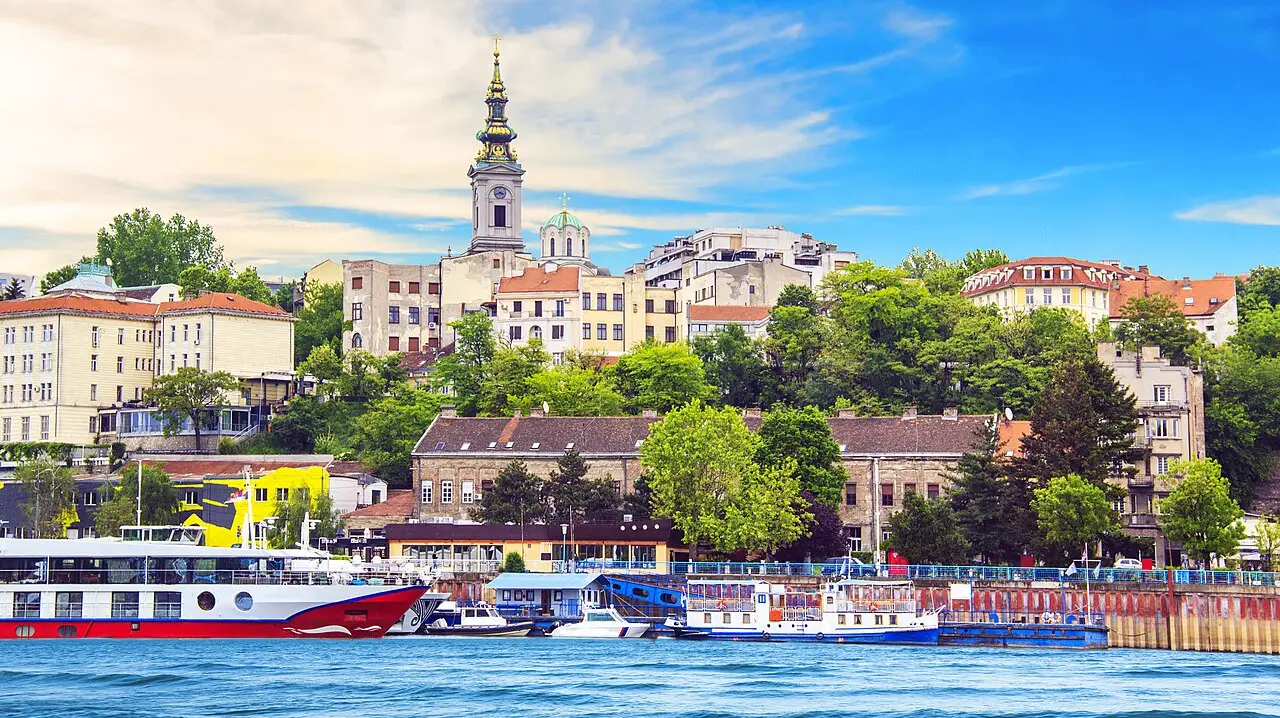
A temporary residence permit (privremeni boravak) is the document that lets a foreigner live in Serbia beyond the 90-day visa-free window, and for most people it’s the first real step toward settling here. You apply on a specific ground (a job, your own company, property, family, study and a few others), and since a 2023 reform the employment route in particular has become far simpler, with residence and work now combined into a single permit through one process. It’s granted for a defined period and can be renewed. Get the paperwork straight and it’s a manageable process rather than a daunting one.
This is general information, not legal advice. Immigration rules in Serbia change often, and what applies to you depends on your nationality, your ground and your circumstances. Everything below was checked in July 2026 against official sources, but you should confirm the current requirements with the Ministry of the Interior (MUP) and, for anything non-obvious, a licensed Serbian immigration lawyer before you act. Fees and thresholds in particular move, so treat any figure here as an order of magnitude, not a quote.
What “boravak” actually is
Boravak is the Serbian word for stay or residence, and in this context it means a temporary residence permit issued by MUP. Practically, it’s a biometric residence card that gives you the legal right to live in the country for its validity period. It’s distinct from a tourist stay, from permanent residence and from citizenship, and it’s the status nearly every long-term newcomer holds first.
Two points set Serbia apart from a lot of Europe and explain its popularity. Several of the residence routes carry no minimum investment or capital requirement the way many countries’ equivalents do, and the country is genuinely welcoming to newcomers. That said, “no minimum investment” isn’t the same as “automatic”: you still have to meet the conditions of your chosen ground and file a proper application.
The grounds you can apply on
You can’t apply for residence in the abstract; you apply on a basis (osnov), and the official list from MUP is broad. The common routes are:
- Employment - a contract with a registered Serbian employer, now handled as the single permit (see below).
- Self-employment or your own company - registering a business and acting as its director. This is the route most freelancers and remote workers use, and Serbia’s version needs no set minimum capital, which is a big part of why it’s popular.
- Real estate ownership - owning property in Serbia is a recognised basis in its own right.
- Family - marriage or a registered common-law partnership with a Serbian citizen or a permit holder, kinship and family reunification. Residence on family grounds generally also carries the right to work.
- Study - schooling, university, Serbian-language courses, scientific research and exchange programmes.
- Other and special categories - medical treatment, care, religious service, and the newer startup, investor and “talent” tracks for recognised higher education.
Which ground you choose matters, because it decides your documents, your validity period and whether the permit lets you work. If more than one route fits your situation, this is exactly the sort of thing worth a short consultation with a local lawyer before you commit.
The 2023 reform: the single permit
The most important recent change is the single (unified) permit, jedinstvena dozvola, for people coming to work. Before it, an employment applicant had to deal with two separate offices: MUP for the residence permit and the National Employment Service for the work permit, in two procedures. The reform merged them into one permit and one procedure before MUP, issued as a single biometric card that covers both residence and the right to work.
Alongside that, applications for the single permit moved online. Since 1 February 2024 they’re filed through the government’s Foreign Nationals’ Portal (welcometoserbia.gov.rs) rather than in person. The stated aim was to make the employment route faster and less bureaucratic, and in practice it removed a whole office from the process.
How long it lasts
Validity depends on your ground, and this is an area that has moved recently, so confirm the current position with MUP. Historically temporary residence was granted for up to one year at a time; more recently the maximum was extended to up to three years for temporary residence, with the single employment permit tied to the length of your contract and renewable in multi-year blocks. Some grounds are shorter by design: the startup track’s first residence is set at one year and the investor track at six months under the official rules.
The practical takeaway is that you should plan for a permit measured in one to three years depending on your basis, and to renew before it expires rather than let it lapse. Don’t build plans around a specific duration you read on a blog, including this one; check what currently applies to your ground.
How to apply, step by step
The exact documents vary by ground, but the shape of the process is consistent.
- Enter and register your address. Every foreigner must register their address (the “white card”, prijava boravišta) within 24 hours of arrival. A hotel does this automatically; in a private rental, your host or you must register it at the police. You’ll need this registration for the residence application.
- Line up your ground. Sign the employment contract, register the company, complete the property purchase, gather the marriage or study documents, whatever your basis requires.
- Prepare the supporting file. Typically a valid passport, proof of the ground, a landlord’s statement agreeing to your registered address, health insurance, proof of sufficient funds, photos and the paid state fees. MUP lists the landlord statement explicitly among the requirements.
- File the application. The single (employment) permit is filed online through the Foreign Nationals’ Portal. Other grounds are generally lodged in person by appointment at the Foreign Nationals directorate (in Belgrade) or the relevant regional police directorate.
- Wait for the decision, then collect the card. For the single permit, MUP is required to decide within 15 days of a complete request. General temporary-residence applications commonly take around a month in practice, though this varies with your case and the office’s workload.
On fees, there are administrative charges for the application and the card, payable in dinars. The amounts change and are set by tariff, so rather than trust a figure here, check the current fee with MUP when you apply. Budget for modest state charges plus any costs of translating and certifying your documents.
Digital nomads and remote workers
If you work remotely and want to base yourself in Serbia, note that the country has no dedicated digital nomad visa. The practical equivalent is temporary residence on self-employment or company grounds: you register a business, become its director and hold residence on that basis. It’s the most common legal route for freelancers and remote workers, and because there’s no minimum capital requirement it’s more accessible than similar schemes elsewhere. We go deeper into the day-to-day of that life, from internet to neighbourhoods, in our guide to living in Belgrade as a digital nomad.
Tax, renewal and what comes next
Two things are worth flagging before you set off down this road. First, residence and tax are separate questions. Holding a Serbian permit doesn’t by itself settle your tax position, but spending more than 183 days a year in Serbia can make you tax resident here, which creates local obligations. Serbia’s tax authority is the Poreska uprava (purs.gov.rs), and this is genuinely a take-advice situation rather than something to guess at from a guide.
Second, temporary residence is a stepping stone. Held continuously over several years (the exact period depends on your ground), it can lead toward permanent residence, and in turn, over a longer horizon, toward citizenship. The rules and timelines for those steps change, so treat this as the general direction of travel and confirm the specifics when you get there.
Before you start
Serbia has made residence more accessible than most of Europe, especially since the 2023 single-permit reform tidied up the employment route, and the lack of a minimum-investment hurdle on several grounds keeps the door open to ordinary movers rather than only the wealthy. The honest caveats are that the rules change frequently, the paperwork is real, and a small mistake in your file or your registration can cost you weeks. Pick your ground carefully, register your address on arrival, keep every document and proof of registration, and lean on official MUP guidance or a licensed lawyer for the current detail.
If you are still weighing whether Serbia is the right base, it helps to know what living here actually costs, which we break down in the cost of living in Belgrade guide, and how to get here in the first place in how to get to Serbia.
Photos
Read also

Relocation · 9 min read
Cost of Living in Belgrade
Verified · August 10, 2026What Belgrade costs in 2026 for nomads and expats: rent by area, food, free transport, coworking and a realistic monthly budget in euros and dinars.

Relocation · 9 min read
Living in Belgrade as a Digital Nomad
Verified · July 4, 2026Belgrade for digital nomads in 2026: fast cheap internet, free transport, coworking, best areas to live, SIM and visa basics, and the honest trade-offs.

Food · 10 min read
Belgrade Food Tours: What You Eat and Pay
Verified · September 4, 2026Belgrade food tours run 2-4 hours: from €34 per person on a street walk to €165 solo on the operator flagship, €810 for a group of six.

What to see · 10 min read
Fruska Gora Monasteries: Which to Visit
Verified · September 3, 2026Sixteen preserved Orthodox monasteries on Fruska Gora: Krusedol, Novo Hopovo, Grgeteg and Vrdnik, plus dress code and a day route from Novi Sad.