
Serbia Weather by Month
Serbia's summers hit 29C and heat waves push past 37C; winters sit near freezing. Month-by-month highs, lows and rainfall, plus when to avoid the heat.
Serbia has a continental climate: cold winters, hot summers, and short, changeable springs and autumns in between. In Belgrade, January days sit around 4 to 5C and often below freezing at night, while July and August afternoons average close to 29C and can spike past 37C in a heat wave. Rain is spread fairly evenly through the year at roughly 630 mm in total, with early summer the wettest stretch and late winter the driest. The mountains run several degrees colder and hold deep snow from December into spring. This page is the month-by-month detail, temperatures, rainfall and what to pack; if what you actually want is a recommendation on which month to book, that’s a different question, and our guide to the best time to visit Serbia answers it head-on.
The figures below are averages for Belgrade, drawn from the 1991-2020 climate normals, and they give a fair picture of the lowland north and centre where most travellers spend their time. Two things to keep in mind as you read: averages smooth over the extremes, so any given day can land well above or below them, and altitude changes everything. Anywhere up in the mountains, subtract several degrees and add a lot more snow.
Serbia weather at a glance: the month-by-month table
Read the highs as “a warm afternoon” and the lows as “around dawn”: the columns below give Belgrade’s average daily high, average daily low and typical monthly rainfall. Treat them as a rough guide rather than a forecast for your specific dates.
| Month | Avg high | Avg low | Rain |
|---|---|---|---|
| January | 4.5C | -2.6C | 40 mm |
| February | 7.4C | -1.4C | 35 mm |
| March | 12.8C | 2.2C | 45 mm |
| April | 18.4C | 6.9C | 50 mm |
| May | 23.0C | 11.5C | 65 mm |
| June | 26.8C | 15.2C | 75 mm |
| July | 29.0C | 16.6C | 65 mm |
| August | 29.3C | 16.7C | 55 mm |
| September | 24.0C | 12.3C | 55 mm |
| October | 18.4C | 7.5C | 50 mm |
| November | 11.9C | 3.2C | 45 mm |
| December | 5.5C | -1.2C | 50 mm |
The warmest highs come in August, closely shadowed by July; the coldest month overall is January. June is the wettest month and February the driest, though the differences are modest and Serbia has no true dry season the way the Mediterranean coast does. Sunshine totals around 2,115 hours a year, concentrated heavily in summer. What the numbers can’t show is the wind: in the colder half of the year the košava, a dry gust off the Carpathians, can rake down the Danube for days and make a 4C afternoon bite like something several degrees colder.
Winter (December to February): cold, grey and often below freezing
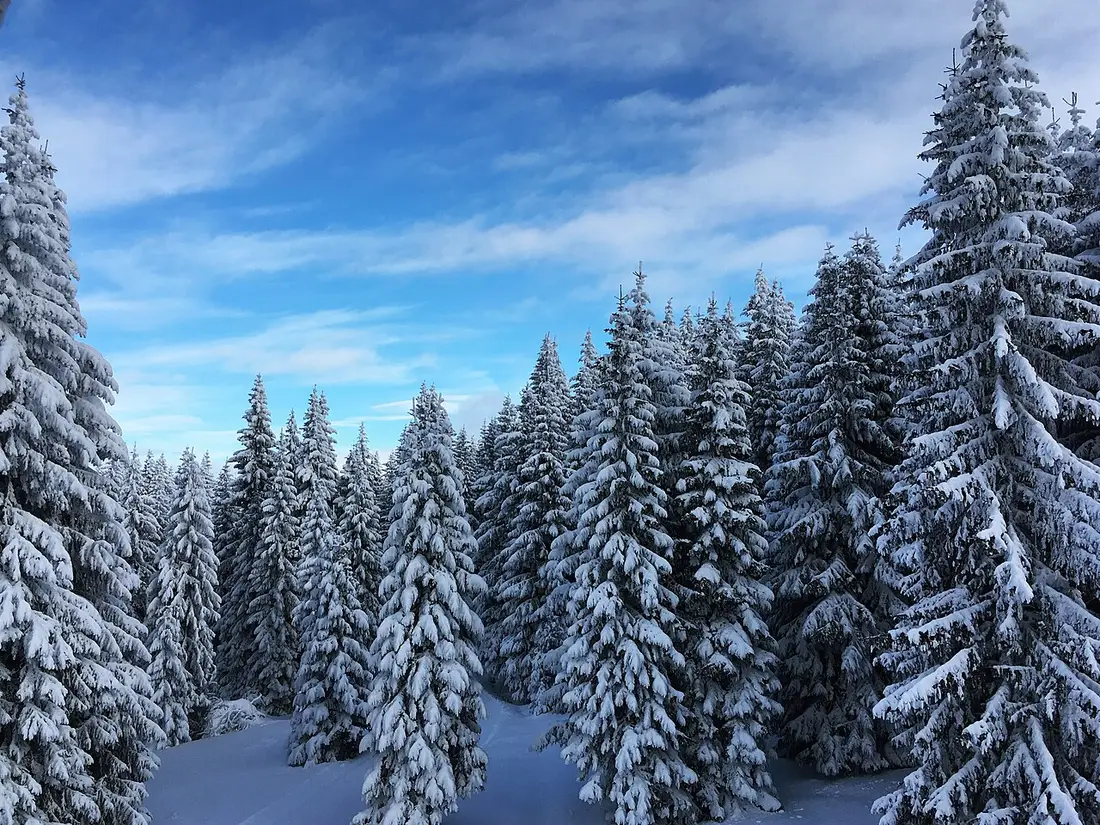
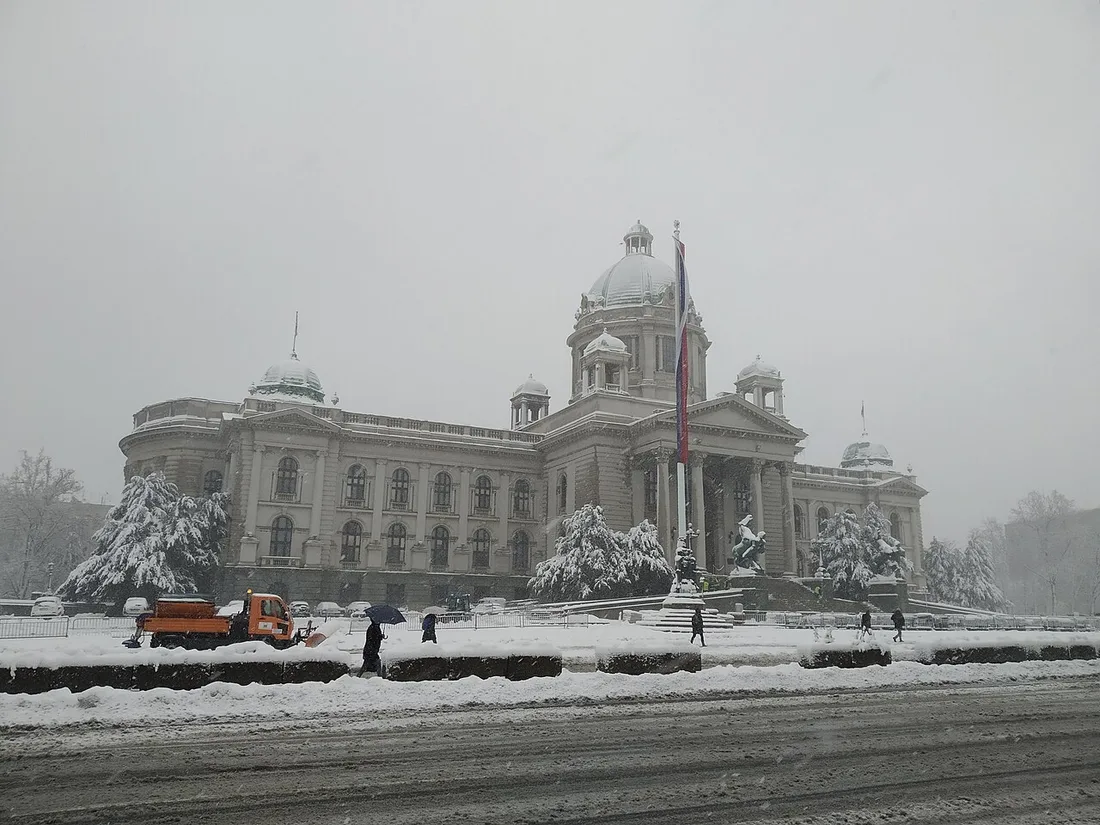
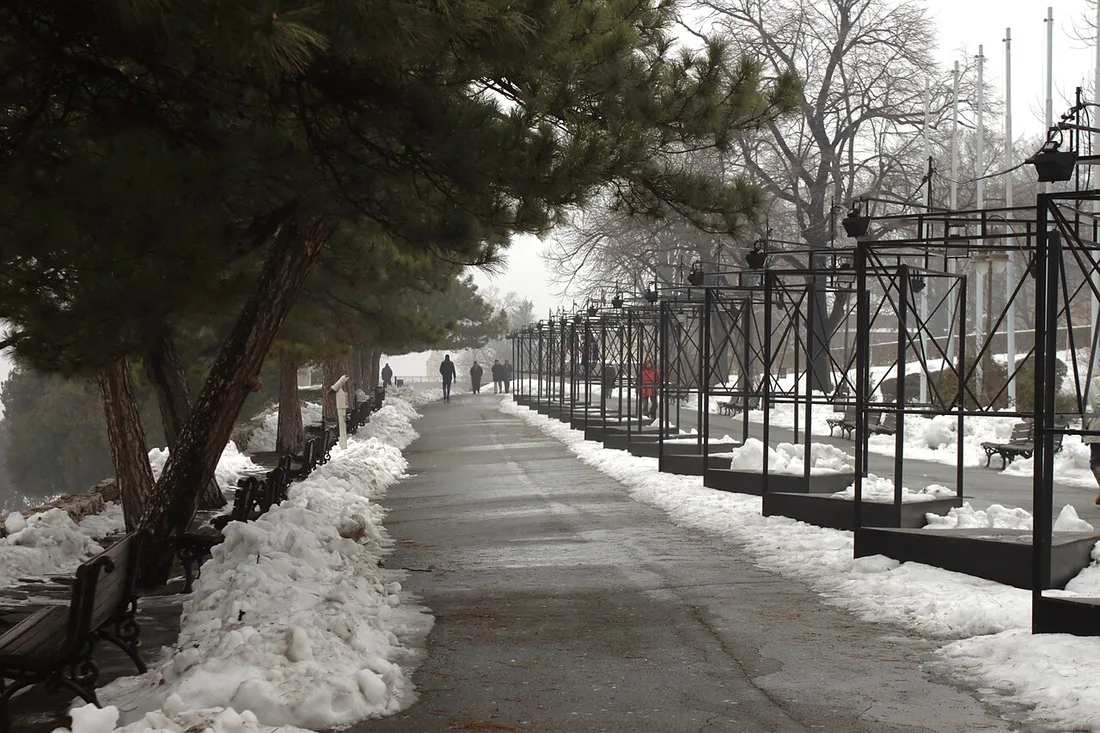
Winter in the lowlands is properly cold rather than brutal. Daytime highs in Belgrade hover between about 4C and 7C, nights dip below freezing more often than not, and the season tends toward grey, damp and foggy rather than crisp and bright. Snow does fall in the city, usually in short spells between December and February, but it rarely lies deep or long down on the plain; you’re more likely to get slush and cold drizzle than a proper white blanket. Cold snaps driven by that same wind or an Arctic outbreak can briefly send temperatures well below -10C, and in extreme years below -20C.
The mountains are a different world in the same months. On Kopaonik, up around 1,700 metres, January averages near -4C and the resort holds a snowpack commonly 60 to 100 centimetres deep at the height of the season, with reliable cover from roughly early December to early April. Snow depth builds through midwinter and daylight lengthens as spring nears, so late-season cover and light peak together in February and March. Pack for real winter here: insulated coat, hat, gloves and proper boots in the city, and full ski kit for the slopes. For what there actually is to do in those months, and what it costs, see our guide to Serbia in winter.
Spring (March to May): warming fast, with big swings
Spring is the season that changes quickest. March can still feel like winter, with highs around 13C and the odd late frost, but by May afternoons are reaching a comfortable 23C and the whole country greens up in a rush. What the monthly averages hide in spring is how far a single day can swing: a warm week can be followed by a cold, wet one, and the gap between a chilly dawn and a mild afternoon is wide, so layering is the only sensible approach. April in particular can throw showers, and rainfall creeps up month on month toward the early-summer peak.
What to pack shifts through the season - our Serbia packing list walks through plugs, layers and the seasonal kit in one place. Early spring still wants a warm jacket and something waterproof; by late April and May you’re into shirt-sleeve afternoons with a light layer for cool evenings, and a sunhat starts to earn its place. Bear in mind the earlier warning about altitude: while Belgrade is in blossom, the higher mountains can still be under snow well into spring, so a May trip up to Kopaonik or the western peaks can feel a full season behind the capital.
Summer (June to August): hot, sometimes humid, occasionally fierce
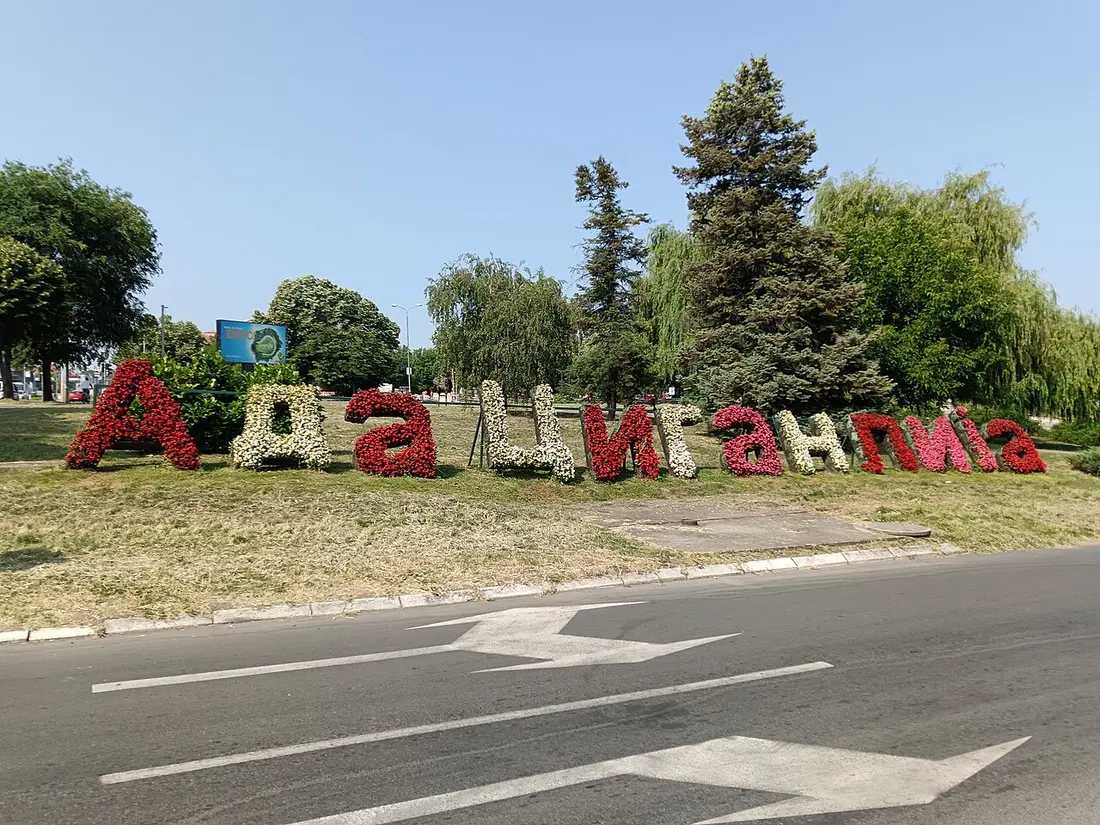
Summer is hot. Average highs across July and August sit right around 29C, and unlike a dry Mediterranean heat, Serbian summer can be humid and heavy, especially in Belgrade and the lowland north, the kind of thick, still air that leaves your shirt damp by mid-morning. Genuine heat waves are a regular feature: several summers have pushed past 37 or 38C, and the city’s record sits at a scorching 43C, set in 2007. Evenings stay warm, nights rarely drop below the mid-teens, and the sun is strong, so sun protection and a steady supply of water matter more here than the mild averages might suggest.
June is, on paper, the wettest month of the year, and summer rain tends to arrive as short, heavy thunderstorms rather than all-day drizzle: the sky can go from clear to a hard fifteen-minute downpour and back, dropping the temperature a few welcome degrees before the mugginess creeps back. Pack light and breathable clothing, sunglasses and a hat, plus one thin layer for over-air-conditioned interiors and the odd cooler evening, and don’t bother with a heavy raincoat when a packable shell will see you through the storms.
Autumn (September to November): mild, golden and cooling
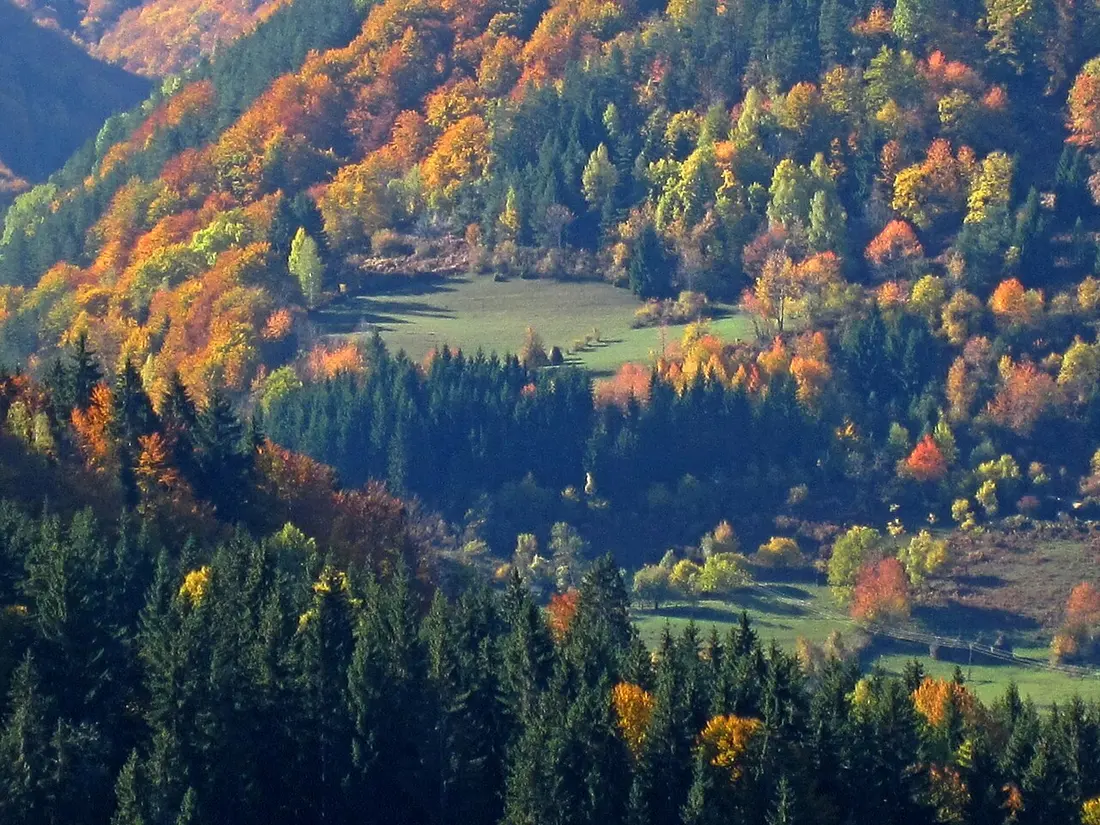
Autumn mirrors spring in reverse, easing down from summer heat rather than climbing toward it. September is still warm and settled, with highs around 24C and pleasantly cool nights. By October afternoons have dropped to the high teens, and November brings the first real chill, highs around 12C, longer nights and the return of grey, foggy mornings that hint at the winter ahead. Rainfall stays moderate, but the daily temperature range widens again as the nights lengthen, so a warm afternoon can sit on top of a dawn cold enough for frost by late October.
Packing for autumn is a layering exercise, much like spring but tilting cooler as the weeks pass. Early autumn is still light-jacket territory; by late October and November you want a warmer coat, a scarf and something for the wet. The mountains, predictably, cool and receive their first snows earlier than the plain, so a late-autumn hike at altitude can catch a genuine wintry day even while Belgrade is merely crisp.
How the mountains and regions differ
The Belgrade figures above cover the lowland north and centre well, but Serbia isn’t climatically uniform, and altitude is the single biggest reason. As a rough rule, temperatures drop by around 6C for every thousand metres you climb, so upland resorts such as Kopaonik (about 1,700 m) and rolling plateaus like Zlatibor run markedly cooler year-round: milder, shorter summers with highs often only in the high teens, and long, snowy winters. Where Belgrade gets thin, passing snow, these highlands hold a deep, dependable snowpack for months, which is exactly what the ski season is built on.
There’s a milder-and-drier tilt too. The far south around Niš, and low river valleys generally, tend to run a touch warmer than the capital, while the northern plain of Vojvodina is flat, open and exposed to wind, with hot summers and cold, sometimes foggy winters. None of this changes the overall continental pattern, but it does mean you should adjust the table for where you’re actually headed: cooler and snowier up high, a shade warmer down south.
Turning the weather into a plan
Knowing the numbers is half the job; the other half is fitting them to your trip. If you are still weighing which month suits what you want to do, whether that is festivals, hiking, skiing or a quiet city break, our companion guide to the best time to visit Serbia turns this data into clear season-by-season recommendations. Once you have a month in mind, how many days in Serbia helps you size the trip, and if a city break is the plan, our rundown of things to do in Belgrade works in any weather the calendar throws at you.
One last reminder worth repeating: these are long-term averages, not a promise. Serbia’s continental climate is prone to swings, a mild February or a stormy June is entirely normal, so check a proper forecast in the days before you travel and pack a layer more than the averages suggest. The table is most useful for the decisions you make weeks out, what to pack and what a given month usually feels like; for the week itself, trust the forecast over the average.
Photos
Read also

Before you go · 9 min read
Tipping in Serbia: How Much, Cash or Card
Verified · August 9, 2026Tipping in Serbia: about 10% in restaurants, round up cafes and taxis. Cash is standard - card terminals rarely add a tip. What to leave, by situation.

Before you go · 9 min read
Belgrade or Budapest: Which City Break?
Verified · August 8, 2026Belgrade or Budapest: Budapest wins on flights, baths and sights, Belgrade on free transit and price. Populations, tickets and connections compared.

Before you go · 10 min read
Best Hostels in Belgrade: Party and Budget Picks
Verified · August 8, 2026Belgrade hostels from EUR 6.66 a bed: 3 party picks near the bars and 3 quiet, cheaper ones, with real prices, ratings and exact addresses.

Before you go · 9 min read
What to Pack for Serbia (+ Power Plugs)
Verified · August 7, 2026Pack for Serbia: Type F/C 230V plugs, Belgrade vs mountain layers, and the shoes, eSIM and documents that actually matter on the trip.