
Belgrade Christmas Market: Dates, Cost, Two New Years
Belgrade's Christmas market is free, runs in Savski park into early January, and the city then throws New Year twice. Dates, transport and what closes.
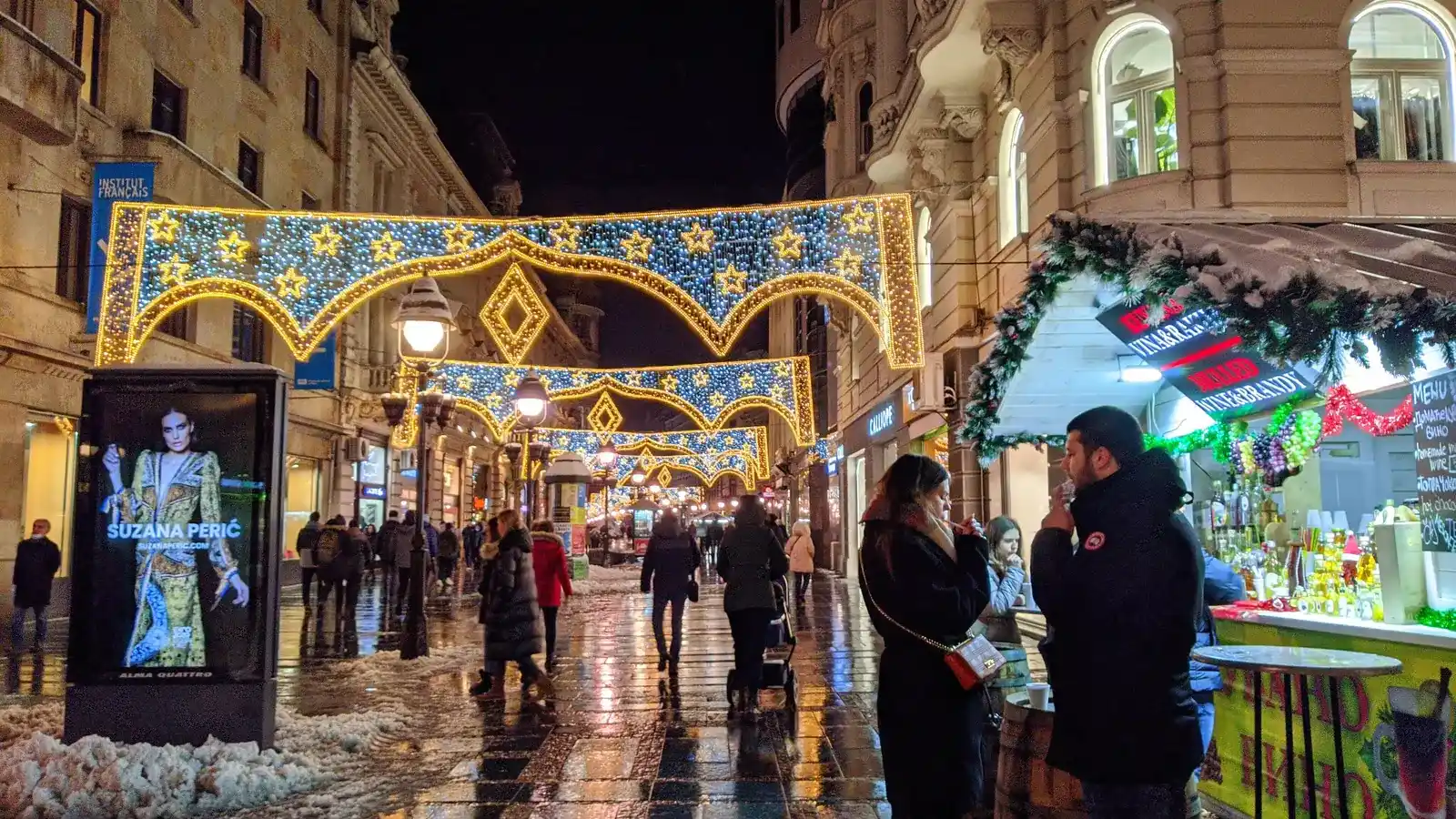
Belgrade’s Christmas market is called Zimska bajka, the Winter Fairytale, entry is free, and it fills Savski park at Belgrade Waterfront rather than any old-town square. The last edition, its fourth, ran 5 December 2025 to 5 January 2026, daily from noon to 22:00. Dates for the coming winter still weren’t out when we checked on 3 August 2026. That is normal here, and it changes the order you book things in.
Set your expectations right and you’ll enjoy it. This isn’t Vienna and isn’t trying to be: a young festival in a riverside park, run as an events programme with food and drink around it. The honest reason to fly in is what happens either side of it. Belgrade sees in the New Year twice, thirteen days apart, and the second one costs a fraction of the first.
What you actually walk into
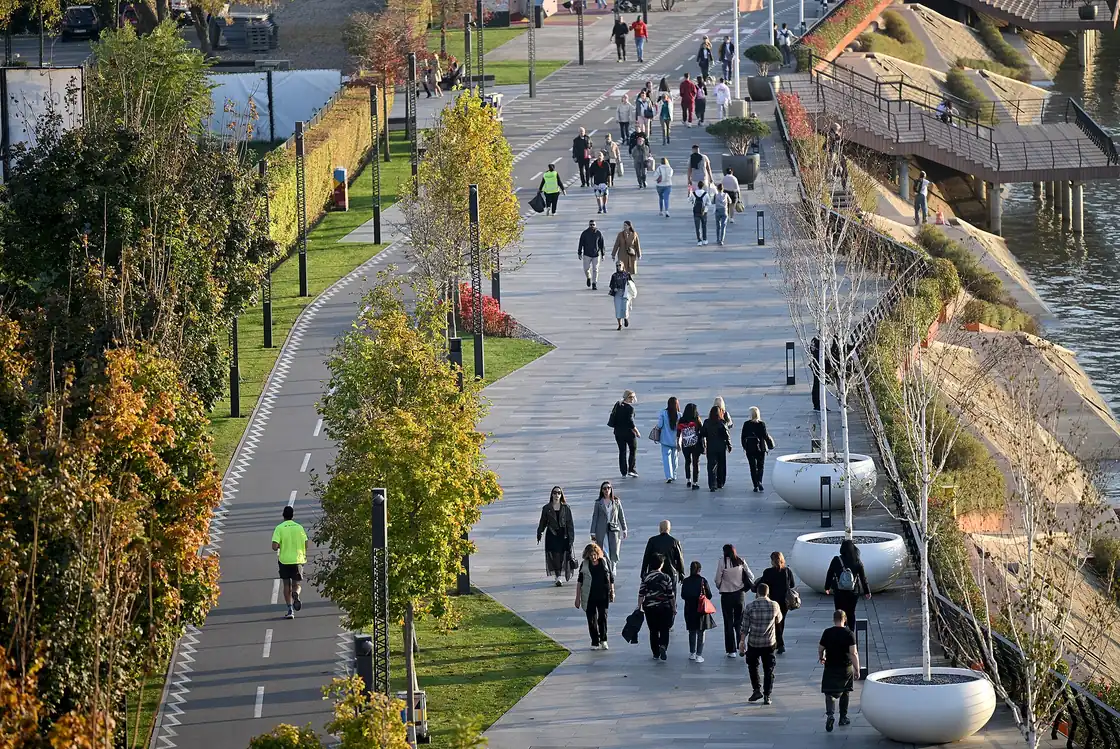
Savski park covers roughly 20,000 square metres, split into named zones: the Tree of the Loveliest Wishes, a magic labyrinth, Gastro spots, an ice rink called Ledeno carstvo (Ice Kingdom), the main stage and a Wine and dine area. Entry costs nothing. You pay for what you eat, drink and skate.
The programme is the point rather than the shopping, and the last edition’s day-by-day listing shows exactly who it is built for. A children’s play at 13:00 every Saturday and Sunday, plus the holiday dates, staged by touring companies. Belgrade Zoo workshops on Sunday middays. Choirs, a magician, DJ sets badged Đuskamo zajedno (“let’s dance together”), cover bands in the early evening. And an open-air winter cinema that screened on 29 of the 32 days, 38 showings in all. Travelling with kids, that stack of free afternoon programming is the strongest thing on offer.
Two things about that cinema. Home Alone and its sequel took eight of those slots between them, four each, so a film you thought you had missed comes round again. And the billing is looser than the branding suggests: Jumanji, Mrs. Doubtfire and Pirates of the Caribbean shared the screen with Elf and The Polar Express. Titles are listed in English, and the listing never says whether a screening is dubbed or subtitled, so ask before promising a five-year-old anything.
If you came for rows of craft stalls, the city-centre pitches usually do more of that job. Belgrade’s own winter programme, Beogradska zima, runs separately: the 2025/26 version began on 25 December with more than 150 free events across Trg Republike, Tašmajdan, Park vojvode Vuka and the plateau by the Temple of Saint Sava. In 2023 a Zimski bazar ran along Knez Mihailova, with a children’s village and a synthetic rink at Kalemegdan. The layout changes year to year, so treat it as likely rather than promised.
When it runs, and why the dates land late
Dates for the last edition went out on the state news wire on 18 November 2025, two and a half weeks before the park opened on 5 December. The edition before it, opening 8 December 2023, was announced on 27 November. So the honest rule is a band, not a number: confirmed dates surface between mid-November and the first days of December, and the full day-by-day programme lands later again, often once the gates are open. The switch-on is at 17:00 on opening day, with a countdown and a concert to follow.
Compare Zagreb, four hours up the motorway, which had published Advent 2026 dates of 28 November to 7 January by the start of August. Belgrade doesn’t work that way, and waiting for official dates before booking is how you end up paying December airfares.
So plan against the pattern instead. Four editions in, the shape holds: opening in the first week of December, closing in the first week of January, noon to 22:00, free. The closing date is the part that actually moves. The last two editions finished on 5 January, but the 2023/24 one ran 8 December to 8 January, straight through Orthodox Christmas. Three days either way sounds trivial until it decides what you see.
What you can book against with total confidence are the fixed dates around the festival: 1, 2 and 7 January are non-working days in Serbia, and Serbian New Year falls on the night of 13 to 14 January, every year. Those anchors don’t move, whatever the festival announces in December.
Warm rakija, not mulled wine
The official description of what gets poured here is “top wines and warm rakija”, and that’s the detail worth arriving prepared for. Mulled wine exists, and you will find kuvano vino on the city-centre stalls; the photo at the top of this page is one of them. But heated fruit brandy is the local answer to a cold evening, most often plum or quince, and it lands considerably harder than a paper cup of Glühwein. Pace yourself on a night that starts at six.
Nobody publishes a price list for the stalls, so don’t trust a figure quoted online. Serbia runs at roughly 60 to 90 euros a day mid-range, and market pricing sits above a neighbourhood kafana without getting silly. Our Serbia trip cost breakdown has the wider numbers.
The ice rink nobody prices
The rink is real: an official zone called Ledeno carstvo, listed by Belgrade Waterfront as an attraction and described in the press as a large surface with separate beginner and expert areas. What doesn’t exist is any published detail. The festival’s own ice rink page carries one line of placeholder dummy text. No hours, no price, no skate-hire figure.
The rest of the city gives you a yardstick. Belgrade’s other rinks in a recent season charged 200 dinars for the ice at Ada Ciganlija plus 300 for skates, 500 at the Pionir ice hall with family tickets at 900, and 500 plus 500 at SC Pingvin. Call it 2 to 9 euros a head. Turn up expecting a few hundred dinars, ask at the gate, and don’t build an evening around it.
Belgrade sees in the New Year twice
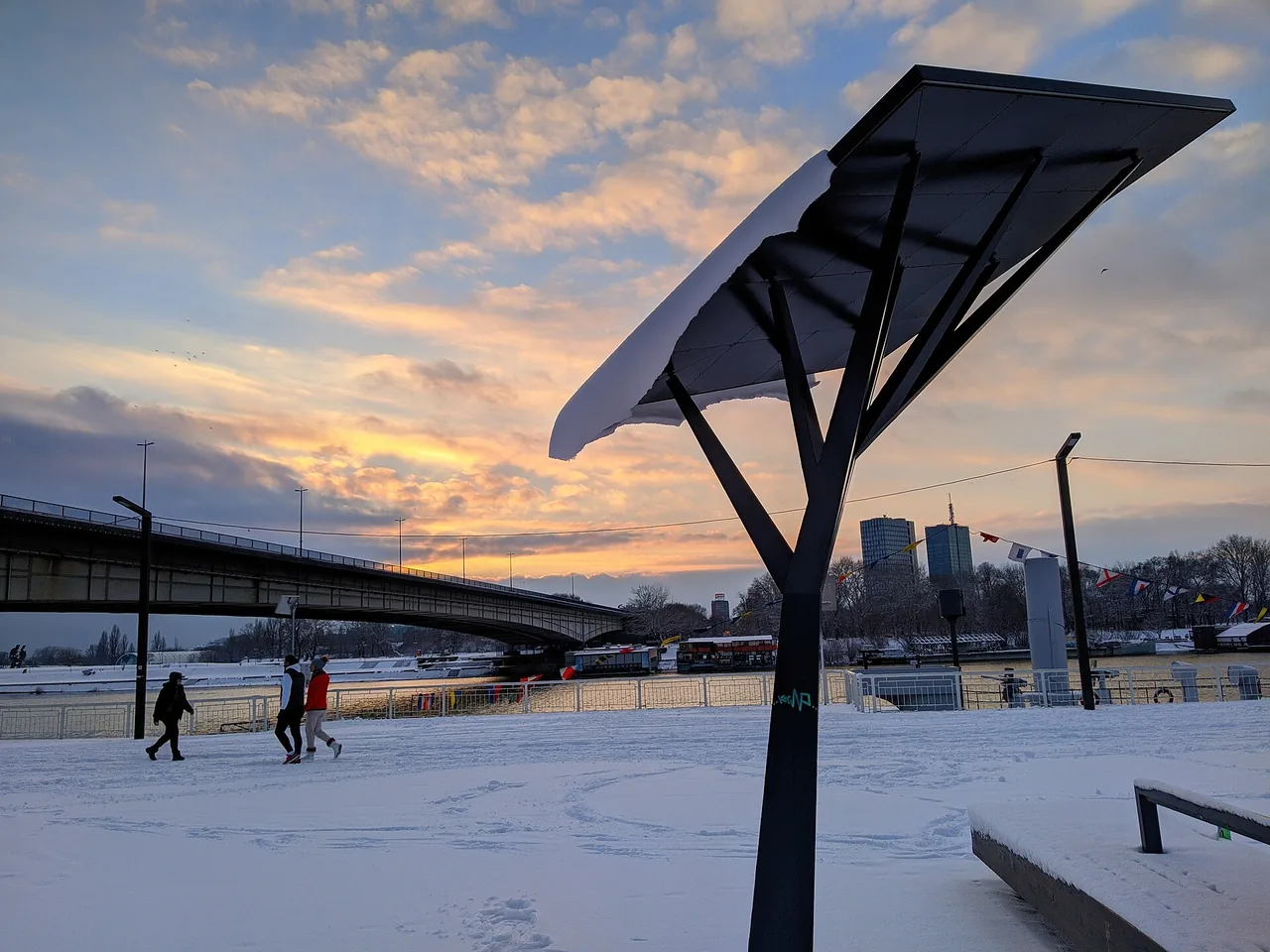
The 31 December party has moved, which matters if you’re following an old blog. For 2025/26 the city announced it only for the Sava Promenada, not Trg Republike, where generations of Belgraders spent the night. The bill was Goca Tržan, Aleksandra Radović, Senidah and the Boban and Marko Marković brass orchestra, music from 20:00, a pyrotechnic projection thrown onto Kula Beograd, a drone squadron and fireworks across New Belgrade. Free, outdoors, no ticket. Inside the park that night: the Nutcracker by BeoBalet at 14:00, DJs from 18:30, a headline set at 22:30.
Then, on the night of 13 to 14 January, the country does it again. Serbian New Year is the Julian 1 January. The most recent one ran on that same Sava promenade: a compact show either side of midnight, fireworks with drones and lasers, national symbols thrown onto the tower. The one before it was still on Trg Republike, Dejan Petrović’s brass big band from 21:30 and Aco Pejović through midnight. One edition on the river is a move, not a habit.
That second date is the value play, and few visitors abroad have heard of it. Beds and flights over 31 December are the priciest of the Belgrade year; by the 13th the peak band has closed and a full public midnight costs you nothing. Serbian New Year isn’t an official holiday either, so shops and offices run normally and the city feels like itself rather than like a holiday set. Our guide to Serbia in winter makes the case for the 10 to 17 January window.
So book on the dates, not the venue: where the stage goes up next is settled in a December press release.
Orthodox Christmas, and whether the market is still open for it
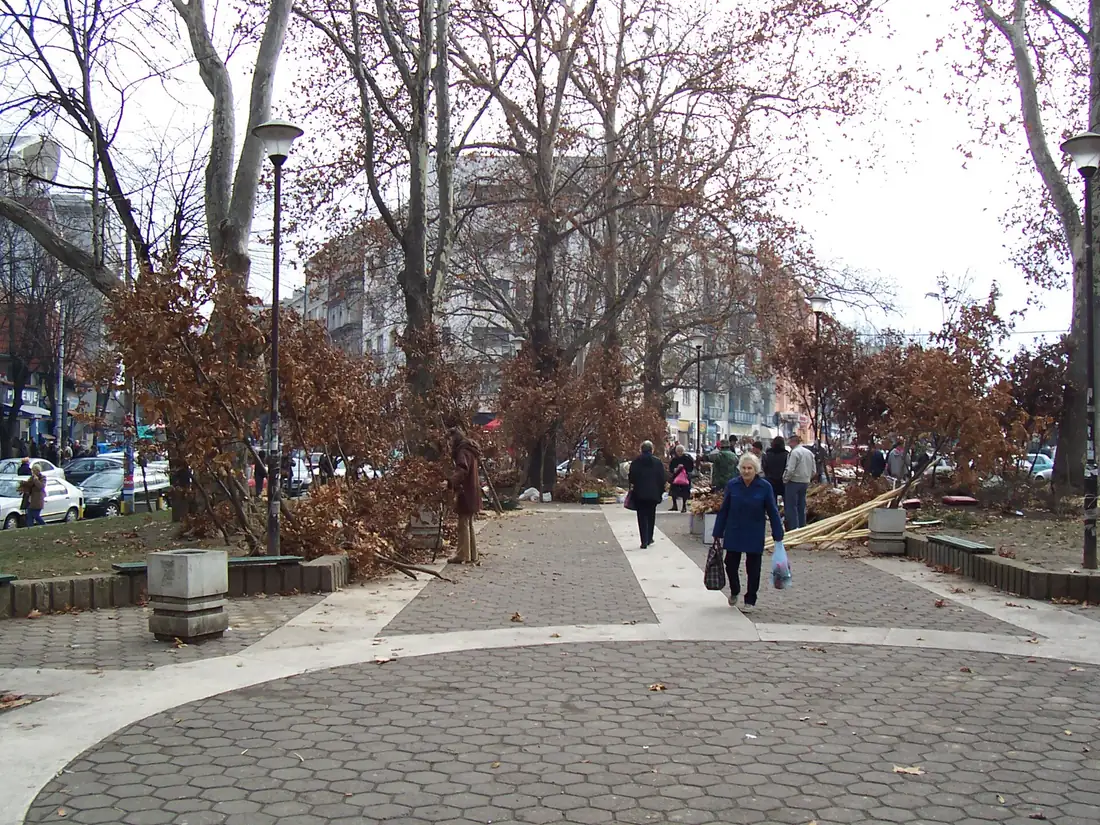
Plenty of visitors assume a Serbian Christmas market runs up to Serbian Christmas. Lately it hasn’t. Orthodox Christmas falls on 7 January, and the last two editions closed on the 5th, two days short. The 2023/24 edition did cover it, running to 8 January. Which way it falls is decided by that December announcement, so check there if the overlap is why you are coming.
No reason to skip the date, though. On the evening of 6 January, Christmas Eve, oak branches called badnjak are burned outside churches across the country. Belgrade’s big one is lit on the plateau in front of the Temple of Saint Sava at 16:00, before a crowd the church puts in the tens of thousands; the liturgy follows inside from midnight, with a second at 09:00. Free, and the most atmospheric hour of the Belgrade winter.
The 7th itself is an inward, family day and a non-working holiday: a roast, česnica bread with a coin baked into it, all of it behind front doors. Museums, offices and a good share of restaurants close. Bars and the nightlife mostly keep going, but don’t plan sightseeing for that date, or for 1 and 2 January.
Getting to Savski park
Belgrade’s public transport is free. Not discounted, not free for residents only, genuinely free for everyone since January 2025, no ticket and no card to tap, with exactly two exceptions, and only one of them waits for you at the airport: the A1 minibus into town at about 400 dinars. The other is the set of express E-badged minibuses at about 200, which run across town rather than to the airport; both are paid on board. Nothing you would use to reach the festival costs a thing. The park names two Savska street stops: Palata Pravde (lines 36, 51, 511, 601) and Durmitorska (3A, 36, 46, 51, 511, 601). The rest of the network is in our Belgrade public transport guide.
On foot it’s 2.25 km from Trg Republike, about half an hour, and the walk down through Savska is unremarkable but easy. Driving, the nearest car park is the Galerija mall, Bulevar Vudroa Vilsona 14, open 06:30 to 02:30 daily, first three hours free, more generous than anything near the old town.
Wrap up properly. December in Belgrade averages a high of 5.5 C and a low of -1.2 C, and the plain sits under grey, damp cloud for days at a stretch. That’s the real weather, not the marketing photos.
Flights, and the Wizz Air question
Nikola Tesla airport (BEG) sits 18 km west of the centre and is Air Serbia’s hub, so getting here from western Europe is easy. One live complication deserves a check before you buy a December ticket: Wizz Air said in June 2026 that regulatory changes would force its four-aircraft Belgrade base to close from November 2026, with a decision due by late September and reduced capacity promised either way. If your festive weekend leans on a cheap Wizz seat, confirm the route is still scheduled; our guide to getting to Serbia tracks the dispute.
Book in this order
Beds first, on a cancellable rate: 31 December is the most expensive bed-night of the Belgrade year. Flights second. Everything else, the festival dates included, waits on the city, which is later than you’d like.
Want the market plus the biggest night? Take the last week of December. Want the market plus value? Take 2 to 5 January: the peak band has broken, the park has stayed open on those dates for two editions running, and one extra night gets you the badnjak fires on the 6th. Want the best week of the Belgrade winter and don’t mind missing the market? Take 10 to 17 January.
Whichever you pick, build the days around evenings. December daylight is short and usually grey, so keep Kalemegdan and the museums for the afternoons and save the park, the kafanas and the promenade for after dark. Our two-day Belgrade itinerary works as written in winter with one change: move the fortress walk to midday, when what light there is turns up.
Photos
On the map
The map loads on click - to keep the page lightweight.
The map didn’t load. Check your connection and refresh the page.
Read also

Entertainment · 11 min read
Danube River Cruises in Serbia: Options and Prices
Verified · September 17, 2026Belgrade river boats €22-29, Tekija speedboats 1,700 RSD, Iron Gate day tours from Belgrade €95-290 at the operators we checked in September 2026.

Entertainment · 11 min read
White Water Rafting in Serbia: Drina, Ibar, Lim
Verified · August 24, 2026Drina, Ibar and Lim rafting compared: real class ratings, 2026 season windows and RSD/EUR prices - plus where the Class III-IV water actually is.

Entertainment · 11 min read
Belgrade Beer Fest 2026: What's Confirmed and What Isn't
Verified · September 5, 2026Belgrade Beer Fest at Ušće: no 2026 dates from the organiser yet, why two recent editions ran in June, last published ticket prices and getting home.

Entertainment · 11 min read
Belgrade Stag Activities: Shooting, Boats, Prices
Verified · August 11, 2026Belgrade stag prices you can buy: shooting from €49, boat party from €39, weekend karting from 1,700 RSD. Book Saturday before the splav night.