
Serbia Events Calendar: Month-by-Month Guide 2026-2027
What is on in Serbia by month: Guca and Beer Fest in August, the Book Fair in October, one Christmas and two New Years, and the 2027 marathon.
Upcoming events
- October 23-31, 2026 International Belgrade Book Fair
- Armistice Day (public holiday)
- Aranđelovdan, the most widely kept slava
All upcoming dates by month (15)
October 2026
- October 23-31, 2026 International Belgrade Book Fair
November 2026
- Armistice Day (public holiday)
- Aranđelovdan, the most widely kept slava
December 2026
- Sveti Nikola, slava day
- New Year's Eve street party
January 2027
- January 1-2, 2027 New Year (public holiday)
- Orthodox Christmas (public holiday)
- January 13-14, 2027 Serbian New Year (Julian)
- St Sava's Day (working holiday)
February 2027
- February 15-16, 2027 Statehood Day (Sretenje)
April 2027
- April 17-18, 2027 40th Belgrade Marathon and European Running Championships
- April 30 - May 3, 2027 Orthodox Easter (Good Friday to Easter Monday)
May 2027
- May 1-2, 2027 May Day (public holiday)
- May 15 - August 15, 2027 Expo 2027 Belgrade
June 2027
- Vidovdan (working holiday)
Dates marked "to be confirmed" follow the previous edition: the organiser had not announced the new ones when we last checked.
Dates checked: August 24, 2026
Serbia’s year has one enormous peak and a lot of quiet, and knowing which is which saves you money. The second week of August is when the country goes off: Guča, Lovefest and Nišville land inside nine days, then Belgrade Beer Fest closes the month at Ušće. Late October is the cultural peak, Book Fair and jazz festival back to back. January gives you one Christmas and two New Years, because half the calendar here still runs on the Julian reckoning. Everything else is shoulder season - cheap and uncrowded for exactly that reason.
One thing to grasp before you book: Serbia’s fixed dates are religious and civic, and they move the whole country rather than filling one venue. Orthodox Christmas on 7 January and the four-day Easter weekend empty the cities into the villages. Those are the weeks when the restaurant you had your heart set on is shut and the motorway south is solid. Festivals you can plan around; holidays you have to plan around.
Verified 2 August 2026. Serbian festival dates get confirmed late, sometimes only weeks ahead, and several organisers hadn’t posted 2027 dates when I checked. Where a date is confirmed I say so; where it isn’t, I give the pattern and the source to check.
The short version
- Biggest week of the year: 7 to 16 August. Three major festivals overlap, and beds in Guča, Vrnjačka Banja and Niš go early.
- Best value months: March, and the back half of November. Mild enough, cheap, nothing sold out.
- Best single date to build a 2027 trip around: 17-18 April, when Belgrade hosts the 40th marathon and the European Running Championships.
- Dates to avoid unless you want them: 7 January, the Easter weekend, and 1-2 May. Half the country is at a family table and the rest is on the road.
- The one that’s missing: EXIT. No Novi Sad edition ran in 2026 and none had been announced for 2027 when I checked.
January: one Christmas, two New Years, one wooden village
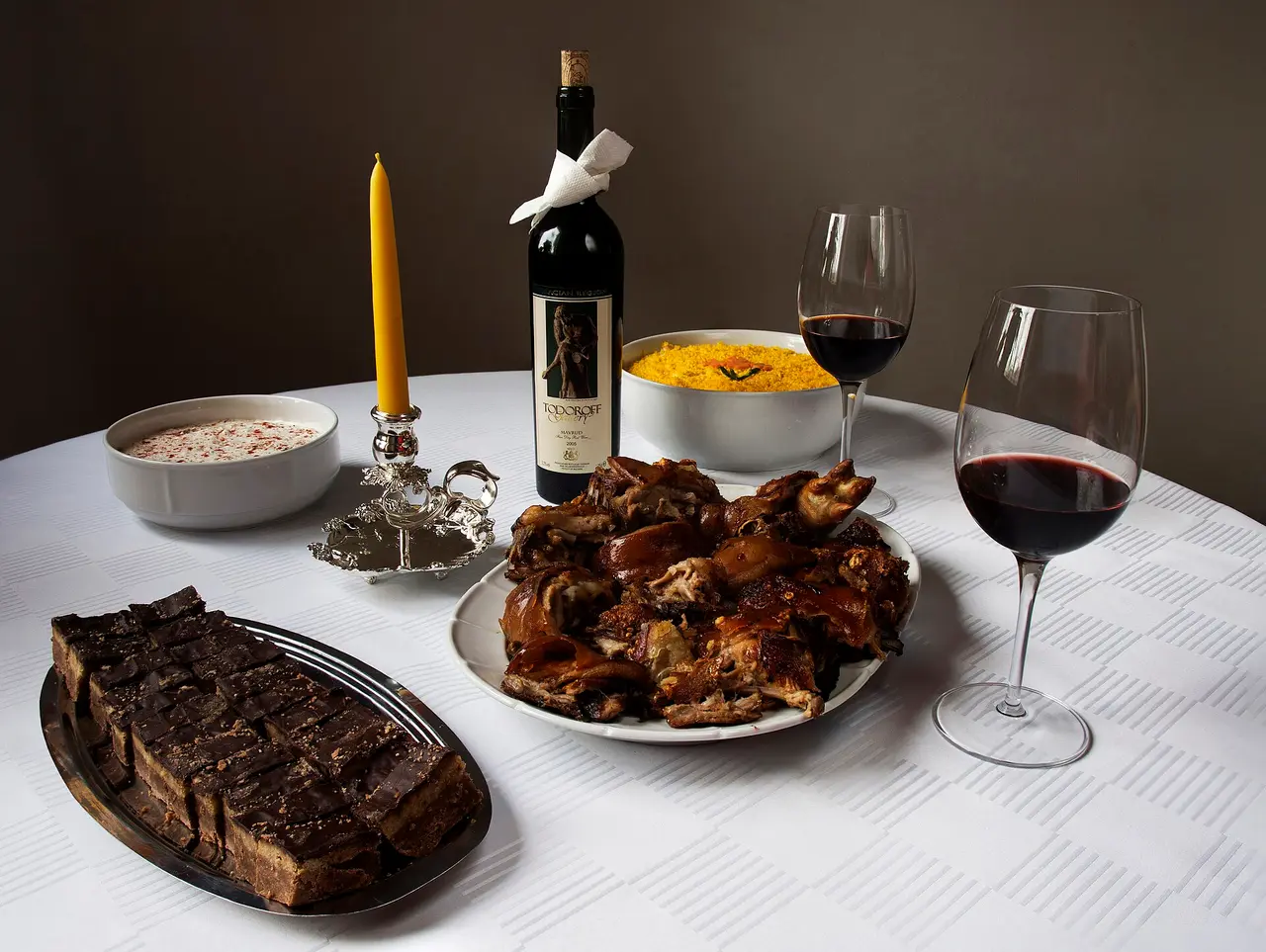
The Gregorian New Year on 1 and 2 January is a non-working holiday and Belgrade does the full street-party thing. Then Julian Orthodox Christmas falls on 7 January, also non-working, and it’s the most inward-looking day of the Serbian year: an oak branch, the badnjak, burned outside churches on the evening of the 6th, roast on the table, almost nothing open. Six days later comes Serbian New Year on the night of 13-14 January, the Julian 1 January. It isn’t an official holiday, so shops and offices run normally, but the city marks it anyway, and it’s the friendliest of the three.
St Sava’s Day on 27 January is a working holiday, which in Serbian usage means observed rather than closed. Late in the month, Emir Kusturica’s Kustendorf International Film and Music Festival takes over Drvengrad, his purpose-built wooden village at Mokra Gora, for a few days of screenings and concerts in the snow. It’s small, it fills up, and dates land late, so check kustendorf-filmandmusicfestival.org.
February: the cheapest month, and a three-day holiday
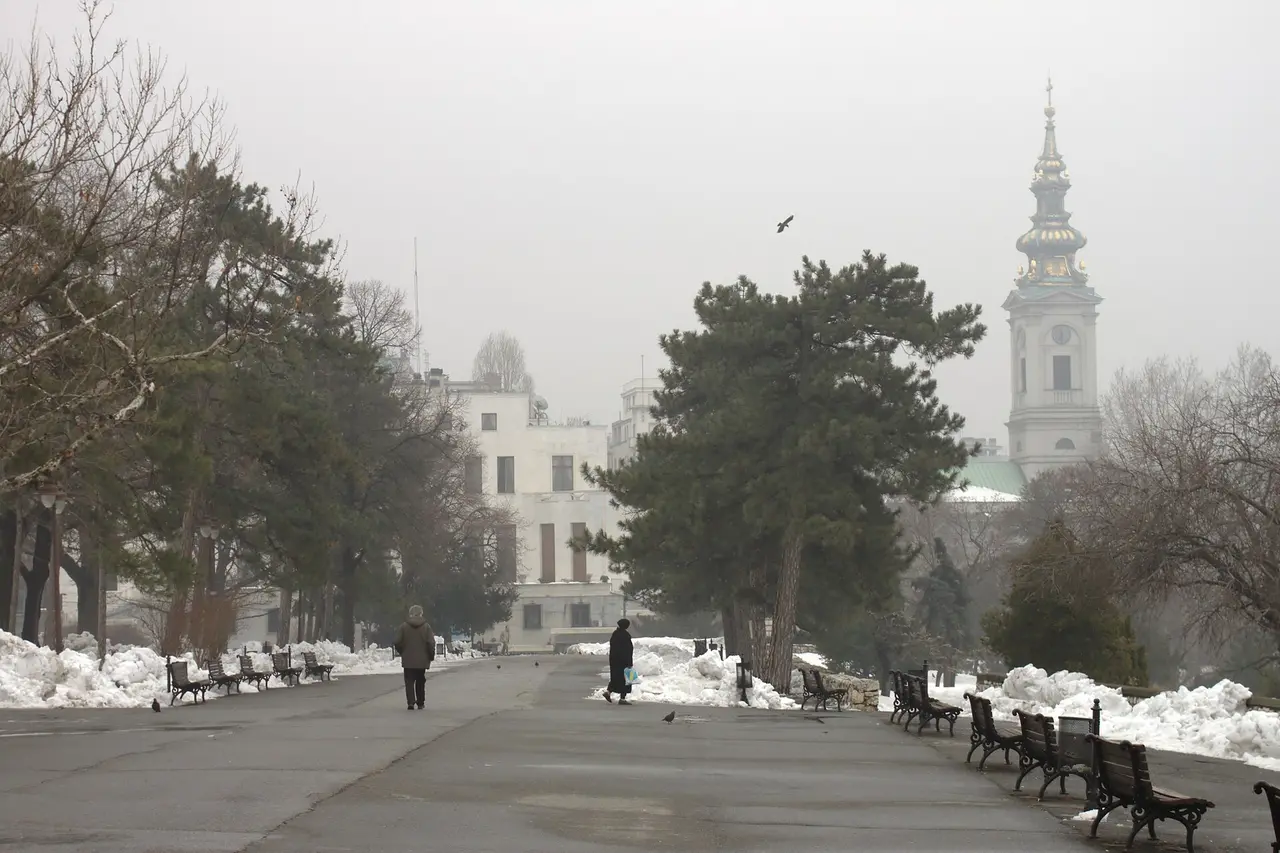
February is the low point for weather and the high point for value: Belgrade sits under fog for days, the mountains are the only reliably beautiful place, and hotel rates are the softest of the year. Our Serbia in winter guide covers what actually works in the cold.
The date to plan around is Statehood Day, or Sretenje, on 15, 16 and 17 February: three consecutive non-working days marking the 1804 uprising and the 1835 constitution. It’s a proper long weekend and Serbs travel on it. Straddling the month boundary is the brand-new Beograd Film Festival, whose first edition ran 30 January to 6 February 2026 at the Kulturni centar Beograda - not to be confused with the long-running FEST (see October), which is a different, older festival.
March and April: the marathon months
March is the quietest month in this whole calendar, and I mean that as a recommendation: no fixed holidays, no festival with national pull, prices still at winter levels, and the first genuinely warm afternoons in Belgrade. If your trip is flexible and you care more about cities than crowds, book March.
April turns on two things. Orthodox Easter is a four-day non-working weekend from Good Friday to Easter Monday; it fell on 10-13 April in 2026, and in 2027 Easter Sunday lands on 2 May, colliding head-on with the 1-2 May holiday. Serbia effectively shuts from Friday 30 April to at least Monday 3 May 2027, and possibly into Tuesday 4 May if the usual rule (a non-working Sunday transfers to the next working day) gets applied to that collision. The National Bank hadn’t published the official 2027 non-working days when I checked, and plenty of listings sites still show the wrong dates - don’t book tight around this week until the list is out.
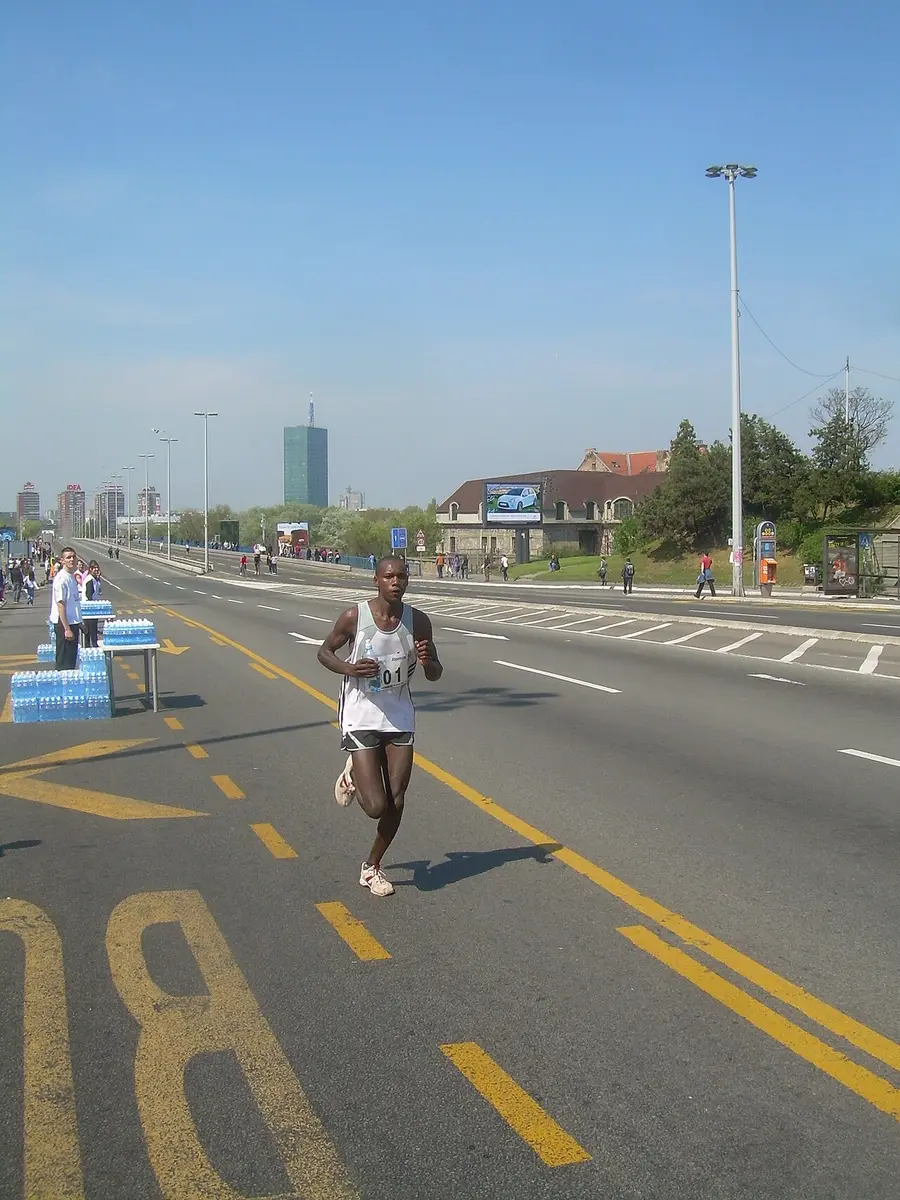
The other April date is the good kind of disruption. The 40th Powerade Belgrade Marathon runs on 17 and 18 April 2027, and it isn’t an ordinary edition: Belgrade simultaneously hosts the second European Running Championships over 10K, half marathon and marathon, so recreational runners share the course with the European field. Organisers expect more than 25,000 participants and registration is open via erch2027.com. If you were ever going to build a spring city break around a race, this is the one.
May: two long weekends and the start of terrace season
May Day on 1 and 2 May is non-working and functions less as a holiday than as a national instruction to light a barbecue somewhere with a view. Half of Belgrade decamps to Ada, Avala or a relative’s garden and the other half is on the road; city restaurants stay open, but the parks are the event. Victory Day on 9 May is a working holiday, so nothing closes.
Museums run a nationwide late-opening night on one Saturday in May, timed near International Museum Day on the 18th, with buildings in Belgrade and Novi Sad open into the small hours. The date is announced only weeks ahead, so check locally once you arrive. Otherwise May is when terrace season starts and the last month before heat becomes a factor; our weather by month breakdown has the detail.
Look one year further and May 2027 is a different scale of month entirely: Expo 2027 opens in Belgrade on 15 May and runs to 15 August, a specialised World Expo themed “Play for Humanity” at a purpose-built site in Surčin, with well over 100 participating countries and attendance projected in the millions. It lands a month after the marathon weekend above, so a spring 2027 trip could plausibly bracket both. Beds, flights and transfer prices across the whole city will move for the summer; book earlier than you would for a normal Belgrade visit.
June: rock in Kragujevac and the year’s heaviest date
June opens the outdoor season. Arsenal Fest takes over the old Knežev Arsenal weapons works in Kragujevac in late June, an industrial site turned festival ground, and the 2026 edition ran 25 to 27 June. Vidovdan on 28 June is a working holiday and the most historically loaded date in the Serbian calendar: nothing closes, but you’ll see commemorations, and it’s a day to read the room rather than treat it as a party.
This is also when Belgrade’s river clubs, the splavovi, reach full volume. If a trip has to fall in high summer but you’d rather skip the festival scrum, June is the smart choice: long warm evenings and none of the August pressure on beds.
July: rivers, rafts and the quietest cities
Belgrade in July is hot and half-empty, because Serbs go to the water. The set piece is the Drina Regatta at Bajina Bašta, a week of riverside programme ending in a mass descent of the Drina on rafts, boats and anything that floats. The 2026 edition ran 13 to 19 July, with the descent starting at 08:00 on Saturday 18 July below the Perućac dam, and organisers put the crowd above 100,000. Book a bed months out: Bajina Bašta is a small town with small-town capacity.
The other July fact is an absence. EXIT didn’t run at Petrovaradin in 2026 - the organisers took the brand on a multi-country tour instead - and no return to Novi Sad had been announced when I checked, though EXIT did stage a separate event in Belgrade this year. Plenty of travellers still show up at the fortress expecting a festival. You can walk it any day of the year, and our Novi Sad guide covers the city on its own merits, but skip building a July trip around a name that’s currently touring elsewhere.
August: the loudest month in the Balkans
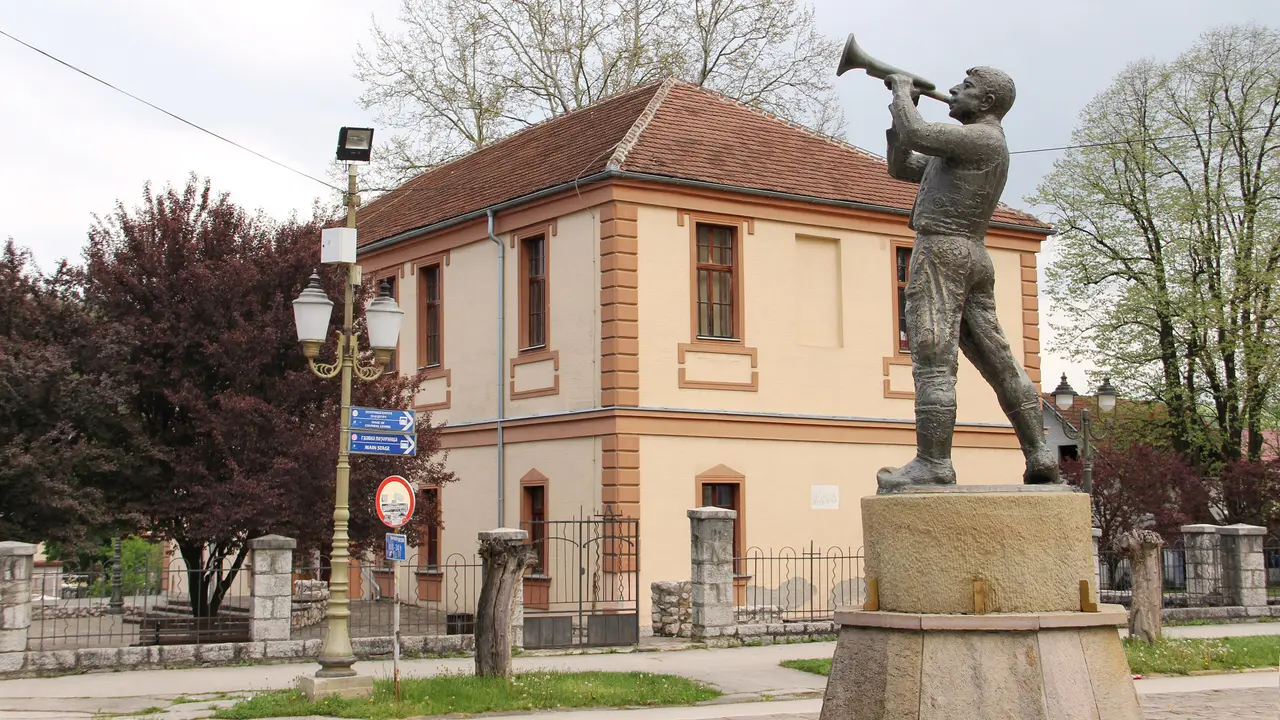
Nine days in August carry more of Serbia’s event calendar than the rest of the year put together. In 2026 they stacked up like this: Guča, 7 to 9 August (free entry), the 65th Dragačevo trumpet assembly; Lovefest at Vrnjačka Banja, 7-8 and 14-15 August (ticketed), techno beside a spa-town lake across two weekends for the first time; and Nišville, 13 to 16 August (ticketed), the 32nd jazz festival inside Niš fortress. Then there’s Belgrade Beer Fest at Ušće - if it lands in August at all: two of its last three editions actually ran in June instead, and entry hasn’t been free since 2023 either. Listings gave 28 to 31 August 2026, and that window has now passed with the official site still showing the 2025 programme - the date was lifted from an old announcement, not confirmed. Until the organiser posts real dates, don’t build a trip around this one.
Guča has almost no hotel stock, so it’s camping, a field, or a bed in Čačak - our Guča survival guide has the logistics and the rakija that fuels it. Because the three big ones overlap, beds along the corridor from Kragujevac down to Niš get scarce for the whole fortnight, well beyond just the festival towns. For lineups and tickets, our guide to music festivals in Serbia goes deeper than a calendar can.
September: theatre, grapes and the best weather of the year
Asked for one month, I’d say September. The heat drops to something civilised, the Danube towns look their best, and the events are the kind you can walk into rather than queue for.
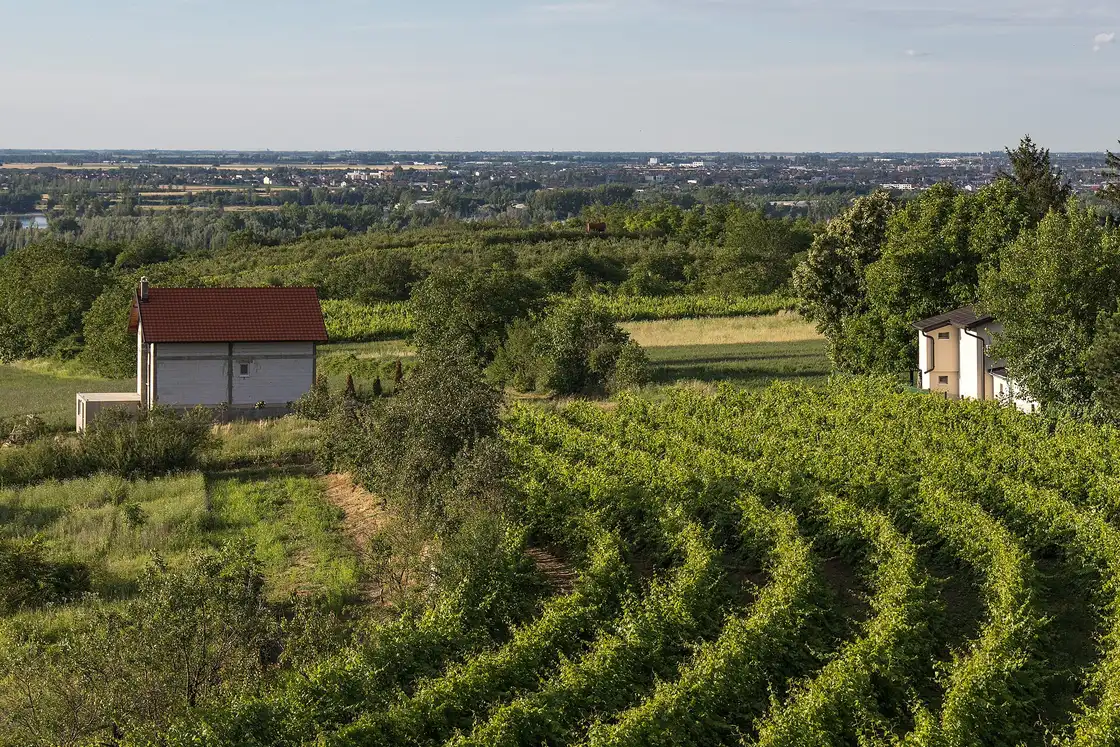
Bitef, the Belgrade International Theatre Festival, is the heavyweight: the 59th edition runs 14 to 20 September 2026 under the theme “Dare to Learn”, confirmed at a National Theatre press conference in June. Worth knowing before you build a trip around it as a fixture: Bitef wasn’t held at all in 2025, its first gap in the festival’s history, after the artistic direction and board resigned over a censorship dispute (a smaller alternative event, NE:BITEF, ran that December instead). Check bitef.rs for the current year rather than assuming an annual pattern. Out in Vojvodina, the Karlovci grape harvest festival takes over Sremski Karlovci in late September, the moment to try bermet, the local dessert wine, at the source rather than off a shop shelf.
October: books, jazz and the last warm weekend
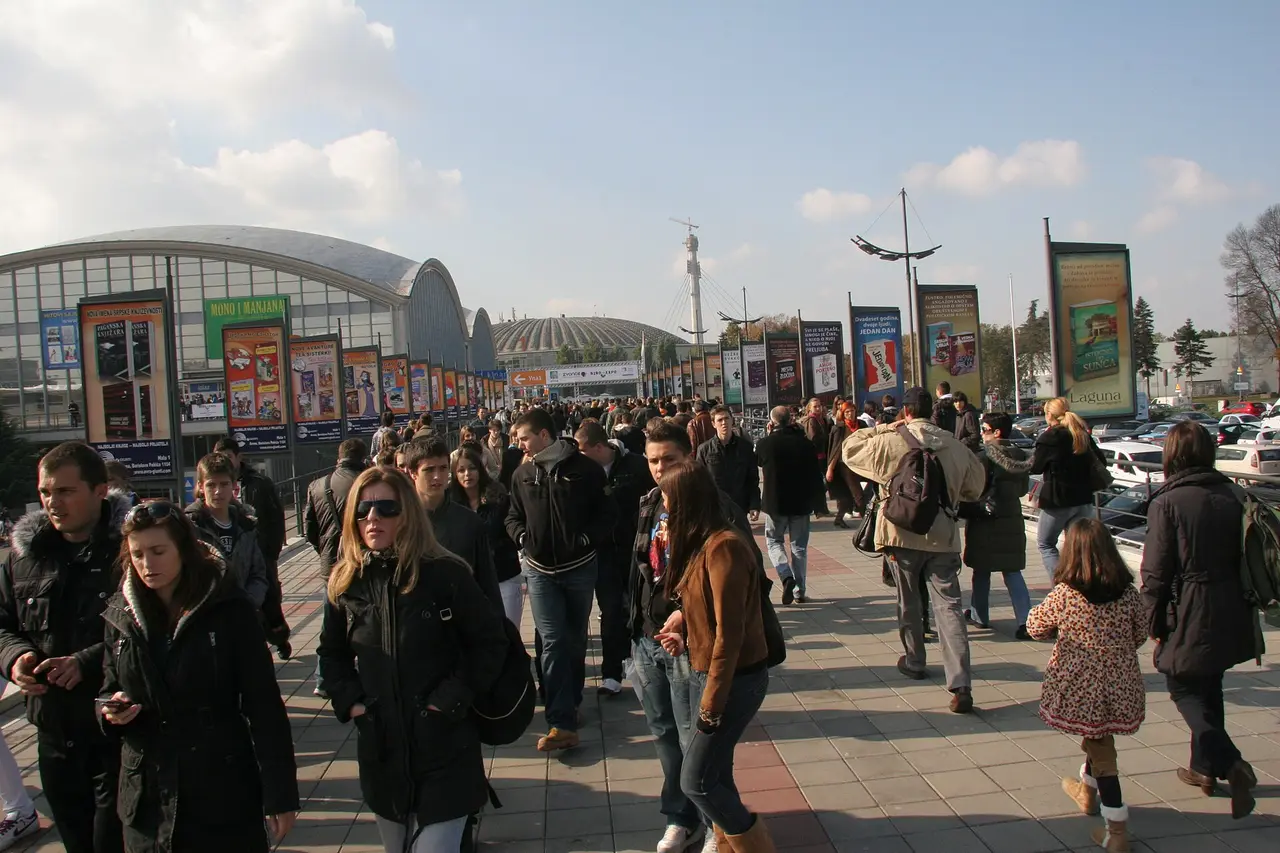
October is Belgrade’s cultural month and it’s busy in a different register from February’s newcomer festival. The 69th International Belgrade Book Fair runs 23 to 31 October 2026 at the Belgrade Fair halls, which sounds niche until you see it: the Fair calls itself the region’s largest book event, the city treats it as a social occasion, and the halls fill with families rather than publishers. FEST, the established Belgrade International Film Festival running since 1971, returns to its usual October slot in 2026 for its 53rd edition (dates to be announced; a two-day “FEST Intro” preview ran at Sava Centar in late February). The Belgrade Jazz Festival also lands in this window, with the 42nd edition due; bjf.rs was still showing the previous edition when I checked, so watch it for dates.
21 October is a working-day remembrance of the 1941 Kragujevac massacre, observed rather than closed. This is the last month you can count on sitting outside and the first when the fog creeps back; our guide to the best time to visit Serbia weighs that trade-off month by month.
November and December: slava season and the long build-up
Armistice Day on 11 November is non-working, marked with the Natalie’s ramonda flower badge. Otherwise the back half of November is the second bargain window of the year: cold but not frozen, no crowds, hotel rates back near February levels.
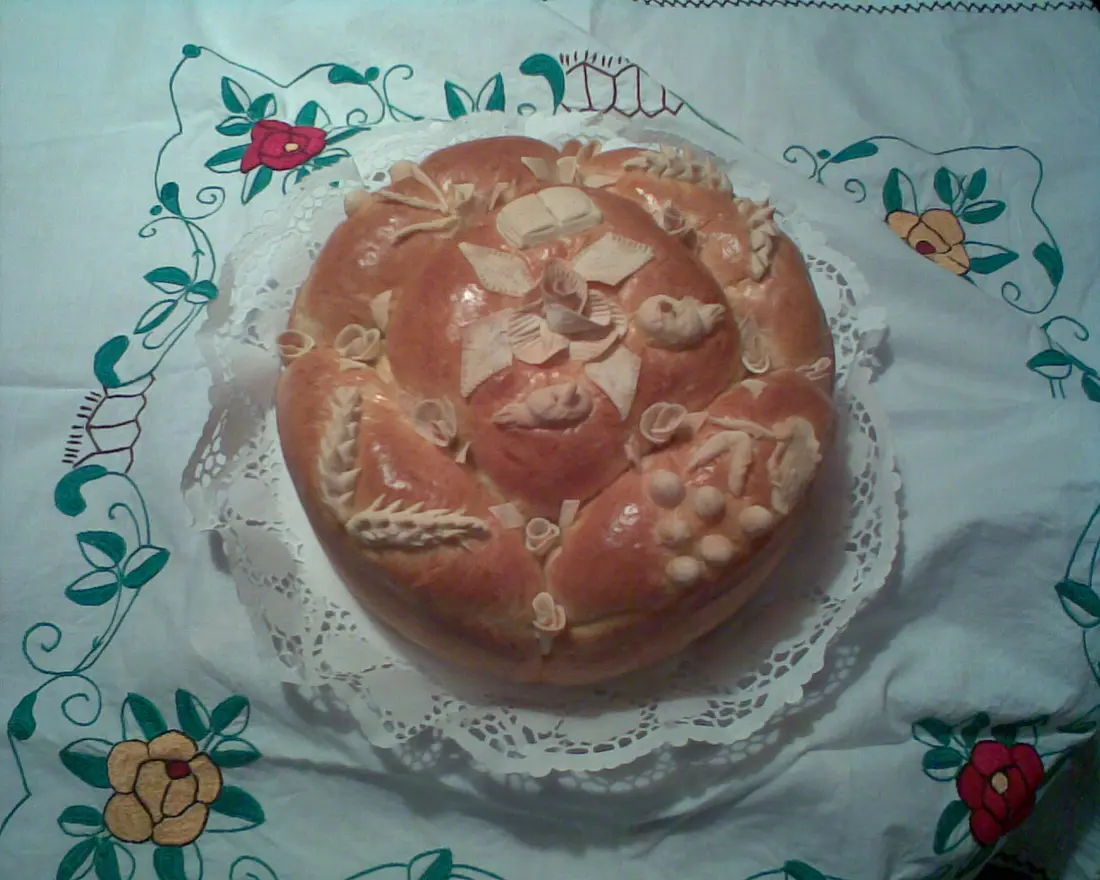
What fills these two months isn’t a festival but the slava, the Serbian household’s own patron-saint day. Every family keeps one, they cluster in late autumn and winter, and two of the most widely kept fall here: Aranđelovdan on 21 November and Sveti Nikola on 19 December. Neither is a public holiday, but if you’re invited to one, go. It’s the best window there is into how the country actually works.
December builds towards the New Year. Belgrade’s winter lights and its festive park go up in the first week of the month and run into the first week of January, though how far into it moves: the last two editions of the riverside park closed on 5 January, two days short of Orthodox Christmas, while the 2023/24 one ran to the 8th. Venues and exact dates are announced late each autumn, between mid-November and the start of December, so check when you book. New Year’s Eve is a large outdoor event in the centre, and beds there are the most expensive of the year for that one night. Our Belgrade Christmas Market guide covers this window day by day, with the current venue and what’s free.
Planning around the calendar
Three habits will save you more than any ticket strategy.
Book beds before tickets. Serbian festivals mostly don’t sell out; the towns around them do. Guča, Bajina Bašta and Vrnjačka Banja have a few hundred rooms between them and fill months before the gates open. Belgrade absorbs almost anything, so if you’re flexible, base yourself there and travel out; our guide to where to stay in Belgrade sorts the districts.
Assume dates land late. Several major organisers here confirm only two or three months ahead, and a couple of the official sites I checked in August 2026 were still displaying their 2025 programme. Buy refundable flights if your trip hangs on one event.
Treat public holidays as travel days. On 7 January, the Easter weekend and 1-2 May, museums may be shut, intercity buses are full and the motorways are the story. Those are days to move between cities, not to plan a packed itinerary in Belgrade.
Everything else is a country with more going on than its reputation suggests and far fewer people competing for a seat. Pick your month, check the organiser, book the room first.
Photos
Read also

Entertainment · 11 min read
Danube River Cruises in Serbia: Options and Prices
Verified · September 17, 2026Belgrade river boats €22-29, Tekija speedboats 1,700 RSD, Iron Gate day tours from Belgrade €95-290 at the operators we checked in September 2026.

Entertainment · 11 min read
White Water Rafting in Serbia: Drina, Ibar, Lim
Verified · August 24, 2026Drina, Ibar and Lim rafting compared: real class ratings, 2026 season windows and RSD/EUR prices - plus where the Class III-IV water actually is.

Entertainment · 11 min read
Belgrade Beer Fest 2026: What's Confirmed and What Isn't
Verified · September 5, 2026Belgrade Beer Fest at Ušće: no 2026 dates from the organiser yet, why two recent editions ran in June, last published ticket prices and getting home.

Entertainment · 11 min read
Belgrade Stag Activities: Shooting, Boats, Prices
Verified · August 11, 2026Belgrade stag prices you can buy: shooting from €49, boat party from €39, weekend karting from 1,700 RSD. Book Saturday before the splav night.