
Belgrade vs Novi Sad vs Niš: Serbia's Cities Compared 2026
Belgrade, Novi Sad, Nis and Subotica compared: days needed, costs, vibe, top sights and how to get between them - plus which city to pick.
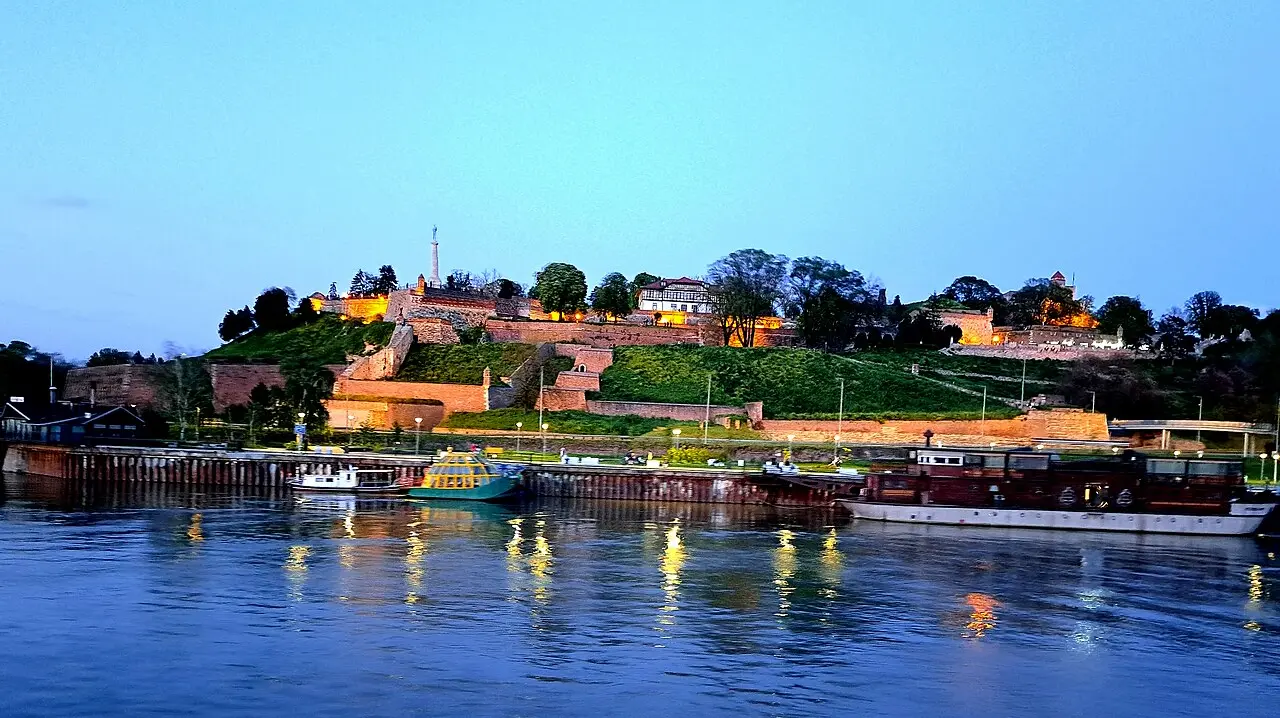
Trying to work out which of Serbia’s cities to actually visit? For a first trip the order is simple: start with Belgrade, the capital, for the nightlife, the history and the value in one hit. Add Novi Sad next, because it sits 40 minutes up a fast train and gives you a calmer, prettier river city with wine country attached. Go further only if you have the days for it: Niš in the south for deep, sometimes sombre history, and Subotica in the far north for Art Nouveau and a quiet break by the Hungarian border. The table below lines up all four on the things that decide a trip - how long each needs, what it costs, the feel of the place, the one sight you should not skip, and how you get between them.
The four are genuinely different despite sitting in one small country, and picking well is mostly about matching a city to the kind of traveller you’re and the days you have. This page is the chooser; each city links out to our full guide if you want the detail.
How we compared: the figures here were checked in July 2026 against Serbia’s rail operator, the 2022 census and our own city guides. Prices are mid-2026 anchors at roughly 117 dinars to the euro, so treat them as a steer and confirm on the day.
At a glance: the four cities compared
| City | Best for | Days | The feel | Don’t-miss sight | Reach from Belgrade |
|---|---|---|---|---|---|
| Belgrade | A first trip, nightlife, history | 2-3 | Raw, loud, lived-in capital | Kalemegdan fortress and the river clubs | You start here |
| Novi Sad | An easy second city, river and wine | Day trip to 2 | Calm, elegant, Central European | Petrovaradin Fortress | 35-40 min, fast Soko train |
| Niš | Deep history on a budget | 1-2 | Working southern city, student buzz | Ottoman fortress and the Skull Tower | 2.5-3h by bus, ~2h by car |
| Subotica | Art Nouveau, a quiet break | Half a day to 1 | Gentle, Hungarian-flavoured border town | The synagogue and City Hall | ~80 min, fast Soko train |
The numbers
| City | Population (2022) | Region | Nearest airport |
|---|---|---|---|
| Belgrade | ~1.2 million (metro 1.68M) | Central, the capital | Belgrade Nikola Tesla (BEG) |
| Novi Sad | ~370,000 | Vojvodina, north | Belgrade (BEG), about 1 h |
| Niš | ~250,000 | South | Niš Constantine the Great (INI) |
| Subotica | ~120,000 | Vojvodina, far north | Belgrade (BEG) ~2 h, or Budapest |
Belgrade is the only Serbian city over a million, and it shows: everything else is a provincial capital by comparison, quieter and slower. That size gap is half the reason the cities feel so distinct.
What a trip actually costs
Prices barely move between the four, because this is one uniformly cheap country, so the honest comparison is a single set of national anchors plus a note on where each city sits. Reckon on about 250 dinars (roughly €2.50) for a coffee, 450 dinars for a pljeskavica off the grill, 1,000 to 1,400 dinars (€8-12) for a plain restaurant meal or around 2,400 dinars (€24) for a full sit-down dinner with a drink. Beds run from a hostel dorm at about 2,100 dinars (€20) up to roughly 11,500 dinars (€105) for a comfortable mid-range double with breakfast.
Where the cities differ is at the margin. Central Belgrade is the dearest of the four, and it climbs hardest in summer and on festival dates; Novi Sad is gentle most of the year but jumps on warm-weekend nights; Niš is the cheapest of the big three; and Subotica stays soft year round. One quiet saving worth knowing: Belgrade’s buses, trams and trolleybuses have been free for everyone since 2025, so getting around the capital costs nothing beyond the airport bus or a taxi. Our Serbia trip cost guide breaks the daily budgets down in full.
Belgrade: the anchor
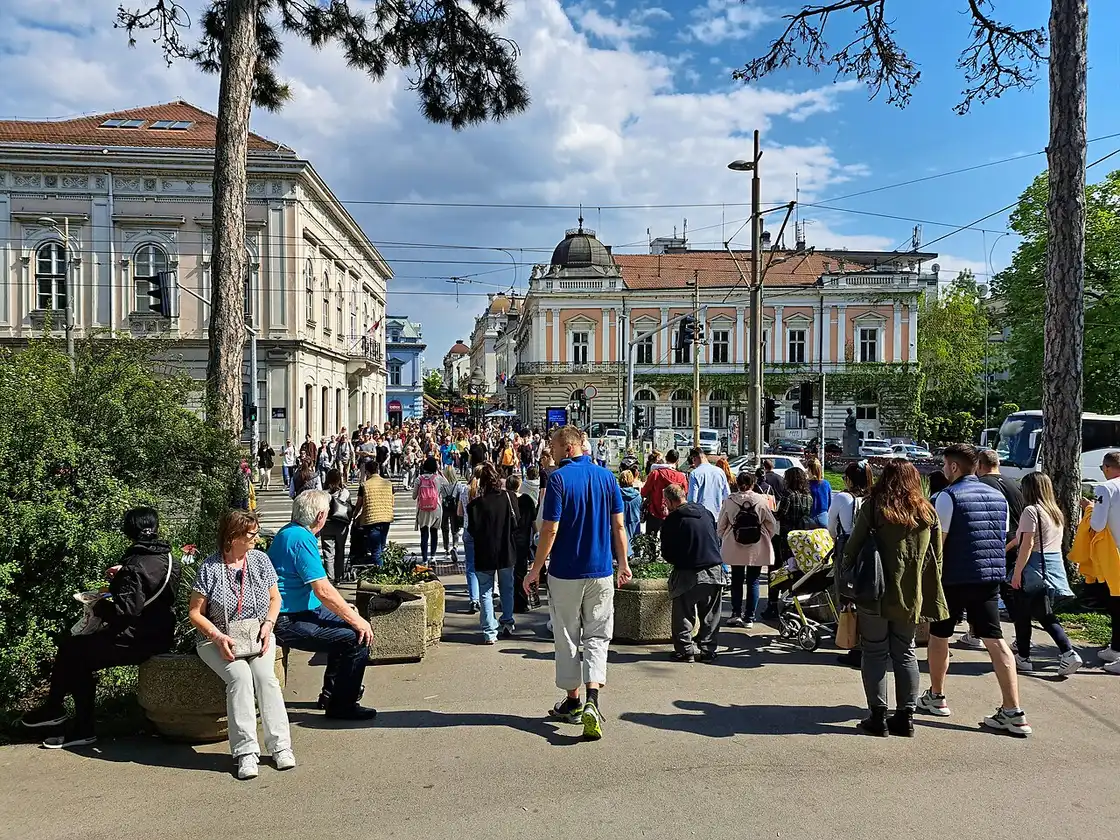
Belgrade is where nearly every Serbia trip should start, and for most people two to three days is the right length. It’s not a chocolate-box capital - expect socialist concrete cheek by jowl with grand old façades and stretches that are frankly rough - but that’s the point. The draw is the atmosphere: the Kalemegdan fortress over the meeting of the Sava and Danube (free to walk), the enormous St Sava church, and one of Europe’s best and cheapest going-out scenes, from the splavovi floating clubs on the rivers to the bars of Savamala. Give it a weekend and it rewards you; expect a tidy museum-piece and it will puzzle you. Our honest take on whether Belgrade is worth visiting lays out who will love it, and things to do in Belgrade covers the two or three days that anchor the trip. And if your choice is between Belgrade and a neighbouring capital rather than another Serbian city, see Belgrade or Bucharest.
Novi Sad: the easy second city
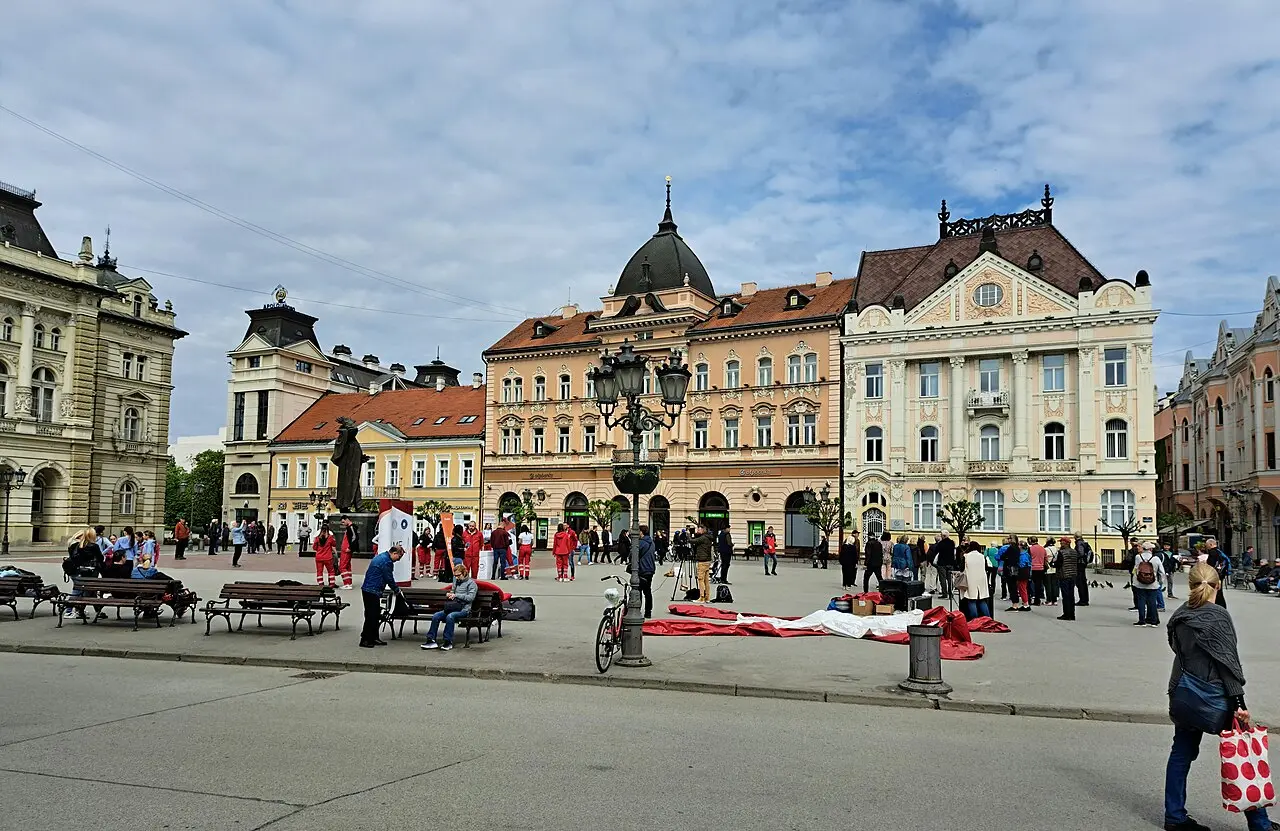
If you add one city to Belgrade, make it Novi Sad. It is the country’s second city, about 75 km up the Danube, and the fast Soko train covers the gap in 35 to 40 minutes, which makes it the easiest day out in Serbia - out in the morning, back for dinner. The character is the opposite of the capital’s: flatter, calmer, laid out around a pedestrian old town of pastel façades and the colossal Petrovaradin Fortress on the far bank, the “Gibraltar on the Danube.” Give it a night rather than a day and you get the parts people remember - the sandy Štrand beach on the Danube in summer, and the Fruška Gora wine country and monasteries half an hour south. One honest caveat for music fans: the EXIT festival that filled Petrovaradin every July has left, with no Novi Sad edition in 2026, so don’t plan a trip around it. Our Novi Sad travel guide and the Fruška Gora guide cover it, and Belgrade to Novi Sad has the train in full.
Niš: the history-heavy south
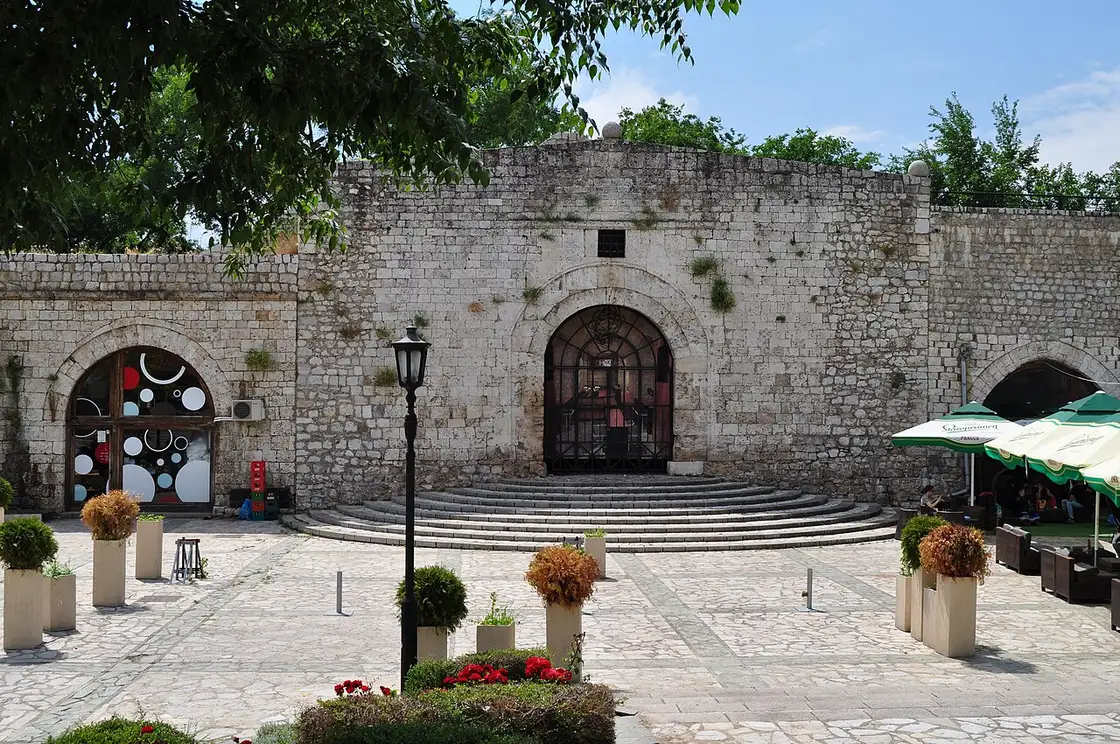
Niš is the big city of the south, the country’s third, and it rewards travellers who care about history over prettiness. It carries real weight rather than gloss: a huge Ottoman fortress you wander for free, the sombre Skull Tower built by the Ottomans from the skulls of fallen Serbs after an 1809 battle, the Roman villa of Mediana, built by the emperor Constantine, in the city where he was born, a preserved WWII camp memorial, and a cobbled alley of kafanas that fills up after dark in famously good grill country. It’s cheaper and more relaxed than the capital, with a student energy. The catch is reaching it: Niš sits about 235 km south with no fast train yet, so it’s 2.5 to 3 hours by bus, a bit over two by car, which is why it earns its place on a week-plus trip rather than a long weekend. Our guide to Niš walks through the sights, and Belgrade to Niš compares the bus, train and car.
Subotica: the Art Nouveau wildcard
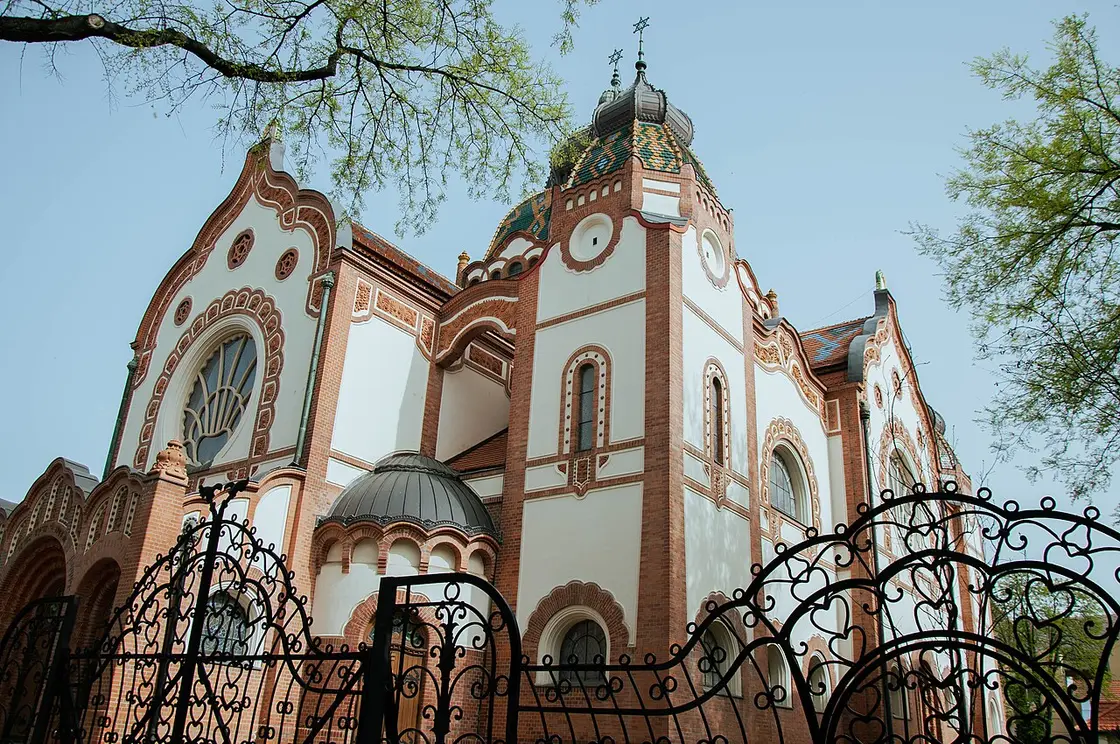
Subotica is the surprise of the four, and the least visited. A border city that spent a century in the orbit of Budapest and Vienna, it’s Serbia’s Art Nouveau showpiece, and it wears that history in its buildings: a riotous, tile-topped City Hall and a beautifully restored synagogue that’s one of the finest surviving Hungarian Secession buildings anywhere. The centre is small, walkable and low-key in a way Belgrade isn’t, and Lake Palić a short ride east adds turn-of-the-century villas and a lakeside promenade. It was a slog to reach until recently, but the Soko fast train now does Belgrade to Subotica in about 80 minutes for 1,200 dinars, which turns it into an easy day trip or a relaxed overnight. It also sits about 10 km from Hungary, so it doubles as a stepping stone if you’re carrying on to Budapest. Our full account of the Belgrade to Subotica train covers the times, the fares and the town.
Getting between the cities
The single biggest planning fact is that three of the four sit on one fast line and the fourth does not. Belgrade, Novi Sad and Subotica are all strung along the rebuilt high-speed railway running north, so hopping between them is quick and cheap: Belgrade to Novi Sad in 35 to 40 minutes, Novi Sad on to Subotica in about 41, and Belgrade to Subotica end to end in roughly 80. That makes a northern loop of all three genuinely easy without a car, and it’s the backbone of most trips. One thing to watch on the Subotica run: only four of the daily departures are the true fast Soko, and the rest are slower Interregio trains, so check which you are booking.
Niš is the outlier. The fast line doesn’t run south yet, so the 235 km down to Niš is a 2.5 to 3 hour bus ride on the motorway, a bit over two hours by car, and slower still by train on ordinary track. It’s perfectly doable and the buses are frequent, but it’s a half-day of travel rather than a quick hop, which is exactly why Niš belongs on a longer trip. If you’re the sort who wants the western mountains too, a rental car starts to make sense once you leave the northern train corridor.
So which Serbian city should you visit?
Match the city to the traveller and the answer falls out. Want a cheap, high-energy city break with serious nightlife and heavy history? That is Belgrade, full stop, and for many people it’s the whole trip. After a relaxed river-and-wine counterpoint with a great fortress and an easy train? Add Novi Sad, ideally with a night for Fruška Gora. Drawn to deep, unvarnished history and the country at its cheapest? Push south to Niš. After architecture and a quiet, pretty break, or a stepping stone toward Hungary? Take the train to Subotica.
For most people the sensible build is a ladder. Two or three days: Belgrade alone, and do it justice. Five days: Belgrade plus Novi Sad and a Fruška Gora wine day, with Subotica an easy add on the same fast line if the north pulls you. Seven days or more: keep that northern core and add Niš in the south, or swing west into the mountains instead. The one order that rarely works is trying to see all four in a short trip - you will spend it in transit. Better to know two cities well than to glimpse four badly. If you’re still sizing up the trip, our guides to how many days you need in Serbia and the best time to visit set the calendar, and where to stay in Belgrade sorts out your base in the capital once you’ve chosen.
Read also

Before you go · 9 min read
Tipping in Serbia: How Much, Cash or Card
Verified · August 9, 2026Tipping in Serbia: about 10% in restaurants, round up cafes and taxis. Cash is standard - card terminals rarely add a tip. What to leave, by situation.

Before you go · 9 min read
Belgrade or Budapest: Which City Break?
Verified · August 8, 2026Belgrade or Budapest: Budapest wins on flights, baths and sights, Belgrade on free transit and price. Populations, tickets and connections compared.

Before you go · 10 min read
Best Hostels in Belgrade: Party and Budget Picks
Verified · August 8, 2026Belgrade hostels from EUR 6.66 a bed: 3 party picks near the bars and 3 quiet, cheaper ones, with real prices, ratings and exact addresses.

Before you go · 9 min read
What to Pack for Serbia (+ Power Plugs)
Verified · August 7, 2026Pack for Serbia: Type F/C 230V plugs, Belgrade vs mountain layers, and the shoes, eSIM and documents that actually matter on the trip.